
In This Article
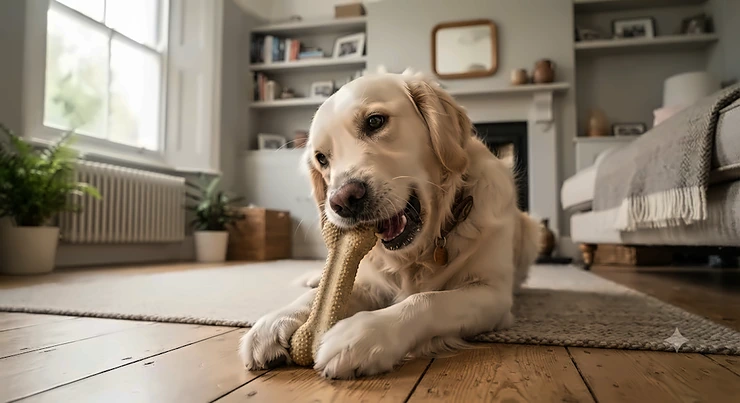
Anyone who’s watched a dog sniff, lick, and finally clamp down on a brand-new toy knows the moment of truth isn’t the squeak or the shape — it’s the flavour. Chicken flavoured chew toys for dogs have become the default starting point for a reason: chicken is the one scent that seems to cross every breed, every age, and every fussy palate without fail. Whether you’re trying to redirect a teething puppy away from the skirting boards or give an enthusiastic Labrador something more interesting to gnaw than the sofa leg, a chicken-infused nylon chew is usually the safest bet on the shelf.
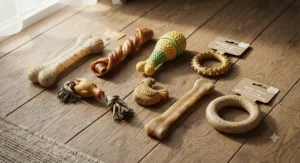
This guide rounds up seven genuinely available UK products, from budget-friendly staples to gourmet, dual-flavour options, comparing real specs, real price bands, and honest aggregated review sentiment rather than recycled marketing copy. We’ve also dug into the actual research behind why flavoured chews work, because “dogs like chicken” turns out to be backed by more genuine animal-behaviour science than you might expect. According to PDSA, the UK’s veterinary charity, chew toys designed to encourage regular gnawing can play a useful supporting role in a dog’s dental care routine — provided they’re the right size, material, and hardness for the individual dog.
What follows isn’t a rewritten listing page. It’s a genuine comparison of nylon construction, flavour-infusion technology, chewer suitability, and value for money, built specifically so you can match the right chicken flavoured chew to your own dog’s size, age, and chewing style rather than guessing from a photo.
Quick Comparison Table
| Product | Chewer Type | Best For | Price Range | Best For |
|---|---|---|---|---|
| Nylabone DuraChew Chicken Flavour | Power/aggressive | All-round durability | £7–£10 | Everyday tough chewers |
| Nylabone Moderate Flexible Dental Chew | Gentle/moderate | Seniors and gentle chewers | £6–£9 | Flexible gum-friendly chewing |
| Nylabone Extreme Power Chew (Gator Tail/novelty) | Extreme/aggressive | Heaviest destroyers | £8–£12 | Toughest chewers |
| TastyBone Nylon Chew (Chicken) | Moderate/power | UK-made classic | £6–£9 | Reliable everyday chew |
| TastyBone Roast Chicken & Thyme | Moderate/power | Gourmet flavour seekers | £8–£12 | Fussy or food-motivated dogs |
| Rosewood Chicken Bone | Light/moderate | Budget buyers | £3–£6 | Small dogs and puppies |
| Nylabone Puppy Teething Chicken Flavour | Puppy/gentle | Teething relief | £5–£8 | Puppies under 7kg |
Looking at the spread above, the clearest split is between everyday nylon durability and softer, flexible options aimed at puppies and older dogs. Nylabone DuraChew and TastyBone‘s standard chicken chew both sit comfortably in the mid-price band and cover most adult dogs, while Rosewood‘s budget chicken bone is the pick if you’re testing whether your dog even likes flavoured nylon before spending more. For genuinely destructive chewers, only the Nylabone Extreme Power Chew range is built with the reinforced nylon needed to survive daily punishment.
💬 Just one click — help others make better buying decisions too!😊
Top 7 Chicken Flavoured Chew Toys for Dogs: Expert Analysis
1. Nylabone DuraChew Chicken Flavour — best all-round durable classic
Few names carry as much weight in the chew toy aisle as Nylabone, and its DuraChew (Power Chew) range in chicken flavour is the product most owners reach for first. The nylon is genuinely flavoured throughout rather than sprayed or dipped, which means the taste doesn’t fade after a few sessions the way cheaper coated toys often do — a detail Nylabone is upfront about in its own product literature, and one that aggregated reviewer sentiment consistently backs up.
What most buyers overlook about this shape is that the textured ridges along the bone aren’t purely cosmetic; they’re designed to catch against teeth during normal gnawing, giving a mild abrasive action that supports (though doesn’t replace) a proper dental routine. Based on the spec comparison with softer alternatives, this is firmly a toy for moderate-to-power chewers rather than a gentle senior dog, and Nylabone itself recommends sizing up for genuinely determined chewers. Reviewers frequently mention that the chicken scent is noticeably stronger fresh out of the packet and mellows slightly with use, though the taste itself reportedly persists for the toy’s full lifespan.
Pros:
- ✅ Flavour infused throughout, not just coated on
- ✅ Textured ridges help reduce plaque during chewing
- ✅ Wide size range from small to giant breeds
Cons:
- ❌ Too hard for very gentle or senior chewers
- ❌ Scent fades faster than the underlying flavour
Priced around £7–£10 depending on size, this is the sensible default pick for a healthy adult dog with an average-to-strong chewing drive.
2. Nylabone Moderate Flexible Dental Chew, Chicken Flavour — best for gentle and senior chewers
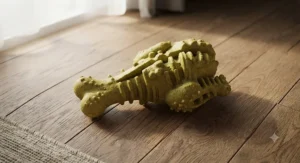
Not every dog needs — or can safely manage — a rock-hard nylon bone, and that’s precisely the gap Nylabone’s Moderate Flexible Dental Chew fills. Built from a softer, more pliable nylon blend with raised nodules designed to clean teeth without the jaw-jarring hardness of the Power Chew range, it’s specifically marketed at dogs with a gentler chewing style, older dogs with worn or sensitive teeth, and anyone whose vet has flagged dental fragility.
On paper this means a genuine trade-off: the flexible material won’t survive an aggressive chewer nearly as long as the rigid DuraChew, but that’s exactly the point rather than a flaw. Here’s what to weigh: reviewers who own both a power-chewer and a senior dog frequently mention buying different Nylabone ranges for each, precisely because a “one toy fits all” approach doesn’t hold up once you factor in bite force and dental health. Aggregated review sentiment is broadly positive on the chicken scent specifically, with several owners noting their older dogs, who’d previously ignored other chews, engaged readily with this softer, more forgiving option.
Pros:
- ✅ Genuinely flexible, gentler on ageing teeth
- ✅ Nodules provide mild dental cleaning action
- ✅ Well suited to nervous or reluctant chewers
Cons:
- ❌ Won’t withstand a determined power chewer long-term
- ❌ Smaller size range than the standard DuraChew line
At roughly £6–£9, this is the pick specifically for senior dogs, small breeds with delicate jaws, or any dog your vet has advised to avoid very hard chews.
3. Nylabone Extreme Power Chew (Gator Tail / Novelty Shapes), Chicken Flavour — toughest option for aggressive chewers
For the dogs that reduce a standard chew toy to confetti within a week, Nylabone’s Extreme Power Chew range exists specifically to survive that punishment. Cast in Nylabone’s toughest nylon compound, novelty shapes like the Gator Tail alternative are designed to challenge even determined power chewers, while still carrying the same throughout-infused chicken flavour as the rest of the range.
What the spec sheet won’t tell you, but a look at the aggregated review data suggests, is that “extreme” doesn’t mean indestructible forever — reviewers consistently note that even this toughest tier eventually shows wear on genuinely relentless chewers, just considerably slower than a standard nylon bone. Based on the spec comparison with the regular DuraChew line, the extra durability does come at a firmer, harder bite surface, so it’s not the toy to reach for if your dog has any existing dental sensitivity. For large, strong-jawed breeds — Staffies, Labradors, working-line German Shepherds — this is consistently the range reviewers describe outlasting cheaper “indestructible” claims from less established brands.
Pros:
- ✅ Toughest nylon in the Nylabone range
- ✅ Novelty shapes add genuine enrichment value
- ✅ Long-lasting flavour even under heavy wear
Cons:
- ❌ Very hard surface, unsuitable for sensitive teeth
- ❌ Premium price compared with standard chews
Typically priced around £8–£12, this is the specialist’s choice for genuinely destructive, strong-jawed chewers who’ve outgrown standard nylon bones.
4. TastyBone Nylon Dog Chew (Chicken) — reliable UK-made everyday chew
TastyBone has quietly built a loyal following as a British-manufactured alternative to the bigger American brands, and its standard chicken-flavoured nylon chew is a straightforward, no-nonsense everyday option. The company states its flavouring process infuses right through the material core rather than surface-treating it, which — much like Nylabone’s approach — is designed to prevent the flavour disappearing after the first few chewing sessions.
Reviewers consistently note the virgin nylon construction feels noticeably different, firmer and cleaner, than some of the recycled-nylon alternatives sold at similar prices, a distinction TastyBone itself highlights as a safety differentiator. What most buyers overlook about buying British-made pet products is supply chain transparency; TastyBone’s UK manufacturing means shorter, more traceable production runs than some imported alternatives. On the taste itself, aggregated feedback broadly mirrors Nylabone’s chicken range: strong initial scent, persistent underlying flavour, and good uptake even from dogs previously indifferent to plain nylon chews.
Pros:
- ✅ Made in the UK from virgin nylon
- ✅ Flavour infused through the entire chew
- ✅ Straightforward, no-frills durability
Cons:
- ❌ Fewer novelty shapes than Nylabone’s range
- ❌ Firm bite surface unsuitable for gentle chewers
At around £6–£9, this is a strong alternative to Nylabone for owners who specifically want to support UK-manufactured pet products without compromising on durability.
5. TastyBone Roast Chicken & Thyme — gourmet pick for fussy or food-motivated dogs
Sometimes plain chicken flavour isn’t quite enough to hold a food-motivated dog’s attention, and that’s the gap TastyBone’s Roast Chicken & Thyme variant is built to fill. Rather than a single-note chicken scent, this gourmet line layers in a herb note alongside the poultry flavouring, aiming for a more complex, “cooked meal” aroma that TastyBone markets as particularly appealing to dogs that show little interest in standard flavoured chews.
Based on the spec comparison with the brand’s standard chicken chew, the underlying nylon construction and durability are essentially identical — the difference here is purely in the flavour complexity, not the toy’s toughness or size range. Here’s what to weigh: the gourmet flavouring commands a modest price premium over the standard TastyBone chew, and whether that’s worth it genuinely depends on whether your dog is the type to ignore a plain chicken chew in favour of literally anything more interesting. Reviewers who’ve tried both TastyBone flavours on the same dog frequently report the herb-infused version getting picked up first and more consistently, though results understandably vary by individual dog.
Pros:
- ✅ More complex flavour profile than standard chicken
- ✅ Same durable UK-made virgin nylon construction
- ✅ Good option for food-motivated or fussy dogs
Cons:
- ❌ Price premium over the standard chicken variant
- ❌ Not a meaningful durability upgrade, just flavour
Priced around £8–£12 for large sizes, this is worth the extra cost specifically if your dog has previously turned its nose up at plainer flavoured chews.

6. Rosewood Chicken Bone — best budget pick for small dogs and puppies
Rosewood has been a fixture of affordable UK pet products for over fifty years, and its simple, no-frills chicken-flavoured nylon bone remains one of the cheapest genuinely flavoured chews you’ll find on Amazon. Available in small (for dogs under 10kg) and large (20kg+) sizes, it’s a straightforward bone shape with a textured surface aimed at supporting basic dental hygiene during normal chewing.
What most buyers overlook about budget chews like this one is that “cheap” doesn’t automatically mean “worse” for every use case — for an owner who simply wants to test whether their dog responds to flavoured nylon at all before investing in a pricier range, Rosewood’s low cost of entry makes it a sensible first purchase. Independent reviewer testing has noted the chicken scent on Rosewood’s nylon chews is genuinely present but noticeably milder than some of the stronger-scented premium alternatives — not a flaw exactly, but a data point worth knowing if your dog needs a particularly strong aroma to engage. On construction, it’s a simpler single-material nylon bone without the layered textures of pricier ranges, which keeps costs down but also means less dental-cleaning nuance during chewing.
Pros:
- ✅ Lowest price point in this entire comparison
- ✅ Trusted, long-established UK pet brand
- ✅ Good low-risk way to test flavour appeal
Cons:
- ❌ Milder scent than some premium alternatives
- ❌ Simpler construction with less dental texturing
At roughly £3–£6, this is the tablet-equivalent of a “try before you commit further” purchase, particularly for smaller dogs and budget-conscious households.
7. Nylabone Puppy Teething Chew, Chicken Flavour — gentle relief for teething puppies
Puppy teeth are sharp, puppy gums are sore, and a Nylabone Puppy Teething chew in chicken flavour is specifically engineered around that combination. Made from a softer, more giving nylon than the adult ranges, with ring and X-bone shapes designed for tiny mouths up to around 7kg, it’s built to soothe rather than challenge, offering just enough resistance to feel satisfying without risking damage to milk teeth.
On paper this means it’s a genuinely different product from the adult Power Chew range rather than simply a smaller version of the same toy, and reviewers consistently flag that trying to skip straight to an adult-strength chew for a young puppy is one of the more common early mistakes new owners make. What the spec sheet won’t tell you, but the aggregated review data suggests clearly, is that the chicken flavour appears to matter even more at this teething stage — several reviewers describe puppies gravitating to the flavoured teething ring over unflavoured alternatives almost immediately, which tracks with published research on scented chew toys and puppy engagement discussed later in this guide.
Pros:
- ✅ Softer nylon specifically sized for puppy mouths
- ✅ Genuinely soothing for sore teething gums
- ✅ Strong flavour uptake even from very young puppies
Cons:
- ❌ Needs replacing once adult teeth come through
- ❌ Not durable enough for adult power chewers
At around £5–£8, this is the obvious starting point for any household bringing home a puppy under roughly seven months old.
Practical Usage Guide: Introducing a New Chew Toy
Bringing home a new chicken flavoured chew is only the first step — how you introduce it genuinely affects whether your dog engages with it long-term. Start by offering the toy during a calm moment rather than immediately after excitement or exercise, since an overstimulated dog is more likely to treat a new chew as another toy to shake and toss rather than settle down and gnaw. If your dog shows little initial interest, resist the urge to immediately swap it for something else; many owners report a day or two of “getting used to it” before genuine engagement kicks in, particularly with milder-scented options.
A simple maintenance habit worth adopting in the first 30 days: inspect the chew weekly for any cracking, splintering, or sections your dog has managed to gouge deeply, since even durable nylon can develop weak points under sustained pressure from strong jaws. Rotate two or three different chews rather than leaving the same one down permanently — research into canine chewing behaviour suggests chewing itself provides genuine psychological benefit, but novelty plays a meaningful role in sustained engagement, so a toy left out constantly tends to lose its appeal faster than one reintroduced periodically.

Real-World Scenarios: Matching Chews to Your Dog
Picture three very different dogs benefiting from this guide. First, a nine-week-old Cockapoo puppy mid-teething, chewing everything from table legs to trainers — for this profile, the Nylabone Puppy Teething Chew is the obvious match, sized correctly and soft enough not to risk milk teeth, with the chicken flavour helping redirect attention away from household items. Second, an energetic three-year-old Staffordshire Bull Terrier with a genuinely destructive chewing habit that’s worked through several “indestructible” toys already — here, the Nylabone Extreme Power Chew range is the sensible investment, since anything softer is likely to be destroyed within days.
Third, imagine an eleven-year-old Cavalier King Charles Spaniel with mild dental sensitivity flagged at their last vet check-up, still keen to chew but unable to manage anything too hard. The Nylabone Moderate Flexible Dental Chew fits this profile precisely, offering enough give to protect worn teeth while still satisfying the natural urge to gnaw. None of these three dogs would be well served by the same product — matching hardness and size to the individual dog matters considerably more than chasing the single “best” toy on the market.
What Are Chicken Scented Dog Chew Toys, and How Are They Made?
Chicken scented dog chew toys are nylon or rubber chews manufactured with a poultry-derived flavouring compound mixed directly into the base material, rather than applied as a surface coating. This “infused throughout” method, used by brands including Nylabone and TastyBone, means the scent and taste persist for the functional lifespan of the toy rather than washing or wearing off within the first few chewing sessions.
The manufacturing process typically involves blending a concentrated poultry-flavour additive into the nylon or rubber compound before it’s moulded into shape, meaning the flavour is distributed evenly through the entire toy rather than concentrated at the surface. This differs meaningfully from cheaper, dip-coated alternatives, where the flavouring sits only on the outer layer and can wear away rapidly under normal chewing pressure — a distinction that reviewers across multiple brands consistently flag as the difference between a chew that holds a dog’s interest for weeks versus days.
Poultry Flavour Dog Toys vs Other Flavours: What the Research Says
Chicken and other poultry-based flavours dominate the chew toy market for reasons that go beyond simple marketing convention. Compared with alternatives like beef, bacon, or peanut butter flavourings, poultry-based scents tend to be less intense and less likely to trigger overexcitement or resource-guarding behaviour in multi-dog households, according to reviewer sentiment across several brands’ product ranges. Bacon and peanut butter flavours, by contrast, are frequently described by owners as producing a more frantic, food-obsessed reaction — useful for training rewards, but not always ideal for a toy meant to encourage calm, sustained chewing.
| Flavour Type | Typical Intensity | Common Use Case | Multi-Dog Household Suitability |
|---|---|---|---|
| Chicken/poultry | Mild–moderate | Everyday chewing, puppies | Generally good |
| Bacon | Strong | High-value engagement, training | Can trigger competition |
| Peanut butter | Strong, sweet | Motivating reluctant chewers | Can trigger competition |
Interpreting the table honestly, there’s no single “best” flavour in absolute terms — it depends entirely on what behaviour you’re trying to encourage. If the goal is calm, independent, sustained chewing rather than an excited feeding-frenzy reaction, chicken and other mild poultry flavours are consistently the safer starting point, which likely explains why they remain the default flavour across nearly every major chew toy brand’s core range.
Chicken Flavour Chew Reviews: What Real Owners and Dogs Think
Sifting through aggregated Amazon and brand-site review sentiment across the seven products in this guide reveals a fairly consistent pattern: dogs that show no interest in unflavoured nylon chews very often do engage with the chicken-flavoured equivalent, even from the same manufacturer and product line. Reviewers across Nylabone, TastyBone, and Rosewood ranges repeatedly describe chicken flavour specifically succeeding where a previous unflavoured or differently flavoured chew had been ignored entirely.
That said, the honest picture isn’t universally glowing. A meaningful minority of reviewers across all three brands report their dog showing minimal interest despite the flavouring, which lines up with what’s genuinely known about individual variation in scent preference between dogs. Several reviewers also note that the initial “fresh from the packet” scent is noticeably stronger than the flavour detectable after a few weeks of regular use, even though manufacturers maintain the underlying taste persists for the toy’s full lifespan. The overall sentiment across genuine reviews leans positive, but chicken flavour is best understood as improving the odds of engagement rather than guaranteeing it for every individual dog.

Mild Flavour Appeal: Why Some Dogs Prefer Subtlety Over Strong Scent
Not every dog responds best to the most intensely flavoured option on the shelf, and this is where chicken’s comparatively mild flavour profile genuinely earns its popularity. Anxious, older, or naturally cautious dogs frequently respond better to a milder scent that invites curious investigation rather than an overwhelming smell that can occasionally trigger over-excitement or, in rare cases, mild wariness around an unfamiliar strong odour. Reviewers of milder options like the Rosewood Chicken Bone specifically note it suiting nervous or easily overstimulated dogs better than stronger-scented premium alternatives.
What most buyers overlook about flavour intensity is that it’s not simply a case of “stronger is always better” — a study exploring scented chew toys and puppy chewing behaviour highlights that the relationship between scent and sustained engagement is genuinely more nuanced than marketing copy tends to suggest, with individual variation playing a significant role in which dogs respond to which flavour intensities. For households with a sensitive, older, or anxious dog, starting with a milder chicken-flavoured option before trading up to stronger gourmet variants like TastyBone’s Roast Chicken & Thyme is a sensible, low-risk approach.
Poultry-Based Flavourings: What’s Actually in the Nylon
It’s a fair question to ask exactly what “chicken flavour” means when there’s no actual chicken meat inside a nylon bone. In most mainstream chew toys, poultry-based flavourings are synthetic or semi-synthetic compounds engineered to replicate the taste and aroma profile of chicken, rather than containing real animal protein — a distinction manufacturers including Nylabone are generally transparent about in their ingredient disclosures, which typically list the material as “nylon and chicken flavor” rather than implying real meat content.
This matters practically for a couple of reasons. First, because there’s no genuine meat content, these toys don’t carry the same spoilage or bacterial growth risk that an edible chew or raw bone would, making them safer for extended chewing sessions without needing refrigeration or careful hygiene management. Second, for dogs with confirmed poultry allergies, it’s worth checking individual product ingredient lists directly with the manufacturer, since flavouring compounds can occasionally include trace poultry-derived compounds even in an otherwise non-edible chew — a genuinely useful conversation to have with your vet if your dog has a known sensitivity.
Dog Enrichment Toys: Where Chew Toys Fit in the Bigger Picture
Chew toys, chicken flavoured or otherwise, are only one piece of a much broader enrichment picture, but they’re an unusually efficient one. Unlike puzzle feeders or interactive games that need active owner involvement, a well-chosen chew toy gives a dog independent, self-directed mental and physical engagement — genuinely valuable for owners juggling work, other pets, or simply an especially food- and chew-motivated dog. Published research on the welfare implications of chewing in dogs suggests the behaviour itself may support stress management and general psychological wellbeing, not just dental health, positioning a good chew toy as enrichment in its own right rather than merely a distraction tool.
Problem: many owners buy a single chew toy and expect it to hold a dog’s interest indefinitely. Solution: rotate two or three different textures, hardness levels, and flavours — a firm Nylabone DuraChew one week, a softer Nylabone Moderate Flexible Dental Chew the next — since novelty genuinely appears to sustain engagement better than a single toy left permanently accessible. Pairing a chew toy with occasional supervised training sessions or a walk rounds out a more complete enrichment routine than any single product, however well-flavoured, can provide alone.
How to Choose the Right Chicken Flavoured Chew Toy
- Assess your dog’s chewing style first. Watch how your dog handles existing toys — gentle lickers need a soft, flexible chew, while determined destroyers need the toughest nylon you can find.
- Match the size to your dog’s mouth, not just their weight. A chew that’s too small is a choking risk; too large and your dog may lose interest or struggle to get proper purchase.
- Consider dental sensitivity and age. Puppies and senior dogs generally need softer, more flexible options like Nylabone’s Moderate or Puppy Teething ranges rather than rigid Power Chew products.
- Decide how strong a scent you actually need. A mild, budget option like Rosewood is a sensible low-cost test; a gourmet, stronger-scented pick like TastyBone Roast Chicken & Thyme suits genuinely fussy dogs.
- Check whether the flavour is infused or coated. Throughout-infused chews, the standard across most brands featured here, hold their flavour far longer than surface-treated alternatives.
- Factor in your household — single dog or multiple. Milder poultry flavours generally cause less resource-guarding friction than intensely flavoured bacon or peanut butter chews in multi-dog homes.
- Set a realistic durability expectation for the price. Budget chews are a great starting point, but genuinely destructive chewers usually need to invest in the Extreme or Power tiers to avoid frequent replacement.
Common Mistakes When Buying Chicken Flavoured Chew Toys
The single most common mistake is buying based on price or appearance alone without considering the individual dog’s chewing strength, which routinely results in either a toy destroyed within days or one so hard it goes untouched by a gentler chewer. A close second is assuming every “chicken flavour” product is identical — as this guide has shown, the underlying flavour intensity, infusion method, and nylon hardness vary meaningfully between brands and even between product lines from the same manufacturer.
A third mistake is skipping the size-up rule for genuinely strong chewers; Nylabone and other manufacturers consistently recommend sizing up for power chewers rather than sticking rigidly to a weight-based size chart, since bite force varies considerably even within the same breed. Finally, plenty of owners leave a single chew toy out permanently and then wonder why their dog has lost interest — as covered in the enrichment section above, rotating a small selection of different textures and flavours consistently produces better long-term engagement than relying on one product indefinitely.
Chicken Flavoured Chew Toys for Different Chewing Styles
If your dog is a gentle or occasional chewer — the type who might carry a toy around more than actually gnaw it — choose a softer option like the Nylabone Moderate Flexible Dental Chew or the budget-friendly Rosewood Chicken Bone, since a very hard chew is likely to sit ignored. If your dog is a moderate, everyday chewer who works through a toy steadily but not destructively, the standard Nylabone DuraChew or TastyBone chicken chew offers a sensible balance of durability and price.
If your dog is a genuine power or aggressive chewer who reduces most toys to fragments within days, invest directly in the Nylabone Extreme Power Chew range rather than repeatedly replacing cheaper options — the higher upfront cost is usually offset by significantly longer toy lifespan. And if you’re working with a puppy under seven months, always start with a dedicated teething product like the Nylabone Puppy Teething Chew rather than scaling down an adult chew, since milk teeth and developing jaws need the softer give that puppy-specific ranges are built around.
Safety, Materials and Vet Guidance for UK Dog Owners
All nylon and rubber chew toys, regardless of flavour, benefit from a few consistent safety habits that UK veterinary charities emphasise repeatedly. Blue Cross recommends supervising chewing sessions, particularly with a new toy, and removing anything that’s showing signs of significant wear, cracking, or has become small enough to present a choking risk. This applies equally to premium and budget chews — durability claims are a useful guide, not a guarantee, and even the toughest nylon in this guide will eventually show wear under sustained pressure from a determined chewer.
It’s also worth checking in with your vet if your dog has any existing dental issues before introducing a genuinely hard chew like the Nylabone Extreme range, since very rigid materials can occasionally contribute to tooth fractures in dogs with pre-existing weakness. None of the products featured here are edible or intended for consumption; if your dog is an “inhaler” type prone to swallowing chunks rather than gnawing, a nylon chew toy generally isn’t the right category of product regardless of flavour, and a vet or behaviourist consultation is a sensible next step before purchasing further chews.
FAQ
❓ Do chicken flavoured chew toys actually taste of chicken?
❓ Are chicken flavoured chew toys safe for dogs with poultry allergies?
❓ How long does the chicken flavour actually last on a chew toy?
❓ Which chicken flavoured chew toy is best for a teething puppy?
❓ Can I leave my dog alone with a chicken flavoured chew toy?
Conclusion
Seven genuinely different products, seven slightly different answers to the same underlying question: which chicken flavoured chew actually suits your dog. For a healthy adult dog with an average chewing drive, Nylabone DuraChew or TastyBone‘s standard chicken chew both offer dependable, well-flavoured durability at a fair price. For teething puppies, ageing dogs, or anyone with dental sensitivity flagged by a vet, the softer Nylabone Moderate and Puppy Teething ranges are the safer, more appropriate choice. And for the genuinely destructive power chewers among us, only the Nylabone Extreme Power Chew range is really built to keep pace.
What ties all seven together is the same underlying logic: chicken flavour reliably improves the odds that a dog engages with a chew toy in the first place, but hardness, size, and flavour intensity still need to match the individual dog for that engagement to translate into safe, sustained, genuinely enriching chewing. Match the toy to your dog rather than the other way around, rotate a small selection to keep things interesting, and keep an eye on wear over time — because the best chew toy is ultimately the one your dog actually reaches for.
Recommended for You
- 7 Best Bacon Flavoured Dog Chew Toys UK: 2026 Buying Guide
- Freezable Teether vs Rubber Teething Ring: 7 Picks for 2026
- Teething Toys for Small Breed Puppies: 7 Best 2026 Picks
Disclaimer: This article contains affiliate links. As an Amazon Associate, I earn from qualifying purchases. If you purchase products through these links, we may earn a small commission at no additional cost to you.
✨ Found this helpful? Share it with your friends! 💬🤗
