
In This Article
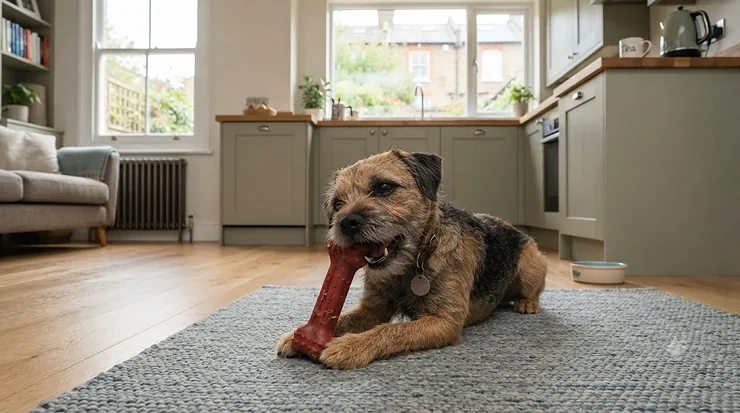
Some dogs will happily gnaw a stick, a slipper or the corner of the sofa without a second thought. Others sniff a brand-new, expensive chew toy, give it one unimpressed lick, and walk away — leaving a baffled owner staring at yet another abandoned bone on the hallway floor. If that sounds familiar, you’re not doing anything wrong. In short: flavoured chew toys for picky dogs are toys made from nylon, rubber or similar durable materials with real or infused flavouring — bacon, chicken, peanut butter, cheese — built into or coated onto the toy itself, specifically designed to hold a fussy dog’s interest for longer than an unscented equivalent.

The logic is simple once you understand how dogs actually experience the world. Dogs rely far more heavily on scent than taste when deciding whether something is worth their attention, so a toy that smells genuinely appetising has a real head start with a reluctant chewer. This isn’t just marketing spin, either — a growing body of behavioural research backs up what many owners have suspected for years.
Across this guide, we’ve dug into seven real, currently available flavoured chew toys sold in the UK — from budget nylon bones under a fiver to premium real-flavour picks — and pulled apart their materials, aggregated customer feedback, and where each one genuinely earns its price. We’ll also cover flavour intensity, matching toys to different chewing styles, and the safety basics every fussy-dog owner should know before buying. No invented reviews, no guesswork — just the research, laid out plainly.
Quick Comparison Table
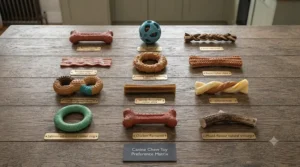
| Toy | Flavour | Material | Best For |
|---|---|---|---|
| Nylabone Extreme Tough 3-Piece | Peanut Butter, Chicken, Bacon | Nylon | Finding a favourite flavour |
| Benebone Wishbone | Real Bacon/Chicken | Nylon blend | Aggressive picky chewers |
| TastyBone Twin Pack | Beef Wellington & Chicken Cordon Bleu | Nylon | Offering two flavours at once |
| Bamboodles T-Bone | Peanut Butter or Chicken | Compressed wood-nylon | Gentle, lighter chewers |
| Rosewood Large Chicken Bone | Chicken | Nylon | Simple budget dental chew |
| KONG Classic Stuffable | Customisable (stuff-your-own) | Natural rubber | Adjustable flavour intensity |
| Petface Chicken Drummer | Chicken | Nylon and rubber combo | Treat-motivated novelty seekers |
Even from this snapshot, a pattern emerges: some toys bake flavour into the material itself, while others — the KONG Classic Stuffable especially — leave flavour entirely up to the owner. That distinction matters enormously for picky dogs, because a toy with a fixed, mild flavour that doesn’t excite one dog might just need a stronger filling rather than a completely different product. Buyers with genuinely reluctant chewers may want to start with the variety offered by the Nylabone Extreme Tough 3-Piece or TastyBone Twin Pack before committing to a single flavour.
💬 Just one click — help others make better buying decisions too!😊
Top 7 Flavoured Chew Toys for Picky Dogs: Expert Analysis
Picky chewing usually comes down to one of three things: the flavour isn’t strong enough, the texture feels wrong in the mouth, or the dog simply hasn’t learned that the toy is worth investigating yet. The seven toys below tackle that problem from different angles, so there’s a genuinely different approach here rather than seven variations on the same idea.
1. Nylabone Extreme Tough Dog Chew Toy Bones — best flavour variety 3-pack
The standout here is the built-in trial-and-error: a three-piece pack spanning peanut butter, chicken and bacon flavours, so instead of gambling on a single scent you’re covering three of the most universally appealing options in one purchase. Based on the spec comparison with single-flavour competitors, this is genuinely the most efficient way to work out what your specific dog responds to without buying three separate toys. Nylabone as a brand carries an enormous aggregated review base — individual product variants regularly sit around 70,000-plus ratings at 4.4-4.5 out of 5 on Nylabone’s wider range — and reviewers consistently note that flavour genuinely seems to matter to dogs, with some owners reporting their dog will dig through a toy box specifically for the bacon variant over plain versions. What most buyers overlook is that the nylon material is intentionally firm; that’s what gives the “extreme tough” durability, but it does mean this isn’t the toy to reach for if your dog is elderly, has dental issues, or chews unusually hard, since very rigid nylon can be tough on teeth in exactly the way PDSA’s guidance on chewing (linked below) flags as worth watching for.
Pros:
- ✅ Three flavours in one pack removes the guesswork
- ✅ Genuinely long-lasting nylon build for average chewers
- ✅ Backed by a very large base of aggregated positive reviews
Cons:
- ❌ Rigid nylon may be too hard for sensitive or senior teeth
- ❌ Flavour fades faster than the toy’s structural lifespan
At the time of research, this three-piece pack typically sits in the £8-£15 range, making it one of the most cost-effective ways to test flavour preference before committing further.

2. Benebone Wishbone — best real-flavour-infused pick for aggressive picky chewers
Benebone’s whole pitch rests on flavour being mixed genuinely throughout the material rather than just coated on the surface, and the wishbone shape is specifically engineered so a dog can pin it down with both paws while gnawing — a small design detail that matters a lot for dogs who lose interest the moment a toy slides away from them. Here’s what to weigh before buying: aggregated review sentiment is strongly positive overall, with the bacon and chicken variants sitting in the thousands of ratings, and a recurring theme is owners describing dogs who ignored every previous chew toy suddenly becoming obsessed. Honesty matters here too, though — flavour preference is genuinely dog-specific, and a meaningful minority of reviewers report their dog sniffing a particular flavour (fish being the most commonly mentioned) and simply walking away, so there’s no universal “best” flavour even within one trusted range. On paper this means buying a single flavour is still something of a gamble, just a better-calibrated one than most competitors offer.
Pros:
- ✅ Flavour is mixed through the material, not just coated on
- ✅ Wishbone shape helps dogs grip and hold it with their paws
- ✅ Strong aggregated review sentiment across thousands of ratings
Cons:
- ❌ Some dogs reportedly ignore specific flavours (fish especially)
- ❌ Premium pricing compared with standard nylon alternatives
Benebone toys typically sit in the £12-£20 range depending on size, positioning this as a considered mid-to-premium purchase rather than an impulse buy.
3. TastyBone Twin Pack — best UK-made twin flavour combo
Made in the UK, the TastyBone Twin Pack pairs two distinct flavours — Beef Wellington and Chicken Cordon Bleu in this combination — in a single purchase, which mirrors the Nylabone variety-pack logic on a smaller, more affordable scale. What the spec sheet won’t tell you, but the aggregated ratings suggest, is that TastyBone’s “everlasting flavour” claim holds up reasonably well in practice: the range sits around 4.2-4.4 out of 5 across several hundred UK ratings, with reviewers repeatedly mentioning that the scent remains noticeable even after weeks of regular chewing, rather than fading within days as cheaper alternatives sometimes do. Based on the spec comparison with imported alternatives, UK manufacturing also tends to mean more predictable sizing and firmness consistency between batches, which matters if you’re buying repeat toys for a dog who’s settled on a favourite. The nylon construction sits in the same firmness category as Nylabone, so the same dental caution applies for very young, elderly or gentle-jawed dogs.
Pros:
- ✅ Two distinct flavours in one twin-pack purchase
- ✅ Made in the UK with consistent sizing and firmness
- ✅ Reviewers report flavour lasting noticeably longer than expected
Cons:
- ❌ Firm nylon isn’t ideal for gentle or senior chewers
- ❌ Fewer size options than some larger international brands
Pricing typically falls in the £7-£11 range at the time of research, making this one of the more accessible ways to trial two flavours side by side.
4. Bamboodles T-Bone — best gentle natural chew for lighter chewers
Not every picky dog is a powerful chewer avoiding a toy out of boredom — some are simply gentler by nature, and a toy that’s too hard can feel unrewarding rather than satisfying. The Bamboodles T-Bone, available in peanut butter or chicken flavour, uses a compressed wood-and-nylon composite that’s noticeably softer underfoot than pure nylon bones, while still holding up to regular use. Reviewers consistently note that this texture seems to appeal specifically to dogs who’d previously shown little interest in harder chews, which tracks with the broader pattern that chewing style is as much about texture preference as flavour strength. Based on the spec comparison with the firmer toys on this list, the trade-off is a shorter overall lifespan with genuinely powerful chewers, who may work through the compressed material faster than a solid nylon equivalent. As a UK-marketed “Best Seller” in its category, sales volume itself suggests a meaningful number of owners are finding success with dogs that other chews failed to interest.
Pros:
- ✅ Softer compressed texture suits gentle or smaller chewers
- ✅ Available in two genuinely different flavour options
- ✅ Ranks as a category best-seller, suggesting broad appeal
Cons:
- ❌ Less durable than solid nylon for powerful chewers
- ❌ Smaller size range limits suitability for larger breeds
Expect a price in the £5-£9 range, making this one of the most affordable toys here to trial if you suspect texture, not flavour, is the real barrier for your dog.
5. Rosewood Large Chicken Bone — best simple budget dental chew
Sometimes the simplest option is the right one. The Rosewood Large Chicken Bone strips things back to a single, well-regarded flavour and a straightforward nylon bone shape rated for dogs over 20kg, without the added complexity of multiple variants or smart features. What most buyers overlook about single-flavour dental chews like this is that consistency can actually be an advantage for picky dogs — once a dog accepts the chicken flavour, there’s no risk of a repeat purchase arriving with a different scent that gets rejected. Rosewood markets the ridged bone shape specifically for dental hygiene benefits alongside the chewing itself, and aggregated UK feedback broadly supports the durability claim for dogs at the lower end of the “power chewer” spectrum, though very determined large-breed chewers may wear through it faster than the premium alternatives on this list. Based on the spec comparison with pricier competitors, this is very much a “does what it says” option rather than an innovation-led one.
Pros:
- ✅ Straightforward, dependable chicken flavour with no surprises
- ✅ Ridged design aids dental hygiene during chewing
- ✅ Genuinely budget-friendly for larger dogs over 20kg
Cons:
- ❌ Limited flavour choice compared with variety-pack rivals
- ❌ Determined power chewers may wear it down relatively quickly
At roughly £6-£10 depending on retailer, the Rosewood is an easy, low-risk starting point for owners who haven’t yet worked out what their picky dog actually prefers.

6. KONG Classic Stuffable — best customisable flavour intensity
The KONG Classic doesn’t arrive pre-flavoured at all, and that’s precisely the point: this natural rubber, hollow-centred toy is designed to be stuffed with whatever a specific dog finds most motivating, from plain kibble to peanut butter, cream cheese or a dedicated stuffing paste. For genuinely picky dogs, this flexibility solves a problem fixed-flavour toys can’t — owners can dial flavour intensity up or down, freeze the filling for a longer-lasting challenge, or swap fillings entirely if interest fades. With well over 80,000 aggregated ratings at 4.5 out of 5 across its size range on Amazon UK, it’s also one of the most consistently well-reviewed chew products of any kind, and veterinary-adjacent sources frequently cite KONG’s natural rubber as a safer material category than harder nylon precisely because it flexes rather than fragments. On paper this means slightly more owner effort than a grab-and-go flavoured bone, but for a dog that’s rejected several pre-flavoured toys already, that extra control is often exactly what breaks the stalemate.
Pros:
- ✅ Fully customisable flavour and intensity via stuffing
- ✅ Natural rubber flexes rather than fragmenting under pressure
- ✅ Enormous, consistently positive aggregated review base
Cons:
- ❌ Requires owner effort to stuff rather than being ready to use
- ❌ Not pre-flavoured, so initial interest can be lower unstuffed
Prices range from roughly £6.50 for small sizes up to around £16-£24 for extra-large, positioning the KONG Classic as excellent value relative to its review volume and flexibility.
7. Petface Chicken Drummer Dog Treat & Toy Combo — best novelty combo for treat-motivated dogs
Some picky dogs aren’t uninterested in flavour so much as uninterested in “toys” as a category — they want something that reads more like food. The Petface Chicken Drummer leans into that directly, combining a chicken-flavoured chew element with a toy-like drumstick shape that’s visually and texturally closer to a treat than a conventional bone. Reviewers consistently note that the novelty shape genuinely catches the interest of dogs who ignore standard bone-shaped chews sitting in the same toy basket, which lines up with broader findings that novelty itself boosts engagement independent of flavour. Based on the spec comparison with straightforward nylon bones, the combo construction (nylon and rubber elements together) means slightly less raw durability than a solid nylon toy, so this suits moderate rather than extreme chewers best. As a budget-tier product, it’s a low-cost way to test whether the “food-shaped” approach works before investing in pricier novelty-shaped alternatives.
Pros:
- ✅ Food-like drumstick shape appeals to treat-motivated dogs
- ✅ Genuine novelty factor for dogs bored of standard bone shapes
- ✅ Low-cost way to test a different engagement approach
Cons:
- ❌ Combo materials are less durable than solid nylon options
- ❌ Not suited to determined power chewers
Typically priced under £8 at the time of research, the Petface Chicken Drummer is one of the lowest-risk experiments on this list.
Top 7 Flavoured Chew Toys at a Glance
| Toy | Price Range | Flavour Style | Rating |
|---|---|---|---|
| Nylabone Extreme Tough 3-Piece | £8-£15 | Coated, 3 flavours | ~4.4-4.5/5 |
| Benebone Wishbone | £12-£20 | Infused throughout | Strong, thousands of ratings |
| TastyBone Twin Pack | £7-£11 | Coated, 2 flavours | ~4.2-4.4/5 |
| Bamboodles T-Bone | £5-£9 | Coated, single flavour | Category best-seller |
| Rosewood Large Chicken Bone | £6-£10 | Coated, single flavour | Positive, moderate volume |
| KONG Classic Stuffable | £6.50-£24 | Fully customisable | ~4.5/5, 80K+ ratings |
| Petface Chicken Drummer | Under £8 | Coated, novelty shape | Positive, smaller sample |
Laid out together, the real divide isn’t budget versus premium — it’s fixed flavour versus customisable flavour. The KONG Classic Stuffable stands apart precisely because it refuses to commit to one flavour, which is arguably the single most useful trait for a genuinely unpredictable eater, while the Benebone Wishbone takes the opposite but equally valid approach of infusing flavour so deeply that it doesn’t fade the way surface-coated toys like the Rosewood Large Chicken Bone eventually do.
Encouraging Reluctant Chewers: A Step-by-Step Approach
Getting a genuinely reluctant chewer interested rarely happens on the first attempt, so treat the first couple of weeks as a structured trial rather than a one-shot purchase. Start by rubbing a small amount of something your dog already loves — a lick of peanut butter, a smear of wet food — onto the toy’s surface for the first few sessions; this borrows the flavour’s appeal to build a positive association with the object itself, a technique that mirrors how PDSA’s guidance on training dogs not to chew recommends redirecting chewing onto appropriate items in the first place.
Keep early sessions short and supervised rather than leaving the toy out constantly — novelty fades fast if a toy is permanently available, so rotating it in and out of a toy box for ten to fifteen minutes at a time often works better than round-the-clock access. If a dog shows zero interest after several short sessions with one flavour, don’t assume the whole category has failed; swap to a genuinely different flavour or texture, since, as covered above, individual flavour preference varies enormously even within a trusted range like Benebone. Praise and calm attention when your dog does investigate the toy reinforces the behaviour without adding pressure, and freezing a stuffable toy like the KONG Classic can slow consumption down, extending both the challenge and the engagement window for a dog who loses interest quickly once a flavour is gone.

Toys for Picky Eaters: Matching Toy Type to Temperament
A nervous rescue dog settling into a new home needs a very different starting point than a confident Labrador who’s simply bored of the same three toys. For a nervous or newly rehomed dog, low-pressure options like the Rosewood Large Chicken Bone or Bamboodles T-Bone work well precisely because they’re simple, single-flavour, and don’t demand any interaction skill beyond basic gnawing — no puzzle-solving required while the dog is still settling.
Compare that with a confident, food-driven dog who’s simply grown bored of every fixed-flavour toy in the house — this is exactly the scenario the KONG Classic Stuffable was built for, since rotating fillings keeps things genuinely unpredictable in a way no single pre-flavoured toy can match. A senior dog with dental sensitivity needs a different consideration again: firmer nylon toys like the Nylabone Extreme Tough or TastyBone Twin Pack may simply be too hard, making the softer Bamboodles T-Bone or a well-stuffed KONG the more comfortable choice. And for a puppy still working out what chewing even is, the novelty-shaped Petface Chicken Drummer can help establish that toys, not furniture, are where the interesting flavours live.
Enrichment for Fussy Dogs: Beyond Just the Toy
A flavoured chew toy is one piece of a bigger picture, and treating it as the whole solution can undersell what’s actually going on with a fussy chewer. According to Blue Cross’s advice on dogs and chewing, chewing is a genuinely calming, instinctual behaviour that most dogs need throughout their lives, not just during puppy teething, and it’s closely tied to stress relief and mental stimulation rather than simple boredom. That framing matters for fussy chewers specifically: a dog that seems uninterested in every toy on the shelf may not have a “picky” problem so much as an environment that isn’t giving chewing the priority it needs.
Rotating which toy is available, rather than leaving every option out permanently, keeps novelty high and mirrors how professional enrichment programmes maintain interest over time. Pairing a flavoured chew with a short sniffing walk or a scatter-feed beforehand can also help, since dogs who’ve had their nose satisfied are often more receptive to investigating a new object afterwards. Finally, timing matters more than owners often expect — offering a chew toy during a dog’s naturally calmer period (after exercise, rather than when wound up) tends to produce longer, more focused engagement than trying to introduce a new flavour during a high-energy moment.
What Are Flavoured Chew Toys, and Do They Actually Work?
Flavoured chew toys are chews made from nylon, rubber or composite materials that have flavouring — either coated onto the surface or genuinely infused throughout — added specifically to appeal to a dog’s sense of smell and taste, with the goal of increasing engagement compared with an unscented equivalent. The short answer to whether they work is: broadly yes, with important caveats.
A 2025 study published in Frontiers in Behavioral Neuroscience directly tested this question with puppies, comparing a peanut butter-scented squeaker toy against an identical unscented one. The research on scented chew toys found that puppies spent significantly more time interacting with and sniffing the scented toy, and owners needed to prompt their dogs to engage far less often with the scented option than the plain one. Owners in the scented-toy group were also notably less likely to describe their dog’s mouthing or nipping as problematic after a week of use. The caveat worth knowing: the same study found no measurable difference in overall time spent chewing between scented and unscented toys once a dog did engage, suggesting flavour’s biggest advantage is getting a reluctant dog to investigate a toy in the first place, rather than necessarily extending how long they chew once interested.
How to Choose Flavoured Chew Toys for Picky Dogs: 7 Expert Criteria
- Start with variety, not commitment. A multi-flavour pack like the Nylabone Extreme Tough 3-Piece tells you more about your dog’s preferences in one purchase than three separate single-flavour bets.
- Match firmness to chewing style. Confident power chewers can handle rigid nylon; gentler or senior dogs generally do better with softer composite or rubber options like the Bamboodles T-Bone.
- Consider infused versus coated flavour. Infused toys such as the Benebone Wishbone hold scent longer than surface-coated alternatives, which matters if your dog loses interest as flavour fades.
- Think about customisability for truly unpredictable eaters. The KONG Classic Stuffable lets you change flavour entirely rather than betting on a single fixed scent.
- Check the size-to-dog match carefully. A toy that’s too small for your dog’s mouth is a genuine choking risk, regardless of how appealing the flavour is.
- Factor in your dog’s play style, not just chewing. Novelty-shaped combo toys like the Petface Chicken Drummer can succeed with dogs who respond more to shape and texture than pure scent.
- Budget for a few “misses.” Given how individual flavour preference is — even premium, well-reviewed toys get rejected by some dogs — starting with two or three inexpensive options is often more efficient than one expensive gamble.

Flavoured Chew Toys vs Plain Chew Toys
| Factor | Flavoured Chew Toys | Plain (Unscented) Chew Toys |
|---|---|---|
| Initial engagement | Generally higher, especially for reluctant chewers | Often needs more owner prompting |
| Flavour longevity | Fades over weeks (coated) or lasts longer (infused) | Not applicable |
| Best For | Picky, food-motivated or easily bored dogs | Dogs already confident chewers, or sensitive stomachs |
| Cost | Slight premium over unscented equivalents | Generally marginally cheaper |
| Customisability | Fixed unless stuffable (e.g. KONG Classic) | N/A |
The gap isn’t purely theoretical. As the Frontiers study above demonstrated, owners with unscented toys had to actively call their dog over and re-engage them far more often than owners with a scented option — a genuinely practical difference for anyone tired of a chew toy gathering dust in the corner. That said, plain toys remain entirely valid for dogs who are already confident, established chewers, or for owners managing dogs with sensitive digestion who prefer to control exactly what flavouring, if any, their dog is exposed to.
Common Mistakes When Buying Chew Toys for Fussy Dogs
The most common error is buying one toy, in one flavour, and concluding a dog simply “doesn’t like chew toys” after a single rejection — as covered above, flavour preference is genuinely individual, and even strongly reviewed options get turned down by a meaningful minority of dogs. A close second is ignoring firmness relative to a dog’s age and chewing strength; a rigid nylon bone that’s perfect for a robust adult Labrador can be genuinely uncomfortable, or even risky for dental health, in a senior dog or a small breed with a more delicate bite.
Buyers also frequently overlook size guidance, assuming “bigger is safer” without checking it against their specific dog’s mouth and jaw strength — an oversized toy can be just as frustrating for a picky dog to engage with as an undersized one is dangerous. Finally, don’t assume a toy that worked brilliantly for a friend’s dog will automatically work for yours; breed, age, past experiences, and individual scent preference all shape what actually lands, which is exactly why starting with variety, as covered in the buying criteria above, tends to outperform committing to a single premium pick.
Flavour Intensity Levels: From Mild to Meaty
Not all “flavoured” toys are flavoured equally, and understanding the rough intensity spectrum helps explain why one picky dog responds to one product and ignores another. At the milder end sit toys like the Rosewood Large Chicken Bone, where flavour is present but subtle — a reasonable starting point for a dog who’s never shown much interest in food-motivated toys, since a stronger scent can occasionally overwhelm a genuinely nervous or unmotivated chewer. In the middle sit surface-coated multi-flavour options like the Nylabone Extreme Tough 3-Piece and TastyBone Twin Pack, where the scent is noticeably stronger but still fades gradually with repeated chewing and washing.
At the intense end sit toys like the Benebone Wishbone, where flavour is mixed through the material rather than applied to the surface, producing a scent that persists far longer and, based on aggregated review sentiment, tends to provoke the strongest reactions in either direction — dogs either become genuinely obsessed or show no interest at all, with less of a lukewarm middle response. The KONG Classic Stuffable sits outside this spectrum entirely, since intensity is entirely owner-controlled: a light dusting of kibble crumbs produces a mild experience, while a dense peanut butter or paste filling produces something close to maximum intensity. For a genuinely unpredictable eater, starting mild and working upward, rather than beginning with the most intense option available, is generally the more efficient path to finding what actually works.
Chew Toys for Fussy Dogs: Matching Material to Chewing Style
Material matters just as much as flavour for fussy dogs, because a toy that feels wrong in the mouth gets abandoned regardless of scent. Rigid nylon, used in the Nylabone Extreme Tough, TastyBone Twin Pack and Rosewood Large Chicken Bone, offers genuine longevity and dental-cleaning friction but can feel unrewarding to dogs who prefer some give under their teeth. Natural rubber, as used in the KONG Classic Stuffable, flexes and bounces, which many dogs — particularly food-motivated or playful ones — find more engaging, and it’s also generally considered gentler on developing or ageing teeth.
Compressed wood-composite materials, seen in the Bamboodles T-Bone, split the difference: firmer than pure rubber but noticeably softer than solid nylon, which explains why reviewers consistently report success with dogs that had previously rejected harder chews. Combo constructions like the Petface Chicken Drummer, mixing nylon and rubber elements, aim to offer some of both textures in one toy, though generally at the cost of the outright durability a single-material toy provides. If your fussy dog has rejected several flavoured toys already, experimenting across material categories, not just flavours, is often the missing variable.
Safety First: Choking, Dental Damage & When to Replace a Chew Toy
Flavour should never come at the expense of basic safety, and the guidance here applies regardless of how enthusiastically a dog takes to a particular toy. Size the toy to your dog properly: it should be large enough that your dog cannot fit the entire toy in their mouth, since anything smaller becomes a genuine choking risk once wear reduces it further. A widely used practical check for rigid chews like nylon bones is the fingernail test — if you can’t leave an indentation in the material with your thumbnail, it may be too hard for your dog’s teeth, and repeated hard chewing on overly rigid toys is a recognised cause of fractured teeth in dogs.
A comprehensive review of chewing behaviour published via the US National Library of Medicine, examining the welfare implications of chewing in dogs, notes that appropriate chewing supports dental and psychological health, but also flags that the risk of dental fractures is a genuine reason some veterinarians advise caution with very hard chew items. Always supervise a dog with any new toy for the first several sessions, inspect chews regularly for cracks, splintering or loose pieces, and retire a toy once it’s small enough to be swallowed whole or has visibly sharp, broken edges — no flavour is worth the risk of an emergency vet visit.
FAQ
❓ Why does my dog ignore every chew toy I buy?
❓ Do flavoured chew toys actually last as long as they claim?
❓ Are flavoured chew toys safe for puppies?
❓ Can I make a plain chew toy more appealing myself?
❓ How do I know if a chew toy is too hard for my dog?
Conclusion
Getting a genuinely picky dog to actually chew the toy you’ve bought them usually isn’t about finding one magic product — it’s about understanding that flavour intensity, material firmness and individual preference all interact, and being willing to experiment across all three. Across the seven toys covered here, there’s a sensible starting point for most situations: the Nylabone Extreme Tough 3-Piece or TastyBone Twin Pack for testing flavour variety cheaply, the Benebone Wishbone for dogs who need genuinely intense, deeply infused scent, the Bamboodles T-Bone or Rosewood Large Chicken Bone for gentler or budget-conscious choices, the KONG Classic Stuffable for fully customisable flavour control, and the Petface Chicken Drummer for dogs who respond better to novelty than scent alone.
What matters most is treating the first few purchases as genuine trials rather than final verdicts. A rejected toy isn’t wasted money so much as useful information about what your specific dog actually wants — and once you find it, that flavour or material tends to keep working for years, not just weeks.
✨ Don’t Miss These Exclusive Deals!
🔍 Take your search for the perfect flavoured chew toy to the next level with these carefully selected, genuinely researched picks. Click on any highlighted item to check current pricing and availability. These toys could finally turn your picky pup into an enthusiastic chewer!
Recommended for You
- Bacon vs Chicken Flavoured Dog Chew Toys: 7 Best Picks (2026)
- Flavoured Chew Toys Under £10: 7 Best Budget Picks (2026)
- 7 Best Mint Flavoured Dog Chew Toys UK 2026: Fresh Breath Fix
Disclaimer: This article contains affiliate links. As an Amazon Associate, I earn from qualifying purchases. If you purchase products through these links, we may earn a small commission at no additional cost to you.
✨ Found this helpful? Share it with your friends! 💬🤗
