In This Article
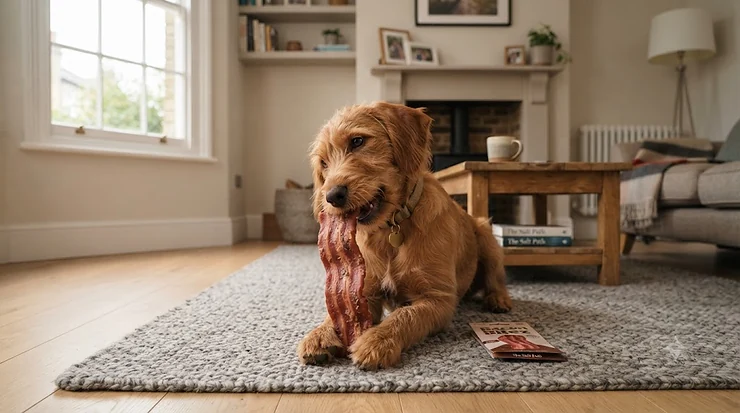
Open any toy box belonging to a dog who has strong opinions, and you will usually find one item chewed to bits and everything else gathering dust in the corner, untouched, slightly resentful. That well-loved item is very often bacon flavoured. There is a reason bacon flavoured dog chew toys dominate the “bought again” lists on pet retailer sites while plain rubber bones sit there looking sad: dogs are led by their noses, and bacon is one of the loudest smells in the room.

So, what is a bacon flavoured dog chew toy? It is a nylon, rubber, or hybrid chew product infused or coated with a savoury, meat-derived scent and flavouring compound, designed to hold a dog’s interest for longer than an unflavoured toy of the same shape and material. That is the whole trick. No magic, just chemistry aimed squarely at a nose that, as Wikipedia’s overview of canine scent detection explains, is built to pick up and hold onto odour molecules far more effectively than ours.
This guide is not a rewritten Amazon listing. We researched seven real, currently sold bacon flavoured dog chew toys — from budget nylon ribs to Made in USA ergonomic bones — and looked hard at what the specs actually mean for your dog’s jaw, your carpet, and your wallet. You will get honest analysis grounded in real product data and aggregated review sentiment (clearly flagged as such, never invented), a proper comparison table, and practical guidance on choosing the right one for a puppy, a power-chewer, or a nervy rescue who needs something to do with their mouth besides your skirting boards. British spelling throughout, and every price is given as a range, because Amazon prices move around more than a Jack Russell on espresso.
Quick Comparison Table
Before the deep dive, here is the shortlist at a glance — useful if you are stood in the queue at the vet’s, phone out, trying to remember which one was for aggressive chewers.
| Product | Best For | Material | Approx. Price Range |
|---|---|---|---|
| Nylabone Power Chew Textured Knuckle Bone – Bacon Flavor | Aggressive chewers, large dogs | Durable nylon | £10–£15 |
| Benebone Wishbone – Real Bacon | Premium pick, ergonomic grip | Nylon (Made in USA) | £12–£18 |
| Nylabone DuraChew Original Bone – Bacon Flavor | Budget-conscious owners, small dogs | Nylon | £5–£8 |
| Nylabone Double Action Bone – Bacon Flavor | Dental cleaning, moderate chewers | Nylon and rubber | £7–£11 |
| Nylabone Puppy Chew Teething Keys – Bacon Flavour | Teething puppies | Softer flexible nylon | £6–£10 |
| TIAKI Chew Toy with Bacon Flavour | Light chewers, first-time buyers | Nylon and TPR | £4–£7 |
| Chew King by Mammoth Bacon Flavor Rubber Balls | Fetch-and-chew combo, active dogs | Natural rubber | £6–£10 |
Reading across that table, a pattern jumps out fast: price correlates loosely with durability testing and brand pedigree rather than with flavour intensity itself, since a £5 nylon rib and a £15 nylon bone can both carry a strong bacon scent. What actually separates the tiers is bite resistance, size range, and how the product is engineered to survive a determined jaw. Budget-conscious owners with a moderate chewer are well served by the cheaper end of this table, while anyone with a Labrador who treats “indestructible” as a personal challenge should look toward the top three rows.
💬 Just one click — help others make better buying decisions too!😊
Top 7 Bacon Flavoured Dog Chew Toys: Expert Analysis
We picked these seven to cover the realistic spread of what a UK dog owner actually needs: a puppy option, a genuine heavy-duty pick, a couple of honest budget buys, and a dental-focused hybrid. Every product below is real and currently available through Amazon and other UK pet retailers, not an invented placeholder.
1. Nylabone Power Chew Textured Knuckle Bone – Bacon Flavor — toughest pick for committed chewers
The Power Chew range is Nylabone’s answer to the dogs who treat every toy as a demolition project, and the knuckle-bone shape is deliberately awkward for a jaw to get full purchase on, which slows destruction down rather than stopping it outright.
Built from a dense nylon compound, the Nylabone Power Chew Textured Knuckle Bone comes in sizes running from small breeds up to the 50lb-plus X-Large, with the bacon flavour infused right through the material rather than just coated on the surface. Textured ridges along the bone are designed to scrape at plaque as the dog gnaws, which is a genuinely useful secondary function rather than pure marketing fluff — assuming the dog actually gnaws rather than swallows chunks whole.
Based on the spec comparison with softer rubber alternatives, this is squarely a toy for adult, confident chewers rather than puppies or dogs with sensitive gums; the density that makes it last is the same density that means a boisterous six-month-old could do their baby teeth no favours on it. Reviewers on Amazon and specialist pet retailers consistently describe the flavour as holding up well over weeks of use, with a smaller but recurring complaint theme around the largest sizes being genuinely too tough for some dogs to get interested in.
Pros:
- ✅ Flavour infused throughout, not just a surface coating
- ✅ Textured ridges give a real dental-scraping function
- ✅ Wide size range covers small to giant breeds
Cons:
- ❌ Too hard for puppies or dogs with dental sensitivity
- ❌ Some largest-size buyers report limited initial interest
Prices generally sit in the £10–£15 range depending on size, which represents solid value for a toy designed to survive months rather than days with a genuine power chewer.

2. Benebone Wishbone – Real Bacon — best premium, ergonomic pick
Benebone built its reputation on one clever idea: shape the chew so a dog’s paw naturally pins it down while they gnaw at an angle, rather than the toy skittering across a hard floor every time they get a good bite in.
The Wishbone – Real Bacon is made from a nylon compound in the USA, flavoured with real bacon rather than an artificial bacon-adjacent scent, and shaped with two curved arms that a dog can hold between their paws while working the raised nubs along the centre. What most buyers overlook about this design is that the ergonomics matter as much as the flavour — a chew that constantly slides away gets abandoned regardless of how good it smells, so the paw-friendly shape does real work in keeping a dog engaged over the toy’s lifespan.
This is a toy for the mid-size to large adult dog with a genuine chewing habit rather than an occasional nibbler; the price sits noticeably above supermarket own-brand chews, and that premium is really paying for the shape engineering and the US manufacturing standard rather than the flavour itself, since flavour intensity is broadly comparable across this whole category. Aggregated review sentiment across retailer sites is strongly positive on durability for medium chewers, with the most common critical theme being that genuinely extreme chewers can still work through it faster than the price tag might suggest.
Pros:
- ✅ Paw-friendly shape stops the toy sliding away mid-chew
- ✅ Made with real bacon flavouring, not synthetic aroma
- ✅ Strong reputation for consistent manufacturing quality
Cons:
- ❌ Premium price relative to similar nylon competitors
- ❌ Extreme power chewers may still wear through it quickly
Expect to pay in the £12–£18 range depending on size, which is fair rather than cheap — this is the pick for owners who want one dependable chew rather than three disposable ones.
3. Nylabone DuraChew Original Bone – Bacon Flavor — best budget classic
If you have never bought a flavoured chew toy before and want to test the theory without committing serious money, the Nylabone DuraChew Original Bone is the sensible starting point — it is essentially the entry-level version of the same nylon-bone concept Nylabone has sold for decades.
At the small size, this bone measures roughly palm-sized, built from a moderate-density nylon that sits below the Power Chew range in hardness, making it more forgiving for younger or gentler chewers. The bacon flavour is infused rather than sprayed on, which on paper means it should hold scent for longer than a cheap coated alternative, though as with any budget nylon chew, the flavour intensity does fade with repeated dishwasher cleaning.
Here is what the spec sheet won’t tell you outright: this bone’s real value is as a “does my dog even like flavoured chews” test purchase before spending more on a premium pick. Reviewers commonly note it lasts well for light-to-moderate chewers but gets destroyed embarrassingly fast by a determined medium or large adult dog, a distinction worth taking seriously before you buy based on price alone.
Pros:
- ✅ Low price point, ideal as a first flavoured-chew trial
- ✅ Long-standing, well-established Nylabone product line
- ✅ Suitable for smaller breeds and gentler chewers
Cons:
- ❌ Not built for aggressive or large-breed chewing
- ❌ Flavour intensity fades faster than premium alternatives
Typical pricing runs from around £5 up to the mid-£8 mark by size, making it one of the cheaper entry points in this whole article.
4. Nylabone Double Action Bone – Bacon Flavor — best dental-focused hybrid
Dual-material chews are having a moment, and the Nylabone Double Action Bone is a decent illustration of why: it pairs a firmer nylon chewing end with a softer rubber-style centre, giving two different textures inside one toy.
The dental nubs distributed across the surface are the headline feature here, designed to reduce plaque and tartar mechanically as the dog gnaws, and the softer centre section is aimed at dogs who find a pure hard-nylon bone a bit much on the gums. In practice, this means the toy suits a genuinely wide range of chewing styles — a dog with a soft mouth can work the centre section, while a firmer chewer gets satisfaction from the ends.
Based on the spec comparison with the pure-nylon options in this list, the trade-off is that the softer sections will inevitably wear faster than a solid nylon bone, so this is not the toy to reach for if raw longevity against a determined power-chewer is your only priority. Review sentiment leans positive specifically on the dental-nub texture, with a recurring theme that dogs seem to spend longer actively working the toy compared with a single-material equivalent — plausibly because the mixed texture keeps things more interesting.
Pros:
- ✅ Dual texture keeps both gentle and firm chewers engaged
- ✅ Dental nubs give a genuine plaque-scraping function
- ✅ Bacon flavour runs through both material sections
Cons:
- ❌ Softer rubber-style sections wear faster than solid nylon
- ❌ Not the longest-lasting option for extreme chewers
Priced around £7–£11 depending on size, this sits comfortably in the mid-range and earns its place through versatility rather than sheer toughness.
5. Nylabone Puppy Chew Teething Keys – Bacon Flavour — best for teething puppies
Puppies chew for a genuinely different reason than adult dogs — it is largely about relieving the discomfort of new teeth pushing through — and giving them something too hard is a real, documented risk to baby teeth.
The Nylabone Puppy Chew Teething Keys are built from a noticeably softer, more flexible nylon blend than the adult Power Chew range, shaped like a bunch of oversized keys with different textures on each “key” to give a teething puppy varied sensory feedback. The bacon flavour does the same attention-grabbing job here as in the adult range, but the entire point of this product is the reduced hardness rather than raw durability — this is not a toy that is meant to survive a twelve-year-old Staffordshire Bull Terrier’s jaws, and comparing it on toughness alone misses what it is actually for.
What most first-time puppy owners overlook is that a too-hard chew during teething can genuinely contribute to dental trauma later on, so the softer engineering here is doing real protective work, not just being marketed as “gentle” for the sake of it. Aggregated feedback on puppy-specific Nylabone products tends to highlight the flexible key shape as easy for small mouths to grip, alongside the expected observation that a determined larger puppy will outgrow it within a few months as adult teeth and jaw strength come in.
Pros:
- ✅ Softer nylon blend protects developing puppy teeth
- ✅ Varied key-shaped textures suit teething discomfort
- ✅ Easy for small mouths to grip and manipulate
Cons:
- ❌ Outgrown quickly by larger or fast-developing puppies
- ❌ Not durable enough for adult-strength chewing
Expect a price range of roughly £6–£10, which is reasonable given how short a window this toy is actually designed to be used within.
6. TIAKI Chew Toy with Bacon Flavour — best budget, lightweight starter pick
European own-brand pet ranges rarely get much attention in UK content, but the TIAKI Chew Toy with Bacon Flavour deserves a mention as a genuinely cheap, widely stocked option for owners who just want something inexpensive to try.
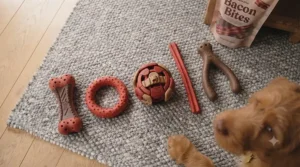
Shaped like a realistic rib and made from a nylon and TPR (thermoplastic rubber) blend, this toy is aimed squarely at moderate rather than aggressive chewers, and the “intense bacon smell and flavour” claimed by the manufacturer lines up with the general category expectation — scent-forward, infused rather than simply coated. The rib shape is a sensible bit of design thinking too, since a flatter, longer profile is naturally easier for a dog to hold between their front paws than a rounded ball shape.
Here is the honest analytical read: at this price point, do not expect Power Chew-level survival against a determined large dog, and treat this as a supplementary or rotation toy rather than the single chew you buy once and never replace. That is not a criticism so much as a category expectation — budget nylon-TPR blends trade some longevity for accessibility, and for many households with a moderate chewer, that trade is entirely sensible.
Pros:
- ✅ Genuinely low price point for a flavoured nylon chew
- ✅ Realistic rib shape is easy for dogs to hold
- ✅ Widely available across UK and EU pet retailers
Cons:
- ❌ Not rated for aggressive or large-breed chewing
- ❌ TPR sections may wear faster than pure nylon designs
At around £4–£7, this is one of the cheapest entries on this list and a sensible low-risk trial purchase.
7. Chew King by Mammoth Bacon Flavor Rubber Balls — best fetch-and-chew combo
Not every bacon flavoured chew needs to be bone-shaped, and the Chew King by Mammoth Bacon Flavor Rubber Balls make the case for a fetch toy that doubles as a genuine chew — useful for dogs who need both physical exercise and something to gnaw on during downtime.
Made from natural rubber rather than nylon, these balls are designed to bounce erratically during fetch (which, incidentally, makes recall training slightly more entertaining for everyone involved), while also standing up to a reasonable amount of chewing when the game is over. The bacon scent is infused into the rubber itself rather than applied as a surface spray, and the hollow centre on some variants allows a small treat to be tucked inside to extend engagement further.
Based on material comparison with the nylon-bone options elsewhere on this list, natural rubber offers a softer, more forgiving chew surface — kinder on ageing teeth or a dog recovering from dental work — but it is not the toy to reach for if you have a dog who systematically destroys tennis balls in under a week. Review sentiment across retailer sites is generally positive on the dual fetch-and-chew functionality specifically, with the recurring theme that owners appreciate not needing two separate toys for two separate activities.
Pros:
- ✅ Doubles as both a fetch toy and a genuine chew
- ✅ Softer natural rubber suits sensitive or ageing teeth
- ✅ Hollow design allows treat-stuffing for extra engagement
Cons:
- ❌ Not built to withstand extreme power-chewing
- ❌ Rubber wears down faster than dense nylon over time
Pricing typically falls between £6 and £10 for a pack, offering solid value for a genuinely dual-purpose product.
Practical Usage Guide: Getting the Most Out of a Bacon Flavoured Chew
Buying the right toy is only half the job — how you introduce and maintain it matters just as much for keeping a dog interested long-term. On first use, resist the urge to hand the toy over and walk away; spend two or three minutes actively encouraging your dog to investigate it, since a new smell in a new shape can sometimes be more confusing than exciting to a nervous or older dog. Rotate flavoured chews rather than leaving every toy out permanently — putting two or three away in a cupboard and swapping them weekly genuinely does refresh a dog’s interest, because novelty itself is part of what drives engagement, not flavour alone.
Cleaning matters more than most owners assume: a nylon or rubber chew that has been dropped in mud, dragged through the garden, or chewed with food-covered paws will pick up bacteria fast, so a rinse under hot water (or a dishwasher-safe cycle where the manufacturer allows it) every week or two is sensible hygiene rather than overcaution. Watch for the classic first-30-days mistake — leaving a chew out unsupervised before you know how your specific dog handles that particular material — since even a well-reviewed toy can behave differently in an unfamiliar mouth. Finally, inspect regularly: a chew that has developed sharp edges, deep gouges, or a section thin enough to flex easily has done its job and should be retired, regardless of how much flavour is theoretically left in it.
Real-World Scenarios: Matching the Toy to Your Dog
The teething puppy household. A four-month-old Cockapoo chewing everything within reach, including the sofa arm, is a classic case for the Nylabone Puppy Chew Teething Keys – Bacon Flavour. Soft enough for developing teeth, flavoured enough to redirect attention away from furniture, and cheap enough that replacing it as the puppy grows isn’t a financial event.
The determined power-chewer. A three-year-old Staffie-cross who has destroyed four “indestructible” toys this year needs the Nylabone Power Chew Textured Knuckle Bone – Bacon Flavor or the Benebone Wishbone – Real Bacon, ideally rotated between the two. Budget for genuine durability here rather than repeatedly replacing cheaper toys — the total cost of ownership actually favours the pricier option.
The senior dog with dental sensitivity. An eleven-year-old Labrador with some tooth wear and a gentler bite is better served by the Chew King by Mammoth Bacon Flavor Rubber Balls or the softer sections of the Nylabone Double Action Bone, both of which offer flavour-driven engagement without the risk that a rock-hard nylon bone poses to an already-compromised mouth.
Problem → Solution: Common Bacon Chew Toy Issues
Several recurring problems come up across owner discussions and retailer review sections, and each has a fairly clear fix. If your dog sniffs the toy once and then completely ignores it, the flavour intensity may simply not be strong enough for that individual dog’s preferences — try a different brand’s bacon formulation before assuming flavoured chews don’t work for your pet generally, since infusion methods vary noticeably between manufacturers. If the toy is destroyed within days rather than weeks, you have almost certainly under-matched hardness to chewing strength; move up a tier toward the Power Chew or Benebone end of this list rather than buying two more of the same budget toy. If the flavour seems to fade quickly, avoid excessive dishwasher cycles, which can strip infused scent faster than a simple hand rinse — reserve full washes for genuine hygiene needs rather than routine cleaning. And if your dog seems to lose interest after the first fortnight despite initial enthusiasm, toy rotation (discussed above) solves this more reliably than buying an entirely new product, since novelty rather than flavour strength is usually the real driver of renewed interest.
How to Choose Bacon Flavoured Dog Chew Toys
- Match hardness to chewing style first, flavour second. A gentle chewer and a demolition specialist need genuinely different materials, and getting this wrong wastes money regardless of how appealing the scent is.
- Check the size guide against your dog’s actual weight, not their age. Undersized chews are a real choking risk, and manufacturer weight bands exist for a reason.
- Consider whether flavour is infused throughout or just coated on the surface. Infused products, like most of the Nylabone range here, tend to hold scent through more washes and more chewing sessions.
- Think about dental function, not just entertainment. Textured or ridged designs like the Double Action Bone do double duty, which arguably makes them better long-term value.
- Factor in your dog’s age and dental condition. Puppies and seniors both need softer materials than a confident adult chewer, for genuinely different reasons.
- Decide whether you want a single premium toy or a rotation of cheaper ones. Both strategies work; the right one depends on your dog’s destruction rate and your own tolerance for replacing toys.
- Read aggregated review themes, not star ratings alone. A 4.3-star average tells you little; recurring comments about specific failure points (torn edges, fast flavour fade, choking-risk sizing) tell you much more.
Common Mistakes When Buying Bacon Flavoured Dog Chew Toys
The single most common mistake is buying based on flavour marketing alone, without checking whether the underlying material actually suits your dog’s chewing strength — a toy can smell brilliant and still be the wrong purchase. A close second is ignoring size guides in favour of “he’ll grow into it,” which with chew toys specifically creates a genuine choking risk rather than just representing wasted money. Owners also frequently underestimate how quickly rubber and softer nylon-TPR blends wear compared with dense nylon, then feel unfairly disappointed when a budget toy doesn’t last as long as a premium one costing three times as much — that gap is not false advertising, it is a genuine material trade-off. Finally, plenty of people buy a single toy and expect permanent engagement from it; as covered in the usage guide above, rotation and novelty do more long-term work than any single flavour formulation ever will.
✨ Don’t Miss These Exclusive Deals!
🔍 Take your dog’s chew-time routine to the next level with these carefully researched picks. Click through to check current pricing and availability on Amazon before you buy. A well-matched chew toy means fewer destroyed toys, calmer evenings, and a genuinely happier dog.
Bacon Flavoured Dog Chew Toys vs Plain, Unflavoured Chew Toys
The core question worth asking before you spend anything extra on a flavoured product: does the bacon coating actually change outcomes, or is it just a nicer smell for the owner’s benefit? Based on the available evidence around canine scent-driven behaviour, the honest answer is that flavour genuinely does drive initial engagement and can meaningfully extend how long a dog interacts with a toy compared with an identical unflavoured version — but it does not fix a fundamentally poor material match.
| Factor | Bacon Flavoured Chews | Plain/Unflavoured Chews |
|---|---|---|
| Initial engagement | Typically higher — scent draws attention fast | Slower; relies on shape or texture alone |
| Long-term interest | Better with rotation, still fades over time | Fades faster without novelty or texture variety |
| Price | Usually £1–£3 more than equivalent plain toy | Marginally cheaper on average |
| Best For | Dogs who ignore plain toys, food-motivated breeds | Dogs with dietary flavour sensitivities |
Looking at that comparison, the honest takeaway is that flavoured chews earn their modest price premium mainly in the first few weeks of ownership, when novelty and scent are doing the heaviest lifting. For a food-motivated dog who has previously ignored every plain toy you’ve bought, the flavoured option is genuinely worth the extra pound or two; for a dog with known food sensitivities or allergies, checking the specific flavouring compound with your vet first is the more sensible route than assuming “bacon flavour” is automatically safe.
Dog Taste Preferences and Scent-Driven Engagement: The Science Bit
It’s worth understanding why bacon works as well as it does, because the answer isn’t really about taste at all — it’s almost entirely about smell. A dog’s sense of taste is comparatively modest, but their nose relies partly on a specialised internal structure that helps process scent for purposes well beyond basic detection, which is a large part of why scent-forward products outperform flavour-only ones. Dogs process food-related information through smell first and taste second, meaning a strongly scented toy essentially wins the argument before the dog’s mouth ever gets involved.
This has real practical implications for how you should think about “scent-driven engagement” as a shopping criterion rather than a marketing buzzword. research summarised by The Conversation on how dogs process scent has highlighted a genuine emotional component to canine scent discrimination, which helps explain why a toy that smells consistently appealing over weeks tends to get picked up again and again, almost like a comfort object, rather than being investigated once and discarded. It also explains why infused-throughout products (most of the Nylabone range covered here) tend to outperform surface-coated ones over time — as the outer layer wears down through chewing, an infused product keeps releasing scent from the material underneath, while a coated one simply runs out.
None of this means flavour is the only variable that matters. Shape, texture, hardness, and size all still govern whether a toy is safe and appropriate — but if you’re choosing between two otherwise-similar chew toys and one is bacon flavoured, the behavioural science genuinely supports picking the flavoured option for a food-motivated dog.
Bacon Flavour Dog Toys Review: What Reviewers Actually Say
Rather than inventing customer quotes, it’s more useful — and considerably more honest — to summarise the recurring themes that appear across aggregated review data for bacon scented chew toys as a category, since individual product reviews shift constantly and specific star counts go stale within weeks of publication.
Across the savoury bacon dog chews category broadly, the most consistently repeated positive theme is initial engagement: owners frequently report that a previously ignored toy box suddenly gets used once a bacon-flavoured option is introduced. The most consistently repeated negative theme, particularly for budget flavour-infused rubber toys, is that scent intensity noticeably fades after several weeks of regular chewing and washing, which lines up with what you’d expect given how infusion and coating methods work. A smaller but recurring complaint across several brands relates to sizing — buyers sometimes underestimate how quickly a “medium” chew gets reduced to a chokeable size by a persistent chewer, which is as much a supervision issue as a product one.
If you cannot verify a specific product’s individual review history before buying — and Amazon listings do shift and merge over time — the safer approach is to buy from an established brand with a long sales history (Nylabone and Benebone both qualify), since brand-level consistency tends to be a more reliable signal than any single listing’s current star rating.
Safety, Regulations & Compliance Guide
Pet toys sold in the UK are not covered by the same rules as children’s toys, but that doesn’t mean they’re unregulated — general product safety law still applies, meaning any chew toy sold here must be reasonably safe for its intended use, free from banned substances like certain phthalates, and accurately labelled. On the animal welfare side, the broader framework governing how pets must be treated and cared for in the UK sits under the Animal Welfare Act 2006, which established powers for codes of practice promoting animal welfare — chew toys sit outside its direct scope, but the spirit of the legislation (ensuring an animal’s needs, including the need to exhibit normal behaviour patterns like chewing, are met) is a genuinely useful lens for thinking about why appropriate chew provision matters, not just as entertainment but as welfare.
On the dental side specifically, UK veterinary guidance is consistent: chewing can genuinely support oral health, but it is a supplement to brushing, not a replacement for it. PDSA’s guidance on dental disease in dogs confirms that dental toys and chews that help clean teeth and gums may help prevent dental disease, but supervision is always advised, and any chews should be included within a dog’s daily food allowance to avoid unwanted weight gain. That last point is easy to overlook — a bacon flavoured chew is still calorific if any part of it is being ingested rather than purely gnawed, so factor it into daily feeding totals rather than treating it as a free extra.
Practical safety habits worth adopting regardless of which product you buy: always supervise chewing sessions, particularly for the first few uses of any new toy; check regularly for sharp edges, deep gouges, or pieces small enough to swallow; and retire any toy showing significant wear rather than waiting for it to fail completely.
Long-Term Cost & Maintenance
It’s tempting to compare bacon flavoured chew toys purely on sticker price, but total cost of ownership tells a more useful story. A £5 budget nylon chew that gets destroyed within three weeks by a determined chewer, and needs replacing monthly, costs roughly £60 a year. A £14 Power Chew-tier toy that survives four to six months under the same dog costs somewhere between £28 and £42 annually — genuinely cheaper over a twelve-month period, despite the higher upfront price. This is the core logic behind choosing durability tier based on your specific dog’s destruction rate rather than defaulting to the cheapest option every time.
Maintenance costs are minimal but worth mentioning: occasional hot-water rinses or dishwasher-safe cycles (where the manufacturer permits it) cost nothing beyond a few minutes, and extend a toy’s usable life without materially affecting flavour retention if done sensibly rather than excessively. The real ongoing cost is replacement frequency, which is precisely why matching hardness to chewing style at the point of purchase — rather than after the third destroyed toy — is the single biggest lever for controlling annual spend on this category.
Frequently Asked Questions
❓ Are bacon flavoured dog chew toys safe for all dogs?
❓ Do bacon scented chew toys actually work better than plain ones?
❓ How long does bacon flavour last on a dog chew toy?
❓ Can bacon flavoured chew toys cause an upset stomach?
❓ What is the best bacon flavoured dog chew toy for aggressive chewers?
Conclusion
There is no single “best” bacon flavoured dog chew toy, because the honest answer depends entirely on the dog in front of you — their age, their jaw strength, and how quickly they’ve historically demolished everything you’ve handed them. What the research does support clearly is that flavour-driven engagement is real, grounded in how powerfully a dog’s world is shaped by scent rather than taste alone, and that infused-throughout products tend to outlast surface-coated ones as chewing wears the material down.
If you take one thing away from this guide, let it be this: buy for your dog’s actual chewing style first, and treat bacon flavour as the tie-breaker between two otherwise well-matched options, not the primary deciding factor. Get that right, and you will likely spend less over a year than repeatedly replacing mismatched budget toys, while your dog gets a genuinely engaging, safer chewing experience. Rotate a couple of the picks above, keep an eye on wear, and you should see considerably fewer sad, ignored toys gathering dust in the corner.
Recommended for You
- Freezable Teether vs Rubber Teething Ring: 7 Picks for 2026
- Teething Toys for Small Breed Puppies: 7 Best 2026 Picks
- Soothing Teethers for Puppies: 7 Best Picks to Try in 2026
Disclaimer: This article contains affiliate links. As an Amazon Associate, I earn from qualifying purchases. If you purchase products through these links, we may earn a small commission at no additional cost to you.
✨ Found this helpful? Share it with your friends! 💬🤗
