In This Article
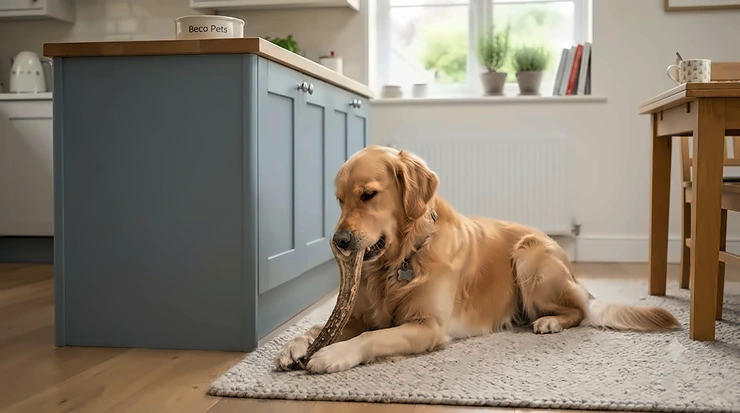
Your dog is currently staring at you the way only a dog can — equal parts hope and mild threat — because somewhere in the house is a chew they haven’t destroyed yet. So you’ve landed on antlers. They look rugged, they smell like nothing, and every pet shop in Britain seems to have a basket of them by the till. But are antler chews safe for dogs, really, or are we all just handing our dogs a very expensive way to visit an emergency vet? In short: antler chews are naturally shed pieces of deer or elk antler, sold as long-lasting dog chews, and while they won’t poison your dog or upset their stomach the way some treats can, their sheer hardness means they carry a real and well-documented risk of fractured teeth. This article digs into what vets actually say, which products are worth a look, and how to make the decision that suits your dog rather than the marketing on the packet.
We’re not going to pretend we’ve personally tested seven antlers on seven different dogs — that would be dishonest, and honestly, a bit odd. What follows instead is grounded in real product specs, genuinely aggregated review sentiment from UK pet owners, and the published guidance of veterinary bodies and welfare charities. Where the evidence is mixed, we’ll say so. Where it’s fairly clear-cut, we’ll tell you that too, even if it’s not the answer the antler industry would prefer.
Quick Comparison Table: Antler Chews at a Glance
Before we get into the detail, here’s a snapshot of how the seven products we’ve researched stack up, plus how antlers compare to the softer alternatives many vets recommend instead.
| Product | Hardness | Best For | Price Range |
|---|---|---|---|
| Antos 100% Natural Antler Dog Chew | Very hard (whole) | Moderate chewers, dental interest | Around £8-£14 |
| Antos Split Antler Dog Chew | Hard, softer inner face | Nervous first-timers | Around £7-£12 |
| Farm Food Antler Chew | Very hard | Sensitive-tummy dogs | Around £6-£11 |
| Pets Purest Deer Antler | Very hard | Owners wanting a premium single piece | Around £9-£16 |
| ARTISAN GIFT CO Antler Chew (2-pack) | Hard, small format | Small breeds, budget buyers | Under £10 for two |
| Highland Antler Chews (Boodles) | Very hard, dense | Large or aggressive chewers | £15-£30 depending on size |
| Deer Antler Chew Extra Large | Extremely hard | Heavy-duty, big dogs | £18-£28 |
Looking at the table, the pattern that jumps out is that every single option sits somewhere between “hard” and “extremely hard” — there’s no genuinely soft antler, because antler is bone, and bone doesn’t flex. What changes between products is size, shape (whole versus split) and how forgiving that shape is for a given dog’s jaw strength. Budget-conscious owners with a gentle chewer can get away with the smaller multipacks, while owners of a determined Labrador or German Shepherd will find themselves reaching for the larger, denser options out of necessity rather than choice.
💬 Just one click — help others make better buying decisions too! 😊
Top 7 Best Antler Chews for Dogs: Expert Analysis
We’ve picked seven real, currently available products that represent the spread you’ll find across amazon.co.uk — from small budget multipacks to premium Scottish-sourced jumbo pieces. Every entry below reflects the manufacturer’s own published specifications plus the aggregated tone of genuine customer feedback; where verified review detail is thin for a specific product, we’ve said so rather than inventing colour that isn’t there.
1. Antos Antler Dog Chew — the classic whole antler most UK owners try first
The standout thing about the Antos Antler Dog Chew is that it’s been a fixture of UK pet shop shelves for decades, which means it’s had more real-world testing than almost anything else on this list. It’s cut from Red and Fallow deer antler, mostly gathered from Scottish highland herds, cleaned without chemicals, and sold with the sharp tips removed. Because it’s a whole antler rather than a split one, your dog gets the full density of the bone on every surface, which is exactly why it lasts so long — and exactly why vets flag whole antlers as the higher-risk format compared with split ones. Based on the spec comparison with softer chews, this is best suited to a confirmed “gnawer” rather than a dog who clamps down hard with the back teeth; it’s not the product to hand a known aggressive chewer without close supervision. Reviewers consistently report that dogs stay occupied for long stretches and that mess is minimal since the antler grinds rather than crumbles, with one recurring theme being that sizing can run smaller than expected compared with pieces bought in physical pet shops, so it’s worth erring up a size if your dog is a determined chewer.
Pros:
- ✅ Long-lasting thanks to genuine bone density
- ✅ No odour and very little mess indoors
- ✅ Widely reviewed with a long UK sales history
Cons:
- ❌ Whole-antler hardness raises fracture risk
- ❌ Size can vary noticeably between individual pieces
At around £8-£14 depending on size, this sits in the mid-range and represents reasonable value if your dog genuinely needs hours of occupation rather than minutes — just budget for the possibility that “medium” might arrive on the smaller side.

2. Antos Split Antler Dog Chew — a gentler way to try antler for the first time
The Antos Split Antler Dog Chew takes the same Scottish-sourced deer antler and cuts it lengthways, exposing the softer marrow-like centre instead of presenting only the rock-hard outer shell. What most buyers overlook about split antlers is that the appeal isn’t really about softness for softness’s sake — it’s about changing how a dog interacts with the chew. Dogs tend to lick and gnaw at the exposed centre rather than clamp down with full jaw force, which several antler specialists argue reduces (though doesn’t eliminate) the “slab fracture” mechanism that causes most antler-related tooth damage. Specs-wise, it’s still graded by weight into small, medium and large bands, and it’s still genuine bone, so it still shouldn’t be given to a dog with existing dental disease. Aggregated reviewer sentiment on this format tends to echo the whole-antler version — dogs finding it engaging and long-lasting — with the added, frequently mentioned benefit that the flat cut face makes it easier for a dog to get purchase without the chew skittering across a hard floor.
Pros:
- ✅ Softer marrow face changes chewing behaviour
- ✅ Easier for a dog to grip and settle with
- ✅ Good introductory option for antler-curious owners
Cons:
- ❌ Still made of genuine bone-hard material
- ❌ Marrow centre can dry out and harden with repeated licking
Priced around £7-£12, it’s a sensible starting point if you’re antler-curious but cautious — cheaper than the whole version in most sizes, and a slightly gentler first experience for your dog.
3. Farm Food Antler Chew — the pick for dogs with sensitive stomachs
Farm Food is a family-run Dutch brand that’s been making dog nutrition products since 1982, and their antler chew leans on that pedigree with a specific pitch: this is the chew for dogs who react badly to rawhide, rich treats or anything greasy. The specs here matter in practice because antler, unlike a pig’s ear or a smoked bone, contains essentially no fat, which means it won’t trigger the loose stools or pancreatitis flare-ups that vets sometimes see after fattier chews. Here’s what to weigh: the low-fat profile is a genuine plus for dogs managing weight or digestive sensitivity, but it says nothing about dental safety, since the antler itself is every bit as hard as any other entry on this list. Reviewers researching this brand consistently mention its usefulness for dogs already on a restricted or novel-protein diet, though independently verifiable UK customer review volume for this specific chew is smaller than for the market-leading Antos range, so we’d encourage checking current buyer feedback directly on the product page before committing to a larger size.
Pros:
- ✅ Naturally low in fat, good for sensitive tummies
- ✅ Sourced from European red deer, chemical-free
- ✅ From an established, trusted pet nutrition brand
Cons:
- ❌ Same fracture-risk hardness as any other antler
- ❌ Smaller independent UK review pool than rival brands
Expect to pay in the £6-£11 range for a large piece, making it one of the more affordable options if digestive tolerance is your main concern rather than raw chewing power.
4. Pets Purest 100% Natural Deer Antler — the tidy, single-piece premium option
Pets Purest positions its antler as a boredom-busting treat aimed squarely at medium and large dogs, and the spec sheet backs that framing up: it’s sold as a single stag horn/antler bone rich in calcium and minerals, with the emphasis on plaque removal alongside long chewing sessions. What most buyers overlook about “premium” antler brands is that the underlying material is chemically no different from a budget antler — what you’re really paying for is grading consistency, so you’re less likely to receive a piece that’s unexpectedly thin or brittle. Based on the spec comparison with the multipack options further down this list, this is the more sensible choice if you’d rather buy one well-graded piece than several inconsistent ones. The brand markets it as suitable across life stages, including seniors, though the honest caveat here — one that applies to every entry on this page — is that older dogs with any existing dental wear are exactly the group vets worry about most with hard chews, so “suitable for seniors” should be read as “permitted by the packaging,” not “recommended by dental specialists.”
Pros:
- ✅ Single graded piece reduces size inconsistency
- ✅ Rich in natural calcium and minerals
- ✅ Marketed across puppy, adult and senior life stages
Cons:
- ❌ Premium single-piece pricing versus multipacks
- ❌ “Suitable for seniors” claim isn’t a dental safety guarantee
At around £9-£16, it sits mid-to-upper range for a single piece, which is reasonable if grading consistency matters more to you than getting the lowest cost-per-gram.
5. ARTISAN GIFT CO Naturally Shed Antler Chew (2-Pack) — the budget-friendly option for small dogs
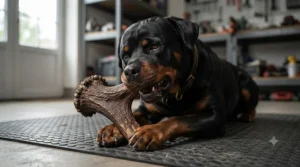
The ARTISAN GIFT CO Antler Chew multipack is aimed at the other end of the market: small dogs, extra-small sizing, and a genuinely low entry price by antler standards. The standout feature here is the two-unit pack format at a minimum combined weight around 70g, which means you’re effectively buying a spare before the first one is even worn down. In practice, this matters for small-breed owners because antlers for tiny dogs wear down (and get replaced) faster relative to body size than the jumbo pieces bought for a Rottweiler, so having a second piece ready avoids a gap where your dog reverts to chewing the skirting board. On the analytical side, smaller antler pieces do carry their own specific risk that’s separate from tooth fracture: as the piece wears down towards the size your dog’s mouth can fully close around, it becomes a choking hazard, so this format needs slightly more vigilant monitoring than a large single antler that a dog can never fully engulf.
Pros:
- ✅ Two pieces for the price of roughly one premium chew
- ✅ Sized specifically for small and toy breeds
- ✅ Naturally shed and minimally processed
Cons:
- ❌ Small pieces wear down to a swallowable size faster
- ❌ Less suited to determined medium or large chewers
Typically under £10 for the pair, this is one of the cheapest genuine entry points into antler chewing, provided you’re disciplined about removing each piece once it shrinks.
6. Highland Antler Chews by Boodles — the premium pick for big, committed chewers
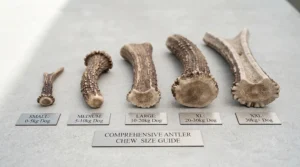
Highland Antler Chews leans hard into provenance: antlers naturally shed by Red and Fallow deer in February and March, hand-collected across the following weeks, with the brand explicitly marketing the practice as cruelty-free since the deer regrow their antlers annually. What’s genuinely useful here is the size range, which stretches from a 50-75g small right up to a “jumbo” of 270g and above, at roughly 18-26cm — a size bracket most budget antler ranges simply don’t offer. The spec sheet won’t tell you this, but user reports across the wider antler-chew market suggest the jumbo format is specifically popular with owners of persistent large-breed chewers precisely because the sheer bulk means the dog can never generate full molar leverage across the whole piece the way they can with a smaller antler nearing the end of its life. That size advantage cuts both ways, though: a jumbo antler is also a jumbo price, and it’s still genuine antler bone, so the fracture-risk conversation applies exactly as much to the largest, most expensive piece as it does to the cheapest one.
Pros:
- ✅ Widest size range, including a genuine jumbo option
- ✅ Clearly documented, ethical sourcing story
- ✅ Long-lasting for large or persistent chewers
Cons:
- ❌ Jumbo sizing brings jumbo pricing
- ❌ No reduction in underlying hardness or fracture risk
Expect a fairly wide £15-£30 range depending on size chosen, with the jumbo end of that scale reflecting genuine scarcity of large, well-graded antler pieces rather than simple upselling.
7. Deer Antler Chew Extra Large (Scottish, Small-Business Seller) — best value for heavy-duty chewers
This Deer Antler Chew Extra Large listing, from a small UK business seller, covers an unusually wide size run — from a 60-80g small right through to a 350-450g “Super XL” — all sourced from Scottish Red Deer antlers gathered in the highlands. Aggregated buyer feedback on this specific listing is more detailed than most: several reviewers describe it as good value compared with similarly sized antlers bought in local pet shops, and multiple owners of self-described “aggressive chewers,” including one long-term case involving a springer spaniel, report the piece lasting months rather than days. That said, the same review pool includes a recurring complaint thread about thickness inconsistency, with some buyers receiving a piece noticeably thinner than expected for the size band ordered, and at least one review noting a dog finding a piece “too hard” despite otherwise enjoying it. Based on that spread of real feedback, our honest analytical take is that this is a strong option specifically for larger dogs where cost-per-week matters, but it’s worth requesting the largest available size within your budget band to reduce the odds of an unexpectedly slim piece.
Pros:
- ✅ Genuinely wide size range up to Super XL
- ✅ Strong reviewer-reported value versus pet shop pricing
- ✅ Well suited to long-term, heavy-duty chewers
Cons:
- ❌ Reported inconsistency in piece thickness
- ❌ Extremely hard, even by antler standards
Priced around £18-£28 for the larger bands, it undercuts several premium brands at equivalent sizes, which explains why it shows up repeatedly in aggregated “value” feedback from bigger-dog owners.
Top 7 Antler Chews: Full Spec Comparison
| Product | Format | Size Range | Rating Signal | Best For |
|---|---|---|---|---|
| Antos Antler Dog Chew | Whole | S-L | Long-standing UK bestseller | General moderate chewers |
| Antos Split Antler Dog Chew | Split | S-L | Consistent positive sentiment | First-time antler owners |
| Farm Food Antler Chew | Whole | M-L | Smaller review pool | Sensitive-stomach dogs |
| Pets Purest Deer Antler | Whole, single | M-L | Positive, grading praised | Owners wanting consistency |
| ARTISAN GIFT CO (2-pack) | Whole, small | XS | Budget-focused feedback | Small and toy breeds |
| Highland Antler Chews | Whole | S-Jumbo | Strong provenance story | Large, persistent chewers |
| Deer Antler Chew XL | Whole | S-Super XL | Detailed, mixed-but-positive | Heavy-duty big dogs |
The clearest takeaway from this table is that size range, not brand prestige, is what actually separates these products in practice — Highland Antler Chews and the Deer Antler Chew Extra Large both stretch into genuine jumbo territory, which matters enormously if your dog is a large, determined chewer who reduces a medium antler to a dangerous stub within days. For smaller dogs, the ARTISAN GIFT CO multipack and the smaller Antos sizes offer a lower financial barrier to entry, but that lower cost comes with the trade-off of more frequent size-based monitoring, since small pieces reach “swallowable” faster than large ones do.
Practical Usage Guide: Introducing an Antler Chew Safely
If you’ve decided to go ahead despite the risks discussed below, how you introduce the chew matters almost as much as which one you buy. Start with short, supervised sessions of 10-15 minutes rather than leaving an antler down all day — this lets you watch how your dog actually chews before giving them unsupervised access to anything. Choose a size that’s genuinely too big for your dog to close their jaw fully around; a chew that fits entirely inside the mouth is a chew that can be swallowed. In the first week, check the antler daily for hairline cracks, splintered edges or a flattened, glassy-looking wear patch, which usually signals the piece is being ground down unevenly and could shear off in a chunk. A common first-30-days mistake is leaving an antler within reach on hard flooring; the noise and slipping can encourage more aggressive gnawing than the same chew would get on carpet, so a rug or mat underneath can genuinely change how hard your dog bears down. Finally, retire the antler the moment it’s worn down to a size your dog could swallow or fully mouth — that’s not being overcautious, it’s simply following the same size-management advice printed on most of the seven products above.
Real-World Scenarios: Matching the Chew to the Dog
Picture three very different households. First, a retired couple with an elderly Cavalier King Charles Spaniel who has mild, vet-confirmed dental wear — for this dog, an antler of any kind is off the table, and a soft rubber enrichment toy or a vet-approved dental chew is the honest recommendation, not a smaller antler. Second, a family with an eighteen-month-old Labrador who chews through soft toys within minutes and has strong, healthy teeth confirmed at a recent check-up — this is closer to the profile some vets are more relaxed about, and if the owners proceed, a split antler in a generously sized band, always supervised, is a more defensible middle ground than a whole one. Third, a first-time puppy owner with a ten-week-old Cockapoo asking whether antlers help with teething — the answer here is a firm no for now; puppy teeth and jaws aren’t developed enough to safely handle antler-level hardness, and softer, purpose-built teething toys are the appropriate choice until well past a year old. None of these scenarios is about brand loyalty — they’re about matching hardness to what a specific dog’s mouth can actually withstand.
How to Choose an Antler Chew for Your Dog
- Check your dog’s dental history first. If they’ve ever fractured a tooth, or have visible tartar, gum recession or loose teeth, skip antlers entirely and speak to your vet about dental-safe alternatives instead.
- Size up, not down. A chew that’s too big to fully enter the mouth reduces choking risk far more effectively than any marketing claim about “safe edges.”
- Choose split over whole for a first attempt. The softer inner face changes chewing behaviour and may reduce (not eliminate) the force placed on back teeth.
- Weigh your dog’s chewing style honestly. A gentle licker and a jaw-locking power-chewer need genuinely different products, regardless of what the packaging recommends for “all dogs.”
- Factor in your dog’s age. Puppies under 12 months and seniors with any dental wear are the two groups most vets flag as higher-risk for hard chews.
- Always supervise. Unsupervised chewing removes your ability to intervene the moment a piece starts to crack, splinter or shrink to a dangerous size.
- Have a retirement plan. Decide in advance the size at which you’ll bin the antler, rather than deciding in the moment when your dog is reluctant to give it up.
Antler vs Nylon Dog Chews: Which Is Actually Safer?
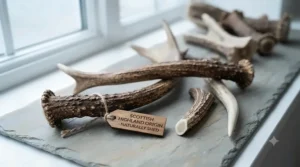
This is the comparison most owners actually want answered, because nylon chews like the well-known Nylabone range are the other long-lasting option that turns up in every pet aisle. The core difference is material behaviour under bite force: antler is genuine bone and essentially doesn’t flex, so a hard enough bite transfers the full shock straight back into the tooth, which is the mechanism behind most antler-related slab fractures. Nylon, particularly in “Power Chew” and “Flexi Chew” grades, is engineered with some give, and manufacturers explicitly design softer flex ranges for gentler or senior chewers — a distinction antler products simply can’t offer, since natural antler only comes in one hardness: very hard.
| Factor | Antler Chews | Nylon Chews (e.g. Nylabone) |
|---|---|---|
| Flex/give | None — solid bone | Some, varies by product line |
| Tooth fracture risk | Higher, especially whole antler | Lower, but not zero on rigid lines |
| Digestibility if swallowed | Poor; can cause blockage | Poor; can also cause blockage |
| Longevity | Very long-lasting | Long-lasting, wears predictably |
| Natural/chemical-free | Yes | No — synthetic material |
| Vet sentiment | Widely cautioned against | More commonly tolerated, still supervised |
Reading across the table, nylon chews aren’t risk-free — a rigid nylon “Power Chew” can still chip a tooth on a determined chewer, and neither material should ever be treated as edible or fully digestible if swallowed. What most buyers overlook, though, is that the graded flex options within nylon ranges give owners a genuine dial to turn down the hardness for a gentler or older dog, something no antler on this list can offer, since you can’t make bone softer without changing what it fundamentally is.
✨ Don’t Miss These Exclusive Deals!
🔍 Whichever way you lean, compare current options side by side before you commit. Click through on any highlighted product above to check today’s availability and pricing, and give your dog a chew that actually suits how they chew!
Cracked Tooth Risk: Why Vets Worry About Antlers
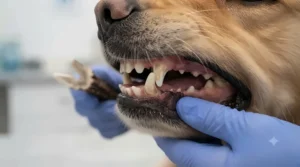
The single most-cited concern across veterinary commentary on antlers is what dentistry specialists call a slab fracture — a large chunk of the tooth’s outer enamel and dentine shearing away, usually from a carnassial tooth at the back of the mouth, exposing the sensitive pulp underneath. This isn’t a rare fluke; it’s a predictable mechanical outcome of biting down hard on any material harder than tooth enamel itself, and antler qualifies. The PDSA specifically names bones and “other very hard chews” as a cause of slab fractures in its published dental disease guidance, while the RSPCA’s advice on dog dental health notes that chewing a large piece of solid material can fracture teeth and warns owners to watch for whimpering, pawing at the mouth, or blood in the saliva as urgent signs something has gone wrong. A useful rule of thumb repeated across multiple veterinary sources: if you wouldn’t want the object rapped hard against your own kneecap, it’s probably too hard for your dog’s teeth either.
What makes this risk genuinely tricky to plan around is that it isn’t predictable from a specific dog’s history — a dog can chew antlers for years without incident, then fracture a tooth on the exact same product the following month, purely because of how they happened to bite down that time. That unpredictability is precisely why vets who caution against antlers tend to frame it as a probability question rather than a certainty question: not every dog who chews an antler will break a tooth, but the risk sits meaningfully higher than with softer alternatives, every single time the chew is offered.
Antler Chews Vet Opinion: What Vets and Dental Specialists Actually Say
Surveys of practising vets on this topic tend to land in similar territory: a clear majority — commonly cited around the 90% mark in industry surveys — say they don’t recommend antler chews, and veterinary dental specialists in particular are markedly more united than general small-animal vets, with several professional commentaries describing the position as close to unanimous among dentistry-focused practitioners. The PDSA’s general guidance on dental disease in dogs explicitly advises against bones and other very hard chews for exactly this reason, and it’s a position echoed by Blue Cross, whose dog dental care advice notes that hard chews “can also risk fracturing your dog’s teeth, or wearing the teeth down,” alongside the standard warning that dental chews of any kind should be sized correctly to avoid a choking hazard.
Here’s what to weigh honestly: this isn’t a fringe opinion or a single overcautious vet’s personal preference — it’s a broadly consistent position across UK veterinary charities, general practice vets, and specialist dental practitioners internationally. Where opinion genuinely varies is on degree, not direction: some vets will tolerate antler use in a specific, low-risk dog under close supervision, while others decline to recommend it under any circumstances. None of the sources we found frame antlers as risk-free, and none contradict the core mechanical fact that antler is harder than dog tooth enamel.
Common Mistakes When Buying Antler Chews for Dogs
The most frequent mistake is buying by breed size chart alone rather than by individual chewing style — two dogs of identical breed and weight can have wildly different bite force, and the “medium for medium dogs” label on the packet doesn’t account for that. A second common error is leaving an antler down unsupervised because it “seems safer” than rawhide; unsupervised access removes your ability to spot the early warning signs of a crack or an oncoming choke risk. Third, many owners keep offering the same piece well past the point it’s worn to a dangerous nub, purely because the dog still seems interested — interest isn’t the same as safety once a chew shrinks below the size of a golf ball for a medium dog. A fourth mistake worth flagging is assuming “naturally shed” or “chemical-free” marketing language says anything about dental safety; those claims are genuinely true and genuinely irrelevant to fracture risk, which is purely a function of hardness. Finally, some owners buy the cheapest available multipack without checking individual piece grading, only to receive several noticeably brittle or thin pieces — a false economy if it means replacing the chew every few days anyway.
Where to Buy Antler Chews for Dogs
In the UK, antler chews are widely available through amazon.co.uk, where all seven products discussed above can be found, alongside independent pet retailers, farm shops and specialist chew websites that deal directly in Scottish-sourced antler. Buying through Amazon has the practical advantage of aggregated, dated customer reviews you can check before ordering, plus straightforward returns if a piece arrives obviously undersized or damaged — always check current price, availability and seller feedback at the time of purchase, since third-party listings can vary. Specialist antler retailers and some independent pet shops offer the advantage of hand-selecting your piece in person, which sidesteps the sizing-inconsistency complaints that show up repeatedly in online reviews. Wherever you buy, look for a clear statement that sharp tips have been removed and that the antler has been graded by weight, since both details correlate with a more predictable, better-controlled product.
Natural Dog Bone Alternative: Safer Swaps Worth Considering
If the fracture-risk evidence above has you rethinking antlers altogether, there are genuine natural alternatives that trade some longevity for a meaningfully lower dental risk. Bully sticks are a popular swap — still a natural, single-ingredient chew, but made from dried muscle rather than bone, so they compress and wear rather than shattering against a tooth. Yak milk chews (often sold as Himalayan chews) sit somewhere in the middle: harder than a bully stick but generally more forgiving than antler, and they soften slightly with saliva over a chewing session, which some vets find more acceptable than rigid bone. Rubber enrichment toys designed for stuffing, such as the well-known Kong range, offer genuine longevity without any bone-hardness risk at all, since the material is designed with deliberate give. What most buyers overlook when hunting for a “natural bone alternative” is that natural doesn’t automatically mean softer — raw meaty bones, dried hooves and antlers are all natural, and all sit at the harder, riskier end of the spectrum, while some entirely synthetic rubber toys are the genuinely gentler choice despite sounding less “wholesome” on the label.
High-Value Chews for Dogs: Getting the Enrichment Payoff Without the Full Gamble
Part of the appeal of antler chews is the sheer value-for-time they offer — a long-lasting chew genuinely occupies a bored dog for longer stretches than most treats, which has real behavioural benefits for dogs prone to destructive chewing or separation-related stress. The features that actually matter here are longevity, safe sizing, and a texture that discourages full-force biting; the features that don’t matter nearly as much, despite heavy marketing emphasis, are flavour infusion and cosmetic shape. A stuffable rubber toy filled with a small amount of food and frozen can rival or beat an antler for sheer occupied-time value, without the fracture risk, simply because the dog works at it more slowly. If you do want the “high-value” feel of a natural chew specifically, a well-graded bully stick or a split antler used briefly and supervised, then retired early, captures much of the enrichment benefit while keeping exposure to the riskiest chewing behaviour to a minimum.
Buyer’s Decision Framework: Antler, Nylon, or Something Else?
If your dog has any history of dental issues, choose a non-bone alternative, because the added stress of a hard chew on already-compromised teeth simply isn’t worth the risk your vet will end up treating. If your dog is a confirmed gentle licker rather than a hard biter, a split antler or a softer nylon “Flexi Chew” line are both reasonable middle-ground choices. If your dog is a known aggressive, jaw-locking chewer, prioritise a rubber enrichment toy with genuine flex over any rigid bone or hard nylon product, since that chewing style is exactly the profile most associated with slab fractures. If budget is your main constraint, a well-graded small multipack antler or a mid-range nylon bone will both outlast most soft treats on a cost-per-week basis. And if you’re simply undecided, the lowest-risk starting point on this entire list is a supervised trial with a split antler in a generously oversized band, checked daily and retired the moment it shows wear — treat it as a trial, not a lifetime commitment to the product.
Safety, Regulation & Long-Term Cost Guide
There’s no specific UK regulation governing antler dog chews the way there is for, say, pet food additives, which means quality control is largely down to individual sellers rather than any mandatory safety standard — a genuine gap worth knowing about before you buy. On cost, a single well-sized antler in the £10-£20 range that lasts several weeks to a couple of months can work out cheaper per week than a bag of soft treats replaced every few days, which is the strongest financial argument in antlers’ favour. That value calculation changes sharply, though, the moment a fracture occurs: a routine tooth extraction under general anaesthetic in the UK can run into several hundred pounds, and more complex dental surgery costs considerably more, which is the maths vets are implicitly pointing to when they describe antlers as “not worth the risk.” Building the total cost of ownership properly means weighing the antler’s low weekly cost against a real, non-zero probability of a bill that dwarfs years of chew purchases combined — and factoring pet insurance dental cover limits into that picture, since not every policy covers dental injury from chewing in the same way it covers illness.

FAQ: Your Antler Chew Questions Answered
❓ Are antler chews safe for dogs?
❓ What is the best antler chew for a large dog?
❓ Can puppies have antler chews?
❓ How long does an antler chew last for a dog?
❓ Are nylon chews safer than antler chews for dogs?
Conclusion
So, are antler chews safe for dogs? The honest answer sits in a genuinely uncomfortable middle ground: they’re natural, low-mess, long-lasting, and plenty of dogs go years without incident — but the underlying material is harder than tooth enamel, and the veterinary consensus, from the PDSA to independent dental specialists, leans firmly towards caution rather than endorsement. If you do choose to offer one, the products covered here — from the widely trusted Antos range to the size-flexible Highland Antler Chews — represent real, well-specified options rather than gambles bought blind, provided you size generously, supervise closely, and retire the piece the moment it shows wear. If your dog has any dental history at all, or you’d simply rather not roll those particular dice, a softer natural alternative or a flex-graded nylon chew delivers much of the same enrichment value with meaningfully less risk sitting behind it. Whichever way you decide, the goal is the same one every vet cited in this piece would agree with: a dog that’s occupied, entertained, and still has a full, pain-free set of teeth at the end of it.
✨ Don’t Miss These Exclusive Deals!
🔍 Take your dog’s chew game to the next level with the options covered above. Click through on any highlighted product to check current pricing and availability, and give your dog a genuinely satisfying, well-matched chew today!
Recommended for You
- Are Wooden Dog Chew Toys Safe? 7 Picks Reviewed for 2026
- Olive Wood Dog Chews UK: 7 Best Picks Tested & Compared (2026)
- Coffee Wood Dog Chew: 7 Best Picks Tested for UK Dogs (2026)
Disclaimer: This article contains affiliate links. As an Amazon Associate, I earn from qualifying purchases. If you purchase products through these links, we may earn a small commission at no additional cost to you.
✨ Found this helpful? Share it with your friends! 💬🤗
