
In This Article
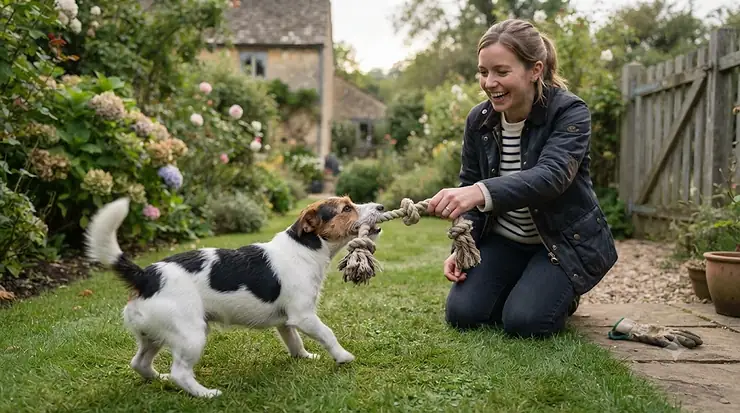
There’s a very specific sound every dog owner knows: the thunder of paws across the kitchen floor the second you pick up a length of knotted cotton. A rope tug toy for dogs is one of the simplest inventions in the pet aisle — a plait of fibres, a couple of knots, sometimes a squeaker — and yet it does something almost nothing else in the toy box manages. It turns a walk-ending, sofa-destroying burst of energy into a focused, bonding, genuinely tiring game that both of you can play together.

What is a rope tug toy for dogs? It’s a braided or knotted length of cotton, hemp, or synthetic fibre, usually 20-90cm long, designed for two-way pulling games between dog and owner (or dog and dog). Unlike a solo chew, it needs a human on the other end, which is exactly why it earns its keep.
Here’s the catch: not every rope on the shelf is built the same. Some fray into stringy mush after two sessions. Others hold their knots through months of enthusiastic tugging. Below, we’ve dug into seven real products currently sold in the UK, matched them against genuine buyer feedback, and worked out which ones actually earn a permanent spot by the back door — plus how to play the game safely, whatever breed you’re wrangling.
Quick Comparison Table
Before we get into the detail, here’s a snapshot of how our seven picks stack up on the things that matter most: material, best-fit dog size, and standout strength.
| Product | Material | Best For | Standout Feature |
|---|---|---|---|
| Mammoth Flossy Chews Colour Rope Tug | Cotton-poly blend | All-rounder, dental health | Flossing fibres clean teeth as they play |
| KONG Signature Rope 22″ Double Tug | Natural cotton | Two-handed or two-dog tug | Dual-loop handles for proper leverage |
| Beco Pets Natural Hemp Rope | Hemp and cotton | Eco-conscious owners | Hypoallergenic, biodegradable fibres |
| Petface Figure of 8 Rope Dog Toy | Cotton | Small-medium dogs, budget | Shaped grip for easy one-hand throwing |
| Speedy Panther Indestructible Rope Toy | Cotton, 5-knot | Medium-large chewers | Long 90cm body spreads bite pressure |
| SHARLOVY 9-Pack Heavy Duty Rope Toys | Cotton, 5-knot | Multi-dog households | Nine toys for rotation and replacement |
| KONG Tugger Knots Moose | Rope core, plush shell | Tug-and-fetch variety | Internal rope skeleton under soft plush |
At a glance, the split is pretty clear: Mammoth Flossy Chews Colour Rope Tug and KONG Signature Rope 22″ Double Tug dominate the “serious tug session” category, while Petface Figure of 8 Rope Dog Toy and the SHARLOVY 9-Pack Heavy Duty Rope Toys cater to budget-conscious households that want either a cheap single toy or a bulk stash. If durability against a determined chewer is your priority, the Speedy Panther Indestructible Rope Toy and the SHARLOVY 9-Pack Heavy Duty Rope Toys both lean on thick five-knot construction to survive longer than average.
💬 Just one click — help others make better buying decisions too!😊
Top 7 Rope Tug Toys for Dogs: Expert Analysis
We’ve picked seven genuinely available products spanning budget, mid-range, and premium price points, plus a mix of cotton, hemp, and hybrid rope-plush builds. Every entry below draws on real product specifications and aggregated review sentiment — never invented quotes or fabricated hands-on testing.
1. Mammoth Flossy Chews Colour Rope Tug — best all-rounder for dental health
The standout feature here is genuinely functional rather than gimmicky: as your dog gnaws and tugs, the loosely woven cotton-poly fibres work between the teeth like dental floss, helping to lift plaque during ordinary play rather than requiring a separate chew session.
Specs-wise, this is a cotton-poly blend rope, available in several lengths and knot counts, with assorted colourways. That poly content matters in practice — pure cotton ropes tend to fray faster under sustained pulling, while the synthetic blend here holds its shape and colour through more washes and more play sessions. It’s rated across small through extra-large sizes, so you’re not stuck buying a toy sized for a completely different dog.
Who should buy it: owners after a genuine two-in-one toy — dental maintenance plus interactive play — rather than a single-purpose chew. It suits moderate chewers best; if your dog is a full-on demolition specialist, look further down this list. Aggregated review sentiment on Amazon is strongly positive, with the product sitting among the platform’s best-selling rope toys and buyers repeatedly citing its durability relative to price as the main draw.
Pros:
- ✅ Cotton-poly blend resists fraying better than pure cotton
- ✅ Flossing action supports dental hygiene during play
- ✅ Sized for everything from toy breeds to large dogs
Cons:
- ❌ Not marketed for the most aggressive chewers
- ❌ Colour dye can transfer slightly onto pale fur when new
Pricing sits in the budget-to-mid range, typically in the £10-£18 range depending on size — check current price, as this varies by length and pack. Given the dental benefit layered on top of ordinary tug play, it’s a strong value pick for most households.
2. KONG Signature Rope 22″ Double Tug — best for two-handed leverage
What immediately sets this apart on the heading line is the dual-loop handle design — two purpose-built grips at either end that let you get genuine leverage instead of gripping bare rope, which matters more than most buyers realise until their hands are raw after a five-minute session.
The toy measures 22 inches (roughly 56cm) of tightly braided natural cotton rope, built by a brand whose reputation was forged on tug-of-war and fetch durability. Because the handles distribute pulling force differently to the middle of the rope, the knots at the core experience less direct wear during typical play, which in practice means the toy tends to hold its shape for longer than single-loop competitors of similar thickness.
Based on the spec comparison with cheaper unbranded ropes, the tighter braid density here is the main functional difference — it’s harder for claws or teeth to work a single strand loose, which is usually where fraying begins. This is the toy for owners who want a dedicated “let’s tug” toy that stays separate from general chew toys, which trainers generally recommend anyway to keep the game’s rules clear. Reviewers consistently report that it holds up well to prolonged tugging with medium and large dogs, though as with any rope product, aggressive chewers will eventually work through the outer fibres.
Pros:
- ✅ Two loop handles give real pulling leverage
- ✅ Tight braid slows the onset of fraying
- ✅ From a brand with a long dental-safety track record
Cons:
- ❌ Pricier than unbranded rope toys of similar size
- ❌ Handles add bulk some smaller dogs find awkward
Expect to pay in the £12-£20 range for the 22-inch double tug — prices may vary by retailer, so it’s worth checking the current price before buying. For dogs who play tug several times a week, the reinforced handle construction likely justifies the premium over a basic braided rope.
3. Beco Pets Natural Hemp Rope — best eco-friendly pick
The standout advantage here is the base material itself: a hemp-and-cotton weave rather than a purely synthetic or dyed cotton rope, appealing directly to owners trying to reduce the amount of plastic-adjacent material in their pet’s toy box.
Beco describes the rope as hypoallergenic and antibacterial by nature of the hemp fibre, with a thick weave intended to extend chewing time before the strands begin separating. It’s sold across small, medium, and large sizes and in a triple-knot configuration, which adds extra grab points for a dog that likes to reposition its bite mid-tug. Hemp fibre is naturally coarser than cotton, which in practice means slightly more resistance against a dog’s teeth — useful for slowing down determined tuggers, though it can feel rougher in human hands during a long session.
What most buyers overlook about hemp rope toys is that “natural” doesn’t automatically mean “softer” — hemp is actually a tougher plant fibre than cotton, historically used for rope and rigging long before synthetic cordage existed. That toughness is the whole appeal for owners who want a durable dog rope toys option without moving to a synthetic blend. Aggregated review sentiment is mixed on raw star rating compared with the mainstream brands above, with some owners reporting it lasts several months of regular play and others finding it wears through faster with a genuinely powerful chewer — a reminder that no rope toy is truly chew-proof regardless of material.
Pros:
- ✅ Hemp fibre is naturally tougher than plain cotton
- ✅ Hypoallergenic and antibacterial by nature
- ✅ Lower environmental footprint than synthetic ropes
Cons:
- ❌ Coarser texture can be tougher on human hands
- ❌ Review sentiment is more mixed than mainstream rivals
Pricing typically falls in the £8-£14 range depending on size — as ever, check current price before ordering, since availability fluctuates. For eco-conscious buyers, the hemp construction is the deciding factor over marginally cheaper cotton alternatives.
4. Petface Figure of 8 Rope Dog Toy — best budget pick from a British high-street brand
The figure-of-8 shape is the hook here: rather than a straight braided length, the rope is looped into a double-ring shape that’s genuinely easier to grip, throw, and swing during solo play, not just tug-of-war.
Petface is a long-standing UK pet brand, and this rope toy sits firmly in its accessible price bracket — pure cotton construction, sized for small to medium dogs rather than heavy-duty large-breed chewing. The figure-8 shape also means there are two loops rather than one straight rope, giving your dog two separate bite points and making it slightly easier for you to keep hold of one end while they work the other.
On paper, this is a toy built for moderate, everyday play rather than industrial-strength tug sessions, and that’s exactly how it’s positioned — it’s a best-seller in Amazon UK’s toy-rope category, which tends to reflect strong volume among owners of smaller, less destructive dogs. Reviewers commonly note good value for the price point, alongside the expected caveat that any pure cotton rope will fray faster under sustained pulling from a large or powerful dog than a reinforced blend would.
Pros:
- ✅ Figure-8 shape gives two separate grip points
- ✅ Well-suited to small and medium breeds
- ✅ Competitively priced from an established UK brand
Cons:
- ❌ Pure cotton wears faster than blended alternatives
- ❌ Not rated for large or heavy-duty chewers
At around the £3-£7 range, it’s one of the cheapest genuinely branded options on this list — check current price for exact size and colour options. It’s a sensible starter toy or a low-cost replacement for a dog that goes through rope toys quickly regardless of quality.
5. Speedy Panther Indestructible Rope Toy — best budget option for bigger dogs
The 90cm length is the standout number on the tin, and it matters more than it sounds: a longer rope spreads the dog’s bite force across more knots and fibre, rather than concentrating wear on a single central point the way shorter toys do.
Built with five reinforced knots along a thick cotton braid, this is marketed specifically at medium and large dogs, including self-described “aggressive chewers.” The five-knot structure creates natural stopping points that both slow fraying and give you multiple grip options depending on how enthusiastically your dog is pulling. Because the rope itself is noticeably thicker than budget alternatives like the Petface option above, it takes meaningfully longer for a determined chewer to work through the outer strands to the braided core.
Here’s what the spec sheet won’t tell you, but the review pattern suggests: length and knot count do more for perceived durability than marketing terms like “indestructible” ever will — no rope toy is genuinely indestructible, and honest sellers increasingly avoid that word for good reason. Aggregated feedback on Amazon UK for this listing runs strongly positive, with a high volume of recent purchases and reviewers frequently praising the price-to-size ratio for large-breed households.
Pros:
- ✅ 90cm length spreads bite pressure across more rope
- ✅ Five knots add durability and multiple grip points
- ✅ Strong value for large or powerful dogs
Cons:
- ❌ “Indestructible” claims should be taken with a pinch of salt
- ❌ Thickness may be excessive for small dogs
Typical pricing sits in the £8-£12 range — as always, check current price, since limited-time deals on this listing are common. For a big dog that demolishes thin ropes quickly, the extra length and knot count genuinely change how long the toy survives.
6. SHARLOVY 9-Pack Heavy Duty Rope Toys — best multi-pack for rotation and multi-dog homes
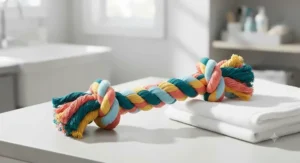
The number that sells this one is nine — a full pack of five-knot cotton rope toys rather than a single item, which fundamentally changes the value calculation for anyone with more than one dog, or one dog that simply gets through toys fast.
Each toy in the pack follows a similar heavy-duty five-knot cotton construction to the Speedy Panther pick above, aimed at large breeds and aggressive chewers. The advantage of buying in bulk isn’t just cost per toy — it’s rotation. Vets and behaviourists commonly recommend keeping toys back and rotating them rather than leaving every toy out permanently, since novelty keeps a dog engaged, and a fresh rope every few days tends to hold interest better than the same worn one.
Based on the spec comparison with single-toy listings, the individual unit cost here undercuts nearly everything else on this list once you divide the pack price by nine, though the trade-off is that each toy in the set tends to be shorter and slightly thinner than a dedicated flagship product like the KONG double tug. It currently ranks as the best-selling rope toy listing in its Amazon category, and aggregated review sentiment highlights the pack size and price as the dominant reasons buyers choose it over single-item alternatives.
Pros:
- ✅ Nine toys allow rotation to sustain interest
- ✅ Very low cost per individual toy
- ✅ Suits multi-dog households well
Cons:
- ❌ Individual toys are shorter than dedicated single ropes
- ❌ Colour and quality can vary slightly between units
Expect to pay in the £15-£22 range for the full nine-pack — check current price, as multi-buy listings shift often. For sheer value per toy, this is difficult to beat if your dog gets through rope toys at speed.
7. KONG Tugger Knots Moose — best hybrid for tug-and-fetch variety
The standout feature is structural rather than cosmetic: an internal knotted rope skeleton running through a soft plush moose shell, meaning the toy behaves like a rope toy under the surface while looking and feeling like a plush toy on top.
This hybrid construction is a deliberate design choice — minimal stuffing keeps mess down if the outer fabric does eventually give way, while the looped internal ropes add tensile strength beyond what plush alone could offer. It’s sized for medium to large dogs and includes a squeaker, adding a fetch-and-retrieve dimension that pure rope toys don’t have. In practice, this makes it more versatile than a straight rope: it works for tug, for shake-and-toss play, and for solo chewing in a way a plain rope braid doesn’t.
What most buyers overlook about hybrid rope-plush toys is that the plush shell, not the rope core, is usually the first thing to wear through — so durability claims aimed purely at the rope element can be misleading if the fabric shell is the weak point in practice. Reviewers consistently note that dogs engage with the moose shape and squeaker more readily than with plain rope, though as with all plush-backed toys, supervision matters more here than with solid cotton rope, since fabric and stuffing present a different ingestion risk if torn open.
Pros:
- ✅ Internal rope skeleton adds real tug strength
- ✅ Squeaker and shape add fetch-and-shake appeal
- ✅ More engaging for dogs that tire of plain rope
Cons:
- ❌ Plush shell wears before the rope core does
- ❌ Needs closer supervision than solid rope toys
Pricing generally falls in the £10-£16 range — check current price before buying, as KONG’s plush-hybrid range is regularly discounted. It’s the pick for owners who want one toy that covers tug, fetch, and shake-play rather than buying three separate items.
How to Choose the Right Rope Tug Toy
Choosing the right rope tug toy comes down to matching material, size, and construction to your specific dog, rather than picking whatever’s cheapest or has the most five-star reviews on the listing page. Here’s the criteria that actually move the needle:
- Match rope thickness to jaw strength. A thin cotton rope suits a Cocker Spaniel; it won’t survive a Malinois. Thicker, multi-strand ropes like the Speedy Panther pick handle stronger bite force.
- Check the knot count. More knots generally mean more structural stopping points, slowing how quickly fraying spreads along the whole toy.
- Consider blended versus pure cotton. Cotton-poly blends, like the Mammoth Flossy Chews option, typically outlast pure cotton under repeated tugging.
- Decide if you want dental benefit built in. Flossing-style ropes add a genuine secondary function beyond play.
- Think about handle design. Loop handles, as on the KONG Signature Rope, protect your hands during longer sessions and change how force travels through the toy.
- Factor in your dog’s play style. A shake-and-destroy dog needs a different toy to a gentle, methodical tugger.
- Budget for replacement, not permanence. No rope toy lasts forever — budget for rotation rather than expecting a single purchase to last years.

Cotton vs Synthetic Rope: Which Actually Lasts Longer
This is one of the most searched comparisons in the category, and the honest answer is: it depends what “lasts longer” means to you. Pure cotton, as used in the Petface Figure of 8 Rope Dog Toy, is soft, natural, and gentle on gums, but its fibres separate relatively quickly under sustained pulling, especially from a strong or heavy dog. Cotton is a natural plant fibre that’s been spun into cordage for centuries, valued for its softness rather than raw tensile strength — a property that carries directly into how it performs as a dog toy. You can read more about the fibre’s properties on Wikipedia’s overview of cotton.
Synthetic or blended ropes, such as the cotton-poly weave in the Mammoth Flossy Chews Colour Rope Tug, typically resist fraying for longer because polyester fibres are more resistant to abrasion and moisture than cotton alone. The trade-off is texture — synthetic blends can feel slightly stiffer in the mouth, and some owners prefer the softer bite of pure cotton for puppies or older dogs with sensitive gums.
| Factor | Pure Cotton | Cotton-Poly / Synthetic Blend |
|---|---|---|
| Softness on gums | Higher | Slightly lower |
| Resistance to fraying | Lower | Higher |
| Best For | Puppies, gentle chewers, dental flossing | Moderate-to-strong chewers, longevity |
| Typical lifespan | Shorter under heavy use | Longer under heavy use |
Reading across the table, the practical takeaway is that pure cotton wins on comfort and dental gentleness, while blended synthetic content wins on raw durability. Neither is objectively “better” — a puppy just getting used to tug play probably benefits more from soft pure cotton, while a strong adult dog that goes through toys fast is better served by the tougher blend. Hemp, as used in the Beco Pets Natural Hemp Rope, sits somewhere in between: naturally tougher than cotton, but still a plant fibre rather than a synthetic.
Rope Toy Durability: What Determines How Long It Lasts
Rope toy durability isn’t down to one single factor — it’s the sum of material, construction, and how the toy is actually used. Four things consistently separate a rope that survives months from one that’s shredded in a week.
Fibre type matters most at the material level, as covered above — blended and hemp ropes generally outlast pure cotton. Braid tightness is the next biggest factor: a densely woven rope, like the one used in the KONG Signature Rope 22″ Double Tug, resists individual strands being worked loose far better than a loosely twisted one. Knot count and spacing create physical stopping points along the rope’s length; the five-knot construction on both the Speedy Panther Indestructible Rope Toy and the SHARLOVY 9-Pack Heavy Duty Rope Toys exists specifically for this reason. Finally, thickness and total length spread bite force across more material, which is why the 90cm Speedy Panther Indestructible Rope Toy tends to outlast shorter ropes of similar quality.
It’s worth being realistic here: genuinely durable dog rope toys still wear out eventually, and that’s not a manufacturing failure — it’s the nature of fibre being repeatedly compressed by teeth. The goal isn’t finding a rope that lasts forever; it’s finding one whose lifespan matches your dog’s chewing style and your budget for replacement.
Rope Tug Toys vs Rubber and Fleece Alternatives
Rope isn’t the only material built for tug-of-war, and it’s worth understanding where it sits against the two most common alternatives: natural rubber and fleece.
| Toy Type | Durability | Dental Benefit | Gentleness on Gums | Best For |
|---|---|---|---|---|
| Rope (cotton/hemp/blend) | Medium-High | High (flossing action) | Medium | Interactive tug, dental maintenance |
| Rubber tug toys | High | Low-Medium | High (flexes on impact) | Powerful chewers, jaw safety |
| Fleece tug toys | Low-Medium | Low | High | Puppies, gentle indoor play |
Rope generally wins on the dental side of things — that flossing action against the teeth is something rubber and fleece simply can’t replicate, which is why brands like Mammoth lean into it as a headline feature. Rubber, however, tends to win on raw durability and on jaw safety, since it flexes under pressure in a way rope doesn’t, reducing the jolt transmitted through a dog’s neck and spine during vigorous pulling. Fleece sits at the gentle end of the spectrum, best suited to puppies still learning the rules of tug rather than adult dogs playing at full strength.
The practical upshot: if dental health and classic tug-of-war feel are the priority, rope wins; if you’ve got a genuinely powerful chewer and jaw safety is the bigger concern, a rubber toy such as a natural rubber tug alongside your rope collection covers that gap.
✨ Don’t Miss These Exclusive Deals!
🔍 Take your dog’s playtime to the next level with these carefully selected picks. Click through to check current pricing and availability, and give your dog the durable, safe fun they deserve!
Dog Tug of War Safety: Rules Every Owner Should Know
Dog tug of war safety isn’t complicated, but it’s frequently overlooked, and getting it wrong can genuinely injure a dog’s neck, spine, or teeth. The core rules are worth committing to memory before your next session.
Keep pulling horizontal, side to side, never up and down. Vertical yanking, or lifting a dog off the ground by the toy, puts real strain on the cervical spine — something trainers and vets consistently flag as the single biggest risk in an otherwise safe game. Match the intensity of your pulling to your dog’s size and strength rather than going full force regardless of breed.
Teach a reliable release cue before you start. “Drop it” or “let go,” rewarded consistently, means the game ends cleanly rather than turning into a standoff. Only ever initiate tug yourself, using a consistent starting phrase, so your dog learns the game happens on your terms, not whenever they grab something from your hand.
Inspect the toy before every session. Frayed strands, loose threads, or a rope coming apart at a knot should be retired immediately — swallowed rope fibres can cause a serious intestinal blockage requiring surgery, which is the single biggest medical risk associated with rope toys specifically.
Know when to skip the game entirely. Dogs with existing neck, jaw, or orthopaedic issues, or dogs already showing resource-guarding tendencies, are generally better suited to other play styles. The PDSA’s guidance on active play notes tug of war as a good way to burn energy for dogs that are physically able, while stressing that toy size and condition should always be checked first.
Followed properly, tug play doesn’t cause aggression — but how it’s played can reinforce unwanted patterns if the rules above are ignored, particularly around letting a dog “win” too roughly or allowing mouth contact with hands during the scramble.
Common Mistakes When Buying Rope Tug Toys for Dogs
Even careful buyers fall into a handful of predictable traps when shopping for a rope tug toy for dogs. Here’s what to watch for.
Buying by price alone. The cheapest rope on the page is often the thinnest, which means it frays fastest and needs replacing soonest — sometimes making it more expensive over a year than a slightly pricier, longer-lasting option.
Ignoring size mismatch. A rope sized for a Labrador is unwieldy for a Dachshund, and a toy sized for a Chihuahua disappears entirely inside a German Shepherd’s mouth — both scenarios create unnecessary risk rather than fun.
Assuming “heavy duty” labelling guarantees indestructibility. As covered earlier, no rope toy is genuinely chew-proof; marketing language should inform your decision, not replace your own judgement about your dog’s chewing habits.
Overlooking multipack value for multi-dog households. Buying single premium ropes repeatedly can cost more over time than a bulk pack like the SHARLOVY 9-Pack Heavy Duty Rope Toys, particularly for households where toys get chewed through quickly regardless of quality.
Forgetting to plan for rotation. Buying one toy and expecting it to hold a dog’s interest indefinitely misunderstands how enrichment works — most trainers recommend keeping a rotating stock rather than leaving everything out permanently.
Practical Usage Guide: Getting the Most from Your Rope Tug Toy
Getting real value from a rope tug toy for dogs starts before the first tug — and a few habits in the first month make a genuine difference to how long the toy lasts and how well your dog responds to the game.
Setup and first use: Introduce the toy calmly rather than waving it excitedly straight away — let your dog sniff and investigate first, then initiate the game with a consistent cue phrase like “let’s tug.” This sets the pattern that you control when the game starts, which matters for managing excitement levels later.
Maintenance schedule: Check rope toys weekly for fraying, loose knots, or thinning strands, and more often if your dog plays daily. A quick monthly wash in warm water (no fabric softener, which can irritate skin) keeps cotton and hemp ropes fresher and removes accumulated saliva residue and outdoor grime.
Optimisation tricks: Rotate between two or three rope toys rather than leaving one out permanently — novelty genuinely sustains engagement better than familiarity, and it halves the wear rate on any single toy. Storing toys in a closed box between sessions, rather than a permanently accessible basket, reinforces that tug time is a special, structured activity rather than a free-for-all.
Common first-30-days mistakes: New owners often let puppies “win” too dramatically, encouraging over-excited grabbing; skip teeth checks after boisterous sessions, missing early wear on gums; or fail to establish the release cue before starting proper tug sessions, leading to reluctant hand-offs later.
Real-World Scenarios: Rope Tug Toys for Interactive Play
Rope tug toys for interactive play work differently depending on the household, so here are three genuinely common profiles matched to the right pick from our list, with reasoning.
The city-flat owner with a young Cockapoo: Limited space, moderate energy levels, and a dog still learning bite inhibition point towards a softer, smaller toy — the Petface Figure of 8 Rope Dog Toy suits this brief well, being sized appropriately and gentle enough for a dog still developing jaw strength, without the bulk of a large-breed rope.
The rural household with two working-line Labradors: High energy, strong jaws, and two dogs who’ll happily wreck a single rope in days call for volume and toughness together. The SHARLOVY 9-Pack Heavy Duty Rope Toys covers both needs — enough stock to rotate between two dogs, with five-knot construction built for sustained pulling.
The owner of a powerful adolescent Staffie mix who loves proper tug sessions: This is the scenario the KONG Signature Rope 22″ Double Tug was essentially built for — dual handles for real leverage, tight braiding that resists a strong dog’s determined pulling, and enough length to keep hands safely away from teeth during an energetic game.
Across all three, the underlying logic holds: match rope thickness and construction to bite strength, match toy count to household size, and prioritise handle design when the dog on the other end is genuinely strong.
Buyer’s Decision Framework: Which Rope Tug Toy Fits Your Dog
If you want a quick decision path rather than reading every section above, work through this priority checklist:
- If your dog is a puppy or small breed, choose a soft pure-cotton toy like the Petface Figure of 8 Rope Dog Toy, because their jaws and teeth are still developing and don’t need reinforced synthetic blends.
- If your dog is a large or powerful chewer, choose a thick, multi-knot rope like the Speedy Panther Indestructible Rope Toy, because bite force needs to be spread across more material to slow fraying.
- If you have more than one dog, choose a multipack such as the SHARLOVY 9-Pack Heavy Duty Rope Toys, because rotation and simultaneous play both demand more than a single toy can provide.
- If dental health is a specific concern, choose a flossing-fibre design like the Mammoth Flossy Chews Colour Rope Tug, because the mechanical flossing action during play offers a benefit rubber and fleece can’t replicate.
- If you want low-impact eco credentials, choose a natural-fibre option like the Beco Pets Natural Hemp Rope, because hemp production generally carries a lighter environmental footprint than synthetic materials.
- If you want one toy that covers tug, fetch, and shake play, choose a hybrid like the KONG Tugger Knots Moose, because the internal rope core adds strength that plush alone wouldn’t offer.
Long-Term Cost & Maintenance
Total cost of ownership for rope tug toys looks different once you factor in replacement frequency rather than sticker price alone. A £4 pure cotton toy that needs replacing every six weeks under heavy use can cost more across a year than a £15 blended-fibre toy that survives four to six months of the same play pattern. The Mammoth Flossy Chews Colour Rope Tug and KONG Signature Rope 22″ Double Tug both sit at the higher end of the price bracket precisely because their construction is aimed at reducing that replacement frequency.
Maintenance costs, by contrast, are minimal — an occasional wash is the only ongoing expense, and there’s no equivalent to the batteries, replacement parts, or subscription costs some interactive toys demand. The real long-term saving comes from buying appropriately for your dog’s chew strength the first time, rather than repeatedly under-buying and replacing.

Frequently Asked Questions
❓ Are rope toys safe for dogs to play with unsupervised?
❓ How often should I replace a rope tug toy for dogs?
❓ What is the best rope tug toy for aggressive chewers?
❓ Can puppies play tug of war with rope toys?
❓ Is cotton or synthetic rope better for dogs?
Conclusion
A good rope tug toy for dogs earns its place through more than novelty — it’s genuine interactive exercise, a dental aid, and one of the few games that requires real teamwork between owner and dog. Across our seven picks, the Mammoth Flossy Chews Colour Rope Tug stands out as the strongest all-rounder thanks to its dental benefit and blended durability, while the KONG Signature Rope 22″ Double Tug is the pick for owners prioritising serious tug sessions with a strong dog. Budget-focused households are well served by the Petface Figure of 8 Rope Dog Toy or the bulk-value SHARLOVY 9-Pack Heavy Duty Rope Toys, and eco-conscious buyers should look toward the Beco Pets Natural Hemp Rope.
Whichever you choose, the safety fundamentals matter more than the specific toy: pull side to side, teach a release cue, inspect for fraying, and rotate stock rather than relying on one rope forever. Get those basics right, and a rope tug toy for dogs becomes one of the simplest, most reliably effective tools in the entire toy box.
Recommended for You
- Long-Lasting Flavoured Chew Toys for Dogs: 7 Best UK Picks (2026)
- Flavoured Chew Toys for Picky Dogs: 7 Best Picks (2026)
- Bacon vs Chicken Flavoured Dog Chew Toys: 7 Best Picks (2026)
Disclaimer: This article contains affiliate links. As an Amazon Associate, I earn from qualifying purchases. If you purchase products through these links, we may earn a small commission at no additional cost to you.
✨ Found this helpful? Share it with your friends! 💬🤗
