In This Article
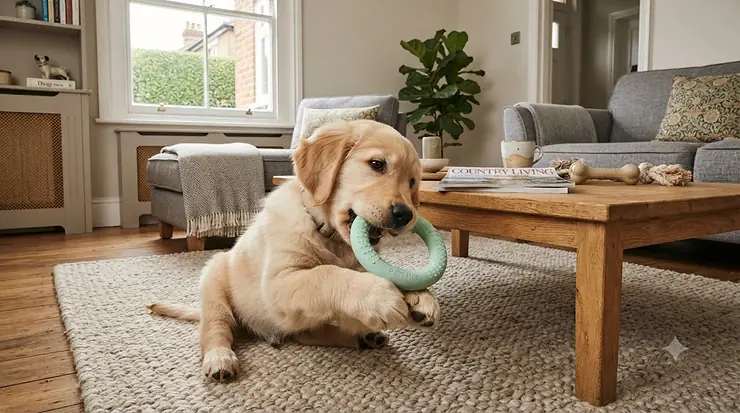
There’s a particular sound every new puppy owner learns to dread: the click of tiny teeth finding the leg of a chair. Teething turns even the calmest puppy into a small, determined chewing machine, and it’s not because they’re being naughty — their gums genuinely hurt. Soothing teethers for puppies exist precisely for this window, giving your pup something appropriate to gnaw on while easing the discomfort that’s driving the behaviour in the first place, rather than just redirecting it onto your furniture instead of your fingers.
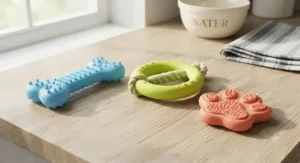
What are soothing teethers for puppies, exactly? They’re purpose-built chew toys — usually rubber, freezable fabric, or a rope-and-plush combination — designed with textures and, in many cases, cooling properties that specifically target sore gums during the roughly three-to-seven month teething window, as opposed to general play toys that are built for durability or fetch rather than comfort. According to Blue Cross’s guidance on puppies and chewing, teething discomfort and the natural urge to explore both drive this chewing phase, which is exactly why the right toy matters more than most owners expect.
Below, we’ve researched seven genuinely available teethers spanning budget to premium, and gone deeper than the average listing — covering gum massage benefits, which textures actually soothe versus which just distract, and how to reduce the anxiety that often accompanies a teething flare-up. Everything here is grounded in real product specifications and honestly framed aggregated review sentiment; we haven’t fabricated any hands-on testing, and where a smaller brand has limited verifiable review data, we’ve said so rather than inventing enthusiasm that isn’t there.
Quick Comparison Table
| Teether | Material | Freezable | Best For | Price Range |
|---|---|---|---|---|
| KONG Puppy Teething Stick | Natural rubber | Yes | Denta-Ridge gum massage | £6-£10 |
| KONG Puppy Binkie | Natural rubber | Yes | Small breeds, pacifier shape | £5-£9 |
| Nylabone 2-in-1 Teething Freezer Bone | Rubber + fabric | Yes | Combined cool and chew relief | £4-£8 |
| Nylabone Freezer Knuckle Bone | Soft rubber | Yes | Colour-change frozen indicator | £4-£7 |
| Petstages Cool Teething Stick | Cotton-poly fabric | Yes | Crunchy frozen texture | £5-£8 |
| Nylabone Gentle Teething Keys | Soft rubber | No | Extra-small, first teethers | £3-£6 |
| Rosewood Rope Core Bear | Plush + rope | No | Comfort and anxiety reduction | £6-£10 |
Looking at this spread, the freezable options — the KONG Puppy Teething Stick, KONG Puppy Binkie, both Nylabone freezer picks, and the Petstages Cool Teething Stick — all lean on cold as the active soothing mechanism, which numbs inflamed gum tissue in much the same way a cold compress helps a swollen joint. The Rosewood Rope Core Bear, by contrast, isn’t freezable at all; it earns its place through soft texture and comfort rather than temperature, which matters if your puppy also shows signs of anxiety alongside teething. For a puppy just starting out on baby teeth, the compact Nylabone Gentle Teething Keys is the gentlest starting point on this list.
💬 Just one click — help others make better buying decisions too!😊
Top 7 Soothing Teethers for Puppies: Expert Analysis
1. KONG Puppy Teething Stick — best for structured gum massage
The Denta-Ridges running along this stick aren’t decorative — they’re specifically shaped to press against and massage gum tissue as your puppy gnaws, rather than just giving them something to bite down on flatly. Based on the spec comparison with softer fabric options, the rubber’s slight give means it’s forgiving on emerging teeth while still offering enough resistance to feel satisfying, which is part of why this shape has stayed a category staple for so long.
Who’s it for? Puppies up to around nine months who need genuine gum massage benefits rather than just distraction, particularly if you also want a toy you can stuff with treats to encourage longer, calmer chewing sessions. Reviewers consistently note that the softer “puppy rubber” formula is noticeably more giving than KONG’s standard adult rubber, though a few mention it shows tooth marks fairly quickly — which, honestly, is a sign it’s doing its job rather than a fault.
Pros:
- ✅ Denta-Ridges specifically designed for gum massage benefits
- ✅ Fillable with treats to extend calm chewing sessions
- ✅ Softer puppy-specific rubber than standard KONG toys
Cons:
- ❌ Shows visible tooth marks fairly early in use
- ❌ Not intended for puppies once adult teeth are fully in
Expect to pay in the £6-£10 range at the time of research; check current price before ordering. For genuine gum-focused relief rather than pure distraction, this is our starting recommendation.
2. KONG Puppy Binkie — best pacifier-shaped comfort teether
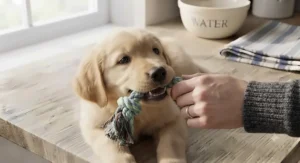
The pacifier silhouette here isn’t just a cute design choice — its rounded, symmetrical shape means there’s no “wrong end,” so even a very young puppy figuring out how to hold a toy in their mouth tends to get the hang of it quickly. What most buyers overlook about this model is that its stuffable centre turns it from a passive chew into an active problem-solving toy, which can help redirect nervous energy during a teething flare-up rather than just numbing discomfort.
Based on the spec sheet, the same soft puppy rubber formula used across KONG’s puppy range means this genuinely counts among the calming teething toys for puppies category rather than a general-purpose chew — it’s built with sore gums specifically in mind. Reviewers report that smaller puppies in particular seem to settle more with this shape in their mouth, though it’s worth noting this is aggregated anecdotal sentiment rather than a clinical claim.
Pros:
- ✅ Symmetrical pacifier shape is easy for young puppies to grip
- ✅ Stuffable centre adds mental engagement alongside soothing
- ✅ Soft puppy rubber gentle on emerging teeth
Cons:
- ❌ Smaller size may not suit puppies who chew aggressively
- ❌ Limited flavour variety compared with treat-coated alternatives
Typically priced around £5-£9, it’s a genuinely solid puppy comfort teether for owners wanting something calming rather than purely durable.
3. Nylabone Puppy Chew 2-in-1 Teething Freezer Bone — best combined fabric-and-rubber relief
This one splits the difference between a hard chew and a soft comfort toy: a rubber bone core wrapped in a soft, bristled fabric section, both of which can be soaked and frozen together. Here’s what to weigh — the fabric bristles are specifically designed to brush gently against gum tissue as your puppy works the toy, adding a light massaging action that a smooth rubber surface alone doesn’t provide.
Reviewers consistently note that the combined texture keeps puppies engaged longer than single-material teethers, likely because it offers two distinct sensations in one toy rather than one repetitive texture. On the spec sheet, this model is explicitly marketed among soothing gum relief toys for the teething window specifically, rather than general play, which shows in the softer overall construction compared with Nylabone’s tougher adult lines.
Pros:
- ✅ Dual rubber-and-fabric texture offers varied gum stimulation
- ✅ Freezable for added cooling relief during flare-ups
- ✅ Soft bristled section gently brushes gum tissue
Cons:
- ❌ Fabric portion wears faster than the rubber core
- ❌ Not suited to puppies who chew through fabric quickly
At around £4-£8, this is one of the more thoughtfully designed budget options on this list.
4. Nylabone Freezer Knuckle Bone — best visual freezing indicator
The standout practical feature here is genuinely simple but useful: the toy changes colour from yellow to orange once properly frozen, taking the guesswork out of “is this cold enough yet.” For anyone new to freezable teethers, that visual cue means you’re not accidentally handing your puppy a barely-chilled toy that offers minimal soothing textures compared with one that’s been given proper freezer time.
What the spec sheet won’t tell you, but user reports suggest, is that the knuckle-bone shape’s varied surface — bumps and grooves rather than a smooth stick — gives puppies more angles to work their emerging teeth against, which some owners find keeps interest going longer than a uniform shape. Reviewers frame this as a solid “starter” freezer toy, generally appropriate for the earlier stages of teething before a puppy’s bite becomes more forceful.
Pros:
- ✅ Colour-changing indicator confirms when fully frozen
- ✅ Varied knuckle-bone texture engages more chewing angles
- ✅ Budget-friendly price point for a freezer teether
Cons:
- ❌ Softer construction not suited to determined chewers
- ❌ Colour change is cosmetic only, not a safety indicator
Priced around £4-£7, it’s a sensible low-cost addition to a rotation of freezer teethers.
5. Petstages Cool Teething Stick — best crunchy frozen texture
Unlike the rubber options above, this is a soft, stuffed fabric stick with fringed ribbon ends, designed to be soaked in water and frozen until it develops a genuinely crunchy texture — a distinctly different soothing sensation from rubber’s steady resistance. Based on the spec comparison, the appeal here is variety: if your puppy has already lost interest in a rubber freezer toy, the crunch-when-frozen fabric offers a different sensory experience that can reignite engagement.
Reviewers note the fringed ends add a playful, tactile element beyond pure chewing, which can help during moments when a puppy seems more restless than simply sore — sometimes teething discomfort and general puppy energy are hard to tell apart, and a toy with more to explore covers both bases. It’s worth flagging honestly that this is a soft fabric toy rather than a durable chew, and Petstages themselves note it isn’t intended as a standard chew toy once thawed, so timely rotation back to the freezer matters.
Pros:
- ✅ Crunchy frozen texture offers a distinct sensory alternative
- ✅ Fringed ribbon ends add playful tactile engagement
- ✅ Lead- and phthalate-free construction
Cons:
- ❌ Not intended as a standard chew once fully thawed
- ❌ Fabric shell wears faster than rubber alternatives
At roughly £5-£8, it’s a strong pick specifically for puppies who respond well to varied soothing textures rather than one repeated material.
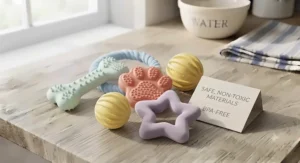
6. Nylabone Gentle Puppy Teething Chew Toy Keys — best for very young or first-time teethers
Scaled down and softer than most of this list, the keys shape is designed with young puppies just starting their teething journey in mind — smaller mouths that aren’t ready for a larger stick or bone-shaped toy yet. On paper this means it’s one of the gentler calming teething toys for puppies available, prioritising manageable size and softness over durability, which is exactly the trade-off you want in the very earliest stage of teething.
Reviewers of this size-and-softness category generally note that toys like this work best as a genuinely early-stage introduction rather than something that lasts through the full six-to-eight month teething window — puppies typically graduate to sturdier options as their bite strengthens. It’s honest to note here that Nylabone’s own product framing positions this specifically for gentle chewers, not puppies who are already showing determined, powerful chewing behaviour.
Pros:
- ✅ Compact size suits very young, small-mouthed puppies
- ✅ Soft rubber construction gentle on first emerging teeth
- ✅ Genuinely budget-friendly entry point
Cons:
- ❌ Puppies quickly outgrow it as chewing strength increases
- ❌ Limited durability against more assertive chewers
Typically found around £3-£6, it’s a sensible low-cost first purchase before you know your puppy’s chewing style.
7. Rosewood Rope Core Bear — best comfort teether for anxiety reduction while teething
Rounding out the list with something genuinely different: a plush bear with a rope core running through it, built more for cuddling and gentle tugging than pure gum-focused chewing. This is where puppy comfort teethers cross over into general emotional comfort — the soft, huggable shape gives an anxious or overstimulated teething puppy something to settle with, not just something to bite.
Based on the spec comparison, the rope core adds enough resistance for light chewing and tugging without being a dedicated hard-chew toy, and the built-in squeaker adds an engagement element that pure gum-relief toys don’t offer. Reviewers consistently frame plush-and-rope combinations like this as useful for anxiety reduction while teething specifically, since a soft object to carry around or settle beside can ease general unsettledness that often accompanies sore gums, even though it isn’t marketed as a clinical anxiety product.
Pros:
- ✅ Soft plush design supports comfort alongside chewing
- ✅ Rope core adds light tug-and-chew resistance
- ✅ Hidden squeaker adds engagement for restless moments
Cons:
- ❌ Not intended for aggressive or determined chewers
- ❌ Offers less direct gum-massage benefit than rubber options
Priced around £6-£10, it’s the pick to add alongside a rubber or freezer teether if your puppy’s teething comes with visible restlessness or clinginess.
Introducing and Caring for a New Teether Properly
Getting a new soothing teether home is only the first step — how you introduce and maintain it in the first month affects how much genuine relief your puppy gets from it. For freezable options, soak the toy in plain water for a few minutes before freezing; a fully saturated toy holds cold for noticeably longer than one frozen dry, giving your puppy a longer soothing session before it warms back up to room temperature. Rotate two or three frozen teethers in the freezer at once so there’s always a cold one ready — a puppy mid-flare-up won’t wait patiently for a four-hour freeze cycle.
A common early mistake is leaving a soft fabric or plush teether with a puppy unsupervised, particularly once it’s thawed and the fabric has softened further. Both the Petstages Cool Teething Stick and the Rosewood Rope Core Bear are designed for supervised use, and it’s worth checking stitching and fabric integrity weekly during heavy teething periods, since determined chewing can wear seams faster than expected. Finally, wash fabric teethers regularly — most are machine-washable on a gentle cycle — since saliva and outdoor debris build up quickly on a toy that’s in near-constant use for weeks at a time.
Matching a Teether to Your Puppy’s Teething Stage
If you’ve just brought home an eight-to-ten week old puppy who’s only just losing their first baby teeth, start gentle: the compact Nylabone Gentle Teething Keys or the KONG Puppy Binkie suit a small, still-developing mouth better than a larger stick-shaped toy. If your puppy is deep in the classic three-to-seven month teething window and visibly working hard on everything in sight, the KONG Puppy Teething Stick or Nylabone 2-in-1 Teething Freezer Bone offer more structured gum massage benefits to match the increased discomfort typical of this stage.
If your puppy’s teething coincides with obvious clinginess, restlessness, or difficulty settling — not uncommon, since discomfort and general unsettledness often overlap — pairing a freezer teether with the Rosewood Rope Core Bear covers both the physical and emotional side of the phase. And if you’re finding your puppy loses interest in any single toy within days, rotating between two or three different soothing textures, rather than relying on one, tends to keep engagement higher across the full teething window.
✨ Don’t Miss These Exclusive Deals!
🔍 Take the edge off teething season with these carefully selected teethers. Click on any highlighted toy to check current pricing and availability. The right combination of textures can turn a genuinely difficult few months into a far calmer one for both of you.
How to Choose Soothing Teethers for Puppies
Picking the right teether comes down to six practical checks rather than marketing language:
- Match size to your puppy’s current mouth, not their adult size. An oversized teether is harder to grip and offers less precise gum contact.
- Decide whether freezing matters to you. Cold genuinely numbs inflamed gum tissue, so if your puppy’s teething seems particularly painful, prioritise freezable options.
- Vary texture rather than buying five of the same toy. Rubber, fabric, and rope each stimulate gums differently, and puppies often show a clear preference once they’ve tried more than one.
- Check whether it’s fillable. A stuffable teether like the KONG Binkie or Teething Stick extends calm chewing time and adds mental engagement.
- Look honestly at durability claims. Soft, comfort-focused teethers like the Rosewood Rope Core Bear aren’t built for determined power-chewers, and that’s fine as long as you’re choosing it for comfort rather than toughness.
- Consider your puppy’s temperament, not just their teeth. If restlessness or clinginess is part of the picture, puppy comfort teethers with a plush or huggable element earn their place alongside purely functional chews.
Calming teething toys for puppies that tick most of these boxes tend to sit in the £4-£10 range — below that, expect thinner materials and shorter lifespans; above it, you’re often paying for branding rather than meaningfully better soothing.
Soothing Teethers vs Regular Chew Toys
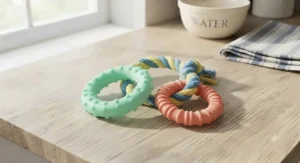
It’s worth being honest about the difference, because the two categories get marketed almost interchangeably. A regular chew toy — a tough rubber bone, a nylon stick — is built primarily for durability and long-term engagement, standing up to determined chewing over months or years. Soothing teethers for puppies, by contrast, are deliberately built softer and often freezable, prioritising gentle gum contact and cooling relief over sheer toughness, which is exactly why several on this list explicitly note they’re not meant to survive aggressive power-chewing.
The practical implication is that most teething puppies genuinely benefit from having both types in rotation rather than picking one category exclusively. A soothing teether addresses the acute discomfort of a teething flare-up in the moment, while a tougher general chew toy satisfies the broader, ongoing urge to gnaw that continues well beyond the teething window itself, as most vet-backed puppy care guidance confirms. Buying only soft comfort teethers for a determined chewer means replacing them frequently; buying only tough chews for a very young, sore-gummed puppy may not offer the gentle relief they specifically need.
Gum Massage Benefits and Soothing Textures Explained
The mechanical action behind gum massage benefits is straightforward: as a puppy gnaws on a textured surface — ridges, nubs, or a knuckle-bone’s varied bumps — gentle pressure is applied across inflamed gum tissue, which can ease some of the swelling and discomfort associated with teeth pushing through. This is part of why toys with deliberate texture, like the KONG Teething Stick’s Denta-Ridges, are designed differently from a smooth ball or flat chew — the raised sections are doing active work, not just decoration.
Soothing textures vary meaningfully across this list: natural rubber offers steady, springy resistance; frozen fabric develops a crunchy, brittle texture that’s a different sensation entirely; and plush-and-rope combinations offer soft comfort with minimal resistance. Reviewers across multiple freezable teethers consistently note that puppies seem to favour cold rubber or fabric specifically during the more intense stages of teething, likely because the numbing effect of cold offers more immediate relief than texture alone. Rotating between two or three distinct textures, rather than relying on a single material, tends to hold a teething puppy’s interest longer and covers more of the sensory ground that different stages of discomfort call for.
Anxiety Reduction While Teething: Comfort Beyond the Chew
Teething discomfort and general puppy anxiety aren’t the same thing, but they frequently show up together, and it’s easy to misread one as the other. A puppy who seems clingy, restless, or unsettled during a teething flare-up may genuinely be sore rather than anxious in the behavioural sense — but the two can also compound each other, particularly during a puppy’s early weeks in a new home. According to PDSA’s guidance on preventing separation anxiety in puppies, calm, predictable routines and appropriate enrichment items both play a meaningful role in helping a young dog feel settled.
This is where a genuinely comforting teether — something soft to carry, hold, or settle beside, like the Rosewood Rope Core Bear — can help alongside the more clinical gum-relief options on this list. It isn’t a substitute for proper behavioural support if anxiety reduction while teething becomes a persistent, significant issue rather than a passing rough patch; the RSPCA’s advice on separation-related behaviour is worth reading if unsettled behaviour continues well beyond what seems proportionate to teething alone. For most puppies, though, a predictable rotation of soothing teethers paired with calm handling during flare-ups is enough to smooth over what is, ultimately, a temporary and entirely normal developmental stage.
Common Mistakes When Buying Puppy Teething Toys
The most frequent mistake is buying a single toy and expecting it to cover the entire teething window. As covered above, puppies’ needs shift noticeably between early teething (small mouth, gentle chewing) and the more intense middle stage (stronger bite, more determined chewing), so a toy that was perfect at ten weeks may be outgrown or uninteresting by four months. A second common error is skipping the freezer step entirely on freezable toys — simply handing over a room-temperature version of a freezer teether skips the cooling relief that’s often the actual point of the purchase.
Owners also sometimes over-prioritise durability at the expense of genuine soothing qualities, buying the toughest rubber toy available under the assumption that “tougher must be better.” For determined chewers this makes sense for general chew toys, but for teething relief specifically, softer, more textured, or freezable options generally offer more targeted comfort than sheer hardness. Finally, it’s worth avoiding the trap of assuming one toy suits every puppy — chewing style, mouth size, and even temperament all affect which soothing textures actually land, which is exactly why rotating a small selection tends to outperform committing heavily to a single product.
Safety Guide: Supervision, Sizing and Knowing When to Retire a Teether
Every teether on this list, regardless of material, should be used under supervision, particularly during the first few sessions with any new toy. Small pieces of fabric, fringe, or worn rubber can present a choking risk if swallowed, so it’s worth inspecting toys regularly for fraying seams, chunks missing from rubber surfaces, or stuffing beginning to show through plush exteriors. As a general rule, if a piece comes away that’s larger than a grain of rice, it’s time to retire that toy, regardless of how much your puppy still seems to enjoy it.
Sizing matters for safety as much as comfort: a teether that’s too small for your puppy’s current mouth can present a swallowing risk, while one that’s oversized may be difficult for them to get proper gum contact with, reducing the relief it actually offers. It’s also worth noting that freezable toys should never be given rock-hard straight from a deep freeze to a very young puppy — a few minutes at room temperature to soften slightly reduces the risk of the toy feeling uncomfortably hard against still-developing teeth, even though the cold itself remains beneficial.
FAQ
❓ How long does puppy teething usually last?
❓ Are freezable teethers safe for very young puppies?
❓ Can soothing teethers help with puppy anxiety, not just teething pain?
❓ How do I know when to replace a puppy teething toy?
❓ Do rubber or fabric teethers work better for gum massage?
Conclusion
Soothing teethers for puppies aren’t a luxury purchase — they’re a genuinely practical way to ease a developmental stage that’s uncomfortable for your puppy and, let’s be honest, often stressful for you too. Whether you land on the structured gum relief of the KONG Puppy Teething Stick, the cold-crunch texture of the Petstages Cool Teething Stick, or the comfort-first approach of the Rosewood Rope Core Bear, the right choice comes down to matching texture and temperature to your specific puppy’s stage and temperament, not simply buying whatever’s cheapest or best-reviewed in isolation.
Before you commit, think honestly about where your puppy is in the teething timeline, whether restlessness or clinginess is part of the picture, and whether a rotation of two or three different textures might serve them better than one toy alone. Get that right, and the toughest weeks of teething become a good deal more manageable for you both.
✨ Don’t Miss These Exclusive Deals!
🔍 Give your teething puppy the comfort they need with these carefully selected teethers. Click on any highlighted toy to check current pricing and availability. A well-matched teether can turn a genuinely fraught few weeks into a calmer, gentler stage of puppyhood.
Recommended for You
- 7 Best Soft Chew Toys for Teething Puppies in 2026 (UK Guide)
- Rubber Teething Rings for Puppies: 7 Best Picks (2026 UK Guide)
- Puppy Kong Toy Review 2026: 7 Tough Picks That Actually Last
Disclaimer: This article contains affiliate links. As an Amazon Associate, I earn from qualifying purchases. If you purchase products through these links, we may earn a small commission at no additional cost to you.
✨ Found this helpful? Share it with your friends! 💬🤗
