
In This Article
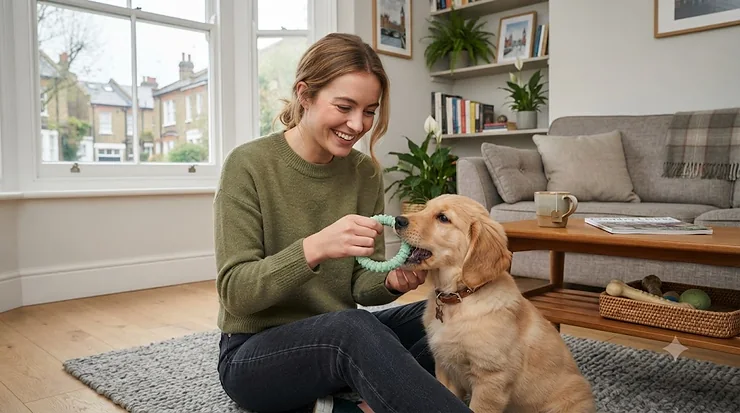
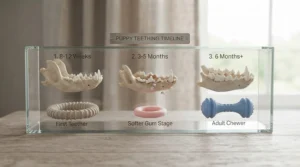
A rubber teething ring for puppies is a circular chew toy, usually made from natural or synthetic rubber, designed to be gentle on a young dog’s sore gums while satisfying the urge to chew during the teething window. If you’re reading this at 2am with a slipper-shaped crime scene at your feet, welcome to the club — nearly every puppy owner ends up here eventually. Between roughly three and seven months of age, your pup is losing 28 needle-sharp milk teeth and growing 42 permanent ones, and their gums genuinely ache while it happens.
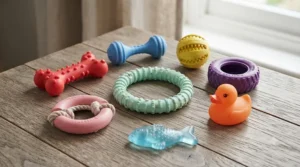
That’s where rubber teething rings for puppies earn their keep. Unlike hard nylon bones or brittle antlers, a well-made rubber ring flexes slightly under bite pressure, which means less risk of chipping those fragile baby teeth and more genuine comfort for tender gums. The shape matters too — a ring is easy for small mouths to grip from any angle, easy to throw for a quick game of fetch, and (crucially, for anyone who has stepped on a stray chew toy at 3am) easy to spot on the floor.
We’ve dug into seven real, currently available rubber teething rings for puppies, compared them honestly against genuine spec sheets and aggregated review sentiment, and built out practical guidance you won’t find on a standard Amazon listing — from setup routines to safety red flags. Whether you’re after a £5 budget option to test the waters or a premium ring built to survive an entire adolescence, there’s something here that fits your puppy, your wallet, and your (currently very chewed) household.
Quick Comparison Table
| Product | Material | Best For | Price Range |
|---|---|---|---|
| KONG Puppy Ring | Softer natural rubber | New puppies, gentle chewers | £8–£12 |
| Nylabone Puppy Teething Ring | Sensory Material rubber, chicken flavour | First-time buyers, budget testing | Under £6–£8 |
| KONG Puppy Binkie | Softer natural rubber | Toy and small breeds | £6–£9 |
| Petstages ORKA Grow with Me Ring | TPE rubber, multi-texture | Long-term durability seekers | £9–£13 |
| Trixie Denta Fun Ring | Natural rubber, mint flavour | Dental hygiene-focused owners | £6–£10 |
| KONG Puppy Goodie Bone with Rope | Natural rubber + cotton rope | Interactive tug-and-chew play | £8–£12 |
| Budget Multi-Pack Rubber Teething Ring | Rubber (unbranded) | Rotation toys, tight budgets | £4–£7 |
Looking at the table, the pattern that jumps out is how much the “best for” column varies even though every product here is technically the same category. KONG Puppy Ring and KONG Puppy Binkie lean on the same softer rubber formula but differ mainly in size and shape, which matters more than owners often assume when a puppy’s jaw is barely big enough to close around a standard ring. Meanwhile, Petstages ORKA Grow with Me Ring sits at the premium end specifically because TPE rubber holds up longer, which changes the maths on cost-per-month rather than cost-per-toy.
💬 Just one click — help others make better buying decisions too!😊
Top 7 Rubber Teething Rings for Puppies: Expert Analysis
1. KONG Puppy Ring — gentlest natural rubber for tiny teeth
The standout here is KONG’s proprietary softer puppy rubber, formulated specifically to be gentler than the classic red KONG adult toys. The ring measures around 12cm across and is made from a natural rubber compound engineered to flex rather than resist, which matters enormously when you’re dealing with milk teeth that can chip on anything too rigid. It’s rated for puppies up to roughly nine months old, which broadly maps onto the entire deciduous-to-adult transition.
Based on the spec comparison with harder KONG lines, the softness here is a deliberate trade-off: less durability in exchange for genuinely reduced strain on developing teeth and jaw joints. What most buyers overlook about this model is that the ring shape (rather than a bone or stick) lets a puppy grip it from any angle, which is genuinely useful in the first few clumsy weeks of chewing. This makes it best suited to puppies aged roughly 8–16 weeks who are just starting to lose milk teeth, rather than a five-month-old adolescent already cutting adult molars with real force behind the bite.
Reviewers consistently report that the ring survives the classic 3–6 month teething window comfortably, though a recurring theme in feedback is that it doesn’t hold up once a larger breed reaches the adolescent power-chewing stage — which tracks, given the compound is intentionally softer than KONG’s adult-grade rubber.
Pros:
- ✅ Softer rubber genuinely reduces strain on baby teeth
- ✅ Ring shape is easy for small mouths to grip
- ✅ Bounces well for supervised fetch sessions
Cons:
- ❌ Wears through fast with strong adolescent chewers
- ❌ Not designed for aggressive or large-breed jaws
Priced around £8–£12, this sits in the mid-range bracket and represents solid value specifically for the early teething phase — just budget for a tougher replacement once your pup’s adult teeth settle in.
2. Nylabone Puppy Teething Ring — budget-friendly chicken-flavoured relief
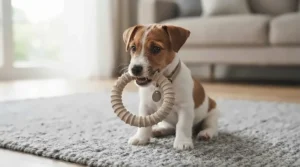
The immediate hook is the flavour-through-material design: rather than a surface spray that wears off in days, the chicken flavour is baked into Nylabone’s Sensory Material itself, sized for puppies up to around 11kg. That’s a meaningfully different proposition to toys that lose their appeal the moment the coating disappears.
Here’s what to weigh: the Sensory Material is softer than Nylabone’s harder nylon bones, which makes it appropriate for milk teeth but genuinely unsuitable for a puppy already displaying strong adult-tooth chewing force. On paper this means it’s best positioned as an entry-level toy — a way to gauge whether your particular puppy is even motivated by chew rings before spending more on a premium option. It’s not a toy built to last months of daily hard chewing; it’s built to be enticing during the earliest, gentlest phase.
Aggregated review sentiment sits in the high-3-star to low-4-star range, with a recurring theme of owners praising how quickly puppies engage with it thanks to the built-in flavour, alongside a parallel complaint stream about the ring flattening or splitting within a few weeks under a heavier chewer’s jaw.
Pros:
- ✅ Flavour baked through the material, not just sprayed on
- ✅ Genuinely budget-friendly entry point
- ✅ Lightweight and easy for tiny puppies to carry
Cons:
- ❌ Softens and splits quickly under strong chewers
- ❌ Not suited to medium or large breed adolescents
At under £6–£8, this is one of the cheapest genuine options on the list — a sensible first purchase rather than a long-term investment.
3. KONG Puppy Binkie — pocket-sized pacifier shape for small breeds
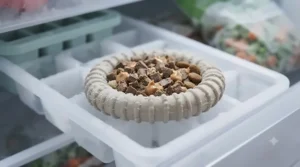
The Binkie’s defining feature is its pacifier-and-ring hybrid shape with a hollow centre built for stuffing, made from the same softer puppy rubber as the standard KONG Puppy Ring but scaled down for smaller mouths. The hollow chamber accepts KONG puppy paste, soaked kibble, or a smear of unsalted peanut butter, and — this is the clever bit — can be frozen afterwards.
Reviewers consistently note that stuffing and freezing transforms this from “just another chew toy” into genuine gum relief, since cold pressure is one of the few remedies vets and behaviourists across multiple sources agree actually numbs inflamed gum tissue rather than merely distracting from it. What most buyers overlook is sizing: the Binkie’s smaller profile makes it a far better fit for toy and small breeds (think Chihuahuas, dachshund puppies, miniature poodles) whose jaws simply can’t manage a full-sized ring comfortably. Larger breed puppies tend to lose interest fast once their bite strength outgrows the toy’s scale.
Feedback frequently describes the Binkie becoming a puppy’s “comfort object” during the roughest teething days, though a consistent minor gripe is that its rounded shape rolls away easily on hard flooring, sending puppies skidding after it across the kitchen.
Pros:
- ✅ Freezable hollow centre adds genuine cold-relief benefit
- ✅ Scaled specifically for small and toy breeds
- ✅ Doubles as a food-enrichment toy
Cons:
- ❌ Rolls away easily on hard floors
- ❌ Too small to satisfy medium or large puppies
Expect to pay around £6–£9, making it excellent value if you own a small-breed puppy specifically — less so for anything bigger.
4. Petstages ORKA Grow with Me Ring — three textures that grow with your pup
This ring’s standout feature is its build: three distinct densities of TPE (thermoplastic elastomer) rubber combined into one toy, letting a puppy naturally favour whichever texture suits their current gum sensitivity on any given day. TPE is a food-grade material that’s softer than natural rubber pound-for-pound but noticeably more tear-resistant, according to the brand’s own material testing.
What this means in practice is durability that scales with your puppy rather than a toy you replace the moment teething ends. Based on the spec comparison against single-texture rings, the layered design is specifically engineered to remain relevant from the earliest 8-week milk-tooth stage right through to early adolescence, which is a genuinely different value proposition to a toy built purely for the teething window. This makes it the strongest pick for owners who’d rather buy one durable ring than replace a soft one every few weeks — though it comes at a slightly higher price point, and owners specifically seeking a fully natural rubber (rather than synthetic TPE) product should note the material difference.
Consistent buyer feedback across retailers highlights the multi-texture design holding its shape well over months of use, a notable point of difference from the softer single-density rings earlier in this list.
Pros:
- ✅ Three textures suit changing gum sensitivity
- ✅ TPE rubber resists tearing better than soft natural rubber
- ✅ Genuinely spans the whole teething-to-adolescence period
Cons:
- ❌ Pricier than single-texture budget rings
- ❌ Not a fully natural rubber for owners who prefer that
At roughly £9–£13, this sits mid-premium — and the cost-per-month works out favourably if it genuinely replaces two or three cheaper rings over a puppy’s teething journey.
5. Trixie Denta Fun Ring — mint-flavoured plaque scraper
The defining feature is the serrated edge running around this natural rubber ring, paired with a mint flavour baked through the material. Unlike a smooth ring that offers pure chew satisfaction, the serration is designed to scrape gently along the tooth surface as your puppy gnaws.
Here’s what most owners overlook when comparing chew rings purely on softness: mechanical plaque control is a genuinely separate benefit from gum-soothing, and this ring is one of the few on this list explicitly engineered for both at once. Based on the material and design, it’s best suited to owners who are already thinking beyond teething relief toward long-term dental hygiene — the mint flavour is a nice secondary touch for puppies prone to less-than-fresh breath, a common complaint among new owners in the early months. It’s a natural rubber product, which appeals to buyers specifically avoiding synthetic compounds, though that does mean slightly less tear-resistance than TPE alternatives under heavy chewing.
Because this is a European import line with a smaller UK review pool than the major US brands on this list, we’d flag that aggregated review data is somewhat thinner here — what’s available leans positive on the mint flavour’s staying power, with occasional notes about the serrated edges softening over time.
Pros:
- ✅ Serrated edge adds real mechanical plaque-scraping action
- ✅ Mint flavour helps with early puppy breath
- ✅ Natural rubber material, no synthetic compounds
Cons:
- ❌ Smaller UK review pool than major competitors
- ❌ Serrations soften with extended heavy use
Typically priced around £6–£10, it’s a solid mid-range pick specifically for dental-conscious households.
6. KONG Puppy Goodie Bone with Rope — dual chew-and-tug design
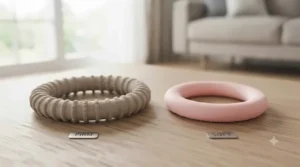
The hook here is the hybrid construction: a rubber bone-ring shape made from KONG’s softer puppy rubber, with a cotton rope threaded through the centre. That combination gives puppies two genuinely different textures — firm rubber and fibrous rope — in a single toy.
Reviewers consistently note that the rope section appeals to puppies who seem to enjoy “flossing” behaviour, working the fibres between their teeth as they chew, which can help dislodge trapped food debris in a way a smooth rubber ring alone can’t replicate. What stands out on the spec sheet is the dual-purpose design: the rope end supports interactive tug-of-war play with an owner, while the rubber end remains gentle enough for solo chewing and gum relief. This makes it particularly well suited to households wanting a toy that also builds bonding time through play, not just something to hand over and walk away from.
The trade-off worth flagging honestly: rope fibres can fray with heavy use, and like any rope toy, loose threads should be trimmed or the toy retired if your puppy starts pulling strands loose and swallowing them — a safety point echoed across veterinary guidance on rope-style chews generally.
Pros:
- ✅ Combines rubber chewing with interactive rope play
- ✅ Rope section helps dislodge food debris between teeth
- ✅ Good for supervised bonding and tug sessions
Cons:
- ❌ Rope can fray and needs monitoring
- ❌ Requires more supervision than a solid rubber ring
At around £8–£12, it’s mid-range and arguably better value for owners who want one toy covering both solo chewing and interactive play.
7. Budget Multi-Pack Rubber Teething Ring — cheapest way to rotate colours and textures
The standout feature is simply price and pack flexibility: an unbranded rubber ring, roughly 16x13cm and 165g, widely sold as a single unit or small multi-pack in randomly assigned colours. It won’t win on brand pedigree, but it earns its place through sheer accessibility.
What most buyers overlook about toy rotation is that it isn’t just a nice-to-have — Blue Cross specifically notes that rubber rings are a durable, easy-to-clean multi-purpose toy well suited to fetch and chewing alike, and rotating several toys regularly helps prevent a bored puppy from fixating on furniture instead. On paper, buying two or three of these budget rings and swapping them weekly can deliver more genuine novelty than owning one expensive ring in isolation. That said, honesty matters here: because this is an unbranded generic listing, verified customer-review data is thinner and less consistent than for the established brands earlier in this list, so treat build-quality claims with a little more caution and inspect the toy regularly for wear.
Where verifiable feedback exists, it tends to focus on value for money and colour variety rather than long-term durability claims, which simply haven’t been tested at the same scale as branded alternatives.
Pros:
- ✅ Extremely low cost per toy for rotation
- ✅ Lightweight and easy for puppies to carry
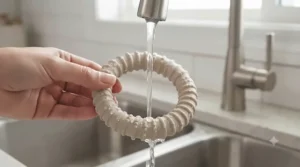
- ✅ Simple to clean under a tap
Cons:
- ❌ Thinner, less verifiable review history than major brands
- ❌ Build quality more variable than established brands
At roughly £4–£7, it’s the cheapest genuine entry on this list — best used as a rotation companion to a more established ring rather than your puppy’s only chew toy.
Practical Usage Guide: Setting Up a Teething Routine With Rubber Teether Rings
Getting real value out of rubber teether rings isn’t just about buying one and hoping for the best — a bit of routine massively improves how much relief your puppy actually gets. Start by introducing the ring during calm moments rather than high-energy play, so your puppy associates it with settling down rather than excitement alone. For stuffable designs like the KONG Puppy Binkie, prep two or three at once with soaked kibble or puppy-safe paste, then freeze them; having a ready supply in the freezer means you’re never caught without relief during a rough teething evening.
In the first 30 days, the most common mistake owners make is leaving a ring out permanently rather than rotating it with two or three other toys — puppies (like small children) lose interest fast in anything that’s always available. Inspect every ring weekly for tears, flattened sections, or chunks that could break off, and retire anything showing damage immediately; this single habit prevents the vast majority of chew-toy-related vet visits. Finally, keep a light layer of supervision during the first few sessions with any new ring shape, simply to confirm your particular puppy chews rather than tries to swallow whole — sizing genuinely matters here, and a ring that’s too small for your breed is a choking risk regardless of how soft the rubber is.
Real-World Scenarios: Matching Ring-Shaped Teething Toys to Your Puppy
Consider three fairly typical households. First, a first-time owner with an 9-week-old Cavalier puppy, working from home with plenty of supervision time — here, a softer option like the Nylabone Puppy Teething Ring or KONG Puppy Binkie makes sense as an affordable way to test engagement before investing further, since a small breed’s bite force is genuinely gentle at this stage.
Second, picture a family with a 5-month-old Labrador who’s already chewing through everything in the house with real force. This is precisely the profile that benefits from the Petstages ORKA Grow with Me Ring‘s tougher TPE construction, since a softer ring simply won’t survive daily use at that bite strength — durability changes the value equation entirely once you factor in how often you’d otherwise be replacing a cheaper toy.
Third, a budget-conscious student living with a rescue puppy of unknown breed mix, chewing moderately but on a tight budget. The Budget Multi-Pack Rubber Teething Ring rotated alongside a single mid-range option like the Trixie Denta Fun Ring offers variety without a large upfront cost, letting the owner observe which shapes and textures their particular puppy actually favours before committing to anything pricier.
How to Choose Rubber Teething Rings for Puppies
- Match the size to your breed’s projected adult jaw, not just their current puppy size — a ring too small becomes a choking risk as your dog grows into it.
- Check the rubber grade against your puppy’s age. Softer compounds like KONG’s puppy formula suit milk teeth; tougher TPE blends suit adolescents already cutting adult teeth.
- Look for stuffable or freezable designs if gum inflammation seems severe — cold pressure genuinely helps, according to consistent veterinary guidance across multiple sources.
- Favour BPA-free rubber materials with clear manufacturer safety documentation over unbranded listings with no material disclosure.
- Consider texture variety — ridges, nubs, and serrated edges add gum-massaging and mild plaque-control benefits beyond a plain smooth ring.
- Budget for rotation, not just one toy — two or three cheaper rings often outperform a single expensive one in keeping a puppy engaged.
- Read aggregated review themes, not star ratings alone — durability complaints tend to cluster around specific breed sizes, which tells you more than an average score.
Soft Rubber Teething Toys vs Other Chew Materials
| Feature | Rubber Rings | Rope Toys | Hard Nylon Chews | Frozen Vegetables |
|---|---|---|---|---|
| Gentleness on baby teeth | High | Moderate | Low | High |
| Durability | Moderate–High | Low–Moderate | High | Very Low (single use) |
| Cold-relief option | Yes (freezable) | No | No | Yes |
| Cleaning ease | Easy (rinse) | Harder (fabric) | Easy | N/A |
| Best For | General teething relief | Interactive tug play | Adolescent power chewers | Occasional cooling treat |
The table makes the trade-offs fairly clear: soft rubber teething toys sit in a genuine sweet spot between gentleness and durability, which is exactly why they dominate vet and rescue-charity recommendations for the core 3–7 month teething window. Hard nylon chews last far longer but carry real fracture risk for milk teeth still loosening in the gum, while frozen vegetables offer excellent short-term cooling relief without any lasting durability at all. If your puppy is still cutting baby teeth, rubber’s flexibility earns its place as the safer default, with harder materials better reserved for once adult teeth have properly set.
✨ Don’t Miss These Exclusive Deals!
🔍 Take your puppy’s teething journey to the next level with these carefully selected rubber rings. Click on any highlighted item to check current pricing and availability. These toys will help create the calm, chewed-shoe-free household your family will love! 🐾
Common Mistakes When Buying Rubber Teething Rings for Puppies
A frequent error is buying based on cute colours or packaging rather than checking size against your specific breed’s adult jaw — a ring perfectly sized for a Spaniel puppy can become a genuine choking hazard once swallowed whole by an enthusiastic Cocker adolescent. Another common misstep is assuming “rubber” automatically means safe; material quality varies enormously between established brands with published safety testing and unbranded imports with none, so it pays to check for BPA-free rubber materials explicitly stated on the listing rather than assumed.
Owners also frequently under-buy, purchasing a single ring and expecting it to last the entire teething period. As covered in the usage guide above, rotation genuinely matters — both for engagement and for giving worn toys a chance to be inspected and retired safely. Finally, a subtler mistake: choosing the hardest, most “indestructible”-marketed ring available out of a desire for value, without accounting for the fact that genuinely tough materials can be too rigid for milk teeth still loosely rooted in sensitive gums, risking exactly the dental trauma a teething toy is meant to prevent.
BPA-Free Rubber Materials & Ring Toy Chew Safety
Material safety is where marketing language and genuine regulation start to diverge, so it’s worth being precise. In the UK, the Food Standards Agency has been reviewing restrictions on bisphenol A (BPA) in food contact materials, reflecting wider health concerns about the chemical’s potential hormonal effects — while this regulation is aimed at human food packaging rather than pet toys specifically, it’s a useful signal of why reputable pet brands increasingly market their rubber as BPA-free as standard practice. When you see “BPA-free rubber materials” on a listing from an established brand like KONG or Petstages, it typically reflects genuine third-party or in-house material testing; on unbranded generic listings, treat the claim with a touch more scepticism unless supporting documentation is provided.
Ring toy chew safety extends beyond material chemistry, too. Always size the ring to your breed, supervise the first several sessions with any new toy, and retire anything showing tears, flattened sections, or missing chunks immediately — a fragment small enough to swallow is a genuine choking and intestinal-blockage risk regardless of how soft or BPA-free the rubber started out. If in doubt about a specific product’s safety documentation, your vet or a UK rescue charity’s toy-safety guidance is a more reliable reference point than star ratings alone.
What to Expect: Real-World Performance & Gum-Soothing Shapes
Specs on a listing rarely translate directly into lived experience, so here’s what the everyday reality tends to look like. In the first week with a new ring, most puppies investigate cautiously before committing to real chewing — don’t be surprised if your pup ignores an expensive ring in favour of chewing your shoelace on day one; engagement often builds over several days rather than instantly. Once teething discomfort peaks, typically around four to five months for many breeds, expect noticeably more enthusiastic and prolonged chewing sessions, sometimes 20–30 minutes at a stretch, as the gum-soothing shapes genuinely start earning their keep against real discomfort rather than idle curiosity.
Texture matters more in practice than it appears on a spec sheet. Ridged and serrated gum-soothing shapes, like those on the Trixie Denta Fun Ring, tend to attract more sustained attention during peak teething discomfort than smooth rings, likely because the varied surface provides more targeted pressure against specific sore spots along the gumline. Expect any rubber ring, however durable its marketing claims, to show visible wear within 6–10 weeks of daily heavy use — that’s not a manufacturing flaw, it’s simply the honest lifespan of a soft material doing its job.
Long-Term Cost & Maintenance
Total cost of ownership rarely matches the sticker price alone. A £5 budget ring replaced every three weeks under heavy chewing works out to roughly £8–£10 monthly, while a £12 Petstages ORKA Grow with Me Ring that survives two to three months comfortably can land at a similar or lower monthly cost despite the higher upfront price — durability, not price tag, ultimately drives value here. Maintenance itself is simple: rinse rubber rings under warm water after outdoor use, and an occasional wash with mild unscented soap keeps stuffable designs free of leftover food residue that can otherwise attract bacteria or odour.
Budget roughly £15–£25 across a puppy’s full teething period if you’re rotating two or three rings of varying price points, which tends to outperform relying on a single premium toy both for engagement and for redundancy if one toy needs replacing mid-routine. Factor in that most rubber teething rings for puppies simply aren’t designed for a dog’s entire lifetime — treat replacement as a normal, expected cost rather than a sign you bought the wrong product.
Frequently Asked Questions
❓ What is the best rubber teething ring for puppies?
❓ Are rubber teething rings safe for puppies?
❓ How often should I replace a puppy's teething ring?
❓ Can I freeze a rubber teething ring for my puppy?
❓ Do rubber teething rings help with puppy biting?
Conclusion
Choosing among rubber teething rings for puppies ultimately comes down to matching material softness and durability to your specific puppy’s age, breed size, and chewing strength — not chasing the toy with the flashiest marketing. For a brand-new puppy just starting to lose milk teeth, something like the KONG Puppy Ring or Nylabone Puppy Teething Ring offers genuinely appropriate softness without overspending before you know your pup’s habits. For an adolescent already chewing with real force, the Petstages ORKA Grow with Me Ring‘s tougher TPE construction earns its higher price through genuine longevity, while budget-conscious households can build a perfectly effective rotation around the Budget Multi-Pack Rubber Teething Ring alongside one sturdier mid-range option.
Whichever you choose, remember that no single ring is a permanent solution — rotation, regular inspection, and supervised early use matter as much as the product itself. As covered throughout this guide, rubber chew toys remain a durable, flexible option specifically designed to withstand vigorous puppy chewing without the splinter or fracture risks harder materials can carry. Treat teething as the temporary (if exhausting) phase it is, keep a couple of appropriately sized rings in rotation, and both your puppy’s gums and your furniture will thank you.
✨ Ready to Soothe Those Sore Puppy Gums?
🔍 Browse today’s picks and find the rubber teething ring that fits your puppy’s exact chewing stage. Your shoes — and your pup’s gums — will both benefit! 🐶
Recommended for You
- Puppy Kong Toy Review 2026: 7 Tough Picks That Actually Last
- 7 Best Freezable Teething Toys for Puppies UK (2026 Guide)
- Puppy Teething Toys 2026: 7 Best Chews for Sore Gums
Disclaimer: This article contains affiliate links. As an Amazon Associate, I earn from qualifying purchases. If you purchase products through these links, we may earn a small commission at no additional cost to you.
✨ Found this helpful? Share it with your friends! 💬🤗
