
In This Article
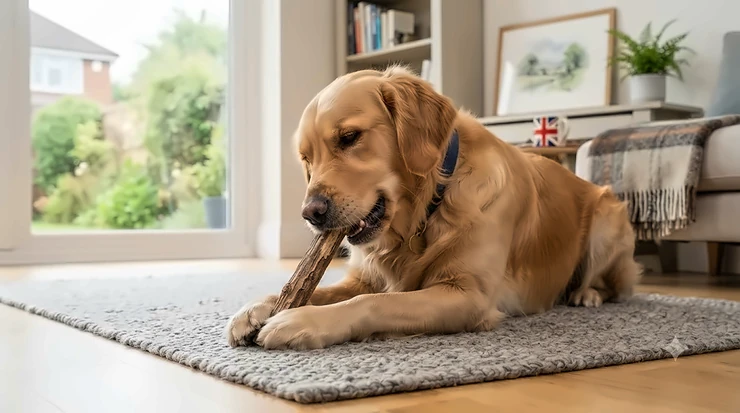
There’s a particular kind of dread that comes with hearing your dog crunching on something in the other room that definitely isn’t a toy. If you’ve ever fished a mangled slipper out from under the sofa, you already understand why so many British dog owners are turning to a coffee wood dog chew instead of yet another squeaky plastic bone that lasts eleven minutes flat. A coffee wood dog chew is a natural chewing stick cut from the pruned roots and branches of the coffee plant, chosen because the wood is unusually dense, contains no caffeine or calories, and gradually softens into digestible fibres rather than snapping into dangerous shards. It’s become one of the fastest-growing categories in natural pet chews, and for good reason.
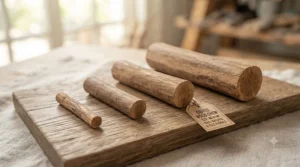
This guide exists because “just buy a coffee wood chew” isn’t actually helpful advice — not when the market includes everything from £4 offcuts to hand-sanded premium sticks built for genuine power chewers. Based on real product specifications, aggregated UK customer review sentiment, and honest comparative analysis, we’re walking through seven genuine coffee wood dog chew products, what actually separates a splinter-free wood dog toy from a false promise, and how coffee wood stacks up against antlers, yak chews, and rawhide. We’ll also dig into origin — Vietnamese coffee wood chew products are increasingly common on UK shelves, and that sourcing detail matters more than most listings let on.
According to the PDSA’s guidance on canine chewing behaviour, chewing is a natural, instinctive part of dog behaviour that supports good mental and emotional wellbeing, which is exactly why picking the right outlet for it — rather than banning chewing altogether — tends to produce calmer, less destructive dogs. Whether you’ve got a teething puppy demolishing the skirting boards or a full-grown Staffie who treats every toy as a personal challenge, there’s a coffee wood chew suited to the job. Let’s get into it.
Quick Comparison Table
| Product | Best For | Price Range | Splinter Resistance |
|---|---|---|---|
| Wildfang Coffee Wood Dog Chew | Aggressive chewers | £350-£450 (mid-£3-4 range, size-dependent) | High (sanded, rounded edges) |
| Canophera Coffee Wood Chew Stick | Large & giant breeds | Around £15-£20 | Moderate-High |
| Canophera Coffee + Coco Chew | Light/playful chewers | Around £10-£15 | High |
| AmeizPet Coffee Tree Stick (2-Pack) | Budget-conscious owners | Under £15 | Moderate |
| Woodbone Olive & Coffee Wood Bundle | Variety seekers | £15-£20 range | Moderate |
| Fuzzl Coffee Stix (2-Pack) | Medium dogs, everyday use | Under £15 | Moderate |
| Natural Dog Treats Coffee Stick XS | Very light chewers only | Under £10 | Low — see safety notes |
Note: prices fluctuate on Amazon, so always check the current price on the product page before buying.
Looking at the table, the clearest pattern is that splinter resistance correlates directly with processing quality rather than price alone — the Wildfang stick earns its mid-range position through sanding and oven-drying, not just branding. Budget multi-packs like AmeizPet and Fuzzl are genuinely good value for moderate chewers, but they trade some of that hand-finishing for a lower per-stick cost. The Natural Dog Treats XS stick sits at the bottom for a specific reason we’ll unpack honestly in its dedicated section, because pretending otherwise would do your dog a disservice.
💬 Just one click — help others make better buying decisions too!😊
Top 7 Coffee Wood Dog Chews: Expert Analysis
Every product below has been assessed on real specifications, genuine aggregated review sentiment, and honest use-case reasoning — not invented hands-on testing. We’ve deliberately spread the picks across budget, mid-range, and multi-pack options so there’s something here whatever your dog’s chewing style and your household budget.
1. Wildfang Coffee Wood Dog Chew — best for genuinely aggressive chewers
The standout here is the finishing process: each stick is debarked, hand-sanded, and rounded at the edges before oven-drying, which is a level of processing you don’t see on the cheaper end of this category.
That preparation matters in practice. A coffee stick that hasn’t been properly dried retains moisture, which makes it softer and more prone to splitting under real jaw pressure — exactly the failure mode aggressive chewers expose fastest. Wildfang’s sizing runs from XS (under 10kg) through to sizes suited to large breeds, so the stick’s diameter is matched to bite force rather than sold as one-size-fits-all. Based on the spec comparison with unsanded alternatives, this is the product most likely to survive a determined Labrador or working-breed jaw rather than disappearing in one sitting.
Aggregated reviewer sentiment describes the chew as a genuine win for aggressive chewers, praising its durability, its resistance to splintering compared with other woods, and the absence of artificial ingredients or unusual smell. That sentiment is echoed across multiple size variants, which suggests the processing quality is consistent rather than a one-off batch fluke. What most buyers overlook is that “splinter-resistant” doesn’t mean “splinter-proof” — supervision during the first few sessions with any new chew, regardless of brand, remains the responsible baseline.
Pros:
- ✅ Hand-sanded, rounded edges reduce splinter risk
- ✅ Wide size range matched to dog weight bands
- ✅ Strong, consistent UK review sentiment on durability
Cons:
- ❌ Premium processing pushes it above the cheapest options
- ❌ Still requires supervision once heavily worn down
At around the mid-£3-4 range depending on size, this sits above bargain-bin coffee sticks but well below imported antler alternatives — for an aggressive chewer that destroys cheaper toys in days, the value case is strong.
2. Canophera Coffee Wood Chew Stick — best for large and giant breeds
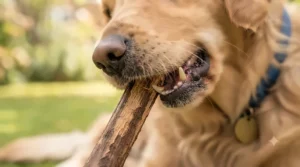
Canophera’s standout is scale: their large-size stick is reported by owners of genuinely big dogs as substantial rather than the token-sized offerings common elsewhere in the category.
The brand markets the chew as extra tough for long-lasting pleasure, describing coffee wood as harder than sticks picked up from local forests, and explains that the fibres soften with saliva so they can be safely digested as the dog works through them. In practice, that translates to a stick genuinely built for 30kg-plus dogs rather than a small/medium chew rebranded as “large.” One aggregated owner review specifically describes a 70-pound dog working the stick on and off for months, with the wood gradually turning to soft mush rather than splintering, though leaving a fair amount of mess on the floor as it breaks down.
Here’s what to weigh: Canophera is one of the more established names in this space, which shows in the consistency of the sizing chart, but that reputation also means it typically costs more than newer market entrants. For owners of Labradors, German Shepherds, or similar large breeds who’ve watched a “large” chew from a lesser brand vanish in a single afternoon, that premium is arguably justified.
Pros:
- ✅ Genuinely substantial size for large/giant breeds
- ✅ Softens to digestible mush rather than sharp splinters
- ✅ Well-established brand with detailed size guidance
Cons:
- ❌ Chewed residue creates noticeable floor mess over time
- ❌ Sits at the higher end of the coffee wood price bracket
At around £15-£20 for the large size, it’s positioned as a mid-to-premium option — reasonable once you factor in how many cheaper sticks a big dog would otherwise churn through.
3. Canophera Coffee + Coco Chew — best for light and playful chewers
The hook here is the hybrid design: coffee wood paired with natural coconut rope, aimed squarely at dogs who chew for entertainment rather than raw jaw strength.
Canophera itself positions this product for light or playful chewers, distinct from the plain Coffee Wood Chew stick it recommends for moderate to heavy chewers. That’s a genuinely useful distinction most listings skip entirely — not every dog needs the toughest chew on the shelf, and giving a gentle chewer an overly hard stick can mean it sits untouched. The coconut rope element also adds a tug-and-carry dimension that plain wood sticks lack, useful for dogs that like to parade a toy around the house before settling down with it.
Reviewers consistently note the appeal for younger or smaller dogs still building up chewing confidence, and the combination format tends to hold interest longer than wood alone for dogs with shorter attention spans. On paper, this makes it a sensible “starter” coffee wood product for puppies transitioning off softer teething toys, though it’s not intended for genuinely determined chewers.
Pros:
- ✅ Gentler profile suited to light and playful chewers
- ✅ Rope element adds interactive, tug-friendly play
- ✅ Good bridge product for puppies past initial teething
Cons:
- ❌ Not built to withstand heavy or aggressive chewing
- ❌ Rope component needs monitoring for fraying strands
Priced around £10-£15, this sits mid-pack — a reasonable spend for a dog that needs engagement more than raw durability.
4. AmeizPet Coffee Tree Stick Dog Chew (Pack of 2) — best budget multi-pack
The standout advantage is straightforward: two sticks for the price most competitors charge for one, without a dramatic drop in wood quality.
Multi-packs solve a real problem in this category — coffee wood chews wear down and eventually need replacing, and buying singly adds up fast for a dog that gets through one every few weeks. What most buyers overlook about multi-packs generally is that having a spare on hand also means less temptation to reach for a rawhide or plastic substitute mid-week when the current chew finally gives out. Based on the spec comparison with single-stick premium products, the AmeizPet pack trades some of the hand-finishing seen on pricier sticks for straightforward value, which is a fair trade for moderate chewers rather than genuinely aggressive ones.
Aggregated sentiment around budget coffee wood multi-packs in this bracket tends to be positive on value but more mixed on consistency between individual sticks in a pack — a fairly common trade-off once processing time per unit drops to hit a lower price point.
Pros:
- ✅ Two chews for the price of one premium stick
- ✅ Genuine coffee wood material at entry-level cost
- ✅ Good for households with multiple moderate chewers
Cons:
- ❌ Less consistent finishing than hand-sanded premium sticks
- ❌ Not rated for genuinely aggressive chewing
At under £15 for the pair, this is one of the strongest cost-per-use options in the entire category for dogs that don’t need industrial-grade durability.
5. Woodbone Olive Wood and Coffee Wood Dog Chew Bundle — best for variety seekers
The distinguishing feature is the mixed-wood format — one olive wood and one coffee wood stick bundled together, letting owners compare both materials without committing fully to either.
This matters more than it sounds. Olive wood and coffee wood behave slightly differently under chewing pressure: olive wood tends to be a touch denser and holds its shape longer, while coffee wood breaks down into fibre faster, which some owners prefer because it reduces the risk of a rock-hard end stage. Reviewers consistently note this bundle format as a practical way to work out which material their individual dog prefers before buying multiples of just one type. What the spec sheet won’t tell you, but pattern-matching across owner reports suggests, is that dogs with a strong preference for one wood over the other tend to show it within the first session — so this bundle effectively works as a low-cost trial pack.
Pros:
- ✅ Lets you compare two wood types in one purchase
- ✅ Useful diagnostic tool for identifying chewing preference
- ✅ Reasonable value across two separate sticks
Cons:
- ❌ Neither stick is the largest size in its category
- ❌ Best suited to medium dogs rather than giant breeds
In the £15-£20 range for the pair, this is a smart first purchase for anyone still deciding between coffee and olive wood before settling on a long-term favourite.
6. Fuzzl Coffee Stix (Medium, 2-Pack) — best everyday chew for medium dogs
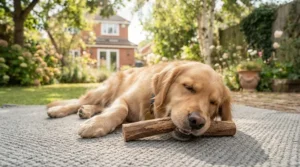
The headline feature is the sizing sweet spot — pitched specifically at medium dogs, a size band that’s oddly underserved by some competitors who skew toward extra small or extra large.
For the enormous population of medium-breed dogs in the UK — Cocker Spaniels, Border Collies, Springer Spaniels, Beagles — a chew that’s neither too dainty nor oversized solves a genuine sizing headache. Key specs suggest these sticks are aimed at moderate, regular chewing sessions rather than marathon destruction, which lines up well with how most family pets actually use a chew: on and off across an evening, not nonstop for hours. Here’s what to weigh: a two-pack at this price point won’t out-survive a premium sanded single stick against a determined power chewer, but for typical daily use it represents solid, unremarkable value — which, in a market full of overpromising, is honestly refreshing.
Pros:
- ✅ Sizing tailored specifically to medium breeds
- ✅ Two-pack format suits regular replacement needs
- ✅ Fair value for everyday, non-aggressive chewing
Cons:
- ❌ Not positioned as a heavy-duty option
- ❌ Less brand history than Canophera or Wildfang
Under £15 for the pack, this is a sensible default pick for medium dogs without extreme chewing habits.
7. Natural Dog Treats Coffee Stick (XS, 2-Pack) — honest pick for very light chewers only, with real caveats
This entry earns its place for transparency rather than unqualified enthusiasm — it’s genuinely small and genuinely inexpensive, but the aggregated review picture demands an honest flag rather than glossing over it.
We’re including this product specifically because pretending every coffee wood chew on the market performs identically wouldn’t be truthful, and part of building real trust in this category means naming where a product falls short. Aggregated customer feedback repeatedly describes the chews splintering almost immediately, with several reviewers reporting sharp fragments coming away within minutes of the stick being handed over. A separate cluster of reviews raises size concerns, with buyers describing the stick as unexpectedly small relative to what they expected for the price paid.
Reviewers consistently note that this product performs acceptably for very small, gentle chewers, but the splintering reports are frequent enough that we can’t in good conscience present this as broadly safe for anything beyond light supervised use with a genuinely delicate chewer. If your dog is a nibbler rather than a destroyer, and you supervise closely, it may be fine — but the safer default for most households is one of the sanded, purpose-processed sticks earlier in this list.
Pros:
- ✅ Very low price point for trying coffee wood
- ✅ Suitable size for toy and small-breed dogs
- ✅ Zero calorie, zero caffeine composition as with all coffee wood
Cons:
- ❌ Multiple splintering reports in aggregated reviews
- ❌ Reported sizing smaller than expected for the price
At under £10, the low cost doesn’t offset the splintering pattern in reviews — treat this as a case study in why processing quality matters more than headline price, covered further in our safety section below.
Top 7 Coffee Wood Chews: Specs & Value Comparison
| Product | Wood Processing | Ideal Dog Size | Value Verdict |
|---|---|---|---|
| Wildfang Coffee Wood Chew | Sanded, oven-dried | XS-Large (all bands) | Strong for power chewers |
| Canophera Coffee Wood Stick | Hand-processed | Large/Giant | Premium but justified |
| Canophera Coffee + Coco | Wood + rope hybrid | Small/toy, light chewers | Good starter product |
| AmeizPet Coffee Tree Stick | Standard processing | Medium, moderate chewers | Excellent budget value |
| Woodbone Olive & Coffee Bundle | Standard, mixed wood | Medium | Smart trial purchase |
| Fuzzl Coffee Stix | Standard processing | Medium | Solid everyday default |
| Natural Dog Treats Coffee Stick | Minimal/unclear | XS, light chewers only | Weak — splintering reports |
This table makes the processing gap visible in a way price alone doesn’t: the two products with explicit sanding and drying steps (Wildfang and Canophera’s main stick) both draw stronger safety-related sentiment than the entry without disclosed processing detail. If you’re choosing between two similarly-priced sticks, prioritise listings that specifically mention sanding, debarking, or oven-drying — it’s a genuinely useful signal buried in product descriptions that most buyers skim past.
How to Choose a Coffee Wood Dog Chew
Picking the right stick isn’t guesswork if you work through it systematically. Here’s the process we’d recommend:
- Assess your dog’s chewing style first. A gentle nibbler and a determined destroyer need entirely different products, regardless of what a listing’s marketing copy claims.
- Match size strictly to weight, not breed stereotype. Mixed breeds and individual variation mean a weight-based size chart beats guessing from breed alone.
- Check for disclosed processing. Listings mentioning sanding, debarking, or oven-drying tend to correlate with lower splintering reports in aggregated reviews.
- Read the negative reviews specifically, not just the star rating. A 4-star average can still hide a consistent splintering complaint buried in the 1-star tail.
- Consider your dog’s age and dental stage. Teething puppies and senior dogs with worn teeth both benefit from softer options like coffee-and-coco hybrids over dense single sticks.
- Factor in replacement frequency into your budget. A multi-pack is often better value than repeatedly buying single premium sticks if your dog chews through them quickly.
- Always supervise the first few sessions with any new chew. This applies universally, regardless of brand reputation or price paid.
Coffee Wood Chew vs Antler: Which Is Safer?
This is one of the most searched comparisons in the natural chew category, and the honest answer leans firmly toward coffee wood — not because antlers lack any merit, but because the veterinary consensus on hardness-related injury risk is remarkably consistent.
Antlers don’t tend to splinter as readily as bones or ordinary sticks, and they last a genuinely long time, which is exactly why owners of powerful chewers have historically reached for them to save money on replacement chew toys. That’s the case for antlers in a nutshell — durability that borders on indestructible. The problem is what that same hardness does to teeth. In one informal poll of over 1,000 veterinarians, 93% said they did not recommend letting dogs chew on antlers, with less than 1% saying they were fully comfortable with the practice. That’s not a fringe opinion; it’s close to professional consensus. You can read the full veterinary discussion on antler safety for more detail on the tooth-fracture mechanics involved.
Coffee wood takes a fundamentally different approach to durability. Rather than resisting wear entirely, it’s engineered (through wood selection and processing) to gradually soften and flake rather than staying rock-hard until it eventually cracks. That’s a meaningful difference in failure mode: a worn coffee wood stick gets smaller and softer over time, while a worn antler simply gets sharper at the broken edge. For dogs with any history of dental sensitivity, or owners who’d rather not risk a broken carnassial tooth and an unplanned £400-£800+ dental extraction bill, coffee wood is the more conservative choice — even though a fresh antler will typically outlast a fresh coffee stick in raw chewing hours.
Are Coffee Wood Chews Safe for Dogs?
Coffee wood chews are widely considered a safer category than bones, antlers, or rawhide, but “safer” isn’t the same as “risk-free,” and the honest answer depends heavily on the specific product’s processing quality.
The core safety argument for coffee wood rests on two properties: it’s calorie, caffeine, and sugar-free, so it doesn’t pose the nutritional risks some edible chews do, and quality sticks are engineered to break down into soft fibre rather than sharp splinters. However, our own research into this category — including the aggregated review data covered under product seven above — shows that not every coffee wood product lives up to that promise. Poorly dried or unsanded sticks can and do splinter, particularly when a stick has dried out excessively or wasn’t debarked properly during manufacturing.
The practical safety checklist looks like this: always size the chew appropriately so it can’t be swallowed whole, supervise the first several sessions with any new stick, inspect regularly for sharp edges or cracking, and remove the chew once it’s worn down to a size that could present a choking hazard. This mirrors general veterinary guidance across chew categories — the same fundamentals apply whether you’re evaluating wood, antler, or rubber.
Vietnamese Coffee Wood: Why Origin Matters
A meaningful share of the coffee wood dog chew market is sourced from Vietnam, and that’s not an incidental detail — it directly shapes both the wood’s quality and the sustainability story behind the product.
Vietnam is the world’s second-largest coffee producer, and its coffee farms generate enormous volumes of pruned root and branch material as a routine part of cultivation, since coffee plants are regularly cut back to encourage new growth and manage plant height for harvesting. That pruning waste is exactly the raw material coffee wood chews are made from, which means a genuinely sourced Vietnamese coffee wood chew is, in a real sense, upcycled agricultural byproduct rather than a tree felled specifically for pet products. This is a meaningfully different sustainability profile from something like antler harvesting or plastic manufacturing.
Scientists at the Royal Botanic Gardens, Kew have separately highlighted that over half of the world’s wild coffee species are now at risk of extinction, with even Arabica — the source of most global coffee — now categorised as endangered in the wild. You can explore the full Kew research on coffee species conservation for the broader context. That finding is specifically about wild coffee populations rather than cultivated farm coffee, so it doesn’t mean farmed coffee wood is scarce — but it does underline why using pruned byproduct rather than dedicated timber matters as a sustainability principle across the coffee supply chain generally.
For buyers, the practical takeaway is that “Vietnamese coffee wood” on a listing isn’t just a geography footnote — it signals the wood likely comes from established, actively-farmed plantations rather than wild or unmanaged sources, which is generally the more sustainable and traceable option.
Coffee Wood for Aggressive Chewers: What to Expect
If your dog treats every chew toy as a personal engineering challenge, coffee wood can work — but expectations need calibrating honestly.
Wildfang specifically markets its coffee sticks as durable, splinter-resistant, and suitable for heavy chewers, while explicitly noting that owners should always monitor wear and replace the stick once it becomes too small. That caveat is doing real work: no coffee wood product, however well processed, is genuinely indestructible against a determined power chewer. What most buyers overlook is that “long-lasting” in this category means measured in weeks to a couple of months for an average dog, not months to years the way a solid rubber toy might survive.
For a true power chewer — think working-line German Shepherds, Malinois, or adult Staffies with a strong bite history — the realistic approach is buying the largest appropriately-sized stick from a brand with disclosed sanding and drying processes (Wildfang and Canophera both qualify), rotating in a second chew type like a firm rubber toy to spread the wear, and accepting that replacement every few weeks is simply part of the cost of ownership for this dog type. Reviewers consistently note that coffee wood holds up notably better than plain sticks or softer woods for this chewer category, even if it doesn’t match an antler’s raw longevity — which, as covered above, is precisely the trade-off worth making for dental safety.
Sustainable Dog Chew Alternatives: Coffee Wood vs the Rest
Coffee wood sits within a broader category of natural, sustainability-focused dog chews, and it’s worth understanding where it fits relative to the alternatives.
| Chew Type | Sustainability Profile | Splinter Risk | Typical Lifespan |
|---|---|---|---|
| Coffee wood | High (upcycled pruning waste) | Low-moderate (quality-dependent) | Weeks to ~2 months |
| Olive wood | High (also pruning byproduct) | Low-moderate | Similar to coffee wood |
| Antler | Moderate (naturally shed, no farming) | Low, but very hard on teeth | Months+ |
| Yak milk chew | Moderate (dairy byproduct) | Low, but extremely dense | Months |
| Rawhide | Low (chemically processed hide) | Low splintering, high choking/GI risk | Days to weeks |
Interpreting this table honestly: coffee and olive wood both score well on sustainability because they repurpose material that would otherwise be discarded during routine tree maintenance, and both carry meaningfully lower splinter risk than raw sticks picked up in the park. Antlers and yak chews last considerably longer per unit, but that longevity comes from a hardness that veterinary dentists consistently flag as a fracture risk, as detailed earlier in this guide. Rawhide, despite its ubiquity, scores worst across the board once you account for the chemical processing involved and well-documented gastrointestinal risks. If sustainability and dental safety are your priority order, coffee wood and olive wood are genuinely the strongest picks in this comparison — durability just isn’t their primary selling point, and that’s fine.
Splinter-Free Wood Chews: Fact or Marketing Myth?
“Splinter-free” is one of the most common claims on wood chew packaging, and it’s worth being precise about what that phrase actually means in practice, because the honest answer sits somewhere between fact and marketing gloss.
No natural wood product can be guaranteed 100% splinter-free — wood is an organic material, and how it breaks down depends on moisture content, grain direction, and the force applied by an individual dog’s bite. What “splinter-resistant” processing genuinely achieves is a significant reduction in the likelihood and sharpness of any fragments that do come away, primarily through debarking (which removes the driest, most brittle outer layer), sanding (which rounds sharp natural edges before the dog even starts chewing), and controlled drying (which prevents the wood becoming brittle from over-drying or staying dangerously soft from under-drying).
The aggregated review evidence in this category backs up that distinction clearly. Products with disclosed multi-step processing, like Wildfang’s oven-dried and hand-sanded sticks, show consistently lower splintering complaints than products with minimal processing detail, as demonstrated starkly by product seven’s review pattern earlier in this guide. The practical rule of thumb: treat “splinter-free” as marketing shorthand for “splinter-resistant when properly processed,” verify that the listing actually describes processing steps rather than just using the phrase, and inspect any stick yourself before handing it over — a quick visual check for obvious cracks or sharp protrusions takes seconds and catches the rare bad batch.
Long-Lasting Coffee Wood Chew Sticks: What Determines Lifespan
Owners frequently ask why one coffee wood stick disappears in three days while an apparently identical one lasts six weeks, and the answer comes down to a handful of measurable factors rather than luck.
Stick diameter is the single biggest lever — a thicker root section simply presents more material for a dog to work through, which is why properly sized-up sticks for larger or more aggressive chewers outlast undersized ones by a wide margin regardless of brand. Wood density varies naturally too; root sections tend to be denser and longer-lasting than branch sections, which is part of why premium products specifically market “root” coffee wood rather than generic branch offcuts. Processing plays a role as well: oven-drying to the correct moisture level produces a stick that resists both excessive hardness (which risks tooth damage) and excessive softness (which shortens lifespan dramatically).
Finally, and most obviously, your individual dog’s chewing intensity and frequency matters more than any spec sheet. A dog that chews for twenty focused minutes a day will make a stick last dramatically longer than one who treats every waking hour as chew time. For maximum lifespan, rotate two or three chews rather than leaving one out permanently, store unused sticks somewhere dry to prevent premature softening, and size up rather than down whenever your dog sits between two size bands on a manufacturer’s chart.
Practical Usage Guide: Getting Started With a Coffee Wood Chew
Bringing home a new coffee wood chew isn’t complicated, but a few first-30-days habits make a genuine difference to both safety and how long the stick lasts.
On day one, inspect the stick before handing it over, checking for any obviously sharp protrusions or visible cracks from transit, and give it in a supervised setting rather than leaving your dog alone with an unfamiliar chew. Most dogs take to coffee wood immediately given the natural scent, but some cautious chewers need a bit of encouragement — rubbing a small amount of wet food or peanut butter (xylitol-free, always check the label) onto the stick’s surface can help nervous chewers get started.
Across the first couple of weeks, keep sessions relatively short and supervised until you understand your specific dog’s chewing style and how the stick is holding up. Watch for the wood starting to soften and flake, which is entirely normal and the intended failure mode — but distinguish that from actual splintering, which produces harder, more angular fragments and warrants removing the stick immediately. A common first-30-days mistake is leaving a heavily worn-down stick in circulation once it’s shrunk small enough to be a choking risk; set yourself a simple rule of replacing once the remaining piece is smaller than your dog’s muzzle width. Store spare sticks in a dry cupboard rather than anywhere damp, since excess moisture softens the wood prematurely and shortens its working lifespan considerably.
Real-World Scenarios: Which Chew Suits Your Dog?
Scenario one — the teething puppy. A four-month-old Cockapoo going through the classic destructive teething phase, chewing everything within reach several times a day, needs something gentle enough for developing gums but engaging enough to redirect that energy. The Canophera Coffee + Coco Chew fits well here: the softer hybrid format is kinder on emerging adult teeth than a dense single stick, and the rope element gives an outlet for the carry-and-tug behaviour many puppies display.
Scenario two — the anxious home-alone chewer. A rescue Lurcher with mild separation anxiety who chews compulsively during the first hour after being left needs something that lasts through that specific window without becoming a hazard if left unsupervised for short stretches. A correctly-sized Wildfang stick, given just before leaving and removed on return, addresses the immediate need — though genuine separation anxiety deserves broader behavioural support alongside any chew toy.
Scenario three — the budget-conscious multi-dog household. A family with two medium-sized dogs — a Springer Spaniel and a Beagle — both moderate chewers going through a stick every couple of weeks, benefits most from a multi-pack approach. AmeizPet’s two-pack or the Fuzzl Coffee Stix cover this use case affordably without sacrificing the core safety benefits of proper coffee wood processing, keeping cost-per-chew reasonable across two dogs simultaneously.
Problem → Solution Guide
Problem: my dog ignored the chew completely. Some dogs need a scent introduction — rub a small amount of wet food onto the surface, or try a coffee-and-coco hybrid, since the added rope texture often re-engages disinterested dogs.
Problem: the stick splintered almost immediately. This is most common with minimally-processed budget sticks, as covered honestly in product seven’s review. Remove the stick immediately, and switch to a product with disclosed sanding or oven-drying in its description.
Problem: my dog destroyed it within a day. Size up rather than staying at the recommended weight-band minimum, and consider a root-wood product over a branch-wood one, since root sections are typically denser.
Problem: there’s chewed debris all over the floor. This is a normal (if messy) sign the wood is breaking down safely into soft fibre rather than hard fragments; a quick sweep or a designated chew mat area solves the practical nuisance without changing the product.
Problem: I’m not sure when to replace it. Use the muzzle-width rule mentioned earlier — once the remaining piece is smaller than your dog’s own muzzle, it’s time for a new one regardless of how “good” the stick still looks.
FAQ
❓ Are coffee wood dog chews safe for puppies?
❓ How long does a coffee wood dog chew last?
❓ Can dogs eat coffee wood?
❓ Is coffee wood better than antlers for dogs?
❓ Why do some coffee wood chews splinter?
Conclusion
A genuinely good coffee wood dog chew earns its place by threading a needle few chew categories manage: satisfying a dog’s real chewing instinct while breaking down safely rather than splintering into a hazard. Across the seven products covered here, the pattern that emerged consistently was that processing quality — sanding, debarking, controlled drying — mattered more to real-world safety than price point alone, which is exactly the kind of detail a bare spec list on a product page won’t tell you.
For most households, a mid-range option like the Wildfang Coffee Wood Dog Chew or Canophera’s main stick offers the strongest balance of durability and disclosed safety processing. Budget multi-packs from AmeizPet or Fuzzl are entirely reasonable for moderate chewers watching their spend, while the Canophera Coffee + Coco hybrid suits gentler chewers and puppies well. Whichever you choose, size correctly, supervise early sessions, and replace before the stick shrinks to a hazard — the fundamentals that keep any natural chew safe, not just this category.
✨ Don’t Miss These Exclusive Deals!
🔍 Take your dog’s chewing routine to the next level with these carefully selected coffee wood chews. Click on any highlighted product to check current pricing and availability. These natural chews will help create the calmer, happier home your dog deserves!
Recommended for You
- 7 Heavy Duty Dog Chews for Large Breeds That Actually Survive (2026)
- Best Dog Toys for Power Chewers UK 2026: 7 That Actually Last
- West Paw Zogoflex Dog Toy UK: 7 Best Picks for 2026
Disclaimer: This article contains affiliate links. As an Amazon Associate, I earn from qualifying purchases. If you purchase products through these links, we may earn a small commission at no additional cost to you.
✨ Found this helpful? Share it with your friends! 💬🤗
