
In This Article
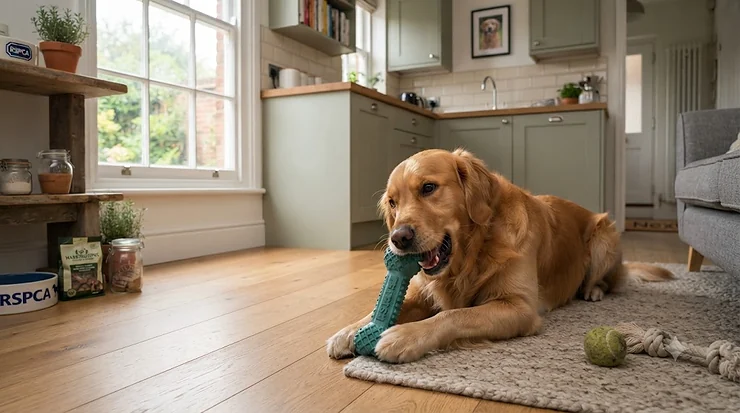
Somewhere in your house right now there’s probably a small graveyard of dead toys — a squeaker that went silent in four minutes, a “tough” rubber bone reduced to confetti by teatime. If you own a big dog with a bigger appetite for destruction, you already know the ritual. You buy something the packaging swears is indestructible. Your dog looks at it, looks at you, and treats that word as a personal challenge. Heavy duty dog chews for large breeds exist precisely because standard toys were never built with 70-plus kilogram jaws in mind — they’re chews engineered from dense rubber, reinforced nylon, or genuinely tough natural materials to withstand sustained, high-pressure chewing without splintering or shredding into a choking risk. This guide skips the marketing fluff and gets into what actually holds up, why, and for which dog.

We researched real products sold on amazon.co.uk, cross-referenced spec sheets against aggregated customer feedback, and pulled together seven genuine contenders spanning budget nylon to premium rubber with lifetime guarantees. You’ll also find dedicated sections on the best heavy duty chews for Rottweilers, what “almost indestructible” actually means once you look past the label, heavy duty dog toys for big dogs more broadly, and specific advice for Mastiffs and other giant breeds whose jaw strength rewrites the rulebook. According to the >RSPCA’s guidance on dog dental health, chewing plays a genuine role in oral hygiene, so getting this choice right matters for more than just your furniture. Let’s get into it.
Quick Comparison Table
| Product | Material | Best For | Price Range |
|---|---|---|---|
| KONG Extreme (Large/XL) | Black natural rubber | All-round power chewers | £15-£30 range |
| Goughnuts MAXX Stick | Reinforced natural rubber | Extreme chewers, giant breeds | £25-£40 range |
| Nylabone Power Chew | Reinforced nylon | Budget-conscious owners | £8-£18 range |
| West Paw Zogoflex Hurley | Zogoflex thermoplastic | Fetch-and-chew combo dogs | £15-£28 range |
| Benebone Wishbone | Nylon with flavour core | Solo gnawers who need enticing | £10-£20 range |
| Green & Wild’s Fallow Antler | Natural deer antler | Slow, sustained natural chewing | £12-£25 range |
| Mammoth Flossy Chews Rope | Cotton-poly rope | Tug play and dental flossing | £8-£16 range |
Looking at the spread above, there’s no single “best” chew for every large dog — the KONG Extreme and Goughnuts MAXX Stick sit at the top for raw destructive resistance, while the Nylabone Power Chew delivers the strongest value-per-pound for moderate chewers. If your dog treats every toy as a puzzle to be solved within the hour, the natural rubber options earn their higher price tag; if they’re a steady, once-a-day gnawer, the nylon and antler picks stretch further for less outlay.
💬 Just one click — help others make better buying decisions too!😊
Top 7 Heavy Duty Dog Chews for Large Breeds: Expert Analysis
1. KONG Extreme — the gold-standard rubber chew for power chewers
The KONG Extreme has become something of a reference point in this category, and that reputation comes from a simple design choice: dense, black natural rubber that’s noticeably firmer than KONG’s classic red version. This isn’t just a harder toy, it’s a fundamentally different chewing experience for a dog with serious jaw strength.
Available in Large and XL sizing for dogs from roughly 20kg upward, the hollow core lets you stuff it with kibble, peanut butter, or wet food and freeze it for extended engagement — reviewers consistently note that a frozen KONG Extreme buys 30-60 minutes of focused, calm chewing rather than the frantic five-minute demolition job you’d get with a softer toy. Based on the spec comparison against KONG’s standard range, the Extreme line trades some of that classic bounce for outright resistance to tearing, which is exactly the trade-off a strong-jawed dog needs.
This is the toy for dogs whose owners have already been through two or three “durable” toys that didn’t survive the week. It’s not indestructible against the most extreme chewers, but it’s a sensible starting point before jumping to premium rubber. Aggregated reviewer sentiment is broadly positive, with the most common praise centring on the stuffing versatility and the most common complaint being that truly extreme chewers can eventually work through the narrower ends over months of use.
Pros:
✅ Extremely dense rubber resists tearing far better than standard KONGs
✅ Hollow design allows treat-stuffing for extended mental engagement
✅ Dishwasher-safe top rack for easy cleaning
Cons:
❌ Narrower ends wear down faster than the wide midsection
❌ Pricier than basic rubber bones of similar size
Priced in the £15-£30 range depending on size, the KONG Extreme represents solid value for a mid-range power chewer, and its stuffability means you’re paying for two functions — chew toy and enrichment tool — in one purchase.

2. Goughnuts MAXX Stick — built for genuinely extreme chewers with a safety guarantee
Where the KONG Extreme is the sensible mid-tier choice, the Goughnuts MAXX Stick is what you reach for once you know, beyond doubt, that your dog is a demolition specialist. Designed specifically for dogs in the 27-54kg range, it’s built from a thicker, denser rubber compound than most competitors, with a 2.2-inch diameter stick shape engineered so a large jaw can’t easily get full purchase to tear pieces free.
What sets Goughnuts apart from most of this list is its internal red safety layer — chew through the black outer material and a bright red core is revealed, signalling it’s time to retire the toy, with the company offering a genuine replacement guarantee if that core is ever exposed. This is honest engineering rather than a marketing gimmick: it turns “is this toy still safe?” from a guessing game into a visual check anyone can do in seconds. One Pit Bull owner reported their Goughnuts lasting over two years before showing any red indicator, which speaks to the material’s staying power under sustained pressure.
Mastiffs, Rottweilers, and other giant or particularly determined chewers are the obvious audience here — it’s a toy that earns its higher price through genuine longevity rather than novelty. The main limitation is that it’s a pure chew, offering little of the interactive appeal some other toys bring to fetch or tug sessions.
Pros:
✅ Visible red safety-indicator layer flags when to replace it
✅ Genuine manufacturer replacement guarantee backs the claim
✅ Thick 2.2-inch diameter resists full-jaw tearing
Cons:
❌ Premium pricing compared with most rubber chews on this list
❌ Limited interactive or fetch appeal versus play-focused toys
At around £25-£40, this sits at the premium end, but for owners who’ve already burned through cheaper toys, the lifetime-guarantee model can work out cheaper across a dog’s lifetime than repeat purchases of disposable alternatives.
3. Nylabone Power Chew — the budget-friendly nylon workhorse
Nylabone has built decades of credibility in this space, and select products in its lineup carry Veterinary Oral Health Council recognition for demonstrated plaque and tartar reduction, which is a meaningful signal in a category full of unverified dental claims. The Power Chew line, sized for Large/Giant dogs up to roughly 23kg and beyond depending on variant, is made from a reinforced nylon that’s noticeably harder underfoot than rubber alternatives.
What most buyers overlook about nylon chews is how they actually wear: rather than tearing into chunks, the material grinds down gradually into fine, largely digestible shavings, which is a meaningfully different — and generally safer — failure mode than rubber toys that can split into larger swallowable pieces. The bacon cheeseburger and similar flavour infusions genuinely extend engagement time, according to aggregated reviewer feedback, with several noting their dog returns to gnaw at it repeatedly across a day rather than losing interest after the initial scent fades.
This is the pick for owners managing multiple dogs or replacing chews regularly on a budget — it won’t outlast a Goughnuts under extreme pressure, but for the price, moderate-to-strong chewers get months of use. The trade-off is real hardness: dogs with existing dental sensitivity should be sized carefully or steered toward softer options.
Pros:
✅ VOHC-recognised range for genuine dental benefit
✅ Grinds into fine shavings rather than large chunks
✅ Excellent price-to-durability ratio for the category
Cons:
❌ Hard material unsuitable for dogs with dental sensitivity
❌ Less exciting or interactive than puzzle-style toys
At £8-£18, this is one of the most accessible entries on this list, and a smart choice for owners wanting a reliable backup chew without a premium price tag.
4. West Paw Zogoflex Hurley — the fetch toy that survives what comes after fetch
The Hurley occupies a genuinely different niche than the pure chews above: it’s a legitimate fetch toy built from West Paw’s proprietary Zogoflex material, which behaves more like a flexible thermoplastic than traditional rubber, giving it bounce and buoyancy that rubber bones simply don’t offer. That floating quality matters more than it sounds — Labrador and Golden Retriever owners in particular report that a floating toy reduces repeated diving in cold water, since a sinking toy can tempt a dog into overexertion trying to retrieve it.
Here’s what the spec sheet won’t tell you but owners consistently confirm: the Hurley’s flexibility, while central to its bounce and fetch performance, does make it a step down in raw toughness compared with the hardest rubber or nylon options on this list. For a moderate-to-strong chewer who mostly wants a bone shape for casual gnawing between throws, that’s a non-issue; for an extreme power chewer looking for a dedicated solo chew, the Goughnuts or KONG Extreme will outlast it.
Its recyclable, dishwasher-safe, non-toxic construction and a genuine manufacturer replacement guarantee push it into premium territory functionally as well as in price. This is the toy for active, water-loving large breeds whose owners want one product that handles both play and chew duty reasonably well, rather than the single toughest option on the market.
Pros:
✅ Floats and bounces unpredictably, ideal for fetch and water play
✅ Recyclable, FDA-compliant material with replacement guarantee
✅ Doubles as a chew toy between throwing sessions
Cons:
❌ Less resistant to sustained extreme chewing than harder materials
❌ Premium pricing for what is primarily a fetch toy
Expect to pay in the £15-£28 range; the value proposition improves considerably if fetch and water play are already part of your dog’s routine, since you’re not buying a separate toy for each activity.
5. Benebone Wishbone — flavour-driven engagement in a genuinely tough nylon shape
Benebone’s signature move is baking real bacon, chicken, or peanut flavour into the nylon itself rather than coating the surface, so the taste doesn’t wash or wear off after the first few sessions — reviewers consistently note their dogs return to gnaw at it days or weeks later with undiminished enthusiasm, which is the real test for any flavoured chew. The wishbone shape isn’t just aesthetic either: the curved ends give a large dog multiple gripping points, letting them wedge a paw and get proper leverage in a way flat bones don’t allow.
Made in the USA from a dense nylon comparable in hardness to Nylabone’s range, it’s sized for dogs under roughly 27kg in its standard large format, with a giant variant for bigger breeds. Based on the spec comparison, Benebone sits firmly in the mid-range nylon bracket — harder and more durable than soft rubber, but with the same general caveats as any nylon chew around dental sensitivity in older or compromised-tooth dogs.
The strongest use case here is the dog who loses interest in plain, unflavoured chews within a day. If sustained solo engagement is the priority over raw destructive resistance, Benebone earns its slightly higher-than-Nylabone price through that flavour retention.
Pros:
✅ Flavour baked through the material, not just coated on
✅ Ergonomic wishbone shape gives large paws leverage
✅ Made in the USA from consistent, tested nylon stock
Cons:
❌ Nylon hardness unsuitable for sensitive or older teeth
❌ Smaller sizes undersized for genuinely giant breeds
Priced around £10-£20, it slots comfortably into the mid-range tier, offering a meaningful upgrade in engagement over unflavoured nylon bones for a modest premium.

6. Green & Wild’s Premium Fallow Antler — the natural, zero-plastic option for sustained chewers
For owners who’d rather avoid synthetic materials altogether, naturally shed deer antler remains one of the most durable options nature provides, and Green & Wild’s sources theirs from Fallow deer, sustainably collected rather than harvested from culled animals. Genuine power chewers suit this tough category, and the destroyer test is a useful gauge: if your dog can demolish a meaty chew in ten minutes flat, they’re likely to appreciate antler’s far slower wear rate regardless of their actual size.
What most buyers overlook about antler is the real trade-off involved: it’s genuinely one of the hardest natural materials a dog can chew, and that hardness carries a documented risk of slab tooth fractures in dogs who apply concentrated, single-point jaw force rather than an even gnawing action. If you notice your dog fixating on one spot with full bite pressure rather than working the whole surface, it’s worth swapping to something softer. Reviewers who’ve used antler with genuine power chewers report exceptional longevity — often months per piece — but also mention occasional splitting along the antler’s natural grain, which can create a sharp edge worth checking for regularly.
This is best suited to steady, methodical chewers rather than dogs who bite down hard and hold. Owners of dogs with any history of dental issues should discuss antler chews with their vet first, a caution echoed in PDSA’s guidance on dental disease in dogs, which flags trauma from chewing hard objects as a genuine cause of fractured teeth.
Pros:
✅ 100% natural, zero synthetic materials or additives
✅ Exceptionally long-lasting for steady, even chewers
✅ Sustainably sourced from naturally shed antlers
Cons:
❌ Genuine risk of tooth fracture for concentrated, hard biters
❌ Can splinter along the grain over extended use
Expect a price range of roughly £12-£25 depending on size, with larger pieces suited to genuine giant breeds representing solid value given how slowly they wear down.
7. Mammoth Flossy Chews Rope Tug — the interactive dental-floss alternative
Not every large dog wants — or needs — the hardest chew on the shelf, and the Mammoth Flossy Chews rope range covers a genuinely different use case: interactive tug play that doubles as informal dental maintenance. Made from tightly woven cotton-poly yarn, the fibres work mechanically against the teeth during tugging and chewing, helping loosen surface plaque in a way rigid chews simply can’t replicate.
Sized up to Extra-Large for dogs in the 36kg-plus bracket, with multiple knot configurations for different grip styles, this is the toy for building a bond through supervised play rather than solo, unattended gnawing — Mammoth themselves, and most veterinary guidance, position rope toys as interactive rather than independent chew items. Reviewers who’ve used the range with genuinely powerful tug players report the poly-blend rope holds knots and resists fraying noticeably better than pure cotton alternatives, though determined chewers left alone with it can eventually work individual strands loose.
Here’s what most owners overlook: rope toys are not a substitute for a hard chew when your dog needs unsupervised occupation, but they’re an excellent complement to one, adding a genuinely different texture and activity to a rotation. Cost per unit is low relative to durability, making this an easy toy to keep several of on hand.
Pros:
✅ Mechanically helps floss teeth during tug play
✅ Builds bonding through interactive rather than solo play
✅ Affordable enough to keep several in rotation
Cons:
❌ Not designed for unsupervised, independent chewing
❌ Individual fibres can fray and be swallowed if left unmonitored
At £8-£16, it’s one of the most affordable entries here, and works best as part of a broader toy rotation rather than a standalone solution for a determined solo chewer.
✨ Don’t Miss These Exclusive Deals!
🔍 Take your large breed’s chew game to the next level with these carefully selected products. Click on any highlighted item to check current pricing and availability on amazon.co.uk. These heavy duty picks will help you create a genuinely tougher toy box your dog will love.
Practical Usage Guide: Getting the First 30 Days Right
Bringing home a new heavy duty chew isn’t a “hand it over and forget about it” situation, particularly with a large or giant breed. In the first session, supervise closely regardless of what the packaging claims — you’re learning your dog’s specific chewing style, and no manufacturer testing accounts for every individual dog’s bite pattern. Introduce the chew during a calm period rather than high-energy play, since an over-excited dog is more likely to attack a new toy with unusual force before settling into a normal rhythm.
For rubber options like the KONG Extreme, stuffing and freezing during the first week helps establish the toy as a positive, engaging object rather than something to be destroyed as quickly as possible — a frozen, food-scented chew genuinely slows the pace of chewing down. With nylon chews, check the surface weekly for sharp edges or splintered points; nylon should wear into smooth shavings, and any jagged breakage is a sign to retire that particular piece early. Natural chews like antler need the most frequent checking, since their unpredictable internal grain means a piece that seemed sturdy on day one can develop a hairline crack by day ten.
A common first-month mistake is leaving multiple chews down permanently, which dilutes a dog’s interest in any single one and makes it harder to track individual wear. Rotating two or three chews — one out at a time, swapped every few days — keeps engagement noticeably higher and gives you a natural checkpoint to inspect each for damage before it goes back into circulation.
Real-World Scenarios: Matching the Chew to Your Dog
The apartment-dwelling Labrador, 32kg, moderate-to-strong chewer, home alone 6 hours daily. This profile benefits most from the KONG Extreme, stuffed and frozen before you leave — it provides sustained mental engagement rather than a quick destructive burst, which matters when the goal is calm, occupied solo time rather than simply surviving the toy.
The rescue Mastiff, 60kg, unknown chewing history, some anxiety around new objects. Start with something lower-stakes and natural, like the Green & Wild’s antler in a large size, introduced under close supervision. Giant breeds with unclear backgrounds benefit from a gentler introduction before committing to premium rubber, and antler’s slower wear rate gives you time to observe bite style before investing further.
The working farm Rottweiler, 45kg, extreme chewer, outdoor access, budget-conscious owner. The Nylabone Power Chew earns its place here on pure economics — an extreme chewer with high turnover needs a product that’s affordable to replace regularly, and its VOHC-backed dental benefit adds genuine value for a dog whose teeth see heavy daily use.
Buyer’s Decision Framework
If your dog demolishes toys within 20 minutes regardless of material, choose premium rubber like the Goughnuts MAXX Stick, because the reinforced compound and safety-indicator system are specifically engineered for that failure pattern. If cost per replacement matters more than absolute maximum durability, choose the Nylabone Power Chew, because its price point allows frequent replacement without financial strain. If your dog’s primary activity is fetch rather than solo gnawing, choose the West Paw Zogoflex Hurley, because its buoyancy and bounce serve that use case that rigid chews can’t. If you’re prioritising a natural, chemical-free product and your dog is a steady rather than aggressive chewer, choose the Green & Wild’s antler. If you want interactive bonding time alongside dental benefit, choose the Mammoth Flossy Chews rope, always under supervision.
How to Choose Heavy Duty Dog Chews for Large Breeds
- Assess your dog’s chewing intensity honestly — a dog that destroys toys in under 15 minutes needs a fundamentally different product tier than one who gnaws steadily for an hour.
- Match the size to your dog’s actual weight, not their breed reputation — a toy sized for “large breeds” generically may still be too small for a genuine giant breed like a Mastiff or Great Dane.
- Prioritise material over marketing claims — reinforced nylon, dense natural rubber, and genuine antler have track records; vague “indestructible” branding often doesn’t.
- Check for a manufacturer guarantee where available — brands like Goughnuts and West Paw back their durability claims with real replacement policies, which tells you something about their confidence in the product.
- Consider your dog’s dental history — very hard materials like antler and dense nylon carry a real fracture risk for dogs with existing tooth damage.
- Think about supervision realistically — rope and softer toys need active oversight, while dense rubber and nylon tolerate longer unsupervised stretches.
- Budget for replacement, not permanence — even the best heavy duty chew has a lifespan, so factor ongoing cost into your decision rather than expecting a single lifetime purchase.
Common Mistakes When Buying Heavy Duty Dog Chews
The single most frequent error is sizing down to save money — a toy marketed for “medium to large” dogs often undersells what a genuinely large or giant breed needs, and an undersized chew becomes a choking hazard rather than a bargain. A close second is ignoring wear signs because a product carries an “indestructible” label; no material is truly indestructible, and treating marketing copy as a safety guarantee is how avoidable injuries happen. Owners also commonly buy based on price alone without matching material to chewing style — a £10 nylon bone handed to a dog who needs premium rubber will be destroyed (and potentially create swallowable fragments) within days, ultimately costing more in repeat purchases than a single well-matched premium product would have.
Another overlooked mistake is failing to rotate chews, which both bores dogs and prevents owners from properly tracking individual wear across multiple items left out simultaneously. Finally, some owners skip the “thumbnail test” — pressing a nail firmly into the surface; if it leaves no impression at all, the material may be too hard for safe, comfortable chewing for that individual dog, regardless of its general safety rating for the breed.
Heavy Duty Dog Chews vs Traditional Alternatives
| Factor | Heavy Duty Engineered Chews | Traditional Rawhide/Sticks |
|---|---|---|
| Splinter/shard risk | Low (nylon grinds to fine shavings) | High (rawhide can tear into large pieces) |
| Typical lifespan | Weeks to months | Minutes to hours |
| Dental benefit | Moderate to good, material-dependent | Variable, often minimal |
| Best For | Sustained, safe daily chewing | Occasional supervised treat sessions |
This comparison makes the underlying trade-off clear: traditional rawhide and found sticks are cheap and instantly appealing to most dogs, but they fail on both durability and safety compared with engineered alternatives, particularly for large dogs whose bite force can shear off dangerously sized chunks. Heavy duty chews cost more upfront but typically work out cheaper per week of actual use, and materials like reinforced nylon and dense rubber are specifically engineered to wear down safely rather than fracture into hazardous pieces.
What to Expect: Real-World Performance
Specs on a packet rarely translate directly into lived experience, so here’s the honest picture. A KONG Extreme handed to a genuinely determined chewer will typically show visible tooth marks within the first session — that’s normal wear, not failure, and shouldn’t trigger immediate replacement. Nylon chews like the Nylabone Power Chew will produce small shavings around your dog’s bed or favourite chewing spot; this is expected and, per manufacturer guidance, generally passes through digestion without issue in normal quantities, though it’s still worth vacuuming regularly.
Natural antler chews behave the least predictably — some dogs work through the outer layer steadily for months, while others locate a weak point in the grain and split a piece unexpectedly. Rope toys show wear gradually as a slight fraying at the ends, which is your practical cue to retire that toy rather than waiting for it to fail during use. Across the board, expect real-world lifespan to fall well short of the “forever toy” framing some marketing implies — even premium options are designed to wear down safely over time, not last indefinitely.
Best Heavy Duty Chews for Rottweilers and Other Power Chewers
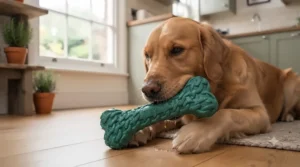
Rottweilers sit firmly in the power-chewer category, and their bite force — measured at up to 328 PSI according to Pets4Homes’ UK breed guide on bite strength — puts real strain on anything less than genuinely reinforced materials. For this breed specifically, the KONG Extreme and Goughnuts MAXX Stick are the standout picks from this list, since both are explicitly engineered around sustained, high-pressure chewing rather than casual gnawing.
What most Rottweiler owners overlook is how the breed’s working-dog temperament factors in: these are dogs bred for purposeful tasks, and a chew that also offers mental engagement — like a stuffed, frozen KONG Extreme — tends to outperform a purely passive chew in terms of actual time spent occupied. The Nylabone Power Chew remains a sensible budget-conscious rotation piece for Rottweiler owners managing frequent replacement, particularly for dogs who chew almost continuously through the day rather than in focused sessions.
Almost Indestructible Dog Chews: What the Word Really Means
“Almost indestructible” is doing a lot of quiet work in that phrase, and the honest answer is that no chew toy is genuinely indestructible against a sufficiently determined large dog — the word functions more as a relative durability claim than a literal guarantee. What separates genuinely tough products from over-promised ones is engineering: dense rubber compounds, reinforced nylon blends, and materials like Goughnuts’ safety-layer construction are specifically designed to resist tearing far longer than standard alternatives, even though eventual wear is inevitable.
The practical takeaway is to treat “indestructible” claims as a starting point for research rather than a purchasing decision in themselves. Look instead for concrete signals: manufacturer replacement guarantees, VOHC dental recognition, published weight and durability testing, and consistent aggregated reviewer feedback across hundreds of purchases rather than a handful of five-star reviews. A product that’s honestly marketed as “resists tearing for months under heavy use” is telling you more useful information than one simply labelled indestructible with no supporting detail.
Heavy Duty Dog Toys for Big Dogs: Chews vs Interactive Toys
There’s a meaningful distinction between a chew and a toy, even though the two categories overlap heavily in marketing. A pure chew — like the Nylabone Power Chew or Green & Wild’s antler — is designed primarily for solo, repetitive gnawing, while an interactive toy — like the West Paw Zogoflex Hurley or Mammoth rope — adds a play dimension involving you or another dog. Big dogs generally benefit from having both categories available, since pure mental occupation and physical interactive play serve different needs.
Based on the spec comparison across this list, the toys that blend both functions best — treat-stuffable rubber options like the KONG Extreme — tend to offer the strongest overall value, because they cover chewing, mental stimulation, and a degree of interactive play (fetch, tug on the exposed ends) in a single product. For owners with limited budget or storage space, prioritising one or two dual-function toys over a large collection of single-purpose ones is usually the more efficient approach.
Choosing a Giant Breed Dog Toy: Extra Considerations
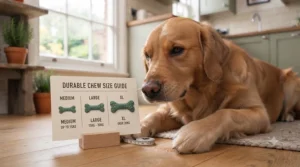
Giant breeds — Mastiffs, Great Danes, Newfoundlands, Bernese Mountain Dogs — introduce a sizing consideration that standard “large breed” categorisation often misses. A toy rated for dogs up to 27kg is genuinely undersized for a Mastiff pushing 70-80kg, and an undersized chew becomes both a choking hazard and simply ineffective, since the dog can get full jaw closure around it in a way that accelerates destruction. Always check the specific weight range on giant-breed-appropriate variants like the KONG Extreme XL or Goughnuts’ largest stick size, rather than assuming “Large” alone covers your dog.
Joint and jaw considerations matter here too — giant breeds are prone to certain orthopaedic and dental issues linked to their rapid growth, and a chew that’s too hard risks contributing to tooth trauma at a size where the bite force involved is simply higher than smaller large-breed dogs generate. Longevity per pound of toy also becomes a real economic factor: giant breeds will work through toys faster in absolute terms, so budgeting for more frequent replacement, or investing in guaranteed-replacement products, tends to make more financial sense than repeatedly buying budget options sized incorrectly.
Mastiff Chew Toy Guide: Jaw Strength and Sizing
The English Mastiff’s bite force sits around 552-556 PSI according to widely cited breed comparisons — meaningfully higher than a Rottweiler’s and among the strongest of any commonly kept breed. That single figure explains why generic “heavy duty” branding often falls short for this breed specifically: a product engineered and tested against moderate large-breed chewing simply wasn’t built for Mastiff-level pressure.
For Mastiffs specifically, the Goughnuts MAXX Stick’s largest sizing and the KONG Extreme XL are the most defensible picks from this list, both explicitly rated into the weight brackets Mastiffs occupy. Sizing up rather than down is the golden rule here — when in doubt between two sizes, the larger option both lasts longer and reduces the risk of a dog achieving full jaw closure around the toy. Given the breed’s documented jaw strength, closer supervision during the first few sessions with any new chew is particularly worthwhile, simply to observe how quickly wear appears before leaving the dog unsupervised with it for extended periods.
Long-Term Cost & Maintenance: The Real ROI
Running the numbers changes the picture on “expensive” versus “cheap” chews considerably. A £10 Nylabone Power Chew replaced every three weeks by a strong chewer works out to roughly £170 a year; a £30 Goughnuts MAXX Stick that lasts six months or longer, backed by a replacement guarantee if it fails early, can end up cheaper across the same period while also reducing the number of unsupervised chewing sessions spent on a degrading product. This is the core logic behind treating premium heavy duty chews as an investment rather than an indulgence for genuinely powerful chewers specifically.
Maintenance also factors into real cost. Rubber and Zogoflex toys are dishwasher-safe on the top rack, making hygiene straightforward; nylon chews need only occasional warm water and mild detergent, since dishwasher heat can warp them over time. Rope toys require more frequent laundering, as they absorb saliva and can develop bacterial buildup faster than solid materials — the RSPCA recommends running fabric toys through a hot wash cycle periodically as part of general toy hygiene. Building a simple rotation and cleaning schedule extends the working life of every toy in your dog’s collection, regardless of category.
Safety, Regulations & Compliance Guide
UK toy safety standards for pet products aren’t as tightly regulated as children’s toys, so responsibility for size-appropriate, hazard-free selection falls largely on the owner. That said, it isn’t a legal grey area either: under the Animal Welfare Act 2006 guidance published on GOV.UK, owners have a legal duty of care to meet an animal’s needs, including a suitable environment and protection from unnecessary suffering — a badly chosen chew that splinters or causes a dental injury sits squarely within that responsibility, not just a matter of preference. The general safety principle — that a toy should be large enough that a dog cannot fully close their jaws around it — remains the single most important sizing rule regardless of product category, and it’s worth rechecking as puppies grow into adult jaw size. TheRSPCA’s advice on providing suitable chew objects reinforces that supervised, appropriately sized toys support both physical and mental wellbeing, while poorly matched ones create real hazard.
Regular inspection matters as much as initial selection. Any chew showing cracks, exposed internal layers (as with Goughnuts’ red safety indicator), sharp splintered edges, or pieces small enough to swallow should be removed immediately rather than left in circulation “until it’s fully used up.” Always supervise a new chew during its first several sessions regardless of brand reputation, since individual chewing styles vary enormously even within the same breed, and no manufacturer testing accounts for every dog’s specific bite pattern.
Frequently Asked Questions
❓ What is the toughest chew toy for large dogs?
❓ How often should I replace a heavy duty dog chew?
❓ Are nylon chews safe for large dogs' teeth?
❓ Can heavy duty chews help with a dog's dental health?
❓ What size chew does a Mastiff or giant breed need?
Conclusion
Finding heavy duty dog chews for large breeds that genuinely survive contact with a determined chewer isn’t about chasing the flashiest marketing claim — it’s about matching real material science to your specific dog’s chewing style, size, and habits. The KONG Extreme and Goughnuts MAXX Stick lead this list for sustained, high-pressure power chewers, the Nylabone Power Chew and Benebone Wishbone offer excellent value for moderate-to-strong chewers, and the West Paw Zogoflex Hurley, Green & Wild’s antler, and Mammoth rope round things out for fetch enthusiasts, natural-material fans, and interactive bonding time respectively.
No product on this list is truly indestructible, and that’s an honest, deliberate framing rather than a weakness in the research — the goal is durability that outlasts the alternatives by a meaningful margin while wearing down safely rather than catastrophically. Rotate a few options, inspect them regularly, size generously for your dog’s actual weight rather than breed assumptions, and you’ll spend a lot less time sweeping up toy fragments and a lot more time watching your dog genuinely enjoy something built to handle them.
Recommended for You
- Best Dog Toys for Power Chewers UK 2026: 7 That Actually Last
- West Paw Zogoflex Dog Toy UK: 7 Best Picks for 2026
- GoughNuts vs KONG: Which Is Better for UK Power Chewers? (2026)
Disclaimer: This article contains affiliate links. As an Amazon Associate, I earn from qualifying purchases. If you purchase products through these links, we may earn a small commission at no additional cost to you.
✨ Found this helpful? Share it with your friends! 💬🤗
