
In This Article
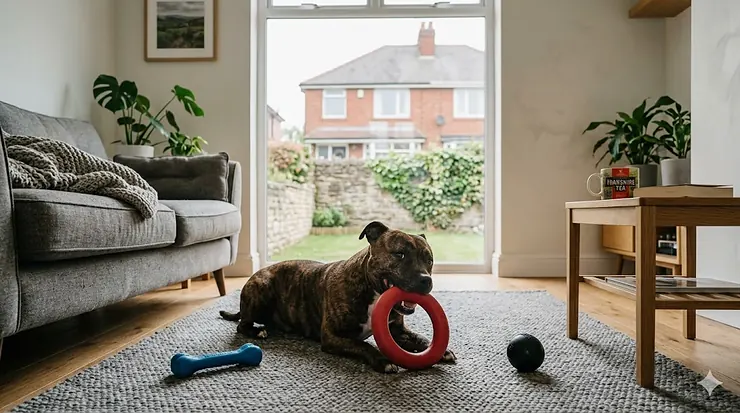
If you’re reading this with a half-chewed slipper in one hand and a credit card in the other, welcome — you’re among friends. Owners of solid rubber chew toys for power chewers tend to arrive at this topic the hard way: through a graveyard of squeaky toys, a skirting board with suspicious tooth marks, and a dog who treats “indestructible” as a personal challenge. British weather doesn’t help. Six months of drizzle means more indoor energy to burn, and a damp back garden in Sheffield or a one-bed flat in Hackney both demand toys that can survive enthusiastic, repetitive gnawing without falling apart into something your dog could swallow.
This guide skips the marketing fluff and gets into what actually holds up. We’ve dug through real Amazon.co.uk listings, UK shelter test reports, and vet-backed safety guidance to bring you seven genuinely tough rubber toys, what they cost in pounds, and which type of British dog (and owner) each one suits. No exact prices — they shift constantly — just honest ranges and the trade-offs nobody puts on the packaging.
Quick Comparison: Solid Rubber Chew Toys for Power Chewers at a Glance
| Toy | Material | Price Range | Best For |
|---|---|---|---|
| KONG Extreme | Black natural rubber | £8–£20 | All-round determined chewers |
| KONG Extreme Goodie Bone | Black natural rubber | £10–£20 | Treat-motivated dogs |
| West Paw Zogoflex Tux | Recyclable Zogoflex | £12–£20 | Stuffable treat fans |
| Goughnuts Original Ring/Stick | Natural rubber | £18–£35 | Genuinely extreme chewers |
| Chuckit! Ultra Ball | Natural rubber | £6–£15 | Fetch-obsessed retrievers |
| Beco Natural Rubber Ball | Rice husk rubber | £8–£16 | Eco-conscious households |
| Trixie Natural Rubber Knot | Natural rubber | £5–£12 | Small to medium tug fans |
A glance at this table tells you most of what you need: there’s roughly a fourfold spread between the cheapest and priciest options here, and that gap usually buys you either a genuine safety-indicator guarantee (Goughnuts) or a recyclable, eco-certified manufacturing story (West Paw, Beco). If your dog is a “moderate-but-determined” chewer rather than a furniture-destroying menace, the KONG Extreme range sits in a sensible middle ground — durable enough for daily punishment, cheap enough that replacing it in a year doesn’t sting.
💬 Just one click — help others make better buying decisions too! 😊
1. KONG Extreme Dog Toy
KONG Extreme Dog Toy is the one nearly every UK vet has recommended at some point, and for good reason. The ultra-strong, black rubber compound is specifically recommended for power chewers, with guidance to supervise use and inspect the toy frequently for wear. In practice, that black rubber is noticeably stiffer than the classic red KONG, which is exactly why it survives Staffies, working cockers, and overgrown Labrador puppies that treat ordinary chew toys as a light snack.
What most owners overlook is the hollow centre: stuff it with kibble, a smear of peanut butter, or KONG’s own paste, then freeze it for a slow, mentally engaging chew session — ideal for rainy British afternoons when a walk isn’t happening. Reviewers report mixed results with the most extreme dachshunds and dachshund crosses chewing through in a single session, so size up if your dog has a reputation.
Pros: genuinely tough rubber, treat-stuffable, widely available with fast UK delivery. Cons: smaller sizes can still be defeated by truly relentless chewers, natural rubber smell takes a few days to fade. Price sits around £8–£20 depending on size, and at the lower end it’s one of the best-value entries on this list.
2. KONG Extreme Goodie Bone
The KONG Extreme Goodie Bone takes the same black rubber and shapes it into a classic bone with treat-holding ends. It’s built from the same durable natural rubber formula created for power chewing dogs, with a patented Goodie Gripper design intended for stuffing challenges. What that means day to day: dentastix or small training treats wedge neatly into each end, turning a five-minute chew into a twenty-minute puzzle.
UK owners with bully breeds report it surviving weeks rather than days, though — as with most rubber toys — a truly committed destroyer can still work through it given enough motivation and an empty afternoon. It’s a sensible crate-time toy for flats and terraced houses where you want your dog quietly occupied rather than barking at next door.
Pros: dual treat-holding ends, dishwasher safe, recommended by vets and trainers. Cons: not the toughest shape in the KONG range (the classic cone-shaped Extreme edges it out for raw durability), bone shape can roll under furniture. Expect to pay in the £10–£20 range.
3. West Paw Zogoflex Tux
West Paw Zogoflex Tux is the toy for dogs who like a project. It’s pliable, bounces, floats, and is made from a recyclable, non-toxic material — and the UK distributor offers a one-time free replacement if your dog manages to damage it, provided you can show proof of purchase from a UK-based seller. That guarantee is the standout feature here; it effectively de-risks the purchase for anyone whose dog has a track record of destroying “guaranteed tough” toys.
The shallow cavity makes it genuinely safer for short-snouted breeds (think French Bulldogs or Pugs) than deep-stuffed alternatives, and freezing it with broth makes a passable “Tux-cicle” for hot spells — admittedly rare in a British summer, but worth knowing. Some long-term reviewers note the price has crept up over the years relative to durability, so it’s not the budget pick.
Pros: replacement guarantee, dishwasher and freezer safe, buoyant for water-loving dogs. Cons: pricier than KONG for comparable durability, only two sizes available. Sits around £12–£20.
4. Goughnuts Original Ring/Stick
If your dog has already destroyed everything else on this list, Goughnuts Original Ring/Stick is the next step up. It’s built with a two-layer safety design where a bright outer colour wears down to reveal a red inner core, signalling that the toy should be replaced — and the company will send a free replacement if a dog chews through to that indicator layer. That red-layer system is genuinely clever: it turns “is this toy still safe?” from a guessing game into a visible signal.
A Hertfordshire rescue that ran several of these past genuinely committed chewers found the stick and ball shapes held up best for dogs who also wanted to fetch, while the ring suited dogs who simply wanted something to gnaw on the sofa. It’s not cheap, and UK stock sometimes comes via smaller third-party sellers rather than Amazon’s own warehouses, so delivery can take a touch longer than Prime-badge alternatives.
Pros: safety-indicator design, genuine no-questions replacement policy, multiple shapes for different play styles. Cons: among the pricier options here, slightly stiffer rubber that some dogs initially reject. Budget £18–£35.
5. Chuckit! Ultra Ball
For the dog whose idea of a good walk is sixty fetches and a soggy ball, Chuckit! Ultra Ball earns its place. It’s made with an extra-thick natural rubber core designed for long-term durability, alongside high-visibility colouring and a smooth surface that wipes clean easily. Launcher compatibility is the quiet genius here — for anyone with a dodgy shoulder or simply tired of slobbery hands, the Chuckit! launcher turns every throw into a long-distance lob without touching the ball.
Worth flagging honestly: Chuckit! itself notes the Ultra Ball isn’t designed as a chew toy for aggressive chewers, so Staffies and similarly powerful jaws may shred the surface faster than retrievers who mostly carry rather than gnaw. It floats, which matters for dogs who fetch from rivers and lakes (common enough on Yorkshire and Lake District walks), and the bright orange-and-blue scheme is genuinely easier to spot in long grass than a plain tennis ball.
Pros: excellent bounce and visibility, launcher-compatible, floats for water retrieves. Cons: not marketed for heavy chewing, smaller sizes risk being swallowed by very large dogs. Typically £6–£15 for a multi-pack.

6. Beco Natural Rubber Ball
Beco Natural Rubber Ball is the British-leaning eco entry on this list — Beco is a UK-based, B Corp certified company, which matters if sustainability sits high on your buying criteria. It’s made from natural rubber blended with rice husk rather than synthetic fillers, comes with a subtle vanilla scent, and every toy carries a manufacturer’s lifetime guarantee against breakage. The hollow design doubles as a treat-hider, and the deliberately wobbly shape rolls unpredictably, which keeps fetch sessions more interesting than a ball that just goes in a straight line.
UK reviewers are split on durability: some toy poodles and gentle chewers leave it untouched for months, while a handful of determined small dogs have chewed through the treat hole within minutes. It’s genuinely one of the more planet-friendly options here, donating a slice of sales to environmental causes, and the lifetime guarantee softens the risk if your dog turns out to be the exception.
Pros: eco-credentials, lifetime guarantee, suitable for sensitive stomachs (low toxicity if ingested in small amounts). Cons: mixed durability reports from genuinely aggressive chewers, smaller sizes can be picked apart at the treat hole. Around £8–£16.
7. Trixie Natural Rubber Knot Toy
Rounding out the list, Trixie Natural Rubber Knot Toy is the budget-friendly grip-and-tug option from the long-established German brand that’s a fixture on UK pet shop shelves. It’s a simple, solid rubber knot shape designed for chewing and tugging rather than fetch, with enough flex to be gentle on a dog’s gums while still standing up to moderate-to-firm jaws.
It won’t outlast a genuinely extreme chewer the way Goughnuts will, but for the average enthusiastic gnawer — particularly smaller and medium breeds — it punches well above its price point. Several UK buyers use it as a “leave-at-home-alone” toy precisely because the price makes replacement painless if it does eventually wear through.
Pros: low cost, gentle on gums, widely stocked in the UK. Cons: not rated for the most extreme chewers, limited size options. Expect to pay roughly £5–£12.
✨ Don’t Miss These Exclusive Deals!
🔍 Take your power chewer’s toy box to the next level with these carefully selected picks. Click on any highlighted item to check current pricing and availability on Amazon.co.uk. These choices will help you find exactly what your dog needs!
Practical Usage Guide: Getting More Bite Out of Rubber Chew Toys
Even the toughest rubber toy benefits from a bit of routine. Rotate two or three toys weekly rather than leaving one out permanently — it keeps novelty high and slows the rate of wear on any single piece. Wash rubber toys in warm soapy water (or pop dishwasher-safe ones, like the KONG and West Paw ranges, on the top rack) every week or so, since drool and food residue build up fast and British damp doesn’t help odours along. The RSPCA’s own toy-care guidance recommends washing hard toys in warm soapy water and letting them dry fully before handing them back, rather than relying on a quick rinse under the tap.
For wet-weather days — most of them, let’s be honest — bring chew sessions indoors on an old towel rather than letting a muddy toy roll around the kitchen floor. Inspect every rubber toy monthly for nicks, cracks, or chunks missing; bin anything compromised rather than waiting for a vet trip to tell you it was a bad idea. And always size up for a genuine power chewer: a toy that’s slightly too big is annoying for your dog, but a toy that’s too small is a choking risk.
Real-World Scenarios: Matching the Right Toy to Your UK Dog
Picture a Staffie in a Birmingham terrace with a postage-stamp garden and an owner working from home: the KONG Extreme Goodie Bone stuffed and frozen buys two hours of quiet during video calls, no garden space required. A retired couple in the Cotswolds with an elderly Labrador might prefer the Chuckit! Ultra Ball for gentle, low-impact fetch across open fields, where bounce and visibility matter more than raw chew resistance.
Then there’s the London flat-dweller with a young, food-motivated rescue and zero tolerance for noise complaints: the Beco Natural Rubber Ball’s quiet wobble and vanilla scent makes it a calmer choice than anything with a built-in squeaker. And for the genuinely committed destroyer — the dog who’s been through four “indestructible” toys this year alone — Goughnuts’ safety-indicator system at least tells you when enough is enough, rather than leaving you guessing.
How to Choose Solid Rubber Chew Toys for Power Chewers in the UK
- Assess your dog’s chewing strength honestly. Most dogs are “average” chewers who’ll do fine with KONG Extreme or Trixie; only a minority need Goughnuts-level toughness.
- Size up, not down. A toy that already looks slightly too big for your dog’s mouth is harder for them to get leverage on, reducing breakage risk.
- Check the guarantee. West Paw, Goughnuts, and Beco all offer some form of replacement promise — useful insurance against an expensive mistake.
- Match the shape to the activity. Balls for fetch, bones and rings for solo chewing, knots for tug — there’s no single “best” shape, only the best fit for how your dog actually plays.
- Budget for replacement, not permanence. No rubber toy is truly indestructible; build a rough annual toy budget rather than hunting for a one-off purchase.
- Prioritise natural rubber over unlabelled blends. It tends to be gentler on teeth and safer if small pieces are swallowed than synthetic alternatives.
Common Mistakes When Buying Tough Rubber Dog Toys
The single biggest mistake is sizing for the dog’s current age rather than their adult jaw strength — a “medium” KONG bought for a six-month-old pup is often outgunned within a year. A close second is assuming “extreme” or “indestructible” on the packaging is a guarantee rather than marketing language; even West Paw’s own product page is upfront that no dog toy is truly indestructible, and recommends always supervising play. Owners also frequently skip the thumbnail test — if you can’t make any indentation in the rubber with your nail, it may be too hard and risk cracking a tooth on a determined chewer. PDSA vets specifically warn against very hard chews because they can cause slab fractures, where a large chunk of tooth breaks away and exposes the sensitive inside — a good reason to favour rubber’s natural give over rock-hard alternatives. Finally, many buyers chase the cheapest option without checking UK stock and delivery timelines, only to find the bargain listing ships from overseas with a two-week wait.
Solid Rubber vs Nylon vs Rope: Which Wins for Power Chewers?
| Material | Durability | Dental Safety | Best For |
|---|---|---|---|
| Solid rubber | High | Good — flexes slightly | Most power chewers |
| Nylon | Very high | Mixed — can be too hard | Persistent gnawers, less aggressive bite force |
| Rope | Low–moderate | Good if supervised | Tug play, not solo chewing |
Rubber generally wins on the balance between toughness and dental safety: it bends rather than splinters, which matters because toys that break apart into sharp pieces present a real swallowing and internal injury risk. Nylon chews (the unbranded “Power Chew” style toys widely sold in the UK) can outlast rubber in raw durability terms, but their rigidity means a few unlucky dogs have cracked teeth on the harder varieties — something rubber’s natural flex avoids. Rope toys are genuinely useful for interactive tug sessions but a poor substitute for solo, unsupervised chewing, since stray fibres are a real ingestion risk if left with a determined chewer.
What to Expect: Real-World Performance in British Conditions
Six months of rain and short winter daylight hours mean more indoor chew time, and rubber genuinely earns its keep here: it’s easy to wipe down after a muddy walk, doesn’t absorb damp smells the way rope or plush can, and the bright colours on toys like the Chuckit! Ultra Ball are a real asset on grey afternoons when visibility drops by 4pm. Cold garages and sheds used for winter toy storage are fine for rubber — unlike some plastics, it doesn’t go brittle in low temperatures, though leaving any toy in direct sun on a rare hot day can soften the surface slightly.
One genuinely British quirk: terraced housing and flats mean storage space is often tight, so the compact shapes here (KONG bones, Beco balls, Trixie knots) tend to suit UK homes better than the bulkier American-market chew toys that don’t always make it to Amazon.co.uk.
Long-Term Cost & Maintenance in the UK
Run the numbers and rubber chew toys are usually cheaper over a year than constantly replacing cheap plastic alternatives or buying weekly rawhide. A £15 KONG Extreme that lasts six months works out to roughly £2.50 a month — less than a single coffee — versus £3-a-week disposable chews that add up to over £150 annually. Under the Consumer Rights Act 2015, goods bought from UK retailers must be of satisfactory quality and fit for purpose, giving you a genuine route to a refund or replacement if a toy fails unreasonably fast for normal use — worth knowing if a “tough” toy falls apart within days rather than months. Keep your Amazon order confirmation as proof of purchase, and remember your statutory rights sit with the retailer, not the manufacturer.
FAQ
❓ Are solid rubber chew toys safe for power chewers?
❓ How long do rubber dog chews last with a strong chewer?
❓ Is natural rubber better than synthetic rubber for dog toys?
❓ Do dog chew toys need UKCA marking or safety certification in the UK?
❓ What size rubber chew toy should I buy for a heavy chewer?
Conclusion
There’s no single “best” solid rubber chew toy for every power chewer — only the right toy for your dog’s particular jaw, your particular budget, and your particular British weather forecast. If you’re after the safest middle ground, KONG Extreme remains the sensible default; if your dog has already proven themselves a genuine destroyer, Goughnuts’ replacement guarantee earns its higher price tag. Whatever you choose, rotate toys, check them regularly, and remember that even the toughest rubber is a consumable, not a one-off purchase. As the Blue Cross itself notes, a firm rubber toy that can be stuffed and withstand serious chewing is one of the most reliable ways to keep a determined dog happily occupied — and, frankly, your shoes safe.
Recommended for You
- Best Natural Rubber Dog Chews UK 2026: 7 Safe, Non-Toxic Picks
- Kong Extreme vs Classic Which Is Better for UK Dogs? (2026)
- Kong Classic Size for Dogs: 7 Best UK Picks & Size Guide (2026)
Disclaimer: This article contains affiliate links. As an Amazon Associate, I earn from qualifying purchases. If you purchase products through these links, we may earn a small commission at no additional cost to you.
✨ Found this helpful? Share it with your mates! 💬🤗
