
In This Article
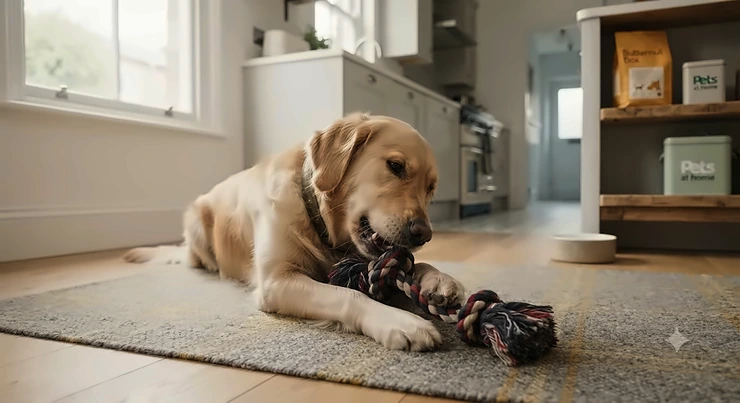
There’s a particular kind of despair that comes from watching a brand new rope toy get reduced to a pile of fluff and loose cotton strands within about four minutes of unwrapping it. If you’re living with a genuinely determined chewer, you’ll know the feeling — you buy the toy that promises to be “indestructible,” your dog looks you dead in the eye, and proves otherwise. Knotted rope dog toys for aggressive chewers occupy an odd space in the pet aisle: they’re marketed as tough, but the honest truth is that no rope toy is truly indestructible, and the best ones simply buy you more time, more play sessions, and a lot more tail-wagging tug-of-war before they need replacing.
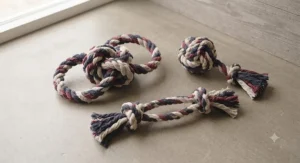
This guide gets specific. We’ve researched seven real, currently available rope toys — from a £10 giant multi-pack to a premium cotton-fleece braid — and looked honestly at what the knots, materials and construction actually mean for a dog that treats “chew-resistant” as a personal challenge. You’ll get straight talk on which ones suit puppies, which suit genuinely big, strong-jawed dogs, and where a rope toy simply isn’t the right tool for the job. Affiliate disclosure: this article contains Amazon Associate links, and we may earn a small commission on qualifying purchases at no extra cost to you.
What Are Knotted Rope Dog Toys for Aggressive Chewers?
Knotted rope dog toys for aggressive chewers are thick, tightly woven cotton or cotton-poly ropes finished with multiple secure knots, designed to withstand sustained biting, pulling and tugging from strong-jawed dogs while helping to floss teeth and satisfy natural chewing instincts during both solo chewing and interactive tug of war play.
The word “indestructible” gets thrown around a lot in this category, and honestly, it’s rarely accurate for a truly committed chewer. What separates a genuinely durable option from a flimsy one is knot tightness, rope thickness, and fibre density — details we’ll unpack product by product below. It’s also worth noting that chewing itself plays a genuine role in dental health: the RSPCA’s guidance on dog dental care notes that dental chews and treats can help keep a dog’s teeth clean alongside regular brushing, and a well-chosen rope toy offers a similar mechanical benefit through play rather than treats.
Quick Comparison Table
| Toy | Length | Knots | Best For |
|---|---|---|---|
| Speedy Panther 90cm 5-Knot | 90cm | 5 | Large aggressive chewers, everyday use |
| XL Giant 3-Knot Set of 2 | XL/giant | 3 (x2) | Budget multi-dog households |
| Mammoth Flossy Chews Medium 20″ | 20″ (51cm) | Multi | Medium dogs, dental flossing |
| KONG Signature Rope Double Tug 22″ | 22″ (56cm) | 2 | Interactive tug, gentler on gums |
| Rosewood Battersea Rope & Rubber | 38cm | 1 rope + rubber | Multi-texture chewers |
| Beco Pets Hoop on Rope L | 37cm | 1 rope + rubber hoop | Eco-conscious owners, fetch and tug |
| Petface Knotted Rope Bone | Compact | 2-3 | Puppies and small teeth |
Even before getting into the detail, this table makes one thing obvious: more knots and thicker rope generally point towards larger, more committed chewers, while the multi-texture options that pair rope with rubber tend to suit dogs who like variety in what they’re gnawing on. If your dog has already destroyed several standard rope toys, skip straight to the higher-knot-count options rather than starting with something built for gentler mouths.
💬 Just one click — help others make better buying decisions too!😊
Top 7 Knotted Rope Dog Toys for Aggressive Chewers: Expert Analysis
The seven picks below span budget multi-packs, dental-focused mid-range options, and premium interactive designs, with genuine attention to which suits puppies, which suits big dogs, and which brings genuine multi-texture variety. Product names stay bold throughout for easy scanning.
1. Speedy Panther 90cm 5-Knot — best all-round pick for large aggressive chewers
The standout feature here is the sheer amount of rope on offer: at 90cm long with five tightly spaced knots, there’s a lot of material between each knot for a determined chewer to work through before reaching the next weak point, which in practice means more play sessions before it needs replacing. Key specs include 100% cotton construction and a genuinely large diameter compared with budget rivals, both factors that matter more in practice than marketing copy about being “indestructible” — a claim that, as with every product on this list, should be taken as directional rather than literal.
Based on the spec comparison with thinner rivals, the Speedy Panther 90cm 5-Knot suits medium to large dogs with a confirmed history of chewing through standard rope toys quickly, since the extra length and knot count genuinely does buy more time before the rope frays through completely. Reviewers consistently flag good value for the size on offer, though as with all cotton rope toys, expect the outer fibres to fluff and shed over the first few sessions — that’s normal wear, not a defect, and actually helps floss teeth as your dog chews.
Pros:
- ✅ Generous 90cm length with five secure knots
- ✅ Thick diameter suits genuinely large, strong-jawed dogs
- ✅ 100% cotton, gentle enough for daily dental benefit
Cons:
- ❌ Outer fibres shed and fluff with heavy use
- ❌ Not truly indestructible against the most extreme chewers
Typically priced in the £10-£16 range, this represents solid mid-range value for a large dog that goes through rope toys faster than smaller breeds tend to.
2. XL Giant 3-Knot Set of 2 — cheapest value pack for multi-dog homes
The standout advantage is simple arithmetic: two giant, three-knot ropes for a genuinely low price point, making this the pick if you’ve got more than one dog demolishing toys, or if you’d rather not feel too precious about a rope that might not survive the week. Made from 100% natural cotton fibre with an easy-grip loop design at each end, these are built with tug-of-war specifically in mind rather than solo chewing alone.
What most buyers overlook about budget multi-packs like this is that the seller’s own honesty here is worth noting — the listing itself acknowledges that nothing is truly indestructible and offers replacement if a rope fails unusually fast, a refreshingly candid approach compared with brands that oversell durability claims. On paper this means you’re buying two attempts rather than one guaranteed survivor, which is arguably the more realistic way to shop for a genuinely aggressive chewer: budget for replacement rather than expecting permanence.
Pros:
- ✅ Two ropes included, ideal for multi-dog households
- ✅ Genuinely low price point for the size on offer
- ✅ Easy-grip loop ends suit tug-of-war specifically
Cons:
- ❌ Fewer knots than premium rivals, may wear faster
- ❌ Colour and finish quality varies between batches
At around £9.99 for the pair at the time of research, this is the most budget-friendly entry on this list, and genuinely reasonable value if you’re testing whether your dog even likes rope toys before investing in a premium option.
3. Mammoth Flossy Chews Medium 20″ — best for genuine dental benefit
The standout feature is the dental-flossing design Mammoth has built its reputation on since 1995: the twisted cotton fibres are specifically engineered to work between teeth as a dog chews, gently helping to reduce plaque build-up alongside regular brushing rather than as a replacement for it. The Medium 20-inch size suits dogs weighing roughly 30-50lbs, though Mammoth’s own sizing guidance is worth taking seriously here — for aggressive chewers specifically, sizing up to their Large or X-Large options is the sensible move, since a rope this size may not last as long against a determined big dog as it would against a more moderate chewer.
Here’s what to weigh: 100% natural white cotton is genuinely gentle and non-toxic, but it’s also less inherently tough than cotton-poly blends, so this suits dogs whose chewing style is enthusiastic-but-not-extreme rather than genuinely destructive. Mammoth Pet Products has manufactured dog toys for three decades, and that manufacturing consistency shows in the even knot spacing and fibre density compared with some newer, less established brands on the market.
Pros:
- ✅ Genuine dental-flossing design from an established manufacturer
- ✅ 100% natural cotton, safe and non-toxic
- ✅ Consistent knot spacing and build quality
Cons:
- ❌ Medium size may undersize a genuinely large aggressive chewer
- ❌ Pure cotton less tough than cotton-poly blends
Expect a price in the £8-£14 range for the medium size; larger sizes cost more but are the smarter buy for confirmed aggressive chewers specifically.
4. KONG Signature Rope Double Tug 22″ — most honest reviews, best for interactive play
The standout feature is the unique braid: rather than pure cotton, KONG combines cotton and fleece for a rope that’s noticeably gentler on gums and teeth while still offering real resistance during tug-of-war. Two sturdy knots at each end give a secure grip for both dog and owner, and the stretch in the braid absorbs some of the shock of a hard tug, which matters more than it sounds for dogs who play with real enthusiasm.
What most buyers overlook about this specific toy is how genuinely mixed real UK customer reviews are, and that mix is actually useful information rather than a red flag. Verified UK buyers report the toy standing up well over an extended period for one dog described specifically as an aggressive chewer, while other reviewers note it unravelling within a single session for a different dog. Reviewers consistently note that outcome depends heavily on individual chewing style rather than a manufacturing inconsistency, which is honestly the most useful takeaway across this entire category: even good toys have a real ceiling for the most extreme chewers, and matching expectations to your specific dog matters more than brand reputation alone.
Pros:
- ✅ Softer cotton-fleece braid, gentler on gums
- ✅ Genuine stretch absorbs shock during vigorous tugging
- ✅ Backed by a well-established, widely trusted brand
Cons:
- ❌ Genuinely mixed durability reports for the toughest chewers
- ❌ Premium price relative to pure-cotton alternatives
Sitting in the £12-£18 range typically, the value calculation here depends on your dog specifically — moderate chewers get excellent mileage, while the most extreme chewers may find it doesn’t outlast a cheaper cotton alternative.
5. Rosewood Battersea Rope & Rubber Tug — best multi-texture pick
The standout feature is genuine material variety in a single toy: a durable rubber section paired with a knotted rope handle, giving dogs two distinct textures and resistance levels to chew and tug against rather than one uniform material throughout. At 38cm, the Large size suits medium to large dogs, and the rubber component specifically resists the kind of rapid fraying that pure rope toys experience under sustained chewing.
What’s genuinely appealing here, beyond the product itself, is the brand association: Rosewood’s Battersea range ties back to Battersea Dogs & Cats Home, one of the best-known and longest-running animal welfare charities in Britain, which lends a certain credibility to a brand that’s had to think seriously about durability and safety testing for dogs in a rescue and rehoming context. On paper this means a toy built with genuine variety in mind — the rope end supports interactive tug and dental benefit, while the rubber section gives a firmer, bouncier chewing option that many multi-texture-loving dogs seem to prefer switching between during a single play session.
Pros:
- ✅ Genuine multi-texture design combines rope and rubber
- ✅ Rubber section resists fraying better than pure rope
- ✅ Well-known, established British pet brand
Cons:
- ❌ Rope portion still wears faster than the rubber half
- ❌ Bulkier shape may suit tug play more than solo carrying
Typically priced in the £8-£13 range, this is solid mid-range value, particularly for dogs who seem to lose interest in single-texture toys faster than multi-texture ones.
6. Beco Pets Hoop on Rope L — best sustainable multi-texture pick
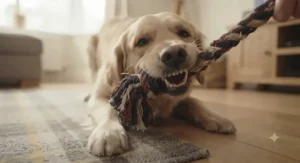
The standout feature is the springy natural rubber hoop paired with soft recycled cotton rope, fastened with chunky, substantial knots that give a genuinely good grip for both dog and owner during tug-of-war. At 37cm for the Large size, the rubber hoop specifically absorbs the shock of an enthusiastic pull far better than pure rope construction, softening the impact on your dog’s jaw and your own hands in equal measure.
Here’s what to weigh: Beco is a certified Climate Neutral, 1% For Planet member brand, meaning a genuine share of every sale goes to environmental causes — a meaningfully different value proposition from the average budget rope toy, and worth factoring in if sustainability credentials matter to your buying decision alongside raw durability. The honest caveat, which Beco states plainly in its own product description, is that no toy is genuinely indestructible; supervised play and replacing the toy once visibly worn will extend its safe usable life considerably.
Pros:
- ✅ Rubber hoop softens shock during vigorous tugging
- ✅ Genuine environmental and sustainability credentials
- ✅ Recycled cotton rope with substantial, secure knots
Cons:
- ❌ Premium price relative to pure-rope alternatives
- ❌ Rubber hoop wipes clean but rope portion still needs washing
Expect a price around £10-£15 for the large size; the sustainability angle and multi-texture design make it a genuinely distinct option among the seven featured here.
7. Petface Knotted Rope Bone — best for puppies and small teeth
The standout feature is scale: this is deliberately sized down for puppies and dogs with smaller, more delicate teeth rather than competing on raw toughness with the large-breed options above. Petface markets it explicitly for light play, tug games outdoors, and gentle indoor chewing, suitable from around eight weeks old — an important distinction, since a puppy’s developing jaw and baby teeth need a genuinely different toy profile from an adult power chewer’s.
What most buyers overlook when shopping for puppies specifically is that “aggressive chewer” toys built for adult strength are often entirely the wrong purchase for a teething puppy — not because they’re unsafe, but because the tension and resistance are calibrated for a stronger bite than a young puppy can comfortably manage, which can discourage rather than encourage healthy chewing behaviour. The compact knotted bone shape gives puppies something appropriately sized to grip and carry, satisfying the natural urge to chew during teething without overwhelming a developing mouth.
Pros:
- ✅ Appropriately scaled for puppies and small teeth
- ✅ Suitable from around eight weeks old
- ✅ Budget-friendly entry point for a first rope toy
Cons:
- ❌ Not built to withstand adult aggressive chewing
- ❌ Requires closer supervision as puppies grow stronger
Priced affordably, typically under £8, this is the sensible starting point for a puppy before graduating to sturdier options as their adult teeth and jaw strength develop.
Full Spec Comparison: All 7 Ropes Side by Side
| Toy | Material | Knots | Multi-Texture | Best For |
|---|---|---|---|---|
| Speedy Panther 90cm 5-Knot | 100% cotton | 5 | No | Large aggressive chewers |
| XL Giant 3-Knot Set of 2 | 100% cotton | 3 x2 | No | Budget multi-dog homes |
| Mammoth Flossy Chews Medium 20″ | 100% cotton | Multi | No | Dental flossing, medium dogs |
| KONG Signature Rope Double Tug 22″ | Cotton-fleece | 2 | No | Gentler interactive tug |
| Rosewood Battersea Rope & Rubber | Rope + rubber | 1 | Yes | Multi-texture chewers |
| Beco Pets Hoop on Rope L | Rope + rubber | 1 | Yes | Eco-conscious, tug and fetch |
| Petface Knotted Rope Bone | Cotton | 2-3 | No | Puppies, small teeth |
Laid side by side, the clearest divide is between pure-rope toys, which generally offer the best dental-flossing benefit but wear fastest under sustained aggressive chewing, and the two multi-texture options that pair rope with rubber, which tend to survive longer overall precisely because the rubber component doesn’t fray the way rope fibres do. If your dog has already destroyed several pure-rope toys, a multi-texture pick is worth trying before assuming your dog simply can’t have rope toys at all.
Practical Usage Guide: Getting the Most from a Durable Knotted Rope Dog Toy
Getting genuine longevity from any durable knotted rope dog toy comes down to a few consistent habits rather than luck. First, supervise the early sessions with any new toy — most rope toys reveal how a specific dog will treat them within the first ten to fifteen minutes, and that early read tells you whether solo unsupervised chewing is appropriate or whether the toy needs to stay strictly for supervised tug-of-war sessions. Second, rotate toys rather than leaving one out permanently; a rope toy that’s constantly available loses novelty and often gets chewed more destructively out of boredom than one reintroduced periodically as a special-occasion item.
Third, dampen expectations around washing: cotton rope toys can generally go through a warm (not hot) wash cycle inside a pillowcase to remove drool and grime without damaging the knots, extending hygienic usable life considerably. A common first-month mistake is throwing away a rope toy the moment fraying starts — light fraying is completely normal wear and actually aids the dental-flossing action; the toy only needs retiring once a knot has genuinely loosened or a section has come away enough to present a choking risk, which we cover in more detail in the safety section below.
Real-World Scenarios: Matching Rope Toys to Your Dog
Consider three fairly typical UK dog owners. First, someone with a boisterous twelve-week-old Labrador puppy going through the teething phase, chewing everything within reach. For them, the Petface Knotted Rope Bone is the sensible starting point — appropriately scaled, gentle on developing teeth, and a good introduction to rope-based chewing before graduating to something sturdier as the puppy grows.
Second, an owner with a powerful adult Staffordshire Bull Terrier or similar breed who’s already destroyed several standard rope toys within days. Here the Speedy Panther 90cm 5-Knot or the budget XL Giant 3-Knot Set of 2 make more sense, given the extra length, thickness and knot count genuinely buy more time against a confirmed strong chewer — and buying two of the cheaper option means you’re not devastated when one inevitably gives out. Third, a household with a dog who seems to lose interest in pure rope toys quickly but loves anything with a bit of bounce or bite resistance. For them, the Rosewood Battersea Rope & Rubber or Beco Pets Hoop on Rope genuinely earn their higher price tag, since the rubber component offers a different chewing sensation that keeps engagement higher for longer.
Problem → Solution: Fixing Common Issues with Knotted Rope Dog Toys
Rope unravels within days despite marketing claims of durability: this is the single most common complaint in the category, and the honest solution is sizing up — a thicker, higher-knot-count rope like the Speedy Panther 90cm 5-Knot genuinely outlasts thinner budget alternatives against the same dog. Dog swallows loose fibres during chewing: supervise chewing sessions closely, especially in the first few uses, and remove the toy the moment noticeable amounts of loose fibre are being ingested rather than simply chewed and spat out.
Dog loses interest in a rope toy after a few sessions: try rotating in a multi-texture option like the Beco Pets Hoop on Rope, since variety in texture and resistance often re-engages dogs who’ve become bored of uniform rope. Rope toy causes overexcitement or grabby behaviour during tug: this is a training and play-style issue rather than a toy fault — playing tug with clear start and stop cues, and ending sessions with a calm “drop” command, resolves this far more effectively than switching products.
How to Choose Knotted Rope Dog Toys for Aggressive Chewers: 7 Steps
- Assess your dog’s actual chewing intensity honestly. A dog that’s destroyed several toys already needs a thicker, higher-knot rope like the Speedy Panther 90cm 5-Knot rather than a delicate option.
- Match size to your dog’s breed and weight. Puppies need compact options like the Petface Knotted Rope Bone; large adult dogs need genuinely thick rope with multiple knots.
- Decide if multi-texture suits your dog’s preferences. Dogs who bore of single-material toys often do better with rope-and-rubber combinations like the Rosewood Battersea Rope & Rubber.
- Consider dental benefit as a genuine factor. Pure cotton designs like the Mammoth Flossy Chews offer the strongest flossing action, though they wear faster than blends.
- Weigh cotton against cotton-poly and rubber combinations. Pure cotton is gentlest and most natural; blends and multi-texture designs generally last longer against sustained chewing.
- Set a realistic budget with replacement in mind. Given no rope toy is truly indestructible, budgeting for periodic replacement, as with the XL Giant 3-Knot Set of 2, is often more sensible than one expensive “forever” purchase.
- Plan to supervise the first few sessions regardless of price. Even premium options need an initial supervised trial to confirm how your specific dog treats them.
Common Mistakes When Buying Knotted Rope Dog Toys
The most common mistake is taking “indestructible” marketing language literally and leaving a genuinely aggressive chewer unsupervised with a new toy on day one — every product in this category, however well-reviewed, deserves an initial supervised session before being trusted for solo play. Buyers also frequently undersize for their dog’s actual strength, buying a Medium option for a large, powerful breed simply because it’s cheaper, when a properly sized Large or X-Large genuinely lasts longer and represents better long-term value.
A third mistake is discarding a rope toy at the first sign of fraying, when light fibre shedding is completely normal and doesn’t compromise safety — the toy only needs retiring once a knot has genuinely loosened or a substantial section has detached. Finally, many buyers overlook the multi-texture option entirely, assuming pure rope is the only route for a chew-focused dog, when combinations like the Rosewood Battersea Rope & Rubber or Beco Pets Hoop on Rope frequently outlast single-material rivals against exactly this kind of dog.
Knotted Rope Toys vs Rubber & Nylon Chew Toys
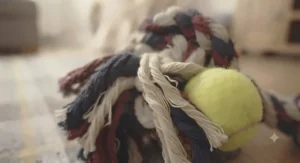
These three materials solve genuinely different problems, and understanding the distinction helps set realistic expectations. Rope toys excel at interactive tug-of-war and genuine dental-flossing benefit through the twisting cotton fibres, but they’re the least durable of the three against sustained solo chewing, since fibres inherently fray under repeated bite pressure. Rubber toys, like the hoop portion of the Beco Pets Hoop on Rope, resist fraying far better and often bounce for added play value, but offer less genuine dental-flossing action than rope specifically. Nylon chews are generally the toughest against raw chewing power but offer no tug-of-war function and, per general veterinary guidance, carry a real risk of tooth fracture if too hard for a dog’s bite strength.
| Feature | Rope | Rubber | Nylon |
|---|---|---|---|
| Dental flossing benefit | Strong | Minimal | Minimal |
| Tug-of-war suitability | Excellent | Good | Poor |
| Raw chew durability | Lower | Moderate-high | Highest |
| Risk of tooth damage | Low | Low | Higher if too hard |
According to Blue Cross’s dog dental care advice, hard chews can risk fracturing a dog’s teeth or wearing them down over time, which is worth weighing against rope’s comparatively gentler profile if dental safety is a priority alongside raw durability. The most balanced households in practice mix materials — rope for interactive play and dental benefit, and an appropriately soft rubber option for solo chewing between sessions.
What to Expect: Real-World Durability for Aggressive Chewers
On paper, five knots and a thick cotton weave sound like they should outlast almost anything, but in practice even the toughest rope toy on this list will show visible wear within the first few sessions against a genuinely committed chewer — that’s simply the nature of woven fibre against sustained bite pressure, not a product failure. What you should actually expect is a gradual, visible fraying process rather than sudden failure: outer fibres loosen first, then shed, then eventually a knot itself may begin to loosen, which is your genuine signal to retire the toy rather than the first sign of surface fluff.
Expect the multi-texture options to outlast pure-rope rivals specifically because the rubber component simply doesn’t fray the way cotton does, even though the rope portion of those toys wears at a broadly similar rate to standalone rope toys. If your dog demolishes even the toughest option here within a single session, that’s a genuine signal worth acting on — some dogs’ bite strength and determination genuinely exceed what rope construction, however well made, can reliably withstand, and a switch to nylon or reinforced rubber chews built specifically for extreme power chewers may serve them better.
Tug of War Dog Toy Play: Rules for Safe Interactive Play
A knotted rope toy is arguably at its best as a tug of war dog toy rather than a solo chew, and playing it safely matters as much as picking the right product. The most important rule, echoed consistently across UK dog training guidance, is to always tug side to side rather than up and down, since vertical yanking motions risk neck and spine strain that horizontal tugging simply doesn’t carry. Match your pulling intensity to your dog’s own effort rather than exceeding it — you’re playing with your dog, not against them, and letting them “win” occasionally builds confidence rather than encouraging dominance, a myth that modern dog training has largely moved past.
For interactive play dog rope sessions specifically, keep games relatively short with built-in breaks: ask for a sit or a “drop” cue every thirty seconds or so, rewarding compliance by restarting the game, which teaches impulse control alongside the physical exercise. According to Julius K9 UK’s guidance on tug games, you should never exert more pulling force than your dog gives, and puppies specifically need extra gentleness since their developing teeth and jaw can be seriously harmed by overly vigorous play.
Multi-Texture Chew Toys and Tight Knots for Big Dogs
For genuinely large, strong-jawed breeds, knot tightness matters more than almost any other single spec on a rope toy’s listing. A loosely woven knot on an otherwise thick rope will work itself apart far faster under a big dog’s bite pressure than a tightly compressed knot on a slightly thinner rope — which is why the Speedy Panther 90cm 5-Knot and Mammoth Flossy Chews, both known for consistent, tightly finished knots, tend to outperform cheaper alternatives with visibly looser knot construction, even when the raw rope diameter looks similar on paper.
Multi-texture chew toy designs offer a different route to durability for big dogs specifically: rather than relying purely on rope tightness, options like the Rosewood Battersea Rope & Rubber and Beco Pets Hoop on Rope pair rope with a rubber element that simply can’t fray the way cotton fibres do, giving a big dog’s jaw somewhere else to direct that bite force. For owners of genuinely powerful breeds, alternating between a tight-knot pure rope option and a multi-texture rope-and-rubber design across different play sessions tends to extend the useful life of both types more effectively than relying on either exclusively.
Knotted Rope Chew for Puppies: What’s Different
A knotted rope chew for puppies needs a genuinely different profile from anything built for adult power chewers, and this is one of the most overlooked distinctions in the whole category. Puppy jaws and baby teeth are still developing, and toys with high resistance and thick, tightly compressed knots — exactly the qualities that make a toy good for an adult aggressive chewer — can actually be uncomfortable or even risky for a young puppy’s developing bite. Softer, smaller options like the Petface Knotted Rope Bone, suitable from around eight weeks old, are specifically designed with this in mind, offering enough resistance to satisfy teething urges without overwhelming a young mouth.
Puppy chewing sessions should also be more closely supervised than an adult dog’s, not because puppies are inherently less careful, but because their inexperience means they’re more likely to attempt swallowing loose fibres rather than simply mouthing them. As puppies mature and their adult teeth come through — generally by six to eight months — gradually introducing sturdier options prepares them for the more robust adult toys covered elsewhere in this guide, rather than jumping straight from a puppy-scale rope to a five-knot large-breed option overnight.
Long-Term Cost, Rotation & Maintenance
Given that no rope toy in this category is genuinely indestructible, the most cost-effective long-term approach is budgeting for periodic replacement rather than expecting a single purchase to last indefinitely. Multi-packs like the XL Giant 3-Knot Set of 2 work out considerably cheaper per toy than premium single options, making them sensible for households where replacement is a regular, expected cost rather than an occasional inconvenience.
Rotating two or three toys of different types — a pure rope option, a multi-texture rope-and-rubber design, and perhaps a separate rubber chew — tends to extend the useful life of each individual toy considerably, since novelty itself seems to reduce how destructively many dogs treat a given toy. Washing cotton rope toys periodically in a warm cycle inside a pillowcase, then air-drying fully before returning them to your dog, is a low-cost maintenance habit that keeps hygiene in check without any specialist products or ongoing expense.
Safety Guide: Choking, Supervision & When to Retire a Rope Toy
Safety should sit above durability in your decision-making, however tempting it is to focus purely on how long a toy lasts. According to PDSA’s first aid guidance on choking, pet owners should always supervise play with toys and chews, and should be alert to signs that a pet is struggling to breathe rather than simply coughing, which indicates a genuine choking emergency requiring immediate action.
Retire a rope toy once a knot has visibly loosened, once a substantial section has detached, or once your dog has swallowed a meaningful amount of loose fibre during a single session rather than simply mouthing and dropping it. Never leave any rope toy with a genuinely aggressive chewer unsupervised until you’ve confirmed, through several supervised sessions, exactly how that specific dog treats it — every dog’s chewing style is different, and the honest reviews across this entire category confirm that outcomes vary considerably even for the same product. If in doubt about whether a specific toy or chewing pattern is safe for your dog, a vet or reputable pet shop can offer guidance tailored to your dog’s size, breed and chewing history.
FAQ
❓ What is the toughest knotted rope toy for aggressive chewers?
❓ Are knotted rope toys safe for puppies?
❓ How often should I replace my dog's rope toy?
❓ Do rope toys actually clean dogs' teeth?
❓ Is tug of war bad for dogs?
Conclusion
No knotted rope dog toy is truly indestructible, and any product claiming otherwise is stretching the truth a little — but the right pick genuinely does buy your dog, and your patience, meaningfully more play time before it needs replacing. Go for the Speedy Panther 90cm 5-Knot or budget XL Giant 3-Knot Set of 2 if you’re dealing with a confirmed powerful chewer, reach for the Petface Knotted Rope Bone for a teething puppy, and consider the multi-texture Rosewood Battersea Rope & Rubber or Beco Pets Hoop on Rope if your dog seems to lose interest in single-material toys quickly.
Whichever you choose, supervise the first few sessions, retire the toy once knots genuinely loosen rather than at the first sign of fraying, and remember that rotating a couple of different textures tends to extend the useful life of all of them. Match the toy to your specific dog’s size, age and chewing intensity honestly, and you’ll get considerably more genuine value — and considerably more happy tail-wagging tug sessions — than a single “indestructible” label ever promised.
✨ Don’t Miss These Exclusive Deals!
🔍 Give your chewer something worth their while — click through to check current pricing and availability on any of the picks above before they change, and get ready for some seriously well-earned tug-of-war time!
Recommended for You
- Cotton Rope Dog Toys: 7 Safe UK Picks Tested for 2026
- Are Rope Toys Safe for Dogs? 7 Honest Picks for 2026
- Elk Antler vs Deer Antler for Dogs Which Is Better 2026: Which Wins?
Disclaimer: This article contains affiliate links. As an Amazon Associate, I earn from qualifying purchases. If you purchase products through these links, we may earn a small commission at no additional cost to you.
✨ Found this helpful? Share it with your friends! 💬🤗
