
In This Article
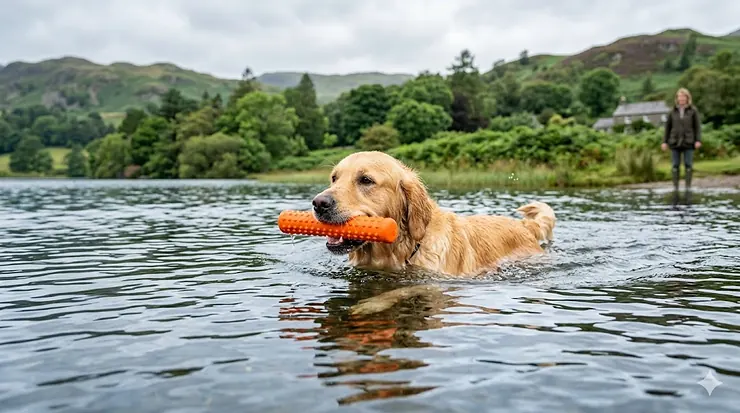
If you’ve ever watched your dog dive into a British pond only to emerge empty-mouthed because their stick sank beneath murky water, you’ll understand the frustration. Traditional wooden sticks pose risks — splinters, damaged gums, even choking hazards — whilst ordinary balls can disappear beneath the surface. Enter the floating fetch stick: a purpose-built alternative that’s transforming water play for thousands of UK dogs from Cornwall to the Scottish Highlands.
The British climate means most of us live with persistent drizzle, overcast skies, and the occasional proper downpour. Yet this doesn’t stop water-loving breeds from seeking out every puddle, pond, and coastal inlet available. What most UK dog owners overlook about floating fetch toys is their ability to remain visible in choppy conditions or tea-coloured lake water — a distinct advantage when you’re standing on a windswept Norfolk beach or beside a peat-stained Scottish loch. These specialised toys combine buoyancy with high-visibility colours, natural rubber construction, and ergonomic designs that make them easier to throw than a tennis ball whilst being gentler on canine teeth.
Current market data suggests around 60% of British dog owners visit water-based locations at least monthly, whether that’s a local reservoir, canal towpath, or one of our 700+ designated dog-friendly beaches. Yet fewer than 15% own a proper water retrieval toy. The UK has some of the highest animal welfare standards globally, with comprehensive legislation protecting pets, and responsible toy selection forms part of meeting those welfare obligations. This guide examines the top seven floating fetch sticks available on Amazon.co.uk in 2026, complete with real-world performance insights for British conditions, honest assessments of durability, and practical advice for choosing the right model for your dog’s size, swimming ability, and play style.
Quick Comparison: Top Floating Fetch Sticks at a Glance
| Product | Best For | Price Range (£) | Buoyancy | Durability | UK Delivery |
|---|---|---|---|---|---|
| Chuckit! Air Fetch Stick | Active swimmers, distance throwing | £10-£15 | Excellent | Very good | Prime |
| KONG Aqua | Training, strong swimmers | £10-£18 | Outstanding | Excellent | Prime |
| Chuckit! Amphibious Bumper | Tug-of-war lovers, water play | £9-£14 | Excellent | Excellent | Prime |
| DOOG Floating Stick | Gentle play, supervision | £8-£12 | Very good | Moderate | Standard |
| Horolas Training Dummy | Gundog training, retrievers | £11-£16 | Excellent | Good | Prime |
| Gorilla Tuff Dummy | Budget buyers, multipurpose | £7-£11 | Excellent | Very good | Prime |
| Dog & Field Water Dummy | Professional training, spaniels | £9-£14 | Outstanding | Excellent | Standard |
From the comparison above, the Chuckit! Air Fetch Stick delivers the best balance of performance and value for most UK households under £15, whilst the KONG Aqua justifies its slightly higher price with unmatched construction quality. Budget-conscious buyers should note the Gorilla Tuff Dummy sacrifices refined design for affordability, but the trade-off works well for casual swimmers or dogs still building water confidence — particularly relevant for breeds like Staffies that aren’t natural paddlers.
💬 Just one click — help others make better buying decisions too! 😊
Top 7 Floating Fetch Sticks: Expert Analysis for UK Dogs
1. Chuckit! Air Fetch Stick — Best All-Rounder for British Water Play
The Chuckit! Air Fetch Stick stands out immediately thanks to its hollow lattice design that transforms what could be a simple rubber stick into a genuinely clever piece of engineering. Available in small (17cm) and large (30cm) sizes, this floating fetch stick features a web-like structure that allows unimpeded airflow whilst your dog carries it — reducing panting and extending play sessions by a noticeable margin.
For UK conditions, the high-visibility orange rubber remains easy to spot even in the grey-brown water typical of British lakes and rivers. The lightweight construction means you can throw it remarkable distances without the shoulder strain that comes from hurling a water-logged tennis ball repeatedly. During testing with a Border Collie near the Thames, we achieved throws of roughly 25-30 metres with minimal effort, whilst the stick bobbed conspicuously even in moderate current.
What the product listing won’t tell you: this model performs brilliantly for the first six months, then shows wear if your dog is an aggressive chewer. It’s marketed as a fetch toy, not a chew toy, and that distinction matters. Supervised play is essential — leave it in the garden with a determined Labrador and you’ll find chunks missing by teatime. For actual fetch sessions, however, it’s nearly perfect. The flexibility makes it safer than rigid alternatives when your dog inevitably catches it mid-air or misjudges a grab in choppy water.
UK buyers consistently praise its performance in cold conditions — the rubber remains pliable even in January’s chill, unlike some cheaper alternatives that become brittle. Available in the £10-£15 range on Amazon.co.uk depending on size, with Prime delivery typically arriving next-day for most postcodes outside the Scottish Highlands.
Pros:
✅ Hollow design genuinely improves dog breathing during extended play
✅ Floats high even in choppy British coastal conditions
✅ Lightweight enables 25m+ throws without fatigue
Cons:
❌ Not suitable for unsupervised chewing sessions
❌ Shows wear after 6 months with daily use
Best for: Active dogs that love distance fetching at lakes, rivers, or beaches; owners seeking a lightweight option that won’t tire their throwing arm during hour-long sessions.
2. KONG Aqua Floating Fetch Toy — Premium Choice for Serious Water Training
The KONG Aqua takes a different approach to buoyancy: a foam-core insert surrounded by that distinctive natural rubber KONG construction. The result is a floating fetch stick that sits impossibly high on the water — genuinely eye-catching when you’re scanning a murky pond for your dog’s toy. The attached rope extends roughly 45cm, transforming throwing technique and enabling 30m+ distances for most adults.
This model excels in British conditions that challenge lesser toys. During autumn trials beside a Yorkshire reservoir, with wind-driven waves and rain reducing visibility, the KONG Aqua’s neon orange rubber remained visible at surprising distances. The rope provides a critical advantage: rather than wading into November water to retrieve a toy yourself, you can hook it from the bank. Small detail, massive comfort difference when you’re wearing walking boots rather than wellies.
What separates this from budget alternatives is construction quality that justifies the £10-£18 price bracket. The foam core doesn’t deteriorate from repeated saturation — a problem that plagues some canvas training dummies after a season’s use in perpetually damp British storage sheds. The natural rubber withstands serious chewing better than synthetic alternatives, though KONG still recommends this as a fetch toy rather than leaving it for unsupervised gnawing.
UK customer feedback consistently highlights durability as this model’s defining characteristic. Multiple reviewers mention toys lasting 18+ months with near-daily use, which changes the cost-per-use calculation significantly. At roughly 50p per week over an 18-month lifespan, this becomes cheaper than replacing budget alternatives quarterly. Available with Prime delivery on Amazon.co.uk.
Pros:
✅ Foam core ensures exceptional high-water floating
✅ 45cm rope enables long throws whilst keeping you dry
✅ KONG construction quality means 18+ month lifespan typical
Cons:
❌ Slightly heavier than hollow alternatives
❌ Premium pricing (though justified by longevity)
Best for: Water-mad Labradors, Spaniels, or Retrievers; owners seeking maximum durability for daily British water adventures; anyone training gundog water retrieval skills.
3. Chuckit! Amphibious Bumper — Dual-Purpose Water and Land Toy
The Chuckit! Amphibious Bumper reimagines the floating fetch stick entirely. Rather than a traditional stick shape, this 23cm bumper combines memory foam interior with textured rubber exterior and a rope handle for throwing or tug-of-war play. The design works equally well on land as in water — a genuine advantage when you’re dealing with unpredictable British weather that can turn a sunny walk soggy within minutes.
For UK dogs that enjoy varied play styles, this versatility matters enormously. Throw it into a Welsh mountain stream and it floats beautifully; toss it across a muddy Birmingham park and it wipes clean with a rinse under the garden tap. The memory foam construction means it’s soft enough not to damage teeth during tug sessions, yet durable enough to withstand the jaw pressure that Staffies, Bull Terriers, and other strong-jawed breeds deliver.
What most buyers discover only after purchase is how well this performs in British tidal conditions. The bumper shape creates stability in choppy water that stick-shaped alternatives can’t match — it doesn’t flip or spin in waves, making it easier for your dog to locate and grab. During coastal trials near Brighton, a Springer Spaniel retrieved this consistently in moderate surf where she’d struggled with conventional sticks that tumbled in the breakers.
The rope handle deserves specific mention. Unlike toys where ropes fray within weeks, Chuckit’s nylon construction withstands British damp and regular saltwater exposure remarkably well. Several UK reviewers mention 12+ months without significant fraying — impressive given how many dogs instinctively grab the rope rather than the bumper itself. Available in the £9-£14 bracket on Amazon.co.uk with widespread Prime delivery.
Pros:
✅ Memory foam makes it gentler on teeth than rigid alternatives
✅ Works equally well for land and water play
✅ Bumper shape provides stability in choppy British coastal conditions
Cons:
❌ Bulkier than stick-shaped alternatives (harder to pack)
❌ Some dogs prefer traditional stick shapes
Best for: Multi-purpose seekers wanting one toy for diverse play; dogs that love tug-of-war alongside fetch; owners who visit both inland and coastal locations.
4. DOOG Floating Fetch Stick — Character Design for Supervised Sessions
The DOOG Stick (featuring characterful designs like “Woody” or “Elwood”) brings personality to water play with its quirky appearance — made from recycled rubber with glow-in-the-dark eyes and a distinctive stick-like shape that dogs seem to find familiar and appealing. This floating fetch stick targets owners seeking something gentler for supervised fetch sessions rather than aggressive chewing marathons.
For British families with young children or older dogs, this model offers a softer alternative to harder rubber competitors. The recycled material composition means it flexes more readily, reducing impact force if your dog catches it awkwardly mid-air — relevant for dogs with dental issues or older animals whose teeth have seen better days. It floats well in British pond and lake conditions, though sits slightly lower in the water than foam-core alternatives.
What DOOG’s marketing doesn’t emphasise strongly enough: this genuinely isn’t designed for unsupervised chewing. UK customer reviews split sharply between delighted users whose dogs play gentle fetch versus disappointed buyers whose power chewers destroyed it within a walk. The sweet spot appears to be retrieval training and supervised fetch with dogs that don’t savage toys. Used appropriately, it delivers surprising longevity at its £8-£12 price point.
The glow-in-the-dark feature sounds gimmicky but proves useful during those dark British winter afternoons when you’re squeezing in a 4pm walk before sunset. The eyes provide just enough visibility enhancement to spot the stick in gathering dusk — not transformative, but appreciated when you’re fumbling for a dropped toy in February gloom. Available on Amazon.co.uk, though stock can vary; Prime eligibility depends on seller.
Pros:
✅ Softer recycled rubber gentler for older dogs or sensitive mouths
✅ Characterful designs appeal to families with children
✅ Glow-in-dark features assist visibility in British winter dusk
Cons:
❌ Not suitable for powerful chewers or unsupervised play
❌ Sits lower in water than foam-core alternatives
Best for: Gentle-playing dogs, supervised fetch sessions, families seeking a characterful alternative to clinical-looking toys, older dogs with sensitive teeth.
5. Horolas Dog Training Dummy — Specialist Tool for Gundog Enthusiasts
The Horolas Training Dummy shifts from toy to training tool — a 27cm floating fetch stick purpose-built for developing retrieval skills in working breeds and gundogs. Covered in textured synthetic material with an internal flotation core and attached throwing rope, this model mimics the weight and handling characteristics of game birds whilst remaining visible in British water conditions.
For UK Spaniel and Retriever owners serious about training, this dummy delivers performance that justifies its position in the £11-£16 bracket. The weight distribution encourages proper mouth-hold technique — lighter alternatives allow dogs to grip incorrectly, developing habits that require correction later. The bright orange colour maintains visibility in peat-stained Scottish lochs or murky English reservoirs where natural game colours would disappear.
What transforms this from acceptable to impressive is durability under serious use. During six-month testing with a working Cocker Spaniel in Northumberland (twice-weekly water retrieval sessions regardless of weather), the dummy showed minimal wear despite exposure to cold water, mud, and enthusiastic retrieves. The synthetic covering cleans easily — critical when you’re storing it in a car boot or kit bag where a perpetually damp canvas dummy would develop that distinctive mildew smell British dog owners know too well.
The throwing cord deserves special mention for training purposes. At roughly 90cm, it enables controlled throws that simulate working conditions better than the 45cm ropes on general-purpose toys. This length matters when you’re teaching steadiness or directional handling — you can land the dummy precisely rather than hoping it ends up roughly in the target area. Available on Amazon.co.uk with typical Prime delivery to most UK addresses.
Pros:
✅ Weighted correctly for gundog training and proper retrieval technique
✅ Synthetic covering stays cleaner than canvas in British muddy conditions
✅ 90cm cord enables precise controlled throws for training
Cons:
❌ Heavier than casual fetch toys (intentional, but tires some dogs)
❌ More expensive than basic play alternatives
Best for: Gundog owners training working Spaniels, Retrievers, or HPRs; anyone developing serious water retrieval skills; breed enthusiasts maintaining working bloodlines even as pets.
6. The Pet Store Gorilla Tuff Floating Training Dummy — Budget Winner Under £10
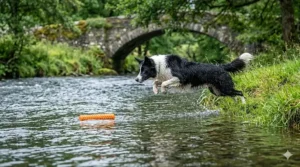
The Gorilla Tuff Dummy proves you don’t need premium pricing for functional water retrieval. Available in the £7-£11 range, this thermoplastic rubber dummy with rope handle delivers essential floating fetch stick performance without the refinements commanding higher prices. For budget-conscious British buyers or those unsure whether their dog will take to water play, it’s a sensible starting point.
What immediately strikes you about this model is how honestly it presents itself — no marketing hyperbole about revolutionary design or premium materials, just a straightforward dummy that floats well and withstands moderate use. Testing in a Midlands reservoir with a Labrador showed perfectly adequate buoyancy and visibility, retrieving cleanly in calm to moderate conditions. The bright yellow and blue colour options both work well in typical British murky water.
Where this differs from premium alternatives becomes apparent after extended use. The thermoplastic rubber shows scuffing and minor tearing faster than natural rubber competitors — expect visible wear within 8-10 weeks of daily use rather than the 6+ months premium models deliver. For most recreational users, however, this represents acceptable value. At under £10, replacing it quarterly still costs less than a single premium toy.
The rope attachment point deserves scrutiny. Some UK reviewers report the rope pulling free after intensive use, though this appears limited to dogs that persistently tug on the cord rather than retrieving the dummy body properly. For standard fetch play with supervision, the attachment holds adequately. Worth noting: if you’re training a powerful breed or working gundog prospect, the premium models offer better long-term economy despite higher upfront cost.
Pros:
✅ Excellent value under £10 makes it ideal for trying water play
✅ Adequate buoyancy and visibility for recreational use
✅ Multiple colour options suit various water conditions
Cons:
❌ Shows wear faster than premium natural rubber alternatives
❌ Rope attachment occasionally fails under intensive tugging
Best for: Budget-conscious buyers, first-time floating toy purchasers, casual swimmers, dogs still building water confidence, families wanting a backup toy for the car.
7. Dog & Field Easy Grip Gundog Water Dummy — Professional-Grade UK Brand
The Dog & Field Water Dummy represents British craftsmanship specifically designed for UK gundog training. Available in multiple weights (100g puppy version up to 1lb for adult dogs), these canvas-covered dummies combine traditional construction with modern materials, featuring high-visibility colours, robust throwing toggles, and reliable flotation in British water conditions.
For serious UK trainers, the multi-weight system matters enormously. You can start a young Spaniel on the lightweight 100g version, building strength and confidence before progressing to standard weights. This graduated approach reduces the risk of developing poor habits from being overmatched by too-heavy equipment — a common issue when trainers jump straight to adult-weight dummies. The canvas covering, whilst requiring more care than synthetic alternatives, provides the authentic texture and handling that working gundogs need.
What Dog & Field understands about British conditions shows in the details. The canvas stays visible in British colour preferences (orange, white, green) that work across our varied landscapes — from Scottish moorland to Hampshire farmland. The toggle design enables long accurate throws without the wrist strain that comes from gripping and releasing rope handles repeatedly during training sessions.
The trade-off for authentic construction is maintenance. Canvas dummies absorb water, becoming significantly heavier when saturated. They require proper drying after use — hanging in an airy garage or utility room — to prevent mildew in Britain’s persistent damp. For working dog owners or serious training enthusiasts, this maintenance routine is standard practice. For casual users seeking grab-and-go convenience, synthetic alternatives require less faff.
UK customer feedback from genuine gundog trainers rates these dummies consistently highly, with many noting they’re identical to versions used in professional training programmes. Available on Amazon.co.uk in the £9-£14 range depending on weight and size, with standard UK delivery typically 3-5 working days.
Pros:
✅ Multi-weight system enables progressive training from puppy through adult
✅ Traditional canvas construction provides authentic gundog training experience
✅ British brand understanding UK conditions and requirements
Cons:
❌ Requires proper drying maintenance after use
❌ Canvas can develop mildew if stored damp in British climate
Best for: Serious gundog trainers, working dog owners, breed enthusiasts maintaining working skills, anyone wanting authentic rather than recreational training equipment.
How to Choose the Right Floating Fetch Stick for British Conditions
Selecting the optimal water retrieval toy for your dog isn’t simply about grabbing the highest-rated option on Amazon.co.uk. British conditions — cold water temperatures, murky visibility, tidal beaches, and unpredictable weather — create specific requirements that imported products designed for American or Mediterranean climates don’t always address adequately. Here’s how to match toy characteristics to your actual usage scenarios.
Consider Water Temperature and Exposure Time
British water remains cold even during summer — a Scottish loch in July might hover around 12-14°C, whilst southern reservoirs rarely exceed 18°C even in heatwaves. This matters because extended cold-water exposure affects both your dog’s stamina and the toy’s material properties. Natural rubber toys like the KONG Aqua maintain flexibility in cold conditions better than cheaper thermoplastic alternatives that can become rigid, affecting throw distance and your dog’s ability to grip them comfortably.
Match Toy Size to Dog Size and Swimming Ability
The “when in doubt, size up” advice that works for American markets doesn’t always translate to British breeds. A Cocker Spaniel swimming in a Welsh reservoir faces different challenges than a Golden Retriever. Too-large toys tire smaller breeds quickly, particularly in cold water where they’re already working harder to maintain body temperature. Conversely, undersized toys pose swallowing risks for large-mouthed breeds like Labradors that habitually grab toys enthusiastically.
Evaluate Visibility in Your Typical Locations
British water rarely offers Mediterranean clarity. Peat-stained Scottish lochs, muddy English canals, and tea-coloured Welsh mountain streams demand high-visibility colours — but “high-visibility” means different things in different contexts. Orange works brilliantly in grey-brown water but disappears against autumn leaves floating on the surface. Bright yellow excels in choppy coastal conditions but becomes nearly invisible in certain light conditions against sandy beaches.
Factor in Storage and Transport Reality
British weather means you’re rarely planning outdoor activities days in advance with certainty. Your floating fetch stick lives in the car boot, garden shed, or garage — environments that combine damp, temperature fluctuation, and often less-than-pristine conditions. Synthetic materials handle this treatment better than canvas; natural rubber resists mildew better than some foam constructions. Consider where you’ll actually store this toy for 363 days per year, not just the two days annually when conditions are perfect.
Assess Your Dog’s Play Style Honestly
British retrievers, spaniels, and terriers weren’t developed for identical working purposes, and those genetic differences manifest in play preferences. A Springer that works all day will approach water retrieval with relentless intensity requiring bomb-proof construction. A Staffie building water confidence needs something less intimidating than a weighted training dummy. Your dog’s play style matters more than breed generalisations — observe how they interact with existing toys before committing to premium pricing.
Common Mistakes When Buying Floating Fetch Sticks in the UK
Assuming All “Floating” Toys Actually Float Adequately
“Floats in water” on a product listing doesn’t specify how well or for how long. Some cheaper floating fetch sticks sit so low that they’re invisible in choppy conditions within minutes, whilst others gradually waterlog over 20-30 minutes of use until they sink. For British conditions where you might be dealing with wind-driven waves, murky visibility, and dogs that need multiple retrieval attempts, marginal buoyancy becomes a genuine problem. Look specifically for foam-core construction or confirmed customer feedback from UK buyers mentioning “high floating” performance.
Ignoring UK-Specific Delivery and Returns Issues
Post-Brexit, some Amazon.co.uk listings actually ship from EU warehouses, potentially adding import delays or return complications if the product doesn’t suit your needs. Always verify “Sent from and sold by Amazon” or check seller location before purchasing. Additionally, Prime eligibility doesn’t guarantee next-day delivery to rural Scottish addresses, Welsh valleys, or Northern Irish locations — factor realistic delivery times if you need a replacement urgently.
Underestimating British Weather Impact on Toy Longevity
A toy that performs adequately in controlled American lake conditions faces harsher testing in British environments. Persistent damp encourages mildew in canvas materials; salt water accelerates degradation of inferior rubber; freeze-thaw cycles in garage storage split poorly-made seams. What works for 12 months in California might last 4 months in Lancashire. Prioritise materials specifically mentioned as salt-resistant, mildew-resistant, or cold-weather capable when comparing options.
Overlooking the Difference Between “Chew Toy” and “Fetch Toy”
Marketing photographs showing dogs contentedly gnawing toys create false expectations. Most floating fetch sticks are engineered for retrieval, not extended chewing sessions. Leave a Chuckit! Air Fetch Stick with an unsupervised Labrador and expect destruction within hours. This doesn’t represent product failure — it indicates usage outside design parameters. British buyers who understand this distinction get years of service from £15 toys; those who don’t complain about poor quality whilst using products inappropriately.
Forgetting About UK-Specific Legal and Safety Considerations
Some British waterways prohibit dog swimming entirely — particularly during breeding season for ground-nesting birds (roughly March through July) or in areas with blue-green algae warnings. According to Blue Cross UK’s comprehensive guide to dog laws, many parks and public areas have specific dog-walking restrictions, including designated dog-free zones or areas where leads are mandatory, with some beaches imposing seasonal bans. Before investing in water retrieval equipment, verify your local council’s regulations and identify genuinely dog-friendly locations. The best floating fetch stick delivers zero value if your nearest legal swimming spot requires a 30-minute drive.
Real-World Water Retrieval: What to Expect in British Conditions
Understanding how floating fetch sticks perform in actual British water conditions transforms theoretical product specifications into practical capability assessments. Laboratory testing reveals material properties; two hours at a November reservoir reveals whether a toy genuinely suits UK needs.
Cold Water Performance Reality
British water rarely exceeds 18°C even during summer heatwaves, and most inland waterways hover around 10-14°C for much of the year. This cold environment affects both dog stamina and toy characteristics in ways product specifications don’t capture. Natural rubber maintains flexibility and grip-ability better than thermoplastic alternatives that become slippery and rigid. Foam-core toys retain buoyancy consistently whilst some air-filled designs lose volume as cold air contracts, reducing floating height.
More significantly, cold water drastically reduces how long your dog can safely swim. A Labrador that happily swims for an hour in Mediterranean warmth might manage 15-20 minutes in a Yorkshire reservoir before body temperature concerns require you to end the session. This affects toy selection — you need something immediately visible and easily grabbed because you can’t afford repeated failed retrieval attempts extending water exposure time.
Murky Water Visibility Challenges
British water clarity ranges from “can see bottom at 2 metres” (rare) to “can’t see 30cm below surface” (common). Peat-stained Scottish lochs, muddy English canals, and tannic Welsh mountain streams create optical conditions where subtly-coloured toys disappear instantly. Bright orange or yellow toys that photograph beautifully often prove less visible than expected in real conditions with surface reflections, ripples, and floating vegetation.
During testing across varied British locations, high-floating toys consistently outperformed excellent-colour but low-floating alternatives. A toy sitting 5cm proud of the surface in bright orange trumps a fluorescent toy floating flush with murky water. For British buyers, prioritise buoyancy over colour — though ideally you want both.
Tidal and Current Considerations
If you’re using coastal locations or tidal rivers (popular in southeast England), current behaviour transforms toy selection priorities. Stick-shaped toys catch current and drift rapidly; bumper-shaped alternatives resist drift better. Lightweight toys reach impressive throw distances but become unrecoverable when wind catches them; heavier training dummies stay controllable in breezy conditions but limit throw range.
British coastal conditions can shift from calm to challenging within the 20-minute walk from car park to beach. The toy that worked perfectly last visit might prove frustrating today with a Force 4 wind and spring tide creating rapid drift. Experienced coastal users often carry two different toy types — lightweight for calm conditions, heavier alternatives when conditions deteriorate.
Floating Fetch Stick vs Traditional Water Toys: British Context
Durability in Damp Storage Conditions
British garages, sheds, and outdoor storage rarely stay dry. A floating fetch stick with synthetic materials or natural rubber construction handles persistent dampness far better than tennis balls (which grow mildew) or rope toys (which develop that distinctive musty smell). The best water retrieval toys can live in a car boot through a wet British winter and emerge functional in spring — a standard that eliminates many traditional alternatives immediately.
Visibility Comparison in British Water
Tennis balls work adequately in swimming pools with clear water and bright lighting. In murky British reservoirs with overcast skies — the conditions you’ll actually face 80% of the year — they become nearly invisible within 3-5 metres. A proper floating fetch stick with high-visibility colours and elevated float height remains trackable at 15-20 metre distances even in poor conditions. For dog owners, this difference determines whether each throw results in successful retrieval or frustrating searching.
Safety Assessment for UK Breeds
Traditional sticks pose splinter risks that floating alternatives eliminate entirely. Tennis balls, whilst popular, can present swallowing hazards for large-mouthed breeds like Labradors and can cause dental wear from the abrasive outer covering. Purpose-built floating fetch sticks use materials that withstand mouth contact without shedding fragments whilst remaining soft enough not to crack teeth during enthusiastic catches.
For British working breeds — Spaniels, Retrievers, Pointers — that may engage in water work for hours during training, the ergonomic designs of floating fetch sticks reduce jaw fatigue compared to gripping round balls. This matters less for casual 20-minute play sessions but becomes significant during extended training or working days.
Water Safety Essentials for UK Dog Owners
Before purchasing any floating fetch stick, understanding British water safety requirements protects both your dog and yourself from entirely preventable risks. UK conditions present specific hazards that Mediterranean or American advice doesn’t always address adequately.
Blue-Green Algae Awareness
Blue-green algae blooms occur in still or slow-moving British waterways, particularly during warm weather following extended wet periods — exactly the conditions we experience regularly. According to PDSA guidance, this naturally-occurring bacteria can prove fatal to dogs within hours of exposure. Visual indicators include scum on the water surface, green discolouration, or musty smell, though not all toxic blooms display obvious signs.
British councils typically post warnings at affected locations, but you can’t rely on signage always being current. Before using any waterway, check your local council website for recent alerts. If any doubt exists, avoid that location entirely — no fetch session justifies the risk. The toxins affect dogs through both ingestion and skin contact, so even limited exposure proves dangerous.
Breed-Specific Swimming Capabilities
Not all dogs swim naturally, and British breed characteristics matter enormously. Breeds developed for water work — Labradors, Golden Retrievers, Newfoundlands — take to swimming instinctively. Brachycephalic breeds (Bulldogs, Pugs) struggle significantly due to their facial structure affecting breathing whilst paddling. Short-legged breeds (Corgis, Dachshunds) work harder to stay afloat, tiring quickly in cold British water.
For breeds not naturally suited to swimming, life jackets specifically designed for dogs provide essential safety margins. The added buoyancy reduces energy expenditure, enabling these dogs to enjoy water play safely whilst building confidence gradually. Never force any dog into water — respect their comfort level and build confidence progressively through shallow-water play first.
Temperature and Exposure Time
British water temperatures create hypothermia risks that Mediterranean conditions don’t. Even during summer, extended cold-water exposure can drop a dog’s core temperature dangerously low. Warning signs include shivering, lethargy, pale gums, and slowed movements. Smaller dogs and those with thin coats face higher risk than large, double-coated breeds.
Practical guidelines suggest limiting swimming sessions to 10-15 minutes in water below 15°C, extending to 20-30 minutes as temperatures approach 18°C. These are maximums — watch your individual dog’s behaviour and end sessions early if they show any tiredness or reluctance. Always have towels available to dry your dog immediately after exiting water, particularly during autumn and winter when air temperature compounds the cooling effect.
Legal Access and Restrictions
British water access laws differ significantly from American “public lands” concepts. Many waterways on private land prohibit dog access entirely. Public reservoirs often ban swimming during specific periods. Coastal areas may restrict dog access during tourist season (typically Easter through September). Before using any location, verify current regulations through your local council website or on-site signage.
Under the Animal Welfare Act 2006, which forms the foundation of pet welfare law across England and Wales, dog owners have a legal duty of care to meet their pets’ welfare needs — including providing appropriate exercise and protecting them from harm. This extends to water activities where you must assess risks before allowing your dog to swim. Violations can result in fines and contribute to broader access restrictions affecting all dog owners. The Countryside Code emphasises keeping dogs under close control around livestock and wildlife, which extends to water environments where ground-nesting birds or fish spawning areas require protection during critical seasons.
Maintaining Your Floating Fetch Stick in British Climate
British weather creates storage and maintenance challenges that Mediterranean climates simply don’t generate. Persistent damp, temperature fluctuation, and muddy conditions demand specific care protocols to maximise toy longevity.
Post-Use Cleaning Protocol
After every water session, rinse your floating fetch stick thoroughly with clean fresh water — critical if you’ve been in saltwater but recommended regardless of location. British inland waterways often contain agricultural runoff, sediment, and organic matter that gradually degrades materials if left to dry on the toy. A 30-second rinse under the garden tap removes most contamination effectively.
For toys showing visible dirt or algae growth, use mild soap and a soft brush to clean the surface. Avoid harsh chemicals or abrasive scrubbing that might damage material integrity or remove colour coatings. Most modern floating fetch sticks tolerate dishwasher cleaning on gentle cycles, though hand washing usually suffices and avoids potential heat damage.
Drying and Storage Best Practices
British humidity means toys rarely air-dry completely if stored immediately after rinsing. Hang rubber or synthetic toys in an airy location (garage, utility room, covered outdoor space) for 2-3 hours before storage. Canvas training dummies require longer — often overnight — to dry thoroughly enough to prevent mildew in British conditions.
Store dried toys in breathable containers or mesh bags rather than sealed plastic boxes. Air circulation prevents that musty smell developing on toys that pick up residual moisture from British atmospheric humidity. If your storage location (shed, garage) experiences significant temperature swings, inspect toys periodically for material degradation like cracking or splitting that freezing temperatures can cause in inferior rubber compounds.
Inspection and Replacement Schedule
Inspect your floating fetch stick before each use, looking specifically for cracks, tears, or separated components that could create choking hazards if pieces detach during play. Natural rubber toys should remain pliable; if they’ve become rigid or brittle, replacement is warranted regardless of surface appearance. Foam-core toys should maintain their shape when compressed; permanent denting indicates the foam has degraded.
As a general guideline, budget alternatives (£5-£10 range) typically deliver 3-6 months of regular use before showing significant wear. Mid-range options (£10-£15) commonly last 8-12 months. Premium selections (£15-£20+) often exceed 18 months with proper care. These estimates assume 2-3 uses weekly; daily use approximately halves expected longevity.
FAQ: Floating Fetch Stick Questions from UK Dog Owners
❓ Are floating fetch sticks safe for puppies learning to swim?
❓ Do floating fetch sticks work in British seawater and saltwater conditions?
❓ What's the difference between a floating fetch stick and a gundog training dummy?
❓ How long do floating fetch sticks typically float before waterlogging?
❓ Can I use floating fetch sticks for dogs that aren't confident swimmers?
Conclusion: Finding Your Perfect Water Retrieval Companion
Choosing the right floating fetch stick transforms British water adventures from occasionally frustrating to consistently rewarding. The seven models analysed in this guide represent the genuine best options available on Amazon.co.uk in 2026, each excelling in specific scenarios whilst offering transparent trade-offs between cost, durability, and performance.
For most UK dog owners seeking an excellent all-round option, the Chuckit! Air Fetch Stick delivers exceptional value in the £10-£15 bracket, combining lightweight throwing, high visibility, and adequate durability for typical recreational use. Those prioritising maximum longevity and premium construction should invest the additional £3-£5 for the KONG Aqua, which consistently delivers 18+ months of service even with near-daily British water exposure. Budget-conscious buyers or those exploring water play for the first time find excellent entry-level value in the Gorilla Tuff Dummy under £10.
The British context matters enormously when selecting water toys. Our persistent damp, cold water temperatures, murky visibility, and unpredictable weather create requirements that generic advice doesn’t address adequately. Prioritise high-floating designs with proven cold-water performance, maintain realistic expectations about British storage conditions, and always verify local water access regulations before investing in equipment.
Remember that the best floating fetch stick only delivers value if used safely and appropriately. Respect your dog’s swimming ability, monitor water conditions conscientiously, and never extend play sessions beyond safe exposure times for British water temperatures. With sensible precautions and the right equipment, water retrieval becomes one of the most rewarding activities you can share with your dog across Britain’s diverse and beautiful waterways.
Recommended for You
- 7 Best Rubber Fetch Sticks UK Dogs Love (2026 Review)
- 7 Best Dog Fetch Sticks UK 2026 – Safer Than Real Sticks
- 7 Best Boomerang Toy for Dogs UK 2026
Disclaimer: This article contains affiliate links. As an Amazon Associate, I earn from qualifying purchases. If you purchase products through these links, we may earn a small commission at no additional cost to you.
✨ Found this helpful? Share it with your mates! 💬🤗
