
In This Article
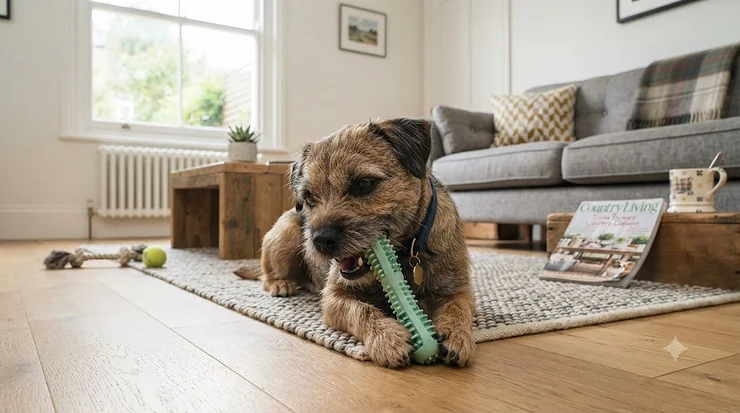
If you’ve ever watched a Chihuahua try to gnaw on a chew toy built for a Labrador, you’ll know the problem instantly: it just doesn’t fit. Small mouths need small tools, and dental chew toys for small dogs are a different category entirely from the giant rope bones and bull-strength rubber blocks lining most pet shop shelves. Toy and small breeds — Yorkies, Pomeranians, Dachshunds, Chihuahuas, Cavaliers — pack the same 42 adult teeth into a jaw that’s a fraction of the size of a Retriever’s, and that crowding is exactly why plaque and tartar find such an easy foothold.

This guide cuts through the noise. We’ve researched seven genuinely available products, aggregated real customer sentiment where it exists, and built the whole thing around one simple idea: a dental toy only works if it’s the right size, the right firmness, and actually gets used. Along the way we’ll cover small jaw sizing, gentle dental toys for toy breeds, and — because it matters more than almost anything else on this list — choking hazard prevention. Prices below are shown as ranges only, since Amazon pricing shifts constantly; always check the current price before buying. As an Amazon Associate, we earn from qualifying purchases made through links on this page.
What Is a Dental Chew Toy for Small Dogs?
A dental chew toy for small dogs is a purpose-sized rubber, nylon or textured toy — typically under 12cm long and under 200g — designed to scrub plaque from the teeth and massage the gums as a dog gnaws, without being so hard it risks cracking small, thin teeth. Unlike edible dental chews, these toys are reusable and built to withstand repeated, supervised chewing sessions.
Quick Comparison Table
| Product | Best For | Price Range |
|---|---|---|
| KONG Dental Stick | Average chewers wanting an all-rounder | £6-£9 |
| Nylabone Moderate Chew FlexiChew Dental Dog Chew Toy | Gentle chewers and teething pups | £5-£8 |
| Benebone Wishbone | Toy breeds who like to grip and gnaw | £9-£13 |
| Petstages Orka Mini Bone | Multi-texture teething relief | £6-£9 |
| Trixie Denta Fun Round Tugger | Interactive tug-and-clean play | £5-£8 |
| Petstages Dentalinks | Budget-friendly multi-pack | £5-£8 |
| JW Pet Chompion (Small) | Treat-motivated small-to-medium chewers | £7-£10 |
Looking at the spread above, there’s no single “best” toy — the right pick depends almost entirely on how your dog chews. The Benebone Wishbone and Nylabone Moderate Chew FlexiChew Dental Dog Chew Toy sit at opposite ends of the firmness spectrum, which matters enormously for older toy breeds with worn enamel. Budget shoppers will find the Petstages Dentalinks multi-pack delivers the best cost-per-toy, while households with a genuinely enthusiastic chewer may get more mileage from the KONG Dental Stick‘s fillable design, which stretches out chewing time rather than ending it in ninety seconds.
💬 Just one click — help others make better buying decisions too!😊
Top 7 Dental Chew Toys for Small Dogs: Expert Analysis
1. KONG Dental Stick — fillable rubber ridges for extended chew sessions
The standout here is the fillable cavity running through the middle, which turns a simple chew into a slow-release enrichment activity.
Made from KONG’s Classic natural red rubber, the stick is moulded with raised ridges along its length that press against the tooth surface as your dog gnaws, and it’s sized specifically for dogs in the small-breed weight bracket rather than being a scaled-down version of a large-dog toy. In practice, that ridge pattern means the cleaning action happens passively during normal chewing, not through any active brushing motion, so results build up gradually with daily use rather than overnight.
Based on the spec comparison with flatter dental toys, the KONG Dental Stick earns its place through versatility: it works as a stand-alone chew or, once smeared with a xylitol-free paste, as a longer-lasting enrichment tool for dogs who tend to lose interest in plain rubber within minutes. It suits average chewers best — dogs who chew steadily rather than attacking a toy — and owners looking for one toy that pulls double duty as both dental aid and boredom-buster.
Reviewers consistently report that the rubber holds up well against determined but not extreme chewing, and a recurring theme in aggregated feedback is that dogs engage with it for noticeably longer once treat paste is added, though a minority of owners with very strong chewers note it can show tooth marks faster than nylon alternatives.
Pros:
- ✅ Fillable design extends chew time significantly
- ✅ Natural rubber is gentler on teeth than hard nylon
- ✅ Sized specifically for small-breed jaws
Cons:
- ❌ Softer rubber wears faster with heavy chewers
- ❌ Not suitable for genuinely aggressive chewing dogs
At around £6-£9, the value case is strong for the price point — you’re essentially getting two toys in one (chew plus treat dispenser), and check current price before ordering since KONG’s small-dog range fluctuates with demand.
2. Nylabone Moderate Chew FlexiChew Dental Dog Chew Toy — softest flex for teething and sensitive mouths
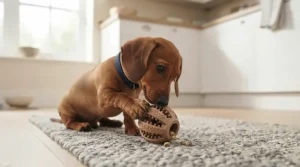
What stands out immediately is the flexible, give-a-little material, which is noticeably softer underfoot than Nylabone’s standard nylon range.
The X-Small/Petite size is rated for dogs up to roughly 7kg, and the surface is covered in rounded nubs rather than sharp ridges — a deliberate choice that trades some cleaning aggression for a gentler bite pressure requirement. What most buyers overlook about this model is that the “moderate chew” branding isn’t marketing fluff; Nylabone genuinely grades its range by chew intensity, and this is their gentlest dental option, sitting well below their Power Chew and Extreme lines in hardness.
This is the toy to reach for with puppies still losing baby teeth, senior toy breeds with worn or loose teeth, or any small dog whose vet has flagged existing dental disease where a harder toy could risk a fracture. The chicken flavour throughout the material (not just sprayed on) does the job of holding a dog’s interest longer than an unflavoured chew would.
Aggregated review sentiment across retailers is broadly positive on softness and flavour appeal, though a repeated theme is that genuinely strong chewers can work through it faster than Nylabone’s tougher ranges — which, given the softer material is precisely the trade-off being made here, isn’t really a flaw so much as a mismatch of dog to product.
Pros:
- ✅ Gentlest texture in the Nylabone dental range
- ✅ Ideal for teething puppies and seniors
- ✅ Flavour infused throughout, not just coated
Cons:
- ❌ Won’t survive determined power-chewers
- ❌ Softer nubs clean less aggressively than firmer designs
Priced around £5-£8, it’s one of the more affordable entries here, making it easy to keep a spare on hand — sensible given how quickly a genuinely enthusiastic chewer can wear one down.
3. Benebone Wishbone — curved ergonomic grip built for tiny paws
The wishbone curve is the standout feature, letting a dog pin the toy with one paw while gnawing at an angle a straight stick simply doesn’t allow.
Benebone makes its Wishbone in a dedicated “tiny” sizing bracket aimed at dogs under roughly 7kg — think Chihuahuas and Yorkies specifically, rather than a generic “small” catch-all — and the nylon core is infused with real bacon flavour rather than a surface spray, which is worth noting for dogs who lose interest once the initial flavour coating wears off other brands’ toys. Here’s what to weigh: Benebone’s nylon-based construction sits firmer than rubber alternatives like the KONG or Petstages entries on this list, so while it lasts considerably longer, it also demands healthy, undamaged teeth to chew safely.
This toy is best suited to toy breeds with strong dental health and a genuine drive to chew, rather than dogs recovering from dental work or puppies still teething. Made in the USA from a single durable material, it holds its shape rather than fragmenting into loose chunks — a genuine safety advantage over cheaper composite chews that can shed pieces.
A recurring theme in aggregated customer sentiment is real enthusiasm for the bacon flavour specifically, with many owners noting their dog engages with it far more readily than with unflavoured nylon competitors; the main complaint is durability expectations, since even “indestructible” branding doesn’t mean infinite — Benebone itself recommends replacing at the first sign of deep teeth marks or cracking.
Pros:
- ✅ Ergonomic curve suits tiny paws and jaws
- ✅ Real bacon flavour infused throughout the nylon
- ✅ Genuinely long-lasting for a nylon chew
Cons:
- ❌ Firmer material isn’t ideal for damaged or weak teeth
- ❌ Premium pricing versus rubber alternatives
At around £9-£13, this sits at the premium end of the lineup, but the cost-per-week of use often works out competitive given how much longer it survives than softer options — a genuine ROI consideration for owners tired of replacing toys monthly.
4. Petstages Orka Mini Bone — multi-texture teether sized for petite jaws
The flat bone shape is the standout detail, engineered specifically to help exercise jaw muscles evenly rather than favouring one side of the bite.
Built from Petstages’ proprietary Orka TPE rubber, the Mini Bone combines several distinct textures on one toy — smooth sections, raised ridges, and a canvas rope insert — with each targeting a slightly different part of the cleaning job: ridges scrape at the tooth surface while the rope fibres work more like dental floss against soft tartar. On paper this means a genuinely more thorough clean than a single-texture toy can offer, though reviewers note the rope portion is the first part to wear through with regular use.
This is a strong pick for teething puppies and small dogs with a mild-to-moderate chewing style; Petstages is explicit that it isn’t built for aggressive chewers, and buyers matching that use case tend to be happiest. It also floats and bounces, giving it a secondary role as a fetch toy — useful if you want fewer separate items cluttering the toy basket.
Aggregated feedback consistently highlights the bright colours and multiple textures as genuinely engaging for small dogs who lose interest in plain shapes quickly, while the recurring criticism is that the rope elements fray faster than the rubber body itself.
Pros:
- ✅ Multiple textures target different cleaning actions
- ✅ Doubles as a floating fetch toy
- ✅ Specifically sized for petite jaws
Cons:
- ❌ Rope sections wear out before the rubber body
- ❌ Not built for strong or aggressive chewers
Sitting around £6-£9, it’s a reasonable mid-range pick, and the dual chew-and-fetch function arguably improves the value equation versus single-purpose toys in this price bracket.
5. Trixie Denta Fun Round Tugger Toy — cotton rope with a play-driven cleaning action
What stands out is the tugger format itself — a looped cotton rope with a moulded handle, which shifts the cleaning mechanism from passive chewing to active, interactive play.
Trixie’s Denta Fun range is built around pure cotton rope construction, and the fibres work through friction: every pull and shake during a game of tug drags the rope across the tooth surface and gumline, which is a genuinely different mechanism to rubber ridges or nylon nubs. The spec sheet won’t tell you this, but reviewers note the interactive format tends to hold a small dog’s attention far longer than a solitary chew toy, simply because there’s a human on the other end.
Best suited to owners who actively play tug regularly rather than leaving toys for unsupervised chewing, this is arguably the most “transformation-friendly” toy on the list — it turns a five-minute daily play session into a dental care habit rather than requiring a separate dedicated chew time.
Review sentiment is generally positive on durability for its price point, with several owners noting it survives longer than expected for a rope toy; the main honest caveat, echoed across multiple sources, is that cotton rope fibres can fray and should be monitored and replaced once loose strands appear, since ingested fibre isn’t something you want a small dog swallowing.
Pros:
- ✅ Turns dental care into interactive playtime
- ✅ Pure cotton construction, no synthetic fillers
- ✅ Compact size genuinely suited to small dogs
Cons:
- ❌ Requires supervised, active play rather than solo chewing
- ❌ Rope fibres fray and need monitoring over time
At roughly £5-£8, it’s one of the most affordable entries, though bear in mind it needs replacing sooner than rubber or nylon options given the natural rope material.
6. Petstages Dentalinks — a budget multi-pack built for variety
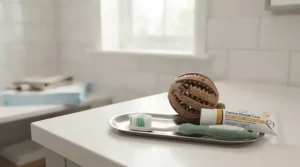
The standout feature is the linked-ring design — two textured rubber rings joined by a rope centre, giving three distinct chew zones on a single toy.
Constructed from the same Orka TPE material as the Mini Bone but sold in a multi-toy pack, the Dentalinks range spreads cost across several chew items rather than one, which matters for households rotating toys to keep a small dog engaged. Reviewers consistently note that having spares on hand reduces the stress of a single “favourite toy” wearing out unexpectedly — a common real-world hassle model comparisons rarely mention.
This is the clear budget-conscious pick on this list, and it particularly suits owners managing multiple small dogs or wanting to test whether their dog responds well to Orka-style rubber before committing to a pricier single toy. The diamond-textured ridges perform a similar plaque-scraping function to the Mini Bone, just distributed across a pack rather than concentrated in one larger toy.
Aggregated sentiment skews positive on value-for-money specifically, with the multi-pack format cited repeatedly as a practical solution for rotating toys; the trade-off flagged most often is that individual pieces are smaller and therefore wear through faster than a single larger toy would.
Pros:
- ✅ Multi-pack format offers genuine cost-per-toy savings
- ✅ Multiple textures across linked rings
- ✅ Useful for rotating toys in multi-dog households
Cons:
- ❌ Smaller individual pieces wear down quicker
- ❌ Not designed for strong chewers
Priced around £5-£8 for the pack, the per-toy cost compares favourably against buying single dental toys separately, making this a sensible starting point for owners still working out their dog’s chewing style.
7. JW Pet Chompion (Small) — dumbbell grip with a built-in treat outlet
The standout feature is the dumbbell shape itself, designed specifically for easy gripping, tossing and bouncing rather than sitting still like a flatter dental toy.
Grooved and nubbed along its length, the Chompion is built from certified non-toxic material soft enough for teething pups, with holes at each end that accept small treats or a smear of paste to extend engagement. Based on the spec comparison with simpler chew shapes, the dumbbell profile genuinely does encourage more active play than a static bone shape — dogs tend to carry and toss it rather than just lying down to gnaw, which adds a physical-activity element most single-purpose dental toys lack.
Here’s the honest caveat worth flagging: this model runs slightly larger than some of the true toy-breed options on this list, and it can be a stretch for the smallest jaws — genuinely tiny breeds like Chihuahuas or Yorkie puppies may struggle to grip it comfortably, whereas dogs at the upper end of the small-breed bracket (Cavaliers, small terriers) tend to manage it well.
Reviewers report strong enthusiasm for the vanilla flavour infusion and treat-holding function specifically, with repeated mentions that it holds attention longer than plain chew shapes; the size mismatch for the smallest breeds is the most consistently repeated criticism in aggregated feedback.
Pros:
- ✅ Dumbbell shape encourages active play, not just chewing
- ✅ Treat-holding ends extend engagement time
- ✅ Non-toxic material safe for teething pups
Cons:
- ❌ Sizing can run large for genuinely tiny breeds
- ❌ Grooves need occasional cleaning to avoid trapped debris
At around £7-£10, it earns its keep for small-but-not-tiny breeds specifically; owners of true toy breeds may find better proportional fit elsewhere on this list.
Toy Breed Dental Issues: Why Small Mouths Need Extra Care
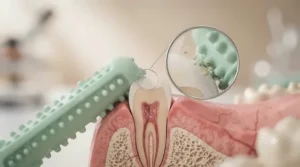
Toy breed dental issues are not a minor footnote — they’re arguably the single biggest reason this whole product category exists. Chihuahuas, Pomeranians, Yorkshire Terriers and similar toy breeds carry the same 42 adult teeth as a German Shepherd, crammed into a jaw a fraction of the size, and that overcrowding creates tight gaps where plaque and food debris accumulate faster than a toothbrush — let alone a dog’s tongue — can clear. According to veterinary guidance on small-breed dental health, dogs under 6.5kg have been found to be roughly five times more likely to develop dental disease than dogs over 25kg — a striking gap that has less to do with size itself and more to do with tooth-to-jaw ratio.
This is the core argument for small breed dental chews and toys specifically sized for toy breeds, rather than a scaled-down large-dog product: a toy that’s merely “smaller” doesn’t necessarily address the crowding problem, whereas one genuinely designed around a petite jaw’s geometry does. Retained baby teeth, delayed eruption and shallow tooth roots also complicate matters further in these breeds, meaning dental toys work best as one part of a wider routine that includes regular vet checks rather than a stand-alone fix.

Small Jaw Sizing: Getting the Fit Right for Petite Breeds
Small jaw sizing is where most dental toy purchases go wrong, and it’s rarely about overall toy dimensions alone — bite width, gum sensitivity and jaw strength all factor in differently across the small-breed spectrum. A Chihuahua’s jaw and a Cavalier King Charles Spaniel’s jaw both fall under “small dog” on most packaging, yet the size and bite-force difference between them is considerable.
- Measure your dog’s open-mouth gape, not just their weight, since narrow-muzzled breeds (Dachshunds, Italian Greyhounds) often need slimmer profiles than stockier small breeds of the same weight.
- Check the toy’s stated weight bracket against the lower end, not the upper end, if your dog sits at the small end of “small” — a toy rated “up to 7kg” is built around dogs closer to that ceiling, not a 2kg teacup breed.
- Prioritise diameter over length for gripping toys; a toy too thick for a petite jaw to close around properly won’t generate the bite pressure needed for any cleaning action to work.
- Reassess sizing after any dental procedure, since extractions can change how comfortably a dog can grip a toy that previously fit fine.
Getting this right isn’t just about comfort — an ill-fitting toy that a dog can’t grip properly either gets ignored entirely or gets swallowed attempts made on it, which brings us neatly to the safety section below.
Gentle Dental Toys for Toy Breeds vs Standard Chew Toys
Gentle dental toys for toy breeds differ from standard chew toys in three material ways: flex, texture aggression, and bite-force requirement. Standard chew toys — even ones labelled “small” — are frequently built on the assumption of a moderate-to-firm bite, since most mainstream chew brands design primarily around medium and large dog demand.
A genuinely gentle toy, like the Nylabone Moderate Chew FlexiChew Dental Dog Chew Toy, sacrifices some scrubbing aggression for a material soft enough that a delicate or damaged tooth won’t crack against it. Standard rubber or nylon toys, by contrast, assume healthy enamel and a jaw strong enough to compress firmer material — fine for a robust adult Jack Russell, less fine for a senior Pomeranian with existing periodontal disease.
The practical takeaway: match toy firmness to your dog’s actual dental condition, not just their size bracket. A young, healthy toy-breed dog with strong teeth may do perfectly well on a firmer product like the Benebone Wishbone, while an older dog or one recovering from a dental procedure is better served by something softer, even if it means more frequent replacement.
Choking Hazard Prevention: Non-Negotiable Safety Rules
Choking hazard prevention deserves its own section because it’s the one area where getting sizing wrong has genuinely serious consequences, not just a wasted purchase. Blue Cross advises that any toy small enough to fit entirely inside a dog’s mouth risks lodging in the back of the throat during play, and that guidance applies just as much to a chew toy as it does to a ball.
- The whole-mouth test: if a toy can disappear entirely into your dog’s mouth, it’s too small — full stop, regardless of what the packaging size label says.
- Watch for fragmentation: rubber and rope toys that begin shedding chunks or loose fibres should be retired immediately, not “used up.”
- Never leave a dog unsupervised with a new toy for the first few sessions, until you know how they chew it.
- Inspect weekly: cracks, exposed inner material, or a toy that’s visibly smaller than when purchased are all replacement signals.
- Size up cautiously, not down, if you’re between two size brackets — a slightly-too-large toy is inconvenient; a slightly-too-small one is a genuine hazard.
None of the seven products above are edible, which removes one layer of ingestion risk compared with dental chew treats — but a dog motivated enough can still shred rope elements or tear off rubber fragments, so supervision remains the single most effective safety measure regardless of which toy you choose.
How to Choose Dental Chew Toys for Small Dogs
- Start with your dog’s chewing style, not the toy’s marketing claims — a gentle nibbler and a determined destroyer need genuinely different products, even within the same weight bracket.
- Match firmness to dental health, favouring softer rubber or flexible nylon for puppies, seniors, or dogs with any known dental issues.
- Confirm the size bracket against your dog’s actual weight and jaw width, erring toward the smaller end of “small” for true toy breeds.
- Check the material composition, prioritising single-material or well-reviewed composite toys over cheap unbranded alternatives with vague ingredient listings.
- Factor in supervision requirements, since interactive toys like the Trixie Denta Fun Round Tugger demand active playtime rather than solo chewing.
- Consider rotation over a single “forever toy”, since variety keeps engagement high and spreads wear across multiple items.
- Budget for replacement, not just purchase, since even durable toys need periodic swapping as they wear.

Practical Usage Guide: Setting Up a Dental Chew Routine
Introducing a new dental toy works best as a gradual routine rather than a one-off purchase left in a toy box. In the first week, offer the toy for short, supervised sessions of ten to fifteen minutes rather than leaving it out permanently — this lets you observe your dog’s chewing intensity before granting unsupervised access, and it also prevents a novel toy from being devoured too enthusiastically on day one.
A useful optimisation trick many owners miss: rotate two or three toys of differing textures rather than relying on a single product, since dogs — much like people with cutlery — tend to re-engage more enthusiastically with a toy they haven’t seen in a few days than one that’s been permanently available. For fillable options like the KONG Dental Stick, freezing a small smear of xylitol-free peanut butter or wet food inside extends the session considerably and adds a cooling, teething-friendly element for younger dogs.
Common first-30-days mistakes include leaving a brand-new toy unsupervised before establishing chewing habits, choosing size based on breed stereotype rather than the individual dog’s actual jaw, and abandoning a toy too quickly if the dog shows initial disinterest — many dogs need several short exposures before a new texture or flavour clicks. A simple weekly maintenance check — washing rubber toys in warm soapy water, inspecting rope elements for fraying, and replacing anything showing structural wear — keeps the dental benefit consistent rather than declining unnoticed over months.
Real-World Scenarios: Matching the Right Toy to Your Dog
The teething puppy owner: if you’ve got an 8-to-16-week-old toy breed puppy losing baby teeth, softness matters more than durability right now. A Nylabone Moderate Chew FlexiChew Dental Dog Chew Toy or the rope-textured Petstages Orka Mini Bone suit sore, developing gums far better than anything firm, and neither represents a large financial commitment if outgrown within a few months.
The apartment-dwelling adult small dog with moderate energy: for a healthy adult Cavalier or terrier-mix living in a flat with limited outdoor chew opportunities, an interactive option like the Trixie Denta Fun Round Tugger doubles as both exercise and dental care during a daily fifteen-minute play session, addressing boredom and oral health simultaneously.
The senior toy breed with existing dental wear: an older Pomeranian or Chihuahua already showing gum recession or previous extractions needs the gentlest option on this list and close vet oversight — the softer Petstages range or a well-supervised KONG Dental Stick filled with something soft is a safer starting point than anything nylon-firm like the Benebone Wishbone.
Common Mistakes When Buying Dental Chew Toys for Small Dogs
The most frequent mistake is buying based on weight alone without considering jaw width or bite force — two dogs at 4kg can have meaningfully different mouths depending on breed conformation. A second common error is assuming “small” sizing on a toy built primarily for medium dogs will scale down safely; several mainstream ranges only genuinely engineer for toy breeds in their smallest labelled tier, not simply their “small” one.
Owners also frequently under-supervise new toys, assuming a product’s durability claims mean it’s safe left unattended from day one, when even well-reviewed toys benefit from an observation period. Finally, treating a dental toy as a complete substitute for brushing or veterinary check-ups is a mistake worth flagging honestly — toys support a dental care routine, they don’t replace one, particularly for breeds already predisposed to periodontal disease.
Dental Chew Toys vs Traditional Alternatives
| Option | Dental Benefit | Choking Risk | Best For |
|---|---|---|---|
| Dental chew toys (this list) | Ongoing, reusable scrubbing action | Low if correctly sized | Daily supervised chew routine |
| Rawhide chews | Moderate, but softens unevenly | Higher — can swell/lodge | Occasional supervised treat |
| Real bones | Minimal, risk of fracture | High — splinters | Not generally recommended |
| Dental chew treats (edible) | Good, chemically/texturally formulated | Moderate if gulped | Complementing toothbrushing |
Compared with rawhide or bones, the toys on this list carry a materially lower choking risk when correctly sized, largely because they’re built from a single durable material rather than one that softens and tears unpredictably. Edible dental chews remain a reasonable complement rather than a competitor — many owners use a toy for daily chewing and a treat-based chew a few times weekly — but as PDSA vets note, very hard chews and bones are generally best avoided altogether given the real risk of slab tooth fractures.
Long-Term Cost & Maintenance
Total cost of ownership for dental chew toys is genuinely modest compared with the alternative — a single dental procedure under general anaesthetic for an adult small dog with established periodontal disease costs vastly more than years of toy rotation. Budget-tier options like the Petstages Dentalinks multi-pack or the Trixie Denta Fun Round Tugger offer the lowest upfront cost but need replacing every few months with regular use; premium single-material options like the Benebone Wishbone cost more per unit but often last considerably longer, which can make the effective cost-per-week comparable across tiers.
A sensible annual budget for a genuinely engaged chewer sits somewhere in the region of several toy replacements across the year, factoring in both planned rotation and occasional early retirement of a damaged toy. According to veterinary academic guidance on small-breed dental disease, small dogs with severe periodontal disease often require full-mouth extractions — a stark reminder that consistent, low-cost preventive chewing is considerably cheaper than reactive dental surgery down the line.
Features That Actually Matter (And Those That Don’t)
Texture variety and correct sizing matter enormously — these are the features doing the actual cleaning and safety work. Flavour infusion matters too, but mainly as an engagement driver rather than a dental benefit in itself; a toy your dog won’t chew provides zero cleaning action regardless of its ridge design.
What matters far less than marketing suggests: bright colours (dogs don’t select toys by colour the way humans assume), elaborate multi-function designs that try to combine squeaking, fetching and dental care all at once (often doing none of the three particularly well), and vague “vet recommended” claims without any specifics behind them. If a listing can’t tell you the material, the size bracket reasoning, or the specific mechanism by which it cleans teeth, that’s usually a sign the dental claim is closer to marketing than genuine product design.
Frequently Asked Questions
❓ How often should small dogs use dental chew toys?
❓ Can dental chew toys replace brushing for small dogs?
❓ What size dental toy does a Chihuahua need?
❓ Are rubber or nylon dental toys better for small dogs?
❓ How do I know if a dental toy is a choking risk?
Conclusion
Choosing dental chew toys for small dogs really comes down to matching three things honestly: your dog’s actual jaw size, their chewing intensity, and their current dental health — not simply picking whatever’s labelled “small” on the shelf. Toy breeds face a genuinely higher dental disease risk than their larger counterparts, purely down to anatomy, which makes this small purchase decision carry more weight than it might first appear.
Across the seven picks here, there’s a fit for nearly every situation: the Nylabone Moderate Chew FlexiChew Dental Dog Chew Toy for teething pups and sensitive seniors, the Benebone Wishbone for robust toy-breed chewers wanting longevity, and budget-friendly multi-packs like the Petstages Dentalinks for owners still working out their dog’s preferences. Whichever you choose, pair it with regular supervision, weekly wear checks, and ongoing veterinary dental reviews — the toy is one part of the routine, not the whole solution.
Recommended for You
- Toothbrush Chew Toy for Dogs Review: 7 Best Picks for 2026
- 7 Best Dental Bones for Large Dogs UK 2026
- Dental Chew Toy vs Dental Stick for Dogs: 7 Winners for 2026
Disclaimer: This article contains affiliate links. As an Amazon Associate, I earn from qualifying purchases. If you purchase products through these links, we may earn a small commission at no additional cost to you.
✨ Found this helpful? Share it with your friends! 💬🤗
