In This Article
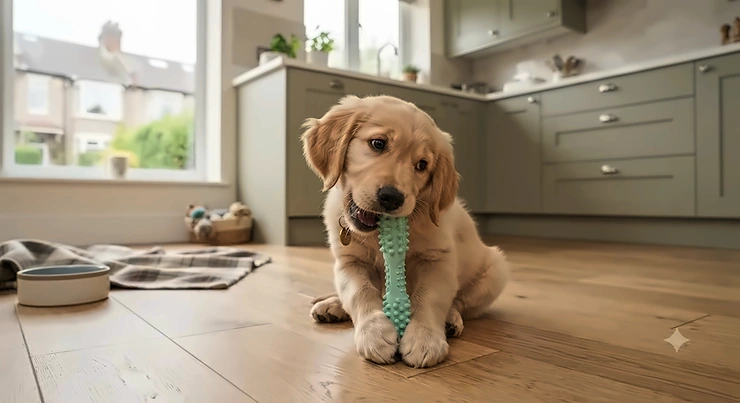
Somewhere between week eight and month six, your sweet, sleepy little puppy turns into a tiny wood chipper with a heartbeat. That’s not bad behaviour — it’s biology. Dental chew toys for puppies are teething aids and oral-health tools rolled into one: safe, appropriately soft objects designed to relieve gum discomfort while a puppy’s 28 baby teeth give way to 42 adult ones, all while gently reducing plaque along the way. Get the texture wrong, though, and you’re either handing your pup something too hard for developing teeth or something so flimsy it’s shredded (and swallowed) in ten minutes flat.
I’ve spent the last few weeks buried in product spec sheets, vet-written guidance, and genuine owner feedback threads to work out which dental chews for teething puppies actually earn their place in a puppy’s toy box — not which ones simply photograph well on a shelf. This isn’t a rehash of an Amazon listing. It’s commentary on why certain textures matter at certain ages, honest analysis of where products fall short, and practical guidance you can act on today.
Below you’ll find seven real, currently available products spanning budget starter packs to premium natural chews, three comparison tables to help you decide fast, and deep-dive sections on puppy dental development, safe chewing habits, and how to introduce dental care early — the kind of foundational work that saves you a four-figure dental bill by the time your dog turns three. As the vet team at Vet Help Direct puts it, taking things slowly and building positive associations early makes all the difference, and that philosophy runs through every recommendation here. Vet Help Direct’s guide on where to start with puppy dental care is a genuinely useful companion read alongside this one.
Quick Comparison Table
| Product | Type | Best For | Price Range |
|---|---|---|---|
| Nylabone Puppy Starter Kit | 3-piece nylon set | First-time owners unsure of chew preference | Around £10-£15 |
| KONG Puppy Teething Toy | Natural rubber | Gentle, food-motivated chewers | Around £8-£13 |
| Benebone Puppy 2-Pack | Nylon dental wishbones | Determined, moderate-to-firm chewers | Around £12-£18 |
| WHIMZEES Softer Dental Stix (S) | Edible vegetarian chew | Soft, consumable dental snacking | Around £6-£9 |
| Nylabone Freezer Bone | Cooling teether | Sore-gum relief during peak teething | Around £6-£10 |
| Pupstages Cool Teething Stick | Soak-and-freeze textured toy | Multi-sensory teething comfort | Around £8-£12 |
| K2 Yak Chews | Natural hardened milk chew | Longer-lasting, low-mess natural chewing | Around £7-£11 |
Even a quick glance shows there isn’t one “best” dental chew — there’s a best chew for your specific puppy’s age, jaw strength and chewing style. Budget-conscious owners gravitate toward the Nylabone Puppy Starter Kit because it hedges your bets across textures for one modest outlay, while the KONG Puppy Teething Toy wins on sheer gentleness for pups still finding their bite. If longevity and low mess matter more than price, the K2 Yak Chews consistently outlast the softer edible options by a wide margin.
💬 Just one click — help others make better buying decisions too!😊
Top 7 Dental Chew Toys for Puppies: Expert Analysis
1. Nylabone Puppy Starter Kit — three chew textures for under £15
The Nylabone Puppy Starter Kit bundles a soft teething ring, a gentler “puppy” bone and a slightly firmer “graduate” chew into one box, which solves the classic new-owner dilemma of guessing which texture your dog will actually tolerate. Each piece is sized for puppies up to roughly 11kg and moulded from a nylon-thermoplastic blend graded specifically softer than Nylabone’s adult range, with a bacon or chicken scent baked in to encourage interest rather than avoidance. In practice, that graded hardness matters enormously: a chew too firm for a four-month-old’s still-forming jaw can do more harm than good, and starting with the softest of the three pieces before working up is the smart approach here. Reviewers consistently report that puppies gravitate toward one or two of the three pieces and largely ignore the third, which is honestly fine — you’re paying for the discovery process, not perfect utilisation. A recurring complaint is that determined chewers can wear through the softest ring faster than expected, so it’s worth treating this as a starter kit in the literal sense rather than a permanent solution.
Pros:
- ✅ Three textures let you find your pup’s preference fast
- ✅ Bacon/chicken scent genuinely encourages engagement
- ✅ Graded softness reduces risk versus adult-strength chews
Cons:
- ❌ Softest piece wears down quickly with determined chewers
- ❌ One of the three pieces is often ignored entirely
Sitting in the £10-£15 range, this is solid value simply because it removes the guesswork of a first purchase.
2. KONG Puppy Teething Toy — softest natural rubber on this list
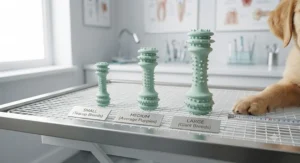
The KONG Puppy Teething Toy is built from KONG’s proprietary puppy-grade natural rubber, which is noticeably more forgiving under the jaw than their adult “Classic” range — a distinction that matters a great deal when a puppy’s baby teeth are still rooted and genuinely sensitive. It’s hollow, so you can pack it with a smear of puppy-safe peanut butter or soaked kibble, and freezing it beforehand turns it into a numbing agent for sore gums rather than just a distraction toy. Based on the spec comparison against firmer nylon chews, this is the toy I’d hand to any puppy under five months old before introducing anything harder, simply because the softer material flexes rather than fights back against a developing bite. Aggregated owner feedback frequently praises the erratic bounce for keeping bored puppies engaged solo, though a subset of larger or more aggressive puppy breeds report working through the rubber faster than KONG’s adult-durability reputation might suggest — which is expected, given it’s deliberately softer.
Pros:
- ✅ Genuinely gentle on developing teeth and gums
- ✅ Stuffable and freezable for extra soothing relief
- ✅ Bounces erratically, holding interest during solo play
Cons:
- ❌ Softer rubber wears faster with strong, persistent chewers
- ❌ Not a long-term solution once adult teeth arrive
Around £8-£13, and genuinely one of the best value gentle-chew options on the market.
3. Benebone Puppy 2-Pack Dental Chew/Wishbone — real bacon flavour baked through the nylon
The Benebone Puppy 2-Pack takes a different approach entirely: rather than a soft outer layer, the bacon flavour is infused directly through the nylon material itself, so the scent and taste don’t fade after the first few sessions the way surface-sprayed chews often do. The wishbone shape is deliberately ergonomic, angled so a puppy can get a grip and gnaw from multiple positions without the toy skittering across a hard floor — a small design detail that makes a real difference to a pup who hasn’t yet mastered paw-hold coordination. What most buyers overlook about this model is that it sits firmer on the hardness scale than the KONG above, which makes it better suited to puppies already past the earliest, most tender teething weeks and into the more assertive 4-7 month exploratory chewing phase. Reviewers repeatedly mention the flavour lasting “for months,” which tracks with the infused-not-coated design, though a handful of owners with very young or gentle chewers found their puppies simply couldn’t get purchase on the firmer nylon.
Pros:
- ✅ Flavour infused through the material, not just coated
- ✅ Ergonomic wishbone shape aids grip and stability
- ✅ Nylon durability suits assertive teething-phase chewers
Cons:
- ❌ Too firm for very young or gentle-mouthed puppies
- ❌ Not freezable, so no cooling relief for sore gums
Priced around £12-£18 for the pack, and worth it once your pup graduates past the softest chewing stage.
4. WHIMZEES Softer Dental Stix (S) — an edible chew built specifically softer for younger dogs
Unlike the toys above, the WHIMZEES Softer Dental Stix are entirely edible and vegetarian, made from a starch blend and formulated in a distinctly lower-density texture than WHIMZEES’ standard range, which is precisely the point — this is a dental chew designed for smaller mouths and developing teeth rather than a scaled-down adult product. Its ridged, brush-like shape is engineered to flex against the tooth surface as your puppy gnaws, aiming to mechanically disrupt plaque rather than simply satisfy the urge to chew. On paper this means you get a genuine two-in-one: teething relief plus a low-calorie treat that doubles as a light snack, which is honestly rare in this category since most toys offer no nutritional trade-off consideration at all. A common theme in aggregated review sentiment is that the softer texture disappears fast with a determined chewer — sometimes in under ten minutes — so this is better positioned as a daily supplement to a “real” chew toy than a standalone teething solution.
Pros:
- ✅ Vegetarian, grain-free formula suits sensitive tummies
- ✅ Textured ridges target plaque mechanically as they chew
- ✅ Doubles as a light, low-calorie daily treat
Cons:
- ❌ Consumed quickly, so it isn’t a long-lasting distraction
- ❌ Calories add up if given alongside regular meals unchecked
Expect to pay around £6-£9 for a pack, making it an easy, low-risk addition to a rotation.
5. Nylabone Puppy Teething Colour-Change Freezer Bone — turns purple-blue when frozen and ready
The standout trick with the Nylabone Freezer Bone is genuinely clever: soak it, freeze it, and the material shifts colour so you know at a glance it’s cold and ready to soothe a sore mouth, rather than guessing whether it’s been in the freezer long enough. It’s made from a softer thermoplastic than Nylabone’s regular chew line, specifically engineered to flex under bite pressure while staying cold for an extended stretch, with a lamb-and-apple flavour that tends to hold a puppy’s attention longer than plain rubber alternatives. Here’s what to weigh: cold therapy genuinely numbs inflamed gum tissue during the most uncomfortable teething weeks (typically 12-20 weeks), so this earns its place specifically as a symptom-management tool rather than a general-purpose chew toy for the whole puppy year. Owner feedback commonly notes that puppies favour it intensely for a short, intense window during peak teething and then lose interest once the discomfort passes — which, if you think about it, is exactly the sign it’s doing its job correctly.
Pros:
- ✅ Visual colour-change confirms it’s properly chilled
- ✅ Cold therapy specifically eases inflamed, sore gums
- ✅ Lamb and apple flavour holds attention well
Cons:
- ❌ Interest tends to fade once teething discomfort passes
- ❌ Needs freezer access, which isn’t always convenient
At around £6-£10, it’s a small outlay for what can be genuine relief during the roughest weeks.
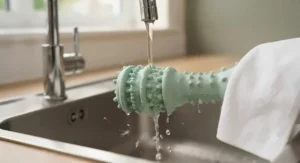
6. Pupstages Cool Teething Stick — multi-textured and built to soak, freeze and float
The Pupstages Cool Teething Stick layers three distinct textures — ridged, nubbed and smooth — into one 8.5-inch stick, which gives a teething puppy several different sensations to explore in a single session rather than the flat, uniform surface most single-texture chews offer. Soaked in water and frozen, it becomes crunchy and cooling in a way that mimics ice without the choking risk of an actual ice cube, and its buoyancy means it also doubles as a toss-and-fetch toy for garden play once the immediate teething need has passed. Based on the spec comparison against the Nylabone freezer bone above, the multi-texture design arguably offers more genuine engagement, since puppies often show a strong preference for one texture over another and this covers several bets in one product. Aggregated feedback tends to highlight the “made in USA” build quality and floatability as standout points, with the main gripe being that, like most freezer chews, its cooling benefit is temporary and needs re-soaking to recharge.
Pros:
- ✅ Three textures in one stick for varied sensory relief
- ✅ Floats, doubling as a fetch toy post-teething
- ✅ Crunchy-when-frozen texture without ice-cube choking risk
Cons:
- ❌ Cooling effect wears off and needs re-freezing
- ❌ Larger, boisterous breeds may work through it quickly
Priced around £8-£12, it’s a genuinely versatile mid-range pick.
7. K2 Yak Chews Original Himalayan Dog Treat — naturally hardened milk chew that lasts for weeks
The K2 Yak Chews are made using a traditional Himalayan process of hardening yak and cow milk into a dense, low-fat, low-lactose chew stick, which gives it a texture unlike anything synthetic on this list — closer to a very hard cheese than a rubber toy, and correspondingly long-lasting. Because it’s 100% natural with no additives, grain or gluten, it tends to suit puppies with sensitive digestion better than flavoured nylon or rubber alternatives, and the slow, gradual softening as your puppy gnaws means less risk of large chunks breaking off compared with rawhide. What most buyers overlook here is that once the chew wears down to a small, softened nub, it can (and should) be microwaved briefly to puff it into a light, fully digestible treat — a nifty zero-waste trick that most first-time buyers never discover from the packaging alone. Reviewers who buy specifically for teething puppies consistently note how long a single piece lasts compared with edible dental sticks, though a minority flag that the initial hardness is genuinely firm and best reserved for puppies past the very earliest, most tender teething weeks.
Pros:
- ✅ 100% natural with no grain, gluten or additives
- ✅ Exceptionally long-lasting compared with edible alternatives
- ✅ Puffable end-piece means almost zero waste
Cons:
- ❌ Quite firm initially — not ideal for the youngest teethers
- ❌ Milky scent can linger on soft furnishings
Around £7-£11 per chew, and genuinely excellent long-term value given how long each piece lasts.
Top 7 Products: Full Comparison
| Product | Material | Hardness | Age Suitability | Price Range | Best For |
|---|---|---|---|---|---|
| Nylabone Puppy Starter Kit | Nylon blend (3 grades) | Soft-medium | 8 weeks+ | £10-£15 | Undecided first-time buyers |
| KONG Puppy Teething Toy | Natural rubber | Soft | 8 weeks+ | £8-£13 | Gentlest early teething |
| Benebone Puppy 2-Pack | Infused nylon | Medium-firm | 4 months+ | £12-£18 | Assertive teething-phase chewers |
| WHIMZEES Softer Stix (S) | Vegetarian starch | Very soft | 8 weeks+ | £6-£9 | Edible daily dental snacking |
| Nylabone Freezer Bone | Soft thermoplastic | Soft | 12-20 weeks | £6-£10 | Cold-therapy gum relief |
| Pupstages Cool Teething Stick | Multi-texture nylon blend | Soft-medium | 3 months+ | £8-£12 | Sensory variety while teething |
| K2 Yak Chews | Hardened milk | Firm | 4 months+ | £7-£11 | Long-lasting natural chewing |
Lay the seven side by side and a clear pattern emerges: the softer options — KONG Puppy Teething Toy, WHIMZEES Softer Stix and the Nylabone Freezer Bone — cluster around the earliest, most sensitive teething weeks, while Benebone and K2 Yak Chews are better suited once your puppy’s bite has genuinely toughened up. If you only buy one thing today, the Nylabone Puppy Starter Kit is the pragmatic middle ground because it spans three hardness levels in a single purchase. Value-wise, the K2 Yak Chews stretch furthest per pound spent simply because a single piece can outlast an entire box of edible sticks.
Puppy Dental Development: What’s Actually Happening in That Mouth
Puppy dental development follows a surprisingly predictable timeline, and understanding it explains why a “one chew fits all ages” approach doesn’t really work. Puppies are born toothless, and their 28 deciduous (baby) teeth erupt between roughly three and eight weeks old. From around twelve weeks, those baby teeth begin loosening and falling out to make way for 42 permanent adult teeth, a process that typically wraps up by six to seven months. During this stretch it’s entirely normal to find a small tooth on the floor, though more often puppies simply swallow them while eating without any issue.
The practical upshot: a chew that’s perfectly appropriate for a ten-week-old puppy with baby teeth may be genuinely risky for a five-month-old whose adult teeth are still settling into the jawbone, and vice versa — a chew tough enough for a seven-month-old’s fully adult bite will likely just get ignored, or worse, chipped baby teeth, by a ten-week-old. Veterinary dentists generally recommend against letting puppies chew anything that won’t bend, because hard, rigid objects can fracture both baby and adult teeth — which is exactly why the softer end of our seven picks skews toward the younger age brackets. If you notice persistent bad breath, visible swelling, or reluctance to chew on one side only, that’s a signal to book a vet check rather than simply switching products.
How to Choose Puppy-Safe Dental Chews
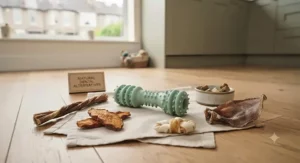
Picking puppy-safe dental chews doesn’t need to be complicated, but it does benefit from a bit of structure. Here’s the criteria I’d actually apply, in order of importance:
- Match hardness to age and chewing stage. Under-five-months, favour rubber or soft nylon; past that, firmer natural chews become reasonable.
- Check the size against your puppy’s current — not adult — weight. Undersized chews pose a choking risk; oversized ones simply get ignored.
- Prioritise flex over rigidity. If you can’t gently bend it with your own hands, it’s probably too hard for developing teeth.
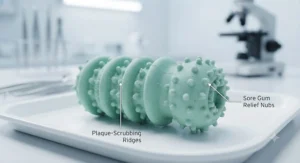
- Look for texture, not just flavour. Ridges, nubs and grooves do the actual plaque-scraping work; smooth surfaces mostly just satisfy the urge to gnaw.
- Factor in supervision practicality. Edible chews need less clean-up vigilance than toys with parts that can be chewed off.
- Rotate rather than commit to one product. Puppies get bored of a single texture within days; two or three chews in rotation extends genuine engagement.
- Read real owner feedback for durability red flags, particularly reports of splintering, cracking, or pieces breaking away.
Dental Chews for Teething Puppies: A Practical Usage Guide
Getting genuine value out of dental chews for teething puppies is as much about routine as it is about product choice. In the first week with a new chew, introduce it during a calm moment rather than a hyped-up play session, so your puppy associates it with settling down rather than excitement-chewing everything in reach. If it’s a freezer-compatible option like the Nylabone Freezer Bone or Pupstages Cool Teething Stick, soak it in water for a few hours and freeze overnight before the first use — the cooling effect is genuinely most useful in the 12-20 week window when gum inflammation peaks.
A simple maintenance schedule works well: inspect toys weekly for cracking, splintering or chunks missing, and retire anything showing wear immediately rather than waiting for it to fail completely. Rotate two to three chews of differing textures rather than leaving one out permanently — puppies genuinely re-engage with a “new” toy that’s simply been out of sight for a few days. The most common mistake owners make in the first thirty days is leaving a chew unsupervised the very first time it’s introduced; always watch the first few sessions with any new product to gauge how quickly your particular puppy works through it, since chewing style varies enormously even within the same breed.
Soft Dental Toys for Young Dogs vs Hard Chews: What’s the Difference
The debate between soft dental toys for young dogs and firmer chews isn’t really about which is “better” — it’s about matching the tool to the developmental stage. Soft options like the KONG Puppy Teething Toy and WHIMZEES Softer Stix flex under bite pressure, distributing force away from tender, still-rooted baby teeth, which makes them the safer default for puppies under roughly sixteen weeks. Hard chews such as Benebone or K2 Yak Chews don’t give at all, which means all the bite force gets absorbed by the tooth itself — perfectly fine once the adult set is settled, but a genuine fracture risk beforehand.
| Factor | Soft Toys | Hard Chews |
|---|---|---|
| Best age | Under 16 weeks | 4+ months |
| Fracture risk | Low | Higher if used too early |
| Durability | Lower | Significantly higher |
| Plaque-scraping action | Minimal | Moderate-strong |
Reading across the table, the sensible strategy is sequencing rather than picking a side: start soft during the most sensitive teething weeks, then transition to firmer natural chews like K2 Yak Chews once your vet confirms the adult teeth have settled. Owners who skip straight to hard chews for a very young puppy risk exactly the tooth fractures that VCA Animal Hospitals’ guide to puppy teeth and chewing flags as the most common preventable injury in this age group.
Safe Chewing for Young Dogs: Supervision, Sizing and Red Flags
Safe chewing for young dogs comes down to three habits: supervision, correct sizing, and knowing what to watch for. No chew toy is completely risk-free, which is why supervision matters even with recommended products — puppies can and do work small pieces loose from even well-reviewed toys. Size the chew for your puppy’s current mouth, not their projected adult size; a chew that’s too small for even a small breed puppy is a genuine choking hazard, while one that’s oversized for their current jaw often just gets abandoned.
Watch for these red flags during any chewing session: swallowing large chunks rather than gnawing them down gradually, a toy that’s cracking or splintering rather than wearing smoothly, or a puppy pawing at their mouth or refusing food afterward. Providing appropriate, durable, puppy-safe chews genuinely helps relieve teething discomfort and reduce destructive chewing, but pairing that with regular home checks and scheduled vet dental evaluations is what actually keeps a puppy safe through the process, not the chew alone.
Introducing Dental Care Early: Building Lifelong Habits
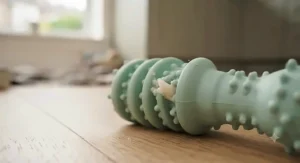
Introducing dental care early is arguably the single highest-leverage thing you can do for your puppy’s long-term health, and it costs nothing beyond a few minutes a week. Brushing baby teeth genuinely helps reduce bacteria and prepares a puppy for lifelong dental care, even though those teeth will eventually fall out anyway — the real value is normalising the sensation of a hand and brush near the mouth before your puppy is big or strong enough to object effectively.
Start with short, thirty-second sessions using a fingertip brush or clean gauze and a dog-specific (never human) toothpaste, building up gradually as your puppy tolerates it. Pair every brushing session with a dental chew afterward as a reward, which builds a positive association fast. Joii Pet Care’s vet-written guide to early puppy dental habits is a genuinely solid companion resource if you want the fuller routine laid out week by week. By six months, most puppies who’ve had this consistent, low-pressure introduction will tolerate a full brushing session — a habit that pays dividends well into their senior years.
Real-World Scenario: Which Chew Suits Your Puppy?
The 9-week-old Cockapoo, still on baby teeth: Start with the KONG Puppy Teething Toy, frozen after a light stuffing, alongside the softest piece from the Nylabone Puppy Starter Kit. Avoid anything firm at this stage entirely.
The 5-month-old Labrador, boisterous and food-motivated: This is prime territory for the Benebone Puppy 2-Pack and K2 Yak Chews — the adult teeth are likely settling in, and a food-driven, powerful chewer needs genuine durability, not a toy that’s gone in a single afternoon.
The 4-month-old small-breed puppy with a sensitive stomach: The WHIMZEES Softer Dental Stix make sense here, being vegetarian, low-calorie and gentle, paired with the Pupstages Cool Teething Stick for cooling relief between meals.
Common Mistakes When Buying Dental Chew Toys for Puppies
The most common mistake is buying based on adult-dog reviews or an adult-sized version of a product, then wondering why a young puppy either ignores it or, worse, chips a tooth on it. A close second is assuming “dental” on the packaging means clinically proven plaque reduction — in reality, the term is loosely regulated, and texture-based mechanical scraping varies hugely between products. Owners also frequently under-supervise the first use of any new chew, missing the window where a determined puppy can work a dangerous-sized chunk free. Finally, sticking rigidly to one product because “it worked for our last dog” ignores that chewing style is genuinely individual — what one puppy demolishes safely, another might swallow whole.
What to Expect: Real-World Performance
On paper, spec sheets promise plaque reduction, gum-soothing relief and hours of entertainment. In practice, expect a noisier, messier version of that promise. Soft rubber and vegetarian chews like the KONG Puppy Teething Toy and WHIMZEES Softer Stix genuinely soothe in the moment but rarely last more than a single sitting with a determined puppy. Firmer natural options like K2 Yak Chews deliver on longevity — genuinely stretching across days or weeks — but won’t offer the immediate cooling relief a freezer chew provides during the roughest teething days. No single product on this list does everything; realistic expectations mean treating your chew rotation as a toolkit rather than hunting for one miracle product.
Long-Term Cost & Maintenance
Thinking in cost-per-week rather than sticker price changes the value calculation considerably. A £15 Nylabone Puppy Starter Kit that lasts six to eight weeks across three pieces works out cheaper per week than repeatedly replacing a £7 WHIMZEES pack every few days. K2 Yak Chews, despite a similar upfront price to the softer edible options, tend to win on total cost of ownership simply because a single piece survives so much longer — and the puffable end-piece means genuinely zero waste. Factor in that puppies typically cycle through three to five different chew products before settling into adult chewing preferences around eight to twelve months old, and budgeting for a rotation rather than a single “forever” product is the realistic approach.
FAQ
❓ What age can puppies start using dental chew toys?
❓ Are dental chew toys actually effective for puppies?
❓ How long should a dental chew toy last a puppy?
❓ Can puppies choke on dental chew toys?
❓ What's the difference between puppy and adult dental chews?
Conclusion
Choosing the right dental chew toys for puppies isn’t about finding one perfect product — it’s about matching texture and hardness to exactly where your puppy sits on the teething timeline, then rotating as they grow. Start soft with the KONG Puppy Teething Toy or Nylabone Freezer Bone during the earliest, most sensitive weeks, lean on the Nylabone Puppy Starter Kit if you’re genuinely unsure where to begin, and graduate toward firmer, longer-lasting options like Benebone and K2 Yak Chews once those adult teeth have properly settled in. Pair whichever chew you choose with a genuinely early, low-pressure introduction to brushing, and you’re setting your puppy up for a healthier mouth well beyond the teething months. The AKC’s guide to matching teething toys to your puppy’s chewing style is worth bookmarking as your puppy’s bite — and preferences — continue to change through their first year.
Recommended for You
- 7 Best Dental Chew Toys for Small Dogs in 2026
- Toothbrush Chew Toy for Dogs Review: 7 Best Picks for 2026
- 7 Best Dental Bones for Large Dogs UK 2026
Disclaimer: This article contains affiliate links. As an Amazon Associate, I earn from qualifying purchases. If you purchase products through these links, we may earn a small commission at no additional cost to you.
✨ Found this helpful? Share it with your friends! 💬🤗
