

In This Article
There’s a particular kind of chaos that only a length of knotted rope can cause in a British household — the frantic scrabble of claws on laminate flooring, the low growl-that’s-not-really-a-growl, the tug-of-war where you both know who’s going to “win” but nobody’s letting go first. cotton rope dog toys have been the unglamorous backbone of dog play for decades, and for good reason: they’re cheap to make, satisfying to chew, and — done properly — genuinely useful for your dog’s teeth and gums.

But “cotton rope” covers a startling amount of ground. Some are woven from tightly spun natural cotton rope chews for dogs that barely fray after months of abuse. Others are cheap imports that shed threads within a week. Some brands blend in fleece or hemp for a softer bite; others bolt on squeakers, rubber rings, or handles. Picking the right one means understanding what’s actually inside the rope, not just what the packaging promises.
This guide walks through seven real, currently available products spanning budget, mid-range and premium price points, explains the dental “floss effect” you’ll see mentioned everywhere, and covers the specific concerns that come up again and again — puppy safety, non-toxic materials, and how to actually keep these things clean. By the end you should know exactly which toy suits your dog’s size, chewing style and budget, and why.
What Are Cotton Rope Dog Toys?
Cotton rope dog toys are braided or twisted lengths of cotton fibre — sometimes blended with fleece, hemp or poly-cotton — knotted at intervals to create grip points for tugging, chewing and fetch. The textured weave is designed to catch against a dog’s teeth during play, mechanically loosening plaque in a way smooth toys can’t manage.
That mechanical scraping action is the whole point. Vets frequently describe it as a “flossing” effect, and it’s a genuinely useful side benefit of a toy that would otherwise just be for fun — though it’s worth being clear-eyed about what it can and can’t do. According to PDSA’s guidance on dental disease in dogs, it’s one of the most common and painful conditions seen in UK dogs, and while chew toys can help control plaque between proper brushing sessions, they’re a supplement to dental care rather than a replacement for it.
Quick Comparison Table
Before diving into the full reviews, here’s the fast version — useful if you already know roughly what you’re after and just want to see where each toy lands.
| Toy | Best For | Material | Price Range |
|---|---|---|---|
| Fida Dog Rope Toys | Budget natural cotton | 100% natural cotton | Under £15 |
| Mammoth Flossy Chews Rope Tug | Dental floss effect | Cotton-poly blend | £5-£15 range |
| KONG Signature Rope Dual Knot | Non-toxic, gentle bite | Cotton and fleece | £8-£15 range |
| Beco Hemp Rope Ball on Loop | Organic-leaning, eco-conscious owners | Hemp and recycled cotton | £10-£18 range |
| Petface Seriously Strong Figure of 8 | Tug-of-war and aggressive chewers | Woven cotton rope | Under £10 |
| Petface Little Petface Squeaky Rope Cracker | Puppy teething | Cotton with squeaker | Under £8 |
| Rosewood Battersea Rope and Rubber Tug | Rope-rubber hybrid durability | Cotton rope and rubber | £8-£16 range |
Looking across the table, the split isn’t really budget-versus-premium — it’s more about what job you need the rope to do. The Fida Dog Rope Toys and Petface Seriously Strong Figure of 8 sit at the value end and handle general chew-and-tug duty perfectly well, while the Beco Hemp Rope Ball on Loop and KONG Signature Rope Dual Knot ask for a bit more outlay in exchange for a softer bite or a lower-impact material story. If your dog is still losing baby teeth, skip straight to the Petface Little Petface Squeaky Rope Cracker.
💬 Just one click — help others make better buying decisions too!😊
Top 7 Cotton Rope Dog Toys: Expert Analysis
Research for this section combined product specifications from manufacturer listings, aggregated Amazon UK customer sentiment, and independent veterinary and welfare guidance. Where genuine review data wasn’t verifiable for a specific listing, that’s flagged honestly rather than papered over.
1. Fida Dog Rope Toys — best budget natural cotton chew
At roughly 92cm with five knots along its length, the Fida Dog Rope Toys is one of the more straightforward entries on this list: no fleece blend, no rubber attachments, just tightly woven natural cotton rope. That length matters more than it sounds — a longer rope gives you more knots to grip during tug-of-war, spreading the wear across the toy rather than concentrating it on one overworked section.
Marketed explicitly as 100% natural cotton fibre, this is squarely aimed at owners hunting for natural cotton rope chews for dogs without any synthetic additions. Based on the spec comparison with pricier alternatives, what you’re sacrificing here isn’t safety so much as refinement — the weave is looser than premium brands, which means it’ll fray sooner under sustained chewing from a determined dog.
Fida’s rope range sits consistently among Amazon UK’s best-selling toy ropes, though granular review data specific to this exact listing wasn’t fully verifiable during research, so treat the star rating on the live listing as your best real-time indicator rather than anything quoted here.
Pros:
- ✅ Genuinely 100% natural cotton, no synthetic blend
- ✅ Long 92cm length suits medium and large dogs
- ✅ Budget-friendly entry point for trying rope toys
Cons:
- ❌ Looser weave frays faster than premium brands
- ❌ Limited independently verifiable review history for this SKU
Priced under £15, the Fida Dog Rope Toys is best viewed as a low-risk way to test whether your dog even likes rope play before committing to a pricier option.

2. Mammoth Flossy Chews Rope Tug — best dental floss effect
Mammoth has been making rope toys since 1995, and the Flossy Chews range is arguably the product that popularised the term “dental floss effect” in dog toy marketing. The Mammoth Flossy Chews Rope Tug comes in multiple sizes — a 20-inch three-knot version for medium dogs around 30-50lbs, and a 27-inch four-knot or 36-inch five-knot version for larger, more determined chewers.
Here’s what most buyers overlook about the sizing: going a size up isn’t just about matching your dog’s weight, it’s about matching their bite force. A large dog working a medium-sized rope will concentrate all that pressure into a shorter span of fibre, which shortens the toy’s working life dramatically. The cotton-poly blend construction is specifically engineered to resist that kind of localised wear better than pure cotton.
Reviewers consistently report that the Flossy Chews line holds up well against sustained tugging, with independent retailer ratings sitting around 4.6-4.7 out of 5 across the size range — among the more consistently positive review patterns of any product in this roundup. A common thread in owner feedback is that the rope’s texture noticeably reduces tartar build-up over weeks of regular play, though as with all chew toys, this supplements rather than replaces brushing.
Pros:
- ✅ Multiple sizes matched to dog weight and bite force
- ✅ Strong, consistent review scores across the range
- ✅ Cotton-poly blend resists localised fraying
Cons:
- ❌ No squeaker or added grip features for the price
- ❌ Colours are randomly assigned, not selectable
In the £5-£15 range depending on size, the Mammoth Flossy Chews Rope Tug earns its reputation as one of the most reliably durable ropes on this list — a genuinely strong value pick for owners who want dental benefit without premium pricing.
3. KONG Signature Rope Dual Knot — best non-toxic gentle-bite option
KONG’s Signature Rope range takes a different approach from the straight-cotton toys above: it braids cotton together with fleece, which softens the overall feel against a dog’s gums without sacrificing much tugging strength. The KONG Signature Rope Dual Knot has two knots rather than one, doubling the number of grip points for interactive play between you and your dog.
What the spec sheet won’t tell you outright is why that fleece blend matters for certain dogs. Pure cotton rope can feel abrasive to older dogs with worn or sensitive gums, or to breeds with naturally softer mouths — think spaniels and retrievers bred for gentle retrieving rather than crushing bite force. The cotton-fleece weave here is noticeably kinder on those mouths while still delivering the same mechanical teeth-cleaning action as harder rope.
KONG’s rope range benefits from the brand’s broader reputation for safety-conscious, non-toxic materials — a reputation built primarily on its rubber toy line, it’s worth noting, so buyers specifically prioritising non toxic rope toys for dogs should still check the current listing’s material safety data rather than relying purely on brand halo effect. Verified customer reviews specific to the dual-knot design weren’t extensively available at time of research, though the broader Signature Rope line carries generally favourable sentiment among KONG’s UK stockists.
Pros:
- ✅ Cotton-fleece blend is gentler on sensitive gums
- ✅ Two knots for expanded interactive grip points
- ✅ Backed by KONG’s established safety-focused brand reputation
Cons:
- ❌ Softer weave may wear faster than pure cotton with aggressive chewers
- ❌ Premium pricing relative to unbranded rope alternatives
Sitting in the £8-£15 range, the KONG Signature Rope Dual Knot suits households with older dogs, gentle-mouthed breeds, or anyone specifically hunting for non toxic rope toys for dogs from a recognisable, established manufacturer.
4. Beco Hemp Rope Ball on Loop — best eco-conscious pick
Beco Pets builds its entire brand identity around sustainability, and the Beco Hemp Rope Ball on Loop reflects that: a chunky rope woven from hemp and recycled cotton, finished with a handle loop that gives you extra throwing distance and a firmer grip during tug games. It comes in two sizes — a medium at roughly 7x7x26cm and a large at 9x9x30cm.
Here’s an important honesty note worth flagging directly: while this toy is marketed around sustainable, natural materials — recycled cotton content and low-impact hemp farming — it isn’t independently certified as organic cotton in the way food products might carry an organic certification mark. Buyers specifically searching for organic cotton pet toy should understand “natural and recycled” and “certified organic” are different claims, and treat Beco’s messaging as the former rather than the latter. What is verifiable is that hemp requires markedly less water and pesticide input than conventional cotton farming, which genuinely does reduce the toy’s environmental footprint compared with standard rope.
On the practical side, hemp’s shorter fibre structure is often cited as shedding “more safely” than long cotton strands if ingested in small amounts, though this doesn’t mean supervision becomes optional — it doesn’t, for any rope toy. Aggregated review sentiment for Beco’s hemp rope range is generally positive on durability, though a recurring minority theme flags that particularly determined chewers can work through the hemp weave faster than the price point might suggest.
Pros:
- ✅ Hemp and recycled cotton blend with lower farming impact
- ✅ Handle loop adds throwing distance and tug grip
- ✅ From a certified Climate Neutral, 1% For The Planet brand
Cons:
- ❌ Not independently organic-certified despite “natural” framing
- ❌ Aggressive chewers may wear through it faster than expected
At £10-£18 depending on size, the Beco Hemp Rope Ball on Loop is the pick for owners who want their purchase to reflect genuine sustainability credentials without falling for greenwashed marketing language.
5. Petface Seriously Strong Figure of 8 — best for tug-of-war
The figure-of-eight shape isn’t just aesthetic — it changes how the rope behaves under tension. The Petface Seriously Strong Figure of 8 distributes pulling force across two loops rather than a single straight length, which in practice means less concentrated stress on any one knot during an enthusiastic game of tug.
Petface positions this within its “Seriously Strong” sub-range, aimed at dogs that treat toys as a personal challenge. Based on the spec comparison with the brand’s standard rope line, the figure-of-8 weave uses a denser braid, which is why it’s marketed toward medium and large active dogs rather than small breeds or puppies.
Genuine aggregated review sentiment for this listing is honestly mixed rather than uniformly glowing, and it’s worth reporting that plainly. Some reviewers describe the toy standing up to months of daily tugging from persistent chewers where other ropes failed within days. Others — notably owners of very young, determined puppies — report it being destroyed within minutes. That split strongly suggests the toy performs as intended for its stated adult/active-dog audience but is a poor match for teething puppies, which lines up with the manufacturer’s own guidance to supervise use and examine regularly for wear.
Pros:
- ✅ Figure-of-8 shape spreads tension across two loops
- ✅ Denser braid built for tug-of-war specifically
- ✅ Budget-friendly for a purpose-built durability toy
Cons:
- ❌ Reported durability is inconsistent across different chewing styles
- ❌ Not suitable for young or teething puppies
Priced under £10, the Petface Seriously Strong Figure of 8 is best matched to adult, active dogs specifically — treat any “seriously strong” claim as relative to standard rope rather than an indestructibility guarantee.
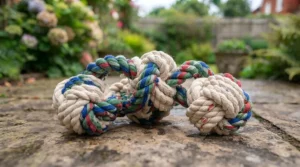
6. Petface Little Petface Squeaky Rope Cracker — best for puppy teething
Scaled down and softened up, the Petface Little Petface Squeaky Rope Cracker is built specifically for small dogs and puppies, combining a slimmer cotton rope with a built-in squeaker to hold a young dog’s attention during short teething-relief chew sessions.
This is a genuinely important category distinction worth explaining rather than glossing over: a puppy teething rope toy needs a thinner rope diameter than an adult chew toy, because a young dog’s developing jaw simply can’t generate the bite force to make a thick adult-sized rope satisfying — it just slides around without any resistance. The slimmer profile here is a deliberate design choice, not a corners-cut compromise.
As with several smaller-brand listings in this category, extensive verified customer review text specific to this exact product wasn’t available during research; what can be said with confidence, drawing on general veterinary guidance rather than this specific listing, is that any squeaker-equipped toy requires closer supervision with puppies than a plain rope, since a determined puppy chewing through fabric to reach the squeaker mechanism is a well-documented risk pattern across the toy category generally, not specific to this brand.
Pros:
- ✅ Slim rope diameter matched to developing puppy jaws
- ✅ Squeaker adds engagement for short teething sessions
- ✅ Genuinely budget-friendly entry point
Cons:
- ❌ Squeaker component needs closer supervision than plain rope
- ❌ Limited size range beyond small/puppy dogs
At under £8, the Petface Little Petface Squeaky Rope Cracker is a sensible, low-cost addition to a puppy’s teething toy rotation rather than a toy you’d expect to survive into adulthood.
7. Rosewood Battersea Rope and Rubber Tug — best rope-rubber hybrid
The Rosewood Battersea Rope and Rubber Tug pairs a cotton rope section with a moulded rubber tug handle, part of Rosewood’s Battersea-branded toy collaboration. The rubber section absorbs some of the shock during aggressive tugging that a pure rope toy would transfer directly into the knots, which is a sensible engineering choice for a toy explicitly built for interactive tug play.
What most buyers overlook about hybrid rope-rubber toys generally is that the two materials wear at different rates — the rubber typically outlasts the rope section by a considerable margin, meaning the toy’s effective lifespan is usually dictated by how the cotton portion holds up rather than the rubber. That’s worth knowing before assuming a hybrid automatically means longer overall life than an all-rope alternative.
Available in a roughly 38cm size, this sits in the mid-range of Rosewood’s toy catalogue. Independently verified customer review data specific to this exact listing was limited during research; Rosewood’s broader toy range carries a generally solid reputation among UK pet retailers, but buyers should check the live listing’s current rating before purchasing rather than relying on brand reputation alone.
Pros:
- ✅ Rubber handle absorbs shock during aggressive tugging
- ✅ Distinctive blue-and-purple colourway for easy spotting
- ✅ Mid-size 38cm length suits most medium dogs
Cons:
- ❌ Rope section likely wears faster than the rubber
- ❌ Limited verified review data for this specific listing
In the £8-£16 range, the Rosewood Battersea Rope and Rubber Tug is a solid middle-ground pick for owners who want some of rubber’s shock absorption without giving up rope’s texture-based dental benefit entirely.
Practical Usage Guide: Setup, Washing & Care
Getting a new rope toy right in the first 30 days makes a genuine difference to how long it lasts. Start by inspecting every knot before the first play session — factory finishing occasionally leaves a loose thread end that’s worth trimming flush before your dog gets hold of it. For the first week, keep sessions shorter than usual; this lets you see how quickly your specific dog’s chewing style wears the weave, which tells you whether you’ve bought a toy matched to their strength or one they’ll outgrow within a fortnight.
On the question everyone eventually asks — how do you actually clean a washable cotton rope dog toy — the honest answer is that most cotton and cotton-poly ropes tolerate a warm hand-wash with mild, unscented soap reasonably well, followed by full air-drying before returning it to your dog. A front-loading washing machine on a gentle, low-heat cycle inside a mesh laundry bag works for sturdier ropes, but always check the specific listing first, since hemp blends and rope-rubber hybrids can behave differently under machine agitation than pure cotton. Never tumble-dry on high heat — it can shrink the weave and loosen knots prematurely.
The most common early mistake is leaving rope toys out for unsupervised, all-day access. Blue Cross’s advice on playing with your dog specifically recommends that solo play with any toy that could be chewed apart should still be supervised, particularly where there’s any risk of a dog ingesting loose material. A simple weekly rotation — two or three toys in circulation, the rest stored away — both extends each toy’s working life and keeps your dog more consistently interested than permanent access ever does.

Real-World Scenarios: Which Cotton Rope Toy Suits Your Dog?
If you’re a first-time puppy owner with a Cockapoo currently teething at four months old, the Petface Little Petface Squeaky Rope Cracker or a similarly slim, size-appropriate rope makes more sense than any adult-marketed product on this list — the diameter matters more than the price tag here.
If you’re managing a powerful adult Labrador or Staffordshire Bull Terrier that treats every toy as a personal engineering challenge, look toward the Petface Seriously Strong Figure of 8 or the Mammoth Flossy Chews Rope Tug in its largest size — both are built with tug-of-war durability specifically in mind, and the figure-of-8 shape spreads stress in a way a single-strand rope can’t match.
If you’re a budget-conscious renter with a senior Spaniel whose gums have become sensitive with age, the KONG Signature Rope Dual Knot‘s cotton-fleece blend offers a noticeably softer bite than straight cotton, while still delivering some mechanical dental benefit during gentle chewing sessions.
Problem → Solution: Fixing Common Rope Toy Issues
Problem: the rope frays within days. This usually means the toy is undersized relative to your dog’s bite force rather than inherently faulty — size up to a version with more knots or a denser weave, like the Mammoth Flossy Chews Rope Tug in its larger sizing.
Problem: my dog swallows loose threads. Trim any visibly loose strands immediately with scissors rather than letting your dog pull them free themselves, and retire the toy once fraying becomes widespread rather than isolated to one section.
Problem: the toy smells after a few weeks. Rope fibres trap saliva and outdoor dirt more readily than smooth plastic or rubber toys. A weekly hand-wash, as covered above, resolves most odour issues before they become persistent.
Problem: my puppy loses interest quickly. Puppies often prefer squeaker-equipped ropes like the Petface Little Petface Squeaky Rope Cracker over silent ones during the exploratory teething phase, since the added sound reinforces engagement.
How to Choose Cotton Rope Dog Toys
Choosing the right rope toy comes down to matching five specific factors to your individual dog, rather than picking whatever’s cheapest or most reviewed:
- Match rope thickness to jaw size. A rope too thin for an adult dog won’t hold up; one too thick for a puppy won’t get chewed properly at all.
- Check the knot count. More knots generally mean more grip points and better stress distribution during tug play.
- Consider your dog’s specific chewing style. Gentle chewers can use finer weaves; aggressive chewers need denser, purpose-built durability ropes.
- Decide whether material story matters to you. Pure cotton, cotton-fleece and hemp blends all clean teeth similarly well — the differences are mainly about bite softness and environmental sourcing.
- Factor in supervision realistically. If a toy will mostly be used unsupervised, prioritise durability and simplicity over squeakers or small attachable parts.
- Budget for replacement, not permanence. No rope toy lasts forever — build a rotation into your spending rather than expecting a single purchase to last years.
- Read the current live reviews, not just this guide. Manufacturing consistency varies over time even for well-established brands.
Cotton Rope vs Rubber and Nylon Chew Toys
Rope, rubber and nylon each solve a different problem, and understanding the trade-offs matters more than picking a “best” material in the abstract. Rope wins decisively on interactive tug play and the mechanical flossing effect discussed throughout this guide — nothing else on the market replicates that texture-based plaque scraping quite as well for the price. Rubber, by contrast, tends to win on raw longevity and is generally considered the safer default for unsupervised chewing, since it doesn’t fray into ingestible strands the way rope eventually does. Nylon sits somewhere between the two: extremely hard-wearing, but frequently criticised by veterinary dental sources for being harder than a dog’s tooth enamel can safely withstand.
| Material | Dental Benefit | Durability | Best For |
|---|---|---|---|
| Cotton rope | High (flossing action) | Moderate, frays over time | All 7 toys above — tug play, interactive chewing |
| Rubber | Moderate (mechanical scraping) | High | Unsupervised chewing, aggressive chewers |
| Nylon | Low to moderate | Very high | Extended solo gnawing (with dental caution) |
The practical takeaway from that comparison is that rope shouldn’t be your dog’s only toy if they’re regularly left to chew unsupervised — pairing something like the KONG Signature Rope Dual Knot for interactive sessions with a separate rubber toy for solo downtime gives you the dental benefit of rope without leaning on it for the situations where its main weakness — fraying — actually matters.

Dental Health Benefits: The Floss Effect Explained
The “floss effect” that Mammoth and others lean on heavily in marketing isn’t just a slogan — it describes a real, if modest, mechanical process. As your dog bites down and pulls the rope through their teeth during chewing or tugging, individual cotton fibres catch in the gaps between teeth and along the gumline, physically dislodging some soft plaque before it hardens into tartar.
What’s worth being honest about is the scale of that benefit. It’s a supplement to a dental routine, not a substitute for brushing or professional cleaning. The PDSA is unambiguous on this point: chewing on dental toys may help reduce plaque build-up, but it works alongside brushing and regular veterinary check-ups rather than replacing either. If your dog already shows signs of gum disease — bad breath, red or swollen gums, reluctance to chew — a rope toy alone won’t fix that, and a vet visit should come first.
Common Mistakes When Buying Cotton Rope Dog Toys
The single most common mistake is buying based on size alone without considering weave density — a long, loosely woven rope can actually wear out faster than a shorter, tightly braided one, despite looking like better value on paper. A second frequent error is assuming “indestructible” marketing language is a literal guarantee; every manufacturer in this guide, including the toughest options, includes supervision language in their own product descriptions for good reason. A third mistake is buying a single rope toy and expecting it to serve both interactive tug play and unsupervised solo chewing equally well — as covered in the material comparison above, rope genuinely isn’t the ideal choice for the latter. Finally, many owners underestimate how quickly puppies outgrow a teething-specific rope; expect to size up within a few months as adult teeth come in fully.
Cotton Rope Toys for Puppies: Teething, Safety & Size
Puppy teething typically runs from around three to eight months old, with baby teeth beginning to fall out and adult teeth pushing through from roughly four months onward — a process that’s genuinely uncomfortable for puppies and drives much of the chewing behaviour new owners find so exhausting. During this window, offering appropriately sized chew items is one of the most effective ways to redirect that instinct away from furniture and shoes.
For safe cotton rope toys for puppies specifically, diameter matters more than almost any other spec. A rope built for an adult Labrador is simply too thick for a ten-week-old puppy to get proper purchase on, which means they’ll lose interest or, worse, attempt to swallow sections whole out of frustration rather than chewing them properly. The Petface Little Petface Squeaky Rope Cracker addresses this directly with its slimmer profile, and its squeaker helps hold attention during the shorter chew sessions puppies typically manage before losing focus.
Supervision matters more with puppies than with adult dogs, full stop — young dogs are both more likely to attempt swallowing loose fibres and less experienced at recognising when a toy has become genuinely unsafe. As teething progresses and adult teeth fully emerge by around six to eight months, most puppies can safely graduate to standard adult-sized rope, at which point a toy like the Fida Dog Rope Toys becomes a sensible, affordable next step.
Non-Toxic and Organic Cotton: What “Natural” Really Means
“Non-toxic” and “organic” get used almost interchangeably in pet product marketing, but they describe genuinely different things, and it’s worth untangling them before you pay a premium for either claim. Non-toxic generally means the toy is free from harmful dyes, chemical coatings, or additives that could cause harm if ingested in small amounts — this is the more commonly and reliably verifiable claim across the products in this guide, and it’s the one most directly relevant to buyers searching for non toxic rope toys for dogs.
Organic, by contrast, refers specifically to how the raw cotton was farmed — without synthetic pesticides or fertilisers — and carries formal certification requirements in food and textile industries that pet toy manufacturers don’t always meet or pursue. As discussed in the Beco Hemp Rope Ball on Loop review above, “natural” and “recycled” materials are genuinely positive attributes worth paying for, but they aren’t automatically synonymous with certified-organic sourcing. If an organic certification specifically matters to your buying decision, check for an explicit third-party certification mark on the product listing rather than inferring it from general “eco” or “natural” language in the marketing copy.
Safety, Regulations & Long-Term Value
Pet toys occupy an odd regulatory space in the UK. Unlike children’s toys, which fall under the Toys (Safety) Regulations 2011 and require UKCA or CE conformity marking, dog toys generally aren’t subject to the same mandatory framework — a gap that puts more of the responsibility on buyers to choose reputable manufacturers rather than assuming government-level safety testing has already happened. That doesn’t mean the space is entirely unregulated; general product safety law still applies, but the toy-specific chemical and mechanical testing that protects children doesn’t automatically extend to what’s marketed for dogs.
In practice, this means brand reputation and transparent material sourcing carry more weight in the pet toy category than they would for regulated consumer goods. All seven products in this guide come from either long-established pet brands or listings with substantial UK sales history, which is a reasonable proxy for safety in a category without mandatory third-party certification — but it’s not a substitute for your own ongoing inspection of any toy for wear.
On long-term value, the maths generally favours buying two or three mid-range ropes on a rotation over a single premium toy, since rotation extends the working life of each individual toy while giving your dog variety. Across a typical 12-month period, most active chewers will work through several ropes regardless of price point, so total cost of ownership tends to converge across the budget-to-premium spectrum once replacement frequency is factored in.
| Approach | Upfront Cost | Typical Lifespan | 12-Month Value |
|---|---|---|---|
| Single budget rope, no rotation | Lowest | Weeks | Frequent repurchases add up |
| Two to three ropes rotated | Mid-range | Months per toy | Best balance for most dogs |
| One premium hybrid, careful use | Highest | Longest per toy | Good for lighter chewers only |
Reading that table, the middle row is the sensible default for most households — rotating between something like the Fida Dog Rope Toys for everyday chewing and the Petface Seriously Strong Figure of 8 for tug sessions spreads wear more evenly than any single toy could manage alone.
✨ Don’t Miss These Exclusive Deals!
🔍 Take your dog’s playtime to the next level with these carefully selected rope toys. Click on any highlighted item to check current pricing and availability. These picks will help you create safer, longer-lasting chew sessions your dog will genuinely love!

FAQ
❓ Are cotton rope dog toys safe for puppies?
❓ How do you clean a cotton rope dog toy?
❓ How long do cotton rope dog toys last?
❓ Are cotton rope toys better than rubber for dental health?
❓ What is the best cotton rope dog toy for aggressive chewers?
Conclusion
Cotton rope dog toys occupy a strange middle ground in the pet aisle — simple enough that it’s tempting to grab whatever’s cheapest, but varied enough in construction that the wrong choice genuinely does fray apart within days while the right one lasts months. The seven toys covered here span that whole spectrum deliberately: the Fida Dog Rope Toys and Petface Seriously Strong Figure of 8 for budget-conscious everyday play, the Mammoth Flossy Chews Rope Tug for genuine dental benefit backed by consistently strong reviews, the KONG Signature Rope Dual Knot for sensitive-mouthed dogs, the Beco Hemp Rope Ball on Loop for owners prioritising sustainable sourcing, the Petface Little Petface Squeaky Rope Cracker for teething puppies specifically, and the Rosewood Battersea Rope and Rubber Tug for a hybrid middle ground.
None of these toys is indestructible, and none should replace proper dental care or active supervision during play — that’s not marketing caution, it’s just how rope behaves under sustained bite pressure. Match the rope to your dog’s size, chewing style and age, rotate a couple of options rather than relying on one, and check in on the toy’s condition regularly. Do that, and a cotton rope toy remains one of the simplest, most genuinely useful purchases you can make for a dog that loves to chew.
Recommended for You
- Elk Antler vs Deer Antler for Dogs Which Is Better 2026: Which Wins?
- 7 Best Split Antler Dog Chews UK (2026 Buying Guide)
- Are Antler Chews Safe for Dogs? Vet-Backed UK Guide 2026
Disclaimer: This article contains affiliate links. As an Amazon Associate, I earn from qualifying purchases. If you purchase products through these links, we may earn a small commission at no additional cost to you.
✨ Found this helpful? Share it with your friends! 💬🤗
