
In This Article
Picture this: you’re heading out for work, and your beloved Border Collie is giving you those pleading eyes. You know what’s coming – a day of potential mischief, from chewed furniture to excessive barking. Sound familiar? This is precisely where the right interactive dog toys buying guide becomes your best mate in creating a happy, mentally stimulated pup.
Interactive dog toys aren’t just playthings; they’re essential tools for your dog’s mental and physical wellbeing. According to the RSPCA, “dogs are intelligent and can become bored,” making mental stimulation equally important as physical exercise. These clever toys transform idle time into productive play, reducing destructive behaviours whilst strengthening the bond between you and your furry friend.
The UK pet toy market has experienced remarkable growth, with interactive options leading the charge in 2026. From puzzle feeders that slow down eager eaters to motion-activated balls that keep energetic breeds engaged, today’s interactive toys leverage technology and innovative design to combat canine boredom effectively. Whether you’ve got a teething puppy, an anxious rescue, or a senior dog needing gentle stimulation, this comprehensive interactive dog toys buying guide will help you navigate the brilliant selection available on Amazon.co.uk.
What exactly qualifies as an interactive dog toy? Simply put, it’s any toy that requires your dog to think, problem-solve, or physically engage to achieve a reward – whether that’s releasing treats, making sounds, or simply providing unpredictable movement that triggers their natural hunting instincts.
Quick Comparison Table: Top Interactive Dog Toys at a Glance
| Product Name | Type | Best For | Price Range (£) | Key Feature | Rating |
|---|---|---|---|---|---|
| CoyCriter Chase Buddy | Motion-activated ball | Medium/Large dogs | £29.99-£39.99 | USB-C rechargeable, obstacle avoidance | 3.8/5 |
| Nina Ottosson MultiPuzzle Level 4 | Advanced puzzle | Smart dogs | £32.99-£39.99 | Sequential challenge, 4 difficulty levels | 4.6/5 |
| KONG Classic (Large) | Treat dispenser | All breeds | £11.87-£14.99 | Durable natural rubber, dishwasher safe | 4.2/5 |
| PetDroid Interactive Ball | Automatic rolling toy | Small/Medium dogs | £18.99-£24.99 | Motion-activated, USB rechargeable | 4.3/5 |
| Outward Hound Treat Tumble | Beginner puzzle | Puppies/Beginners | £8.69-£12.99 | Level 1 difficulty, treat dispensing | 4.5/5 |
| Zellar Treat Ball | IQ training ball | All sizes | £13.99-£16.99 | Adjustable difficulty, slow feeder | 4.4/5 |
| West Paw Toppl | Treat-holding toy | Moderate chewers | £9.99-£15.99 | Interconnecting design, dishwasher safe | 4.6/5 |
💬 Just one click – help others make better buying decisions too!😊
✨ Don’t Miss These Exclusive Deals!
🔍 Take your dog’s enrichment to the next level with these carefully selected products. Click on any highlighted item to check current pricing and availability on Amazon.co.uk. These tools will help you create authentic mental stimulation your family will love!
Top 7 Interactive Dog Toys: Expert Analysis
1. CoyCriter Interactive Chase Buddy Dog Toy
The CoyCriter Chase Buddy represents the cutting-edge of automated dog entertainment in 2026. This motion-activated sphere uses intelligent sensors to navigate around your home, creating unpredictable movement patterns that trigger your dog’s natural prey drive.
Key Specifications:
- USB-C fast charging (2 hours for full charge)
- Three smart modes (slow, fast, interactive)
- Advanced obstacle avoidance technology
- Suitable for medium to large breeds
Price: £29.99-£39.99
UK buyers particularly appreciate the Type-C charging port, which aligns with the universal charging standards increasingly common in British households. The toy’s intelligent auto-avoidance system prevents it from getting stuck under furniture – a common complaint with earlier generation interactive balls.
Customer Feedback: Reviews from UK buyers reveal mixed experiences. Whilst many owners report their dogs becoming “obsessed” with the Chase Buddy, chasing it for hours, several customers noted durability concerns. One Shih-Poo owner mentioned the battery lasting approximately one hour of active play, whilst another found the toy’s rotating mechanism failed within the first week.
✅ Pros:
- Keeps energetic dogs engaged for extended periods
- USB-C charging eliminates battery waste
- Three adjustable speed settings suit different temperaments
❌ Cons:
- Battery life may be insufficient for marathon play sessions
- Durability issues reported with aggressive chewers
2. Outward Hound by Nina Ottosson MultiPuzzle Level 4
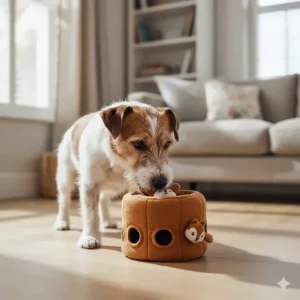
For the canine Einsteins amongst us, the Nina Ottosson MultiPuzzle delivers the ultimate mental workout. This expert-level puzzle requires dogs to complete a series of sequential steps, combining sliding tiles, spinning wheels, and multiple compartments to uncover hidden treats.
Key Specifications:
- Level 4 difficulty (most advanced)
- Multiple challenge configurations
- BPA, PVC, lead, and phthalate-free materials
- Suitable for all breed sizes
Price: £32.99-£39.99
This puzzle stands out in the interactive dog toys buying guide as it demands genuine problem-solving skills. Dogs must learn cause-and-effect relationships, making it perfect for intelligent breeds like Border Collies, German Shepherds, and Poodles who thrive on mental challenges.
Customer Feedback: British customers consistently praise the MultiPuzzle’s ability to occupy clever dogs for 20-30 minutes per session. Several reviewers note it’s brilliant for slowing down fast eaters when filled with their regular kibble, transforming mealtimes into enriching activities.
✅ Pros:
- Provides genuine cognitive challenge for smart breeds
- Food-safe materials with easy hand-washing
- Adjustable difficulty prevents frustration
❌ Cons:
- Requires supervision to ensure proper use
- May be too advanced for puzzle-novice dogs
3. KONG Classic (Large)
The KONG Classic remains the gold standard of interactive dog toys, and for good reason. This deceptively simple red rubber cone has been satisfying dogs’ instinctual needs for over forty years, proving that sometimes the classic design is unbeatable.
Key Specifications:
- Natural red rubber formula for average chewers
- Unpredictable erratic bounce
- Hollow centre for treat stuffing
- Dishwasher safe (top rack)
Price: £11.87-£14.99
What makes the KONG truly interactive is its versatility. Fill it with peanut butter and freeze it for a cooling summer treat that lasts hours, or stuff it with kibble for a challenging meal dispenser. The irregular bounce keeps fetch sessions exciting, whilst its durability means it survives both freezer and dishwasher use repeatedly.
Customer Feedback: UK buyers consistently rate the KONG Classic highly, with many reporting their toys lasting years despite daily use. Parents of teething puppies particularly value its ability to soothe sore gums when frozen. One English Bulldog owner praised it as “one of the few toys that hasn’t been destroyed within minutes.”
✅ Pros:
- Exceptional durability for the price point
- Multiple uses (fetch, chew toy, treat dispenser)
- Veterinarian and trainer recommended worldwide
❌ Cons:
- Sizing crucial – too small poses choking risk
- May not challenge extremely aggressive chewers
4. PetDroid Interactive Motion-Activated Dog Ball
The PetDroid Interactive Ball brings smart technology to traditional fetch, automatically activating when your dog nudges it and rolling in unpredictable patterns to maintain engagement. This mid-range option offers excellent value for UK pet owners seeking automated entertainment.
Key Specifications:
- Motion-sensor activation
- USB rechargeable battery
- Durable, chew-resistant exterior
- Suitable for small to medium breeds
Price: £18.99-£24.99
Unlike cheaper alternatives, the PetDroid features intelligent movement algorithms that prevent repetitive patterns – the key to maintaining long-term interest. Its compact size makes it perfect for indoor play during Britain’s dreary weather days.
Customer Feedback: British buyers appreciate the PetDroid’s whisper-quiet operation, making it suitable for flat dwellers. Several reviews mention it successfully entertaining dogs whilst owners work from home, providing breaks from Zoom meetings without causing distraction.
✅ Pros:
- Quiet operation ideal for shared spaces
- Affordable automatic entertainment
- Suitable for indoor use on various floor types
❌ Cons:
- May be too small for large breed dogs
- Requires smooth floors for optimal rolling
5. Outward Hound Treat Tumble (Level 1)
Perfect for introducing puzzle toys, the Treat Tumble offers an accessible entry point into cognitive enrichment. This beginner-friendly option allows dogs to experience the satisfaction of problem-solving without overwhelming frustration.
Key Specifications:
- Level 1 difficulty rating
- Adjustable treat openings
- Food-safe, easy-clean plastic
- Suitable for puppies and puzzle newcomers
Price: £8.69-£12.99
The beauty of the Treat Tumble lies in its simplicity – dogs quickly learn that movement releases treats, building confidence for more complex puzzles. It’s particularly brilliant for anxious dogs who need gentle encouragement to engage with interactive toys.
Customer Feedback: UK reviewers frequently mention using the Treat Tumble to slow down greedy eaters, with some reporting it extends mealtimes by 15-20 minutes. Puppy owners appreciate its durability despite enthusiastic play from teething pups.
✅ Pros:
- Ideal introduction to puzzle toys
- Affordable entry price point
- Works as slow feeder for rapid eaters
❌ Cons:
- Smart dogs may solve it too quickly
- Lighter weight makes it easier to knock about
6. Zellar Treat Dispensing Dog Toy
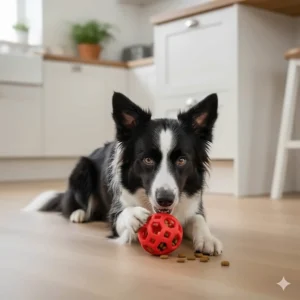
The Zellar Treat Ball combines simplicity with effectiveness, featuring an adjustable difficulty mechanism that grows with your dog’s problem-solving abilities. This IQ training toy works brilliantly for dogs of all sizes and intelligence levels.
Key Specifications:
- Adjustable difficulty settings
- Non-toxic, durable plastic construction
- Suitable for small, medium, and large dogs
- Easy-clean design
Price: £13.99-£16.99
What sets the Zellar apart is its graduated difficulty system – simply rotate the internal mechanism to change how easily treats dispense. This means one toy serves your dog from puppyhood through to their golden years, adapting to their changing capabilities.
Customer Feedback: British buyers praise the Zellar’s versatility, with many using it for training sessions as well as general enrichment. Several cat owners report success using it for their felines too, making it a worthwhile investment for multi-pet households.
✅ Pros:
- Grows with your dog’s abilities
- Excellent value for money
- Suitable for both dogs and cats
❌ Cons:
- Requires regular cleaning to prevent food buildup
- Can be noisy on hard floors
7. West Paw Toppl
The West Paw Toppl reimagines treat dispensing with its innovative interconnecting design. Made from their proprietary Zogoflex material, it’s virtually indestructible whilst remaining surprisingly gentle on teeth.
Key Specifications:
- Zogoflex material (dishwasher and freezer safe)
- Interconnecting design for added challenge
- Made in USA from recyclable materials
- Suitable for moderate chewers
Price: £9.99-£15.99
The Toppl’s clever design allows you to connect two together, creating a customisable puzzle that keeps clever dogs guessing. Its bright colours make it easy to spot in the garden, whilst the textured surface massages gums during chewing.
Customer Feedback: UK buyers consistently mention the Toppl surviving washing machine cycles (though hand-washing is recommended), testament to its durability. Many report using it frozen with wet food for anxious dogs during fireworks or thunderstorms – a common concern for British pet owners.
✅ Pros:
- Exceptionally durable yet teeth-safe
- Dishwasher and freezer safe
- Eco-friendly, recyclable materials
❌ Cons:
- Smaller sizes may be too easy for large breeds
- Premium pricing compared to basic alternatives
Understanding Interactive Toys vs Traditional Dog Toys
Interactive dog toys represent a significant evolution from traditional playthings. Whilst a standard tennis ball requires human participation, interactive toys engage your dog independently through cognitive challenges, automated movement, or treat-dispensing mechanisms. This distinction matters enormously for modern dog owners juggling busy schedules.
Traditional toys certainly have their place – a well-loved plush toy provides comfort, and rope toys facilitate bonding through tug-of-war. However, they don’t address the growing epidemic of canine boredom, particularly amongst intelligent working breeds now living urban lifestyles. Research published in veterinary behavioural journals indicates that mental stimulation can tire dogs as effectively as physical exercise, sometimes more so.
Interactive toys fall into several categories: puzzle feeders that require manipulation to release food, automated toys that move independently to trigger chase instincts, treat dispensers that demand problem-solving, and sensory toys providing varied textures and sounds. Each type addresses different aspects of canine enrichment, and the best interactive dog toys buying guide should help you select options matching your dog’s personality and needs.
Consider breed characteristics when choosing. High-energy breeds like Border Collies and Australian Shepherds thrive with complex puzzles that challenge their working dog heritage. Scent hounds such as Beagles excel with snuffle mats and treat-hiding toys that engage their powerful noses. Meanwhile, gentle breeds like Cavalier King Charles Spaniels may prefer simpler, reward-focused toys that don’t overwhelm.
Benefits That Go Beyond Entertainment
The advantages of interactive toys extend far beyond keeping your dog occupied:
Mental Exhaustion: A twenty-minute puzzle session can tire an anxious dog as effectively as a lengthy walk, particularly valuable during Britain’s notoriously wet weather.
Destructive Behaviour Reduction: Dogs often chew furniture or dig gardens out of boredom. Providing appropriate cognitive outlets redirects these instincts productively.
Anxiety Management: Interactive toys give anxious dogs positive focus during stressful situations like fireworks, storms, or separation.
Weight Management: Slow-feeder puzzles prevent gulping, improving digestion whilst making mealtimes more engaging and extended.
How to Choose Dog Toys: Matching Toys to Your Dog’s Profile
Selecting the right interactive toys requires understanding your individual dog’s characteristics, not just their breed. Here’s how to make informed decisions:
Size Matters More Than You Think
Toy sizing isn’t just about preventing choking hazards – though that’s crucial. Oversized toys frustrate small dogs who can’t manipulate them, whilst undersized options become dangerous projectiles for large breeds. As a general rule, choose toys your dog can comfortably hold in their mouth without difficulty but cannot swallow whole. For puzzle toys, ensure your dog can physically operate the mechanisms; a Chihuahua can’t slide heavy tiles meant for Rottweilers.
Assess Chewing Style Honestly
Dogs fall into three chewing categories: gentle mouthers who carry toys delicately, average chewers who engage moderately, and power chewers who destroy most toys within hours. Match material durability accordingly:
- Gentle chewers: Soft rubber, plush with reinforced seams
- Average chewers: Standard rubber (like KONG Classic red), durable nylon
- Power chewers: Ultra-tough rubber (KONG Extreme black), reinforced rope, solid nylon
Remember, even “indestructible” claims mean little in the UK pet toy market, which lacks strict regulations on such terminology. Always supervise initial play sessions with new toys.
Intelligence and Experience Level
Just as you wouldn’t give a cryptic crossword to someone learning English, don’t start bright dogs with Level 1 puzzles – they’ll lose interest immediately. Conversely, overwhelming puzzle-novice dogs with expert-level challenges creates frustration rather than engagement. Most quality puzzle toy manufacturers clearly mark difficulty levels:
- Level 1 (Beginner): Simple actions like rolling or tipping
- Level 2 (Intermediate): Sliding panels or basic sequences
- Level 3 (Advanced): Multiple steps, combination actions
- Level 4 (Expert): Sequential challenges requiring planning
Start one level below what you estimate your dog can handle, allowing them to build confidence and understanding before progressing.
Age-Appropriate Selection
Puppies require different considerations than adult or senior dogs:
Puppies (Under 12 months): Prioritise teething-safe materials, simple puzzles that build confidence, and toys you can supervise closely. Avoid anything with small, detachable parts.
Adults (1-7 years): Full range of options based on individual characteristics. This is when you can truly challenge bright dogs with expert puzzles.
Seniors (8+ years): Gentler materials for ageing teeth, easier puzzle difficulties accommodating reduced mobility or cognitive changes, and toys providing comfort as well as stimulation.

Best Toys for Different Breeds: Tailored Recommendations
Working and Herding Breeds
Border Collies, Australian Shepherds, German Shepherds, and Belgian Malinois possess legendary intelligence and stamina. These dogs need serious cognitive challenges:
Ideal toys: Nina Ottosson Level 3-4 puzzles, multiple treat-hiding toys rotated daily, automated balls for independent chase sessions, and advanced training toys that require multi-step sequences. Consider investing in several puzzles to prevent boredom from repetition.
Hound Breeds
Beagles, Basset Hounds, and Bloodhounds are driven by their extraordinary noses. Engage this natural talent:
Ideal toys: Snuffle mats where treats hide amongst fabric strips, puzzle toys with multiple compartments for scent work, and outdoor toys for garden hide-and-seek games. The RSPCA recommends engaging dogs’ natural foraging instincts for mental stimulation.
Terrier Breeds
Jack Russells, Yorkshire Terriers, and Bull Terriers combine high energy with determination. They need durable options:
Ideal toys: Tough rubber treat dispensers (KONG Extreme), tug toys with squeakers, and puzzle toys they can manipulate with their determined nature. Avoid anything easily destroyed, as terriers take “dismantling” toys as a personal challenge.
Toy and Companion Breeds
Chihuahuas, Cavalier King Charles Spaniels, and Pugs require gentler, appropriately sized options:
Ideal toys: Small KONG puppies, soft puzzle toys with easy difficulty levels, and lightweight interactive balls. These breeds often prefer toys facilitating interaction with their humans over independent play.
Brachycephalic (Flat-Faced) Breeds
Bulldogs, Pugs, and French Bulldogs need special consideration due to breathing difficulties:
Ideal toys: Puzzle feeders that don’t require excessive physical exertion, treat-dispensing toys they can work at their own pace, and avoid vigorous fetch toys that cause respiratory distress. Cooling toys are particularly valuable for these heat-sensitive breeds during British summers.
Dog Toy Safety Guide: Essential UK Standards
Pet toy safety in the UK presents a peculiar regulatory gap. Unlike children’s toys, which must meet strict UK Toy Safety Regulations 2011, pet toys fall under general consumer product safety legislation with less specific requirements. This makes informed purchasing even more critical.
Red Flags to Avoid
Suspicious Materials: Avoid toys with strong chemical odours, which may indicate toxic compounds. Whilst cheap imports often use harmful materials like lead-based paints or phthalate-laden plastics, UK sellers are responsible for ensuring products meet general safety standards.
Detachable Small Parts: Plastic eyes, bells, feathers, and similar decorative elements pose choking hazards. Even securely attached parts can become dangerous once dogs begin aggressive chewing.
Inappropriate Sizing: A toy small enough to lodge in your dog’s throat represents an immediate danger. Test by attempting to fit it through a toilet paper roll – if it fits, it’s too small for large dogs.
Poor Construction Quality: Seams that separate easily, brittle plastic that cracks, or rubber that tears indicate substandard manufacturing. Quality toys might cost more initially but prove economical long-term.
Material Safety Checklist
Seek toys explicitly labelled:
- BPA-free (Bisphenol A causes hormonal disruption)
- Phthalate-free (linked to reproductive and developmental issues)
- Lead-free (causes neurological damage)
- Made from natural rubber or food-grade materials
- Non-toxic dyes and paints
Reputable manufacturers like KONG, West Paw, and Nina Ottosson publicly commit to safety standards, testing products despite the lack of legal requirements. When product descriptions lack safety information, contact manufacturers directly – legitimate companies welcome these enquiries.
Supervised Play Protocols
Even the safest toys require appropriate supervision:
Initial Introduction: Always supervise first play sessions with new toys, regardless of type. This allows you to assess whether your dog uses it safely and whether the toy holds up to their play style.
Regular Inspection: Check toys weekly for damage – cracks, tears, loose parts, or sharp edges that developed during use. Discard anything showing significant wear before it becomes dangerous.
Rotation Strategy: Keep four to five toys accessible whilst storing others, rotating weekly. This maintains novelty whilst allowing you to inspect stored toys thoroughly before reintroducing them.
Cleaning Routine: Establish regular cleaning schedules. Hard toys: weekly scrub with dog-safe cleaner. Soft toys: fortnightly machine wash. Treat-dispensing toys: daily rinse and weekly deep clean to prevent bacterial growth.

Size-Specific Toy Guide: Finding the Perfect Fit
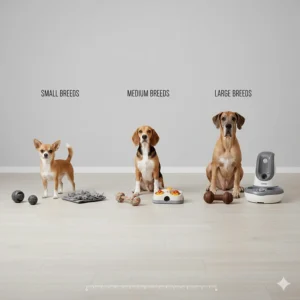
Selecting appropriately sized interactive toys prevents frustration and danger. Here’s a detailed breakdown:
Small Dogs (Under 10kg)
Breeds: Chihuahuas, Yorkshire Terriers, Maltese, Papillons, Toy Poodles
Toy considerations: Small breed dogs often possess surprising determination despite their diminutive size. Choose toys specifically marketed for small breeds, not scaled-down versions of large dog toys. Interactive balls should be roughly tennis-ball sized (6-7cm diameter), whilst puzzle toys need lightweight components they can manipulate.
Recommended sizes:
- KONG: XS or Small
- Nina Ottosson puzzles: Small/Mini versions
- Treat balls: 7-8cm diameter maximum
- Chew toys: No thicker than 2.5cm
Small dogs can choke on standard-sized toys, whilst oversized options frustrate them. The correct size allows comfortable mouth-hold without swallowing risk.
Medium Dogs (10-25kg)
Breeds: Cocker Spaniels, Border Collies, Beagles, Bull Terriers, Springer Spaniels
Toy considerations: Medium dogs occupy the sweet spot where most toys are appropriately sized. However, err toward slightly larger toys for enthusiastic chewers. Medium dogs often combine intelligence with energy, making them perfect candidates for varied interactive toy collections.
Recommended sizes:
- KONG: Medium
- Interactive balls: 8-10cm diameter
- Puzzle toys: Standard medium versions
- Rope toys: 30-40cm length
This versatile size category enjoys the widest toy selection, making it easier to find breed-specific options.
Large Dogs (25-45kg)
Breeds: Labradors, German Shepherds, Golden Retrievers, Rottweilers, Dobermanns
Toy considerations: Large breed dogs need substantial toys that won’t become choking hazards. Their powerful jaws demand durable materials, particularly for chewers. Don’t underestimate the importance of proper sizing – a large Labrador attempting to use medium-sized toys risks swallowing them.
Recommended sizes:
- KONG: Large
- Interactive balls: 10-12cm diameter minimum
- Puzzle toys: Large versions with sturdy construction
- Treat dispensers: 12-15cm height
Large dogs often benefit from multiple smaller interactive toys rather than one giant toy, providing variety in their enrichment activities.
Extra Large Dogs (Over 45kg)
Breeds: Great Danes, Mastiffs, Saint Bernards, Newfoundlands, Irish Wolfhounds
Toy considerations: Giant breeds require the most robust toys available. Their size and strength make inappropriate toys dangerous rather than challenging. Unfortunately, interactive toy options decrease at this size range, necessitating careful selection.
Recommended sizes:
- KONG: XL or XXL
- Interactive balls: 12cm+ diameter (tennis ball canister sized)
- Puzzle toys: Largest available, reinforced versions
- Custom solutions: Sometimes necessary for gentle giants
Many XL dog owners successfully use multiple large-sized toys simultaneously, providing adequate challenge without choking risk.
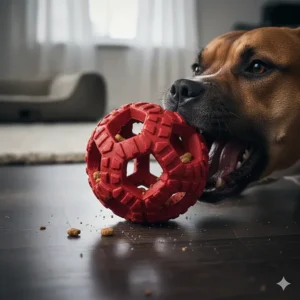
Pet Toy Selection Tips: Maximising Value and Engagement
Budget-Conscious Buying Strategies
Quality interactive toys represent investments in your dog’s wellbeing, but costs accumulate quickly. Here’s how to maximise value:
Start with Versatile Basics: A KONG Classic offers tremendous versatility – fetch toy, chew toy, treat dispenser, and frozen teething relief – making it excellent value at £11.87-£14.99. Similarly, a simple treat-dispensing ball serves multiple functions.
Build Gradually: Rather than purchasing seven toys immediately, invest in one or two quality options monthly. This allows you to assess what your dog genuinely enjoys before expanding your collection.
DIY Supplementation: Complement purchased toys with homemade options. A muffin tin with tennis balls covering treats creates an effective puzzle. Cardboard boxes filled with crumpled paper hiding treats engage natural foraging instincts. Frozen treats in ice cube trays provide cooling enrichment.
Watch for Sales: Amazon frequently offers deals on pet toys. Set price alerts for wishlist items, as brands like KONG and Outward Hound periodically discount their ranges by 20-30%.
Rotating Toys for Sustained Interest
Dogs, like children, become bored with constant access to the same toys. Rotation maintains novelty without continuously purchasing new items:
Weekly Rotation System: Divide your toy collection into four groups. Each week, put away the current group and introduce the next. By the time a group reappears, it feels fresh again.
Seasonal Variations: During summer, emphasise water toys and frozen treat toys. Winter calls for indoor puzzles and cognitive challenges. This natural variation aligns with seasonal activity changes.
Progressive Difficulty: As your dog masters puzzle toys, gradually introduce more challenging levels whilst retiring easier options they’ve outgrown.
Introducing New Toys Successfully
Don’t simply toss a new toy at your dog expecting instant engagement. Proper introduction significantly impacts long-term interest:
Make It Valuable: Before giving your dog a new toy, handle it yourself, show enthusiasm, and perhaps play “keep away” briefly. This increases perceived value.
Easy First Experiences: Load puzzle toys generously with high-value treats for initial attempts, ensuring early success builds confidence.
Short Sessions: Limit first interactions to 5-10 minutes, ending whilst your dog still wants more rather than waiting until they lose interest.
Praise Generously: Celebrate when your dog successfully manipulates puzzle toys, reinforcing the behaviour you want to see.
Mental Stimulation Through Play: Building Your Dog’s Brain
Interactive toys provide more than entertainment – they genuinely develop your dog’s cognitive abilities. Understanding the science helps you maximise these benefits.
The Psychology of Canine Enrichment
Dogs descended from wolves who spent significant energy hunting and problem-solving for survival. Modern dogs receive meals in bowls within seconds, leaving their brains under-stimulated. This evolutionary mismatch creates behavioural problems: anxiety, destructive chewing, excessive barking, and compulsive behaviours.
Interactive toys address this by providing appropriate outlets for natural instincts:
Foraging: Snuffle mats and hide-and-seek toys satisfy the drive to search for food, engaging both nose and brain.
Hunting: Motion-activated balls trigger prey drive in controlled, appropriate ways.
Problem-Solving: Puzzle toys develop cognitive skills through trial-and-error learning, building confidence alongside intelligence.
Research from veterinary behaviourists indicates that 15-20 minutes of cognitive activity can provide similar satisfaction to 30-40 minutes of physical exercise, particularly valuable for dogs with mobility limitations or during inclement weather.
Age-Appropriate Cognitive Challenges
Like human brains, canine brains benefit from appropriate challenges throughout life:
Puppyhood (2-12 months): Focus on simple cause-and-effect toys that build confidence. Success at this stage encourages lifelong engagement with puzzle toys. Keep sessions brief (5-10 minutes) as puppies have limited attention spans.
Young Adults (1-3 years): Peak learning period. Introduce varied puzzle types and increasing difficulties. These years establish your dog’s problem-solving toolkit.
Mature Adults (4-7 years): Maintain cognitive sharpness with regular puzzle engagement. Dogs at this age often exhibit impressive problem-solving speed, combining experience with mental agility.
Seniors (8+ years): Continue cognitive stimulation to slow age-related mental decline, but reduce physical demands. Simplified versions of previous favourites maintain engagement without frustration. Studies suggest regular cognitive activity may delay symptoms of canine cognitive dysfunction (dog dementia).
Training Integration
Interactive toys aren’t just for independent play – incorporate them into training:
Reward Replacement: Use puzzle toy access as training rewards for dogs not highly food-motivated. “Good sit! Now you get five minutes with the puzzle toy.”
Calm Behaviour Reinforcement: Present puzzle toys when your dog settles quietly, teaching that calm behaviour leads to rewarding activities.
Crate Training Aid: A frozen KONG makes crate time positive rather than punitive, particularly valuable for puppies or anxious dogs.
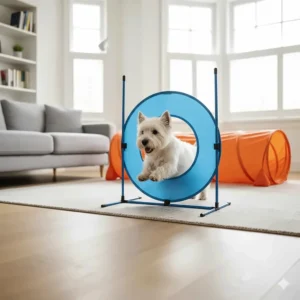
Solving Common Interactive Toy Challenges
Even the best interactive toys sometimes create unexpected situations. Here’s how to troubleshoot:
“My Dog Loses Interest Quickly”
If your dog abandons toys after minutes:
Solution 1: Increase reward value. Standard kibble might not motivate; try cheese, chicken, or commercial treat paste.
Solution 2: Make it easier. Your dog may find the challenge frustrating rather than engaging. Adjust difficulty or choose simpler options.
Solution 3: Participate initially. Show your dog how the toy works, celebrating when they manipulate it correctly. Your enthusiasm becomes part of the reward.
Solution 4: Timing matters. Present toys when your dog is moderately hungry and mentally fresh, not after meals or extensive exercise.
“My Dog Destroys Every Toy”
Determined destroyers require strategic approaches:
Solution 1: Separate supervised interactive play from independent chewing. Provide indestructible chew-specific toys for unsupervised times, reserving puzzle toys for monitored sessions.
Solution 2: Upgrade materials. If red KONG Classic fails, try black KONG Extreme. If that fails, explore ultra-durable nylon options marketed specifically for power chewers.
Solution 3: Address underlying causes. Destructive behaviour often signals inadequate physical exercise, anxiety, or boredom. Increase daily walks and mental stimulation broadly.
Solution 4: Redirect immediately. When your dog begins destroying rather than engaging appropriately, remove the toy and offer a designated chew toy instead.
“My Dog Ignores Interactive Toys Completely”
Some dogs initially show no interest:
Solution 1: Start absurdly easy. Place treats on rather than in the toy, graduating to partially hidden, then fully hidden.
Solution 2: Make it social. Your attention adds value – play with the toy yourself, showing enthusiasm whilst the dog watches.
Solution 3: Restrict free feeding. If food is constantly available, treat-dispensing toys lose appeal. Scheduled feeding increases food motivation.
Solution 4: Choose toy types matching your dog’s natural interests. Scent-driven hounds may ignore rolling balls but love snuffle mats.
“The Toy Is Too Easy/Too Hard”
Difficulty matching proves tricky initially:
Solution: Quality puzzle toy manufacturers often sell difficulty-adjustment accessories or provide instructions for modifying challenge levels. Nina Ottosson puzzles, for example, include optional barriers increasing complexity. For too-difficult puzzles, leave some compartments visible or pre-start certain steps.
Maintenance and Hygiene: Keeping Toys Safe Long-Term
Interactive toys accumulate bacteria, food residue, and outdoor dirt. Proper maintenance protects your dog’s health:
Cleaning Protocols by Material Type
Hard Rubber (KONG, West Paw):
- Daily: Rinse with hot water after use
- Weekly: Dishwasher top rack OR hand wash with dog-safe dish soap
- Deep clean: Soak in vinegar-water solution (1:1) for 30 minutes monthly
Plastic Puzzles:
- After each use: Wipe clean with damp cloth
- Weekly: Hand wash with warm, soapy water (not dishwasher – can warp)
- Dry thoroughly before storing to prevent mould
Fabric/Rope:
- Weekly: Machine wash hot cycle, air dry completely
- Inspect closely for fraying, mould, or damaged areas
- Replace when ropes begin separating or fabric thins
Electronic/Battery Toys:
- Wipe exterior only with slightly damp cloth
- Never submerge or use harsh chemicals
- Check battery compartments monthly for corrosion
Storage Solutions
Proper storage extends toy longevity:
Active Rotation Basket: Keep 4-5 current toys in an accessible container. This becomes your dog’s toy library.
Storage Bins: Organize inactive rotation toys in breathable containers (not sealed plastic, which traps moisture). Label by difficulty or type for easy identification.
Outdoor Toy Station: Designate separate toys for garden use, storing them in weatherproof containers to prevent indoor dirt transfer.
Inspection Shelf: Before returning rotated toys to service, check them thoroughly for damage. This prevents injured mouths from sharp edges or detached parts.
When to Retire Toys
Even quality toys eventually need replacing:
Immediate Retirement:
- Visible cracks exposing interior
- Pieces detaching or loose
- Sharp edges developing
- Unusual odours (indicating material breakdown)
- Mould growth that doesn’t fully clean
Preventive Retirement:
- Heavy wear making cleaning difficult
- Size reduction from chewing (choking risk increases)
- Squeakers exposed or removable
- Structural weakness (toy bends abnormally)
Retiring toys before they become dangerous prevents emergency vet visits. When uncertain, err on the side of caution.
Environmental Considerations: Sustainable Choices
Growing environmental consciousness applies to pet products too. Making eco-friendly choices doesn’t require sacrificing quality:
Sustainable Materials
Natural Rubber: Companies like West Paw and KONG use natural rubber in many products, which biodegrades far faster than petroleum-based plastics. West Paw specifically uses recyclable materials and operates a “Join Our Pack” recycling programme.
Recycled Plastics: Some manufacturers now incorporate post-consumer recycled plastics into toys, reducing environmental impact whilst maintaining durability.
Organic Cotton/Hemp: For fabric toys and ropes, organic materials grown without pesticides offer safer options for dogs whilst supporting sustainable agriculture.
Longevity Over Disposability
The most environmentally friendly toy is one that lasts years rather than weeks:
Investment Pieces: Premium toys like KONG Extreme or quality Nina Ottosson puzzles might cost more initially but survive countless play sessions, proving more economical and ecological long-term than repeatedly replacing cheap alternatives.
Repairable Options: Some companies offer replacement parts. Outward Hound sells spare bones for Nina Ottosson puzzles, extending product life rather than requiring complete replacement.
Multi-Purpose Toys: Versatile toys reducing the total number needed decrease manufacturing impact and household clutter simultaneously.
Responsible Disposal
When toys finally retire:
Recycling: Check local council guidelines – some rubber toys qualify for special recycling programs. West Paw offers free toy recycling through their “Join Our Pack” program.
Donation: Gently used toys unsuitable for your dog might benefit shelter dogs. Contact local rescues about their donation policies.
Creative Repurposing: Old fabric toys become garden plant ties or cleaning rags. Rubber toys cut into pieces serve as garden kneeling pads.
FAQ
❓ What age should puppies start using interactive dog toys?
❓ How long should interactive play sessions last for dogs?
❓ Can aggressive chewers safely use interactive dog toys?
❓ Do interactive toys help with separation anxiety in dogs?
❓ What's the difference between treat-dispensing and puzzle dog toys?
Conclusion: Investing in Your Dog’s Happiness
Selecting the right interactive dog toys buying guide isn’t merely about purchasing products – it’s about enriching your dog’s life through mental stimulation, reducing behavioural problems, and strengthening your bond through shared positive experiences. The seven products featured in this guide represent diverse approaches to canine enrichment, from automated entertainment to cognitive challenges, ensuring every dog finds suitable stimulation regardless of breed, size, or temperament.
Remember that the best interactive toy for your dog depends on their individual characteristics: chewing style, intelligence level, energy requirements, and personal preferences. Start with versatile options like KONG Classics or beginner puzzle toys, observing which toy types generate the most enthusiastic engagement. Gradually expand your collection based on these observations, creating a customised enrichment program unique to your furry friend.
Don’t underestimate the importance of safety considerations. With UK pet toy regulations remaining less stringent than children’s toy standards, purchasing from reputable manufacturers committed to quality becomes paramount. Regular inspection, appropriate sizing, and supervised play protect your dog whilst maximising the benefits interactive toys provide.
Whether you’re addressing destructive chewing, managing separation anxiety, or simply ensuring your intelligent working breed receives adequate mental exercise, the right interactive toys transform daily routines from mundane to enriching. Your investment in quality interactive toys pays dividends in your dog’s happiness, health, and household harmony.
The interactive dog toys market continues evolving, with 2026 bringing increasingly sophisticated options leveraging technology whilst respecting dogs’ natural instincts. By following this buying guide’s principles, you’ll navigate these choices confidently, selecting toys that genuinely enhance your dog’s quality of life rather than cluttering your home with unused purchases.
Recommended for You
- 7 Best Automatic ifetch vs gopet Ball Launcher UK: iFetch vs Competitors 2026
- 7 Best Furbo Dog Camera Treat Dispenser Options UK 2026 Guide
- 7 Best App Controlled Dog Toys UK 2026 (Expert Tested)
Disclaimer: This article contains affiliate links. If you purchase products through these links, we may earn a small commission at no additional cost to you. Prices shown are approximate and may vary.
✨ Found this helpful? Share it with your mates! 💬🤗
