

In This Article
Rubber ring tug vs rope tug for dogs is a choice between two classic tug-of-war designs. One is a moulded rubber or elastomer ring that you both grip. The other is a braided or knotted rope made from cotton, polyester or similar fibres. Rubber wipes clean and shrugs off shredding, while rope is lighter, softer and gentler on human hands.
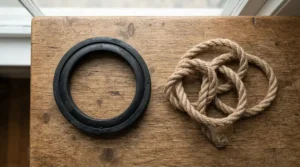
Most owners pick a tug toy the way they pick a loaf of bread: whichever is nearest and cheapest. Then the rope is a pile of lint by Thursday, or the “indestructible” ring turns out to be too heavy for a spaniel’s jaw. Choosing well has less to do with brand than with three things. What is the toy made of? How hard does your dog chew? How do you actually play?
Tug also deserves better press than it gets. For years owners were warned that it breeds aggression. The American Kennel Club’s guidance on tug of war reflects the modern view: well-managed games have real benefits, work best in short bursts, and depend on a reliable “drop” cue. Ordinary caution still applies. Skip tug for dogs with dental, neck or spinal problems, and ask your vet if you’re unsure.
Here’s how this guide works. I researched seven real products in October 2026, using manufacturer specifications, retailer care notes and the patterns in aggregated reviewer comments. I haven’t tested them myself, so you’ll get honest analysis rather than war stories. Prices are ranges only, so check the current price on Amazon UK before buying. Along the way you’ll find a tug toy material guide, safety checks, cleaning routines and a decision framework by chew strength.
Rubber Ring Tug vs Rope Tug for Dogs at a Glance
Short on time? This table boils the debate down to five factors. Every cell is a generalisation, so use it to narrow your shortlist, then read the product analysis for the exceptions.
| Factor | Rubber ring tug | Rope tug | Best For |
|---|---|---|---|
| Resistance to shredding | High; solid moulded body | Lower; fibres fray with use | Heavy pullers: Goughnuts Ring |
| Hygiene | Wipe or rinse clean | Soaks up slobber and mud; needs washing and full drying | Muddy walkers: West Paw Bumi |
| Grip and give | Firmer, with some stretch in elastomer designs | Soft, with knots or rings for grip | Gentle mouths: KONG Signature Rope Double Tug |
| Ingestion risk | Chunks if gnawed | Loose strands if frayed | Supervised play only |
| Upfront cost | Higher | Lower | Budget testers: Battersea Rope and Rubber Rings |
Looking at the comparison above, rubber wins on durability and hygiene, while rope wins on softness and price. Dogs that destroy toys will get more from the Goughnuts Ring. For a gentle puller and a tight budget, the KONG Signature Rope Double Tug or Battersea Rope and Rubber Rings make far more sense. The West Paw Bumi sits happily between the two camps.
💬 Just one click — help others make better buying decisions too!😊
Top 7 Tug Toys: Expert Analysis of Rubber Ring and Rope Options
I’ve ordered these from budget to premium and mixed rubber, rope and hybrid designs, so you can see the trade-offs rather than just a ranking. Each entry interprets the specs, flags the weak points, and says plainly where I couldn’t verify reviews.
1. Battersea Rope and Rubber Rings — budget hybrid that backs a good cause
The twist is the pairing: rubber rings threaded onto rope, so your dog gets two textures in one toy.
At roughly 13cm by 20cm, it’s compact. That suits small and medium dogs and cramped living rooms far better than a Labrador’s jaws. Based on the spec comparison, the rubber rings give you firm, wipe-clean grip points while the rope section handles the pulling. The rope is also where any fraying will begin. The retailer’s own notes say play should be supervised and the toy replaced once worn, which is sound advice for any rope-bearing design.
It makes the most sense as a trial toy. If you don’t know whether your dog is a rubber dog or a rope dog, this answers the question cheaply. It isn’t a heavy-duty puller for strong, determined chewers. A small bonus is that profits go towards Battersea’s dog and cat care, which few toys at this price can claim.
I couldn’t verify a meaningful pool of independent reviews for this exact toy, so I won’t characterise how owners rate it. Skim the current Amazon UK reviews before buying.
Pros:
- ✅ Two textures in one affordable toy
- ✅ Compact size suits small dogs and flats
- ✅ Profits support Battersea’s animal care
Cons:
- ❌ Rope section will fray over time
- ❌ Too small for large or strong dogs
Expect to pay under £10 at the time of research (check current price). It’s good value as a low-risk experiment.

2. Mammoth Flossy Chews 3 Knot Rope Tug — the classic knotted rope in four sizes
Knots do the heavy lifting here. They give you something to grip and give your dog something to bite that isn’t the whole rope.
It’s sold in sizes from about 15 inches up to a 36-inch giant, and sizing matters more than you’d think. A knot that suits a Labrador is too fat for a terrier to hold, which is a gripe some reviewers raise. Material labelling is also inconsistent. Some retailers describe it as 100% cotton and others as a cotton-polyester blend, so read the label on the pack you receive. The “flossing” claim is a marketing line. It’s plausible as a gentle texture benefit, but it’s no substitute for brushing your dog’s teeth.
The Mammoth Flossy Chews 3 Knot Rope Tug is the benchmark rope tug, best for light to moderate chewers and for owners who want a cheap, replaceable toy. Determined chewers will get through it. The maker suggests going up a size for aggressive chewers, which is a hint rather than a guarantee.
Reviewer comments I found were mostly warm: sturdy, a favourite for tug and fetch. The recurring caveats were the oversized centre knot for small mouths and a short lifespan with voracious chewers.
Pros:
- ✅ Four sizes from small to extra-large
- ✅ Knots give you both secure grips
- ✅ Inexpensive to replace when worn
Cons:
- ❌ Fibres can shred under determined chewing
- ❌ Centre knot too bulky for tiny mouths
Roughly £5-£15 depending on size (prices may vary). It’s strong value as a rotating staple, though not as a long-term investment.
3. KONG Signature Rope Double Tug — two rings, soft stretch, honest limits
Two rings mean two grip points, so this suits a two-handed owner or a dog who likes a long, floppy pull.
At around 55-58cm and roughly 450g, it has real heft for a rope toy. That helps in a game of tug but is a lot of toy for small dogs. The rope is braided from cotton and fleece for a soft mouthfeel with some stretch. Listings vary, though, and one retailer gives the composition as mostly polyester with a little cotton, so check the label. The most useful line on the spec sheet is that KONG rates it for light to moderate chewing and points tough chewers towards its rubber range.
My read is that the KONG Signature Rope Double Tug is the comfort-first option. It suits gentle-to-moderate pullers, softer mouths and households that want a toy kind to teeth. Treat it as supervised play, put it away afterwards, and don’t expect it to survive a dedicated shredder.
I couldn’t confirm a reliable body of independent reviews for this specific toy at the time of research.
Pros:
- ✅ Two rings for flexible, two-handed grips
- ✅ Soft, stretchy feel is gentle on mouths
- ✅ Brand is candid about chew-strength limits
Cons:
- ❌ Not designed for tough chewers
- ❌ Bulky for small dogs
Around £9-£15 (check current price). It’s decent value for moderate pullers and poor value for shredders.
4. Ruffwear Pacific Ring — rope ring that flies as well as tugs
This is the one toy here that’s as happy in mid-air as in a tug, a rope ring that flies like a soft flying disc.
The numbers translate well. It’s 27cm across and about 159g, built from 11mm polypropylene kernmantle rope (the same construction family as climbing rope) over a ballistic nylon shell with a polyurethane finish. In practice that means it’s firmer than cotton, should shed less lint, and folds flat into a pocket for walks. Ruffwear positions it for moderate play with medium and large dogs. Care is hand wash, mild detergent, air dry.
Analytically, the Ruffwear Pacific Ring is the hybrid for active owners: fetch on the way out, tug at the far end of the field. It’s not a chew toy, and I wouldn’t give it to a dog who likes to gnaw on rope.
Reviews on Ruffwear’s own site are curated by the brand, so read them with a pinch of salt. They describe a favourite that outlasts other flying toys. A retailer reviewer also reported it holding up to tug sessions with a 70lb dog.
Pros:
- ✅ Doubles as fetch disc and tug ring
- ✅ Folds flat for easy carrying
- ✅ Synthetic build with hard-wearing finish
Cons:
- ❌ Hand wash only, slower to maintain
- ❌ Pricey for a rope-style toy
Around £18-£28 (prices may vary). It’s good value if one toy has to cover both fetch and tug.
5. West Paw Bumi — stretchy S-shaped tug that floats
Stretch is the headline. The S-shaped design flexes to roughly twice its length mid-pull, taking the jolt out of the game.
That elasticity matters for your shoulder and your dog’s neck, because a rigid ring transmits every yank while this absorbs it. West Paw’s Zogoflex line is sold as non-toxic, BPA- and phthalate-free (manufacturer claims), floatable and dishwasher safe, a rare combination for a tug. Retailer listings for sibling Zogoflex toys describe the material as a thermoplastic elastomer, which fits the rubbery-but-flexible feel. The small size measures about 8 inches.
The West Paw Bumi is the strongest fit for muddy, wet British walks and for hygiene-minded owners, because you can run it through the dishwasher after a pond swim. It sits between rope and hard rubber: more forgiving than a solid ring, tougher than fleece. West Paw is upfront that no dog toy is indestructible, and says to stop using it if it’s damaged.
I couldn’t verify enough independent reviews to summarise sentiment fairly.
Pros:
- ✅ Stretches to reduce jolts during tug
- ✅ Floats and copes with muddy fetch
- ✅ Dishwasher safe for easy cleaning
Cons:
- ❌ Not a chew toy for power chewers
- ❌ Costs more than basic rope
Around £14-£25 depending on size (check current price). It’s good value if you’d otherwise replace a rope every few weeks.

6. Goughnuts Ring — natural rubber ring with a built-in wear warning
The clever part is the wear indicator. The green ring has a two-layer build, and a red inner layer tells you when to retire it.
The natural rubber ring comes in four sizes, from a 3.75-inch small (dogs roughly 10-40lb) to large and extra-large rings of about 6.25 inches (60lb and up). Sizing isn’t cosmetic. Goughnuts says the ring shape keeps the jaw more open while chewing, which reduces leverage on teeth. The black version is solid throughout but has no indicator, and the maker pitches it at experienced owners. The small black ring doesn’t float, so it’s not a pond toy.
Let’s be straight about the positioning. Goughnuts markets the Goughnuts Ring mainly for chewing and fetch rather than as a dedicated tug, though the shape is naturally grab-and-pull. For serious tugging, the purpose-built option is coming up next. The ring suits dogs that shred ropes in minutes, and the brand backs it with a lifetime guarantee. Take it away the moment damage appears.
The reviewer material I found was limited but positive. One retailer reviewer with a heavy chewer said the ring takes serious daily use and feels worth the cost. Treat that as anecdotal.
Pros:
- ✅ Red inner layer signals when to replace
- ✅ Four sizes for jaws from 10lb up
- ✅ Wipe clean with warm water
Cons:
- ❌ Not a dedicated tug design
- ❌ Heavy-duty versions cost significantly more
Roughly £20-£45 depending on size and strength (prices may vary). It’s strong value for chewers who destroy cheaper toys.
7. Goughnuts Tug — figure-8 rubber tug for heavy pullers
Hands stay clear of teeth. The figure-8 design puts a bar between your grip and your dog’s, so your fingers never drift towards the jaws.
It’s made from natural rubber and, in the large black version, measures roughly 6 inches wide by 11 inches long. It’s pitched at dogs over 60lb who are tough tuggers. The two handles give each side leverage, and the rubber flexes slightly, so there’s no frayed fibre to snag teeth. Goughnuts is clear that this is a tug, not a chew toy. The thinner profile won’t survive constant gnawing, so put it away when the game ends.
The Goughnuts Tug is the most literal rubber ring tug answer for a powerful, determined puller, and the biggest investment here. Size is where buyers slip. One retailer reviewer found it too big for their dog, and another said theirs played enthusiastically without it being a favourite. Both fit the pattern that rubber feels less springy than rope in a dog’s mouth. Reviewers generally praise its durability for tough pulling.
Pros:
- ✅ Figure-8 shape keeps hands away from jaws
- ✅ Natural rubber stands up to hard pulling
- ✅ Two handles give both of you leverage
Cons:
- ❌ Not designed for gnawing sessions
- ❌ High upfront cost and large size
Roughly £30-£45 (check current price). It’s worth it for strong pullers and poor value for small dogs.
Here’s how all seven stack up side by side.
| Product | Material | Format | Price range | Review sentiment (as found) | Best For |
|---|---|---|---|---|---|
| Battersea Rope and Rubber Rings | Rope and rubber | Compact hybrid | Under £10 | Not verified | Trying both textures |
| Mammoth Flossy Chews 3 Knot Rope Tug | Cotton or cotton-poly rope (check label) | Knotted rope | £5-£15 | Warm; short life for heavy chewers | Light-to-moderate chewers |
| KONG Signature Rope Double Tug | Cotton and fleece braid (check label) | Double-ring rope | £9-£15 | Not verified | Gentle mouths |
| Ruffwear Pacific Ring | Polypropylene rope, nylon shell | Rope ring | £18-£28 | Positive (brand-curated) | Fetch-and-tug dogs |
| West Paw Bumi | Zogoflex elastomer | Stretchy S-shape | £14-£25 | Not verified | Muddy, wet walks |
| Goughnuts Ring | Natural rubber | Ring | £20-£45 | Limited, positive | Heavy chewers |
| Goughnuts Tug | Natural rubber | Figure-8 | £30-£45 | Positive on durability | Large, strong pullers |
Looking at the table, price tracks durability, but not perfectly. The Ruffwear Pacific Ring and West Paw Bumi cost more than basic rope without being chew-proof. You’re paying for dual-purpose design and easy cleaning. Only the two Goughnuts toys target true heavy chewers, and the Goughnuts Tug is the only one built around pulling.
Material for Dog Tug Toys: A Plain-English Tug Toy Material Guide
Material decides almost everything else: grip, hygiene, lifespan and risk. This tug toy material guide covers the five you’ll meet most often.
- Natural rubber: dense and springy, with a little give. It’s used in the Goughnuts Ring and Goughnuts Tug.
- Elastomers: a thermoplastic elastomer blends rubber-like flexibility with plastic-style moulding. That is how West Paw describes its Zogoflex family, and it’s why the West Paw Bumi can stretch.
- Cotton and cotton-poly rope: soft and cheap, but it frays, holds moisture and sheds fibres.
- Fleece and polyester braids: hard-wearing and stretchy, as in the KONG Signature Rope Double Tug.
- Polypropylene kernmantle rope: a tough core inside a woven sheath, wrapped in a nylon shell on the Ruffwear Pacific Ring.
The practical rule of thumb for any material for dog tug toys is to match softness to mouth strength. A soft material your dog can’t shred is ideal, and a hard one that can crack teeth is not. Labels also vary, so the same knotted rope may be described as 100% cotton on one listing and as a blend on another, as with the Mammoth Flossy Chews 3 Knot Rope Tug. Trust the label on your pack, not the search-result snippet.

Rubber vs Cotton Dog Toys: Head-to-Head Analysis
In the rubber vs cotton dog toys debate, neither side wins outright. They fail in different ways, and that’s the key.
Rubber fails slowly and visibly: nicks, tears and eventually chunks. That’s why wear indicators like the red layer in the Goughnuts Ring are useful. Cotton fails gradually and invisibly: fibres loosen, threads pull out, and a fraying rope can become a strand-shedding hazard long before it looks ruined. Cotton is kinder to your hands and to a puppy’s or senior’s mouth, and it’s cheaper to replace. Rubber is easier to clean and gives you more mileage per pound.
The table below also covers the household alternatives people often reach for, so you can see what you gain by buying a proper tug.
| Option | Durability | Hygiene | Main risk | Best For |
|---|---|---|---|---|
| Rubber ring or figure-8 | High | Wipe clean | Chunks if gnawed | Strong pullers: Goughnuts Tug |
| Cotton or poly rope | Low to moderate | Needs washing and thorough drying | Loose strands | Light chewers: Mammoth Flossy Chews 3 Knot Rope Tug |
| Rope and rubber hybrid | Moderate | Mixed | Fraying rope section | Cautious first buyers: Battersea Rope and Rubber Rings |
| Old towel or knotted sock | Very low | Machine-washable | Swallowed fabric | Short, supervised games only |
The table shows why DIY tugs are a false economy. They’re free, but they unravel fastest and offer no grip design or sizing logic. For moderate chewers, a hybrid like Battersea Rope and Rubber Rings is a sensible middle path. For anything stronger, rubber earns its price.
Dog Toy Material Safety: What to Check Before You Buy
Dog toy material safety starts with size, not chemistry. As the vets at PDSA advise for balls, a toy should be larger than your dog’s mouth so it can’t be swallowed or lodged. The same logic applies to tug rings and knots.
Next comes the chemistry, with a caveat. Claims such as “non-toxic” or “BPA-free” are manufacturer statements, not independent certifications. As far as I could establish, pet toys aren’t covered by the dedicated children’s-toy safety rules in the UK, so transparent labelling matters. Look for a named material, a maker you can contact and clear care instructions.
The bigger practical risk with rope is stringy fibre. Veterinary sources describe long, thin objects as especially dangerous because they can bunch up the intestines. A study of 499 foreign-body cases in the Journal of Small Animal Practice, as summarised by Whole Dog Journal, found that string-like objects led to more severe signs and longer hospital stays. Persistent vomiting, appetite loss or lethargy after a dog has chewed a rope toy means an urgent call to your vet.
So watch for these:
- Rope: pulled-out strands and loosened knots.
- Rubber: nicks, cracks or missing chunks. Retire it immediately.
- All tugs: supervise, then put the toy away so it doesn’t become a chew toy.
Choosing Toys by Chew Strength: A Decision Framework
Choosing toys by chew strength is the most reliable way to avoid a wasted purchase. Think of your dog’s mouth as having three gears.
- Gentle chewers carry and tug, but rarely gnaw. If your dog is gentle or a senior, choose soft fleece or cotton, such as the KONG Signature Rope Double Tug, because it’s easy on teeth and gums.
- Moderate chewers chew with enthusiasm but not destruction. If that’s your dog, choose a quality rope in the right size, such as the Mammoth Flossy Chews 3 Knot Rope Tug, or a rope ring such as the Ruffwear Pacific Ring, because they’re durable enough for supervised play without costing a fortune.
- Strong chewers can dismantle rope in one session. If that’s your dog, choose rubber, such as the Goughnuts Ring, because it survives where fibres don’t.
- Strong pullers are large dogs with real power. If that describes yours, choose a purpose-built rubber tug like the Goughnuts Tug, because the figure-8 shape protects your hands from the jaws.
- Wet and muddy dogs: choose the West Paw Bumi, because it floats and goes in the dishwasher.
One warning cuts across all of these. Tug toys are not chew toys. Goughnuts says its tug isn’t meant for gnawing, and KONG limits its rope tug to light-to-moderate chewing. If your dog moves from tugging to chewing, swap to a proper chew toy.
How to Choose a Tug Toy: Rubber Ring Tug vs Rope Tug for Dogs in 6 Steps
The short answer: match the toy to your dog’s mouth size, chew strength and play style, then pick the material that fails in a way you can manage. Here’s the sequence.
- Measure the mouth, not the dog. The toy should be too big to swallow and sized for a comfortable grip.
- Rate your dog’s chew strength honestly. Most owners overestimate gentleness, so use the framework above.
- Check the handle length. Longer rope or a figure-8 keeps your hands away from teeth.
- Choose a material that fits your tolerance. Rope is soft but needs inspection, and rubber is durable but firmer.
- Check the care instructions. Wipe-clean, dishwasher-safe and hand-wash-only toys suit very different lifestyles.
- Plan for replacement. Budget for a rope refresh or a rubber retirement date, not a forever toy.
Features That Actually Matter (And Those That Don’t)
Marketing copy loves adjectives, but a handful of features genuinely change the play experience.
Worth paying for:
- Stretch. Elastic builds like the West Paw Bumi soften the jolt on necks and shoulders.
- Wear indicators. The red inner layer on the Goughnuts Ring takes the guesswork out of retirement.
- Handle design. A figure-8 or double ring keeps hands safely back.
- Washability. A toy you’ll actually clean beats one you won’t.
Safe to ignore:
- Dental claims. “Flossing” rope sounds nice, but I couldn’t find independent evidence that it replaces brushing.
- Added flavours and squeakers. They add novelty, not durability, and can encourage destructive chewing.
- “Indestructible” labels. Even West Paw says no dog toy is indestructible, which is the honest position.
What’s left is a very short checklist: safe size, suitable material, easy care and a grip you trust.
Common Mistakes When Buying a Tug Toy
Most disappointments come from a handful of avoidable errors.
- Buying by dog weight alone. A 12kg terrier and a 12kg lurcher have wildly different jaws and play styles.
- Treating a tug as a chew toy. The rubber tug and rope tug here are built for pulling, not solo gnawing.
- Leaving it out all day. A toy that’s always available loses its appeal and gets chewed by default.
- Ignoring wear. Frayed rope or nicked rubber is a retirement notice, not a challenge.
- Skipping the drop cue. Without it, even a perfect toy makes the game harder to manage.
- Trusting the first label you see. Material descriptions vary between listings, so check the pack.
Avoiding these will do more for your dog’s safety than any single product choice.
Tug Toy Cleaning Tips: A Simple Care and Replacement Routine
These tug toy cleaning tips take about five minutes a week and stretch the life of any toy. Always check the manufacturer’s care label first, as practices vary.
By material:
- Rubber: wipe with warm water after play, as Goughnuts advises for its rings.
- Elastomer: the West Paw Bumi is dishwasher safe, so use that for deep cleans.
- Synthetic rope ring: the Ruffwear Pacific Ring is hand wash, mild detergent, air dry.
- Cotton and fleece rope: general good practice is a hand wash in mild, unscented detergent, a thorough rinse and a full air dry, since damp rope turns musty.
A simple schedule:
- After each session: wipe off slobber and mud.
- Weekly: inspect rope for loose strands, and rubber for nicks or cracks.
- Monthly: do a deep clean following the material’s care guidance.
- When damaged: retire it. PDSA’s guidance is clear that damaged toys can break apart during play.
Rotating two or three tugs also cuts wear on each and keeps them interesting.
Real-World Scenarios: Matching Dogs to Tugs
These profiles are illustrative composites, not real owners, but they show how the logic plays out.
The garden powerhouse. Picture a 30kg Labrador cross who shreds rope within a week and plays tug daily in the garden. A purpose-built rubber tug is the sensible fit. The Goughnuts Tug gives leverage and keeps hands clear. A Goughnuts Ring can sit alongside it for solo chewing. Budget is higher, but you stop buying a new rope every few weeks.
The flat-dwelling terrier. A 9kg terrier in a small flat, with moderate chewing and an owner who wants cheap, quiet games. A compact hybrid like Battersea Rope and Rubber Rings fits the space and the budget, and a small Mammoth Flossy Chews 3 Knot Rope Tug is a good backup. Choose sizes the dog can hold comfortably.
The wet-weather collie. A high-energy collie who fetches on rain-soaked walks and wants a tug at the end. The West Paw Bumi floats and cleans in the dishwasher. The Ruffwear Pacific Ring is a lighter, packable option for fetch-plus-tug. Both beat soggy cotton in a British drizzle.
In every case the logic is the same: chew strength sets the material, and lifestyle sets the format.
Long-Term Cost: What Each Tug Really Costs You
Sticker price tells you very little. Cost per use does. Here’s some illustrative maths, not a lifespan promise. Imagine an £8 rope that your dog destroys every six weeks. That’s roughly £70 a year. A £35 rubber toy that lasts a year or more works out cheaper, with less mess and less ingestion risk.
The flip side is that a gentle chewer might keep a £10 rope for months, making rubber an unnecessary expense. Maintenance counts too. Dishwasher-safe and wipe-clean toys save time, and hand-wash-only toys take more effort.
| Product | Price range | Value logic | Best For |
|---|---|---|---|
| Battersea Rope and Rubber Rings | Under £10 | Cheap trial, expect replacement | Testing preferences |
| Mammoth Flossy Chews 3 Knot Rope Tug | £5-£15 | Replaceable staple | Light-to-moderate chewers |
| KONG Signature Rope Double Tug | £9-£15 | Good for gentle pullers | Soft mouths |
| Ruffwear Pacific Ring | £18-£28 | Dual fetch-and-tug use | Active, outdoor dogs |
| West Paw Bumi | £14-£25 | Easy cleaning, floats | Muddy walks |
| Goughnuts Ring | £20-£45 | Spread over a longer life | Heavy chewers |
| Goughnuts Tug | £30-£45 | Long-term investment | Strong pullers |
The cheapest toys cost the most over time if your dog is a shredder. For gentle dogs, the KONG Signature Rope Double Tug or Mammoth Flossy Chews 3 Knot Rope Tug is the smarter spend. If durability is the problem you’re trying to solve, spend more once on the Goughnuts Ring or Goughnuts Tug.
✨ Don’t Miss These Carefully Chosen Picks!
🔍 Take playtime with your dog to the next level with these researched tug toys. Click on any highlighted item to check current pricing and availability on Amazon UK. Whether you pick rubber or rope, the right match makes every game safer and more fun for you both! 🐕

FAQ
❓ Is a rubber ring tug safer than a rope tug for dogs?
❓ How often should I replace a dog tug toy?
❓ Are rubber tug toys good for puppies?
❓ What size rubber ring tug should I buy?
❓ Can I leave my dog alone with a tug toy?
Conclusion
So, who wins the rubber ring tug vs rope tug for dogs debate? It depends on the mouth in question. Rope is soft, cheap and friendly to gentle chewers, but it frays and needs careful inspection. Rubber is tougher, easier to clean and better for strong pullers, but it’s firmer and costs more upfront.
If you’re unsure, start with a low-risk trial such as Battersea Rope and Rubber Rings and watch what your dog prefers. Gentle or moderate chewers will do well with the KONG Signature Rope Double Tug, the Mammoth Flossy Chews 3 Knot Rope Tug or the Ruffwear Pacific Ring. Muddy-walk households should look at the West Paw Bumi. Strong chewers and big pullers are better served by the Goughnuts Ring and Goughnuts Tug.
Whichever you choose, the safety basics don’t change. Pick the right size, check the material label, supervise play, clean regularly and retire anything damaged. Use the tug toy material guide above to double-check each purchase.
🐾 Ready to pick your dog’s perfect tug?
Check current prices and availability on Amazon UK, choose the one that fits your dog’s chew strength, and enjoy the game! ✨
Recommended for You
- Rubber Ring Tug Toy For Dogs: 7 Best Tough Picks (2026)
- Coloured Rope Tug Toys For Dogs Review: 7 Best Picks (2026)
- Multi-Knot Rope Tug For Aggressive Chewers: 7 Tough Picks (2026)
Disclaimer: This article contains affiliate links. As an Amazon Associate, I earn from qualifying purchases. If you purchase products through these links, we may earn a small commission at no additional cost to you.
✨ Found this helpful? Share it with your friends! 💬🤗
