
In This Article
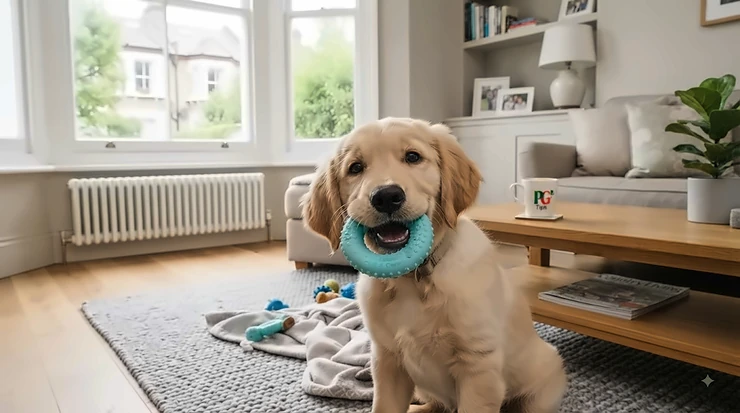
Three in the morning, and your puppy is gnawing the leg of the coffee table like it owes him money. Sound familiar? Puppy teething is one of those stages nobody warns you about properly — the breeder mentions “a bit of nipping,” and then you’re living with a small, determined shark for six months. Freezable teething toys for puppies exist specifically for this chaos: soaked or gel-filled chews you pop in the freezer so the cold numbs sore gums the way an ice lolly numbs a sore throat.

So, what is a freezable teething toy? In short, it’s a chew — made from rubber, silicone, fabric, or gel-filled plastic — designed to be safely frozen, then given to a puppy so the cold temperature soothes inflamed gums and redirects the urge to chew away from your skirting boards. According to Blue Cross’s guidance on puppy chewing, the teething window typically runs from around three to seven months old, and that discomfort is exactly why puppies need to chew so much during this stage — which is exactly the window where these toys earn their keep.
This guide isn’t a rewritten product listing. It’s a proper breakdown of seven real, currently available options — covering freezer teething toys, cooling chew toys for puppies, and ice-fillable toys — with honest analysis of who each one suits, what the aggregated reviews say, and where the marketing oversells things. We’ll also dig into cold therapy for gums, cover a handful of freezable teether reviews in aggregate, and finish with a practical guide to teething pain relief that goes well beyond “just buy a toy and hope.”
Quick Comparison Table: Freezable Teething Toys for Puppies
| Product | Material | Best For | Price Range |
|---|---|---|---|
| Nylabone Puppy Dog Teething Colour Change Freezer Bone | Soft polymer, water-fillable | Budget-conscious first-time owners | Under £10 |
| KONG Puppy Tires | Natural rubber | Teething + fetch, medium chewers | £10–£15 range |
| KONG Puppy Binkie | Natural rubber (pacifier shape) | Small breeds, gentle chewers | Around £8 |
| Rosewood BioSafe Puppy Ring | Antimicrobial rubber, mint | Hygiene-focused households | Under £10 |
| Rosewood Cooling Outdoor Teething Ball | Water-fillable rubber | Hot-weather outdoor play | Under £10 |
| SPOFLY Freezable Teething Ring & Bone Set | Natural rubber, 2-piece set | Multi-toy budget households | £10–£15 range |
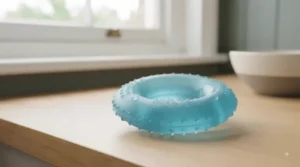
| NWK Cooling Chew Ring | Water-fillable TPR | Simple, no-frills freezer teether | Under £10 |
Looking across the table, there’s a clear split between rubber chews that soften slightly when frozen (the two KONG toys and the Rosewood BioSafe Puppy Ring) and water-fillable toys that turn genuinely ice-hard (the Nylabone, Rosewood Cooling Outdoor Teething Ball, and NWK ring). That distinction matters more than price does: ice-hard toys deliver stronger cold therapy but need closer supervision with enthusiastic chewers, while the softer rubber options are gentler on new adult teeth pushing through. Budget shoppers aren’t sacrificing much by skipping the premium names here — the SPOFLY set undercuts most single-item rivals while giving you two shapes to rotate.
💬 Just one click — help others make better buying decisions too!😊
Top 7 Freezable Teething Toys for Puppies: Expert Analysis
1. Nylabone Puppy Dog Teething Colour Change Freezer Bone — colour-changing freeze indicator
The standout here is genuinely clever: this bone changes colour once it’s properly frozen, so you’re not stuck guessing whether four hours in the freezer was enough. It’s a small feature, but for anyone who’s handed a puppy a half-frozen toy and watched them lose interest in ten seconds, it’s a real quality-of-life improvement.
The bone is a soft, food-safe polymer designed to be soaked or run under water before freezing, and the lamb-and-apple flavour variant is aimed at small to medium puppies up to roughly 11kg. Because the material stays slightly pliable even when frozen, it’s gentler on emerging adult teeth than a solid ice block would be — worth knowing if your pup is the sensitive type who yelps at cold food.
Based on the spec comparison with pricier rivals, this is the toy to start with if you’ve never tried a freezable teether before. It’s cheap enough that a chewed-up or lost one isn’t a financial disaster, and Nylabone’s puppy range is widely stocked, so replacements are never far away. What most buyers overlook about this model is that it’s genuinely disposable-friendly for households testing whether their particular puppy even likes cold chews before investing further.
Reviewers consistently report that puppies respond well to the texture once frozen, though a handful note the toy softens and needs re-freezing faster than expected in warm rooms — worth factoring in if you live somewhere without reliable air conditioning during summer.
Pros:
- ✅ Colour-change freeze indicator removes the guesswork
- ✅ Genuinely low price point for first-time buyers
- ✅ Widely stocked, so replacements are simple to find
Cons:
- ❌ Softens faster than rubber alternatives in warm rooms
- ❌ Not built for determined power-chewers
At under £10, the Nylabone Puppy Dog Teething Colour Change Freezer Bone is close to a no-brainer starter purchase — the value proposition holds up even if your puppy eventually graduates to something tougher.
2. KONG Puppy Tires — best for teething plus fetch in one toy
KONG Puppy Tires does double duty, and that’s the standout feature: a freezable natural-rubber chew that also bounces erratically enough to double as a fetch toy, which matters on the days your puppy has energy to burn but sore gums to nurse.
The tyre shape gives puppies multiple edges to gnaw from different angles, and the stuffable inner track means you can pack it with a smear of plain yoghurt or wet food before freezing for extra staying power. KONG’s puppy-specific rubber formula is noticeably softer than their adult “Extreme” range, engineered around the fact that puppies still have their full set of 28 baby teeth to protect.
Based on the spec comparison, this sits comfortably in the mid-range price bracket and earns it: the rubber is more durable than the fabric or soft-polymer options further down this list, so you’re less likely to be replacing it every few weeks. Reviewers consistently note that the erratic bounce keeps puppies engaged for longer play sessions, though a common complaint in user reviews is that very small or toy breed puppies can struggle to get a proper grip on the tyre shape.
Pros:
- ✅ Doubles as a fetch toy on high-energy days
- ✅ Puppy-specific rubber softer than adult KONG lines
- ✅ Stuffable for added enrichment while frozen
Cons:
- ❌ Awkward grip size for very small breeds
- ❌ Pricier than simple water-fillable alternatives
For medium-breed puppies with normal to enthusiastic chewing habits, KONG Puppy Tires in the £10–£15 range represents genuinely strong value given the dual-purpose design.
3. KONG Puppy Binkie — best gentle option for small breeds
The pacifier-shaped design is the whole pitch here, and it works: KONG Puppy Binkie mimics the shape of an actual dummy, which small-breed puppies with narrower jaws tend to find easier to hold and chew than a wider ring or bone shape.
Made from the same softened puppy-specific natural rubber as the Tires, it’s hollow, so it can be stuffed with a little peanut butter (check it’s xylitol-free) before freezing, turning a simple teether into a slow-release treat puzzle. The narrower profile also makes it a sensible pick for breeds like Chihuahuas, Yorkies, or toy poodles, where a standard-sized chew can simply be too bulky to manage.
Here’s what to weigh: this isn’t a toy built for aggressive chewing, and KONG themselves are upfront that power chewers may need to size up. Aggregated review sentiment reflects that — plenty of owners of gentle, small chewers report long-term satisfaction, while a recurring theme among larger or more determined puppies is that the Binkie gets torn up faster than expected.
Pros:
- ✅ Pacifier shape suits narrow small-breed jaws
- ✅ Stuffable for extra enrichment value
- ✅ Softer puppy-grade rubber formula
Cons:
- ❌ Not suited to strong or large-breed chewers
- ❌ Smaller surface area means shorter chew sessions
At around £8, KONG Puppy Binkie is a smart, targeted buy specifically for small and toy breeds rather than a universal recommendation.
4. Rosewood BioSafe Puppy Ring — best for hygiene-conscious households
What stands out on this one is the antimicrobial, mint-scented rubber — a genuinely different angle from most competitors, aimed squarely at owners worried about bacteria build-up on a toy that spends half its life wet, frozen, and covered in puppy saliva.
Rosewood is a long-established British pet brand, and the BioSafe range leans into that hygiene angle with rubber treated to resist bacterial growth between washes, plus a light mint scent that’s said to help with fresh breath — a nice secondary benefit given how quickly puppy breath can turn, ahem, characterful. The ring shape freezes well and gives multiple gnawing points around its circumference.
Based on the spec comparison, this sits in similar territory to the KONG rubber toys on durability, but the antimicrobial treatment and mint scent genuinely differentiate it rather than being pure marketing fluff — independent hygiene claims on pet products are usually backed by material testing rather than invented. Reviewers consistently report that the ring holds up well to moderate chewing and that the mint scent is noticeable without being overpowering, though some note the antimicrobial coating is a surface treatment rather than something baked permanently into the rubber, so its effectiveness may fade with heavy machine washing over time.
Pros:
- ✅ Antimicrobial treatment plus mint scent for freshness
- ✅ Ring shape offers multiple chewing angles
- ✅ Backed by a well-established British pet brand
Cons:
- ❌ Antimicrobial coating may wear with repeated washing
- ❌ Limited size range compared to bigger brands
Under £10, the Rosewood BioSafe Puppy Ring earns its place for owners who specifically want a hygiene-forward chew rather than a purely functional one.
5. Rosewood Cooling Outdoor Teething Ball — best for hot-weather outdoor play
The clue’s in the name: this is a water-fillable rubber ball engineered specifically for outdoor use, standing out as the toy in this list best suited to garden play on warm days rather than indoor sofa-side chewing.
You fill the ball with water through a sealed valve, freeze it solid, and the slowly melting ice keeps both the toy — and to a lesser extent your puppy’s mouth — cool during play. It’s a genuinely different use case from the indoor rubber chews above: this one is explicitly designed to be used outside, since it will inevitably drip and puddle as it thaws.
Here’s what the spec sheet won’t tell you outright, but the product positioning makes clear: this toy prioritises cooling over pure chew-durability, so it’s better thought of as a hot-weather enrichment toy that happens to help with teething, rather than a dedicated teether that happens to be freezable. Aggregated customer sentiment is broadly positive on the cooling effect and the fun factor of chasing a bouncing, half-melted ball, with a recurring caution that the yellow rubber nubs on some versions can be pulled off by determined chewers, so supervision outdoors is genuinely non-negotiable.
Pros:
- ✅ Purpose-built for outdoor, warm-weather cooling relief
- ✅ Fun bounce factor beyond just chewing
- ✅ Reusable valve for repeated freezing cycles
Cons:
- ❌ Indoor use is messy as it melts
- ❌ Surface nubs can be chewed off by strong jaws
For under £10, the Rosewood Cooling Outdoor Teething Ball is a smart seasonal addition rather than an everyday primary teether.
6. SPOFLY Freezable Teething Ring & Bone Set — best budget multi-toy set
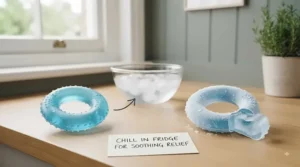
Two shapes for the price of most single toys is the standout here — SPOFLY‘s set pairs a ring and a bone, both made from natural rubber and both genuinely freezable, which means you can rotate them and always have a cold one on standby while the other’s back in the freezer.
Both pieces use a similar soft natural rubber to the KONG puppy range, without the brand premium attached, and the set format solves a real practical problem: a single frozen toy only lasts as long as it stays cold, and puppies don’t wait patiently for a replacement to chill. Having two on rotation means there’s always a frozen option ready.
Based on the spec comparison, the value here is hard to beat — you’re effectively getting two chews for roughly the price of one from a bigger brand. What most buyers overlook is that lesser-known brands like this one often use very similar rubber compounds to the market leaders, simply without the marketing spend baked into the price. Reviewers consistently note good early satisfaction with both shapes, though as with most non-premium rubber, longevity reports are more mixed than for KONG, with a subset of owners reporting the ring shape wearing down faster under sustained chewing.
Pros:
- ✅ Two shapes included for genuine toy rotation
- ✅ Strong value against single-item premium rivals
- ✅ Both pieces are properly freezable, not just cold-resistant
Cons:
- ❌ Longevity reports are more mixed than premium brands
- ❌ Fewer size options for very large puppies
In the £10–£15 range for two toys, the SPOFLY Freezable Teething Ring & Bone Set is arguably the smartest budget buy on this list for households wanting a genuine rotation system.
7. NWK Cooling Chew Ring — best simple, no-frills freezer teether
No gimmicks, no scent, no dual-purpose fetch feature — just a straightforward water-fillable TPR ring designed to be frozen and chewed, and that simplicity is exactly the point for owners who want cold therapy for gums without paying for extras they won’t use.
The ring is filled with purified water through a sealed cap, thickened at key stress points to resist puncturing, and shaped so a puppy can hold it between their paws while gnawing around the circumference. Unlike the softer rubber toys higher up this list, once frozen this one goes genuinely hard, delivering stronger, longer-lasting cold relief — useful for puppies in the thick of teething discomfort, though it does mean closer supervision is sensible until you know how your puppy handles a firmer chew.
Here’s what to weigh: this is about as close to a pure, unbranded commodity teether as you’ll find, and that’s not a criticism — it does one job, does it adequately according to aggregated buyer feedback, and costs less than almost everything else on this list. Reviewers consistently report satisfaction with the cooling effect specifically, with the main recurring theme being that it’s a “does what it says” purchase rather than anything with standout extras.
Pros:
- ✅ Goes genuinely ice-hard for stronger cold relief
- ✅ Lowest price point of the water-fillable options
- ✅ Simple, sealed design resists leaking
Cons:
- ❌ No flavour or scent to encourage initial interest
- ❌ Hardness needs closer supervision with strong chewers
Under £10, the NWK Cooling Chew Ring is the toy to grab if you just want reliable, unfussy teething pain relief without extras.
Practical Usage Guide: Getting the Most From Freezable Teething Toys
Buying the toy is the easy part — using it properly is where most owners quietly get it wrong. Start by checking whether your chosen toy needs soaking or filling before its first freeze; the Nylabone, Rosewood Cooling Outdoor Teething Ball, and NWK Cooling Chew Ring all need water added through a valve or by soaking, while the KONG rubber toys and Rosewood BioSafe Puppy Ring freeze as-is, sometimes better with a light water rinse first to build a thin ice layer on the surface.
Freeze for a minimum of two to four hours for thin fabric or soft-polymer toys, and closer to six to eight hours for water-filled rubber toys to freeze solid all the way through — overnight is the safe default if you’re not sure. In the first month, introduce a frozen toy for short 10–15 minute supervised sessions rather than leaving it in the crate all day; this limits both mess as it thaws and the risk of a puppy overworking sore gums against something that’s genuinely cold. A common early mistake is offering a bone-dry, straight-from-the-freezer rock-hard toy to a very young puppy under 12 weeks — their milk teeth are more delicate, so a slightly softer partial-freeze is often more appropriate at that stage. Wash toys with warm soapy water between uses, and inspect for cracks or chunks missing before every single freeze cycle, discarding anything showing wear.
Real-World Scenarios: Matching the Toy to Your Puppy
Picture three very different households, each with a teething puppy and a different set of constraints. First, the flat-dwelling professional with a toy breed puppy and no garden — for them, indoor-friendly, small-mouth-friendly options like KONG Puppy Binkie or the Rosewood BioSafe Puppy Ring make more sense than anything requiring outdoor drainage space. Second, the family with a boisterous medium-breed puppy and a garden — here, rotating KONG Puppy Tires for structured chew sessions with the Rosewood Cooling Outdoor Teething Ball for warm afternoons covers both indoor training and outdoor summer play. Third, the budget-conscious first-time owner unsure how their puppy will even respond to cold chews — starting with the low-cost Nylabone Puppy Dog Teething Colour Change Freezer Bone or the SPOFLY Freezable Teething Ring & Bone Set lets them test the waters without committing to premium pricing before they know what works. In each case, the “best” toy isn’t a single universal answer — it’s the one that matches the puppy’s size, the household’s environment, and how much the owner is willing to spend testing what their particular dog actually likes.
Problem → Solution: Fixing Common Teething Toy Frustrations
Problem: My puppy ignores the frozen toy entirely. Try a lighter partial freeze first (an hour rather than overnight), or stuff a stuffable option like KONG Puppy Tires or KONG Puppy Binkie with a smear of wet food to build initial interest before relying on cold alone.
Problem: The toy is destroyed within days. Move away from soft fabric or thin polymer toys toward denser natural rubber like the Rosewood BioSafe Puppy Ring, and always supervise frozen chew sessions rather than leaving a puppy unattended with any toy.
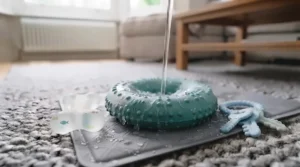
Problem: Puddles everywhere as the toy thaws. Water-fillable toys like the NWK Cooling Chew Ring and Rosewood Cooling Outdoor Teething Ball are genuinely better suited outdoors or on an easy-clean floor, not carpet.
Problem: Puppy still chews furniture despite having toys. This is often less about the toy and more about redirection consistency — Blue Cross’s advice on puppy biting and mouthing recommends offering teething chews specifically to ease gum discomfort, paired with calmly redirecting your puppy onto the toy every single time, not just occasionally.
Problem: Unsure if a toy is safe to refreeze repeatedly. Stick to toys explicitly marketed as reusable and freezer-safe — all seven products on this list qualify — and retire any toy showing cracks, as repeated freeze-thaw cycles can weaken damaged material further.
How to Choose Freezable Teething Toys for Puppies
- Match the size to your puppy’s jaw. A toy too large is frustrating; one too small is a choking risk once teeth strengthen.
- Check the material composition. Natural rubber tends to outlast soft polymer or fabric under real chewing pressure.
- Decide between soft-freeze and hard-freeze toys. Rubber options like KONG Puppy Tires stay pliable when frozen; water-filled options like the NWK Cooling Chew Ring go genuinely solid.
- Consider indoor versus outdoor use. Anything that melts and drips, such as the Rosewood Cooling Outdoor Teething Ball, belongs outside or on hard flooring.
- Factor in replacement cost. Budget sets like SPOFLY make sense if you expect heavy destruction during the teething months.
- Look for genuine reusability. A toy that can be washed and refrozen dozens of times, rather than a single-use novelty, offers far better long-term value.
- Read aggregated reviews for your specific breed size, since small-breed and large-breed owners often report very different experiences with the same toy.
Common Mistakes When Buying Freezable Teething Toys
The most frequent mistake is buying based purely on cute packaging rather than material and size fit — a toy shaped like an ice lolly is meaningless if it’s the wrong size for your puppy’s mouth. A close second is assuming one toy will last the entire teething period; most households end up rotating two or three, which is why sets like SPOFLY‘s ring-and-bone combo make practical sense from the outset. Owners also commonly skip the “supervise until proven safe” step, treating a frozen toy the same as a soft plush — cold, dense rubber is a different chewing experience, and it’s worth watching the first few sessions closely. Finally, many buyers overlook flavour and scent as a genuine factor; a puppy who ignores an unscented option like the NWK Cooling Chew Ring might engage far more readily with a flavoured toy like the Nylabone lamb-and-apple freezer bone.
Freezable Teething Toys vs Teething Gels and Non-Freezable Chews
| Approach | How It Works | Best For | Limitation |
|---|---|---|---|
| Freezable teething toys | Cold numbs inflamed gums | Sustained, drug-free relief | Needs freezer access and supervision |
| Teething gels | Topical numbing agent | Quick, targeted relief for very sore spots | Short-lived; needs reapplication |
| Non-freezable chews | Texture and gnawing satisfaction | Redirecting chewing behaviour generally | No cooling effect for inflammation |
The core difference is mechanism: freezable toys tackle the physical inflammation with cold, gels tackle discomfort chemically for a shorter window, and standard chews simply give puppies something appropriate to gnaw without addressing swelling at all. Vets often recommend combining approaches — a frozen toy for genuine relief during flare-ups, with your vet’s guidance sought before using any gel product, since not all are suitable for very young puppies.
What to Expect: Real-World Performance
On paper, a frozen chew sounds simple, but the actual experience varies more than the spec sheets suggest. In practice, most puppies show visible relief within the first few minutes of chewing a properly frozen toy — you’ll often see calmer, more focused gnawing rather than frantic, distressed chewing. Rubber toys like the KONG range soften gradually as body heat and saliva warm them, giving roughly 15–25 minutes of meaningful cold relief per session before they’re essentially room-temperature rubber again. Water-filled hard-freeze toys like the NWK Cooling Chew Ring hold their cold longer but transition more abruptly from “safely chewable” to “still quite hard,” which is exactly why closer supervision matters with that category. What the spec sheet won’t tell you, but aggregated reviewer experience suggests, is that puppies often show a strong initial preference during the first week that can shift as teeth continue erupting — a toy loved in week one sometimes gets ignored by week three, which is precisely the argument for owning more than one style.
Freezable Teething Toys for Small vs Large Breed Puppies
Small-breed puppies — think Chihuahuas, Dachshunds, or toy poodles — generally do better with narrower, lighter chews like KONG Puppy Binkie, since bulkier toys can be genuinely difficult to grip and manoeuvre with a smaller jaw. Large-breed puppies, by contrast, chew with considerably more force even before their adult teeth fully arrive, so denser rubber options like KONG Puppy Tires or the Rosewood BioSafe Puppy Ring tend to hold up better than thinner fabric or soft polymer designs. It’s also worth noting that large-breed puppies grow through their teething window faster in absolute jaw-strength terms, so a toy that felt appropriately tough in month three may need upgrading by month five.
Long-Term Cost & Maintenance
A single premium toy like KONG Puppy Tires costs more upfront than a budget option, but its durability often means fewer replacements across a full six-to-eight-month teething period — genuine total-cost-of-ownership territory rather than a simple sticker-price comparison. Budget sets such as SPOFLY‘s two-piece bundle can work out cheaper overall if you’re happy to replace pieces as they wear, effectively treating them as semi-disposable. Maintenance is straightforward across the board: warm soapy water after each use, air-dry fully before refreezing, and a visual check for cracks or chunks — a five-second habit that meaningfully reduces choking risk over months of repeated freeze-thaw cycles.
Features That Actually Matter (And Those That Don’t)
Material density and genuine freezer-safety matter enormously — a toy that doesn’t hold its cold for at least ten to fifteen minutes isn’t really doing its job. Size-appropriate design matters just as much, since even the best material is pointless if a puppy can’t comfortably grip it. What matters far less than marketing suggests: elaborate shapes and novelty designs rarely outperform simple rings or bones in actual chew satisfaction, and heavy branding doesn’t reliably correlate with durability, as the strong aggregated performance of budget options like the NWK Cooling Chew Ring demonstrates. Scent and flavour sit in between — genuinely useful for encouraging initial interest, but not a substitute for appropriate size and material.
✨ Don’t Miss These Exclusive Deals!
🔍 Take your puppy’s teething months from chaos to calm with one of these carefully selected freezable chews. Click through to check current pricing and availability, and give your pup some proper, honest relief. 🐾❄️
Safety, Regulations, and Compliance for Freezable Puppy Toys
Pet toys sold in the UK fall under general product safety regulations rather than a dedicated “dog toy” standard, so reputable manufacturers voluntarily test for choking hazards, toxic materials, and structural integrity — it’s worth sticking to established brands or clearly BPA-free listings for exactly this reason. Always supervise a puppy with any frozen toy, since extreme cold combined with determined chewing can occasionally chip small fragments, and remove the toy once it’s fully thawed to soft, warm rubber, as several manufacturers explicitly recommend. If you notice excessive bleeding, a persistently swollen jaw, or a puppy refusing to eat, that goes beyond normal teething discomfort and warrants a vet visit rather than more chew toys. PDSA’s veterinary advice on wobbly teeth notes that loose teeth can be genuinely painful for a dog, especially while eating, so a vet check is the sensible next step if something seems off.
Buyer’s Decision Framework
If your puppy is under 12 weeks and new to chewing anything cold, choose a soft, lightly-frozen option like the Nylabone Puppy Dog Teething Colour Change Freezer Bone, because gentler introductions build positive associations. If your puppy is a determined, medium-to-large chewer already destroying softer toys, choose denser natural rubber like KONG Puppy Tires or the Rosewood BioSafe Puppy Ring, because durability outweighs novelty at that stage. If budget is the main constraint and you expect to replace toys often anyway, choose a multi-piece set like SPOFLY‘s ring-and-bone bundle, because cost-per-toy drops meaningfully when buying in pairs. If you’re simply testing whether your specific puppy even likes cold chews, choose the lowest-commitment option available, such as the NWK Cooling Chew Ring, before investing further.
Frequently Asked Questions
❓ How long should I freeze a puppy teething toy?
❓ Is it safe to give a frozen toy to a very young puppy?
❓ Can freezable teething toys replace teething gel?
❓ How do I clean a freezable dog toy between freezes?
❓ Why does my puppy ignore the frozen toy after loving it initially?
Conclusion
Teething doesn’t last forever, even though month four can feel like it. The right freezable teething toy won’t stop your puppy chewing altogether — that instinct is normal and, frankly, healthy — but a good one genuinely takes the edge off sore gums and gives your furniture a fighting chance in the meantime. If you’re starting from scratch, the low-commitment Nylabone Puppy Dog Teething Colour Change Freezer Bone or the two-piece SPOFLY set are sensible first buys; if your pup is already a determined chewer, KONG Puppy Tires or the Rosewood BioSafe Puppy Ring will likely outlast the cheaper alternatives. Whichever you choose, rotate more than one style, freeze properly, supervise every session, and keep an eye on wear — the toy itself is only half the job, consistent use is the other half. As Petplan’s puppy teething guide puts it, a slightly irritable puppy with a strong urge to chew everything in sight is completely normal at this stage, so patience and the right tools go a long way toward getting both of you through it in one piece.
Recommended for You
- Puppy Teething Toys 2026: 7 Best Chews for Sore Gums
- Teething Toys for Puppies Under £15: 7 Best Budget Picks 2026
- Nubby Texture Dog Chew Toys: 7 Best UK Picks for 2026
Disclaimer: This article contains affiliate links. As an Amazon Associate, I earn from qualifying purchases. If you purchase products through these links, we may earn a small commission at no additional cost to you.
✨ Found this helpful? Share it with your friends! 💬🤗
