
In This Article
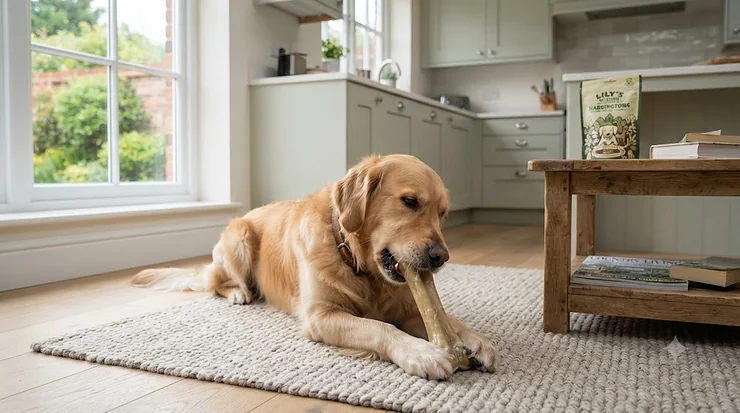
A Labrador with an unattended jaw and thirty free minutes is a genuinely dangerous combination for your skirting boards. Dental bones for large dogs exist to redirect that formidable chewing power somewhere useful — scraping plaque off molars instead of chair legs — but “large dog” and “dental chew” is a pairing that needs far more care than the marketing on most packets suggests. A chew sized for a 12kg spaniel won’t survive thirty seconds with a 40kg mastiff, and a chew tough enough for a committed power-chewer can, in the wrong circumstances, be tough enough to crack a tooth.
This guide covers seven real, currently available dental bones for large dogs, from budget daily sticks to heavy duty dental bones built for genuinely determined chewers, with honest analysis grounded in real product specs, veterinary guidance, and aggregated review sentiment rather than manufacturer copy. We’ll dig into jaw strength considerations, what actually makes a chew safe for a strong chewer, and how to build large breed dental care into a routine that doesn’t rely on the chew doing all the work. Along the way you’ll see which of our seven picks carry the Veterinary Oral Health Council seal, which are best treated as occasional heavy duty dental bones rather than daily fare, and where the genuine trade-offs lie between durability and dental safety.
Quick Comparison Table
| Chew | Type | VOHC Accepted | Daily or Occasional | Best For |
|---|---|---|---|---|
| Pedigree DentaStix Large | X-shaped daily stick | No | Daily | Budget daily routine |
| Greenies Large Dental Treats | Edible dental chew | Yes | Daily | Vet-recommended all-rounder |
| WHIMZEES Alligator Large | Vegetarian dental chew | Yes | Daily | Grain-free, sensitive dogs |
| ProDen PlaqueOff Dental Bones | Compressed dental bone | No | Daily | Targeted tartar control |
| Nylabone Power Chew Textured Bone | Nylon chew bone | No | Occasional (non-edible) | Strong chewer safety |
| Virbac VeggieDent Fr3sh | Plant-based dental chew | Yes | Daily | Fresh breath focus |
| Himalayan-style Yak Milk Chew (Large) | Hard natural dairy chew | No | Occasional | Long-lasting natural option |
Looking at the spread here, the split between daily edible dental chews and occasional heavy duty dental bones matters more than most buyers assume — daily chews like the Pedigree DentaStix Large and Greenies Large Dental Treats are formulated to be soft enough to bend around teeth and fully digestible, while genuinely hard products like the Nylabone Power Chew Textured Bone and Himalayan-style Yak Milk Chew are built for long-lasting large breed dental chew bones sessions rather than daily consumption. Note that only three of our seven — the Greenies Large Dental Treats, WHIMZEES Alligator Large, and Virbac VeggieDent Fr3sh — currently carry the VOHC seal, which is worth knowing if that accreditation matters to your buying decision.
💬 Just one click — help others make better buying decisions too!😊
Top 7 Dental Bones for Large Dogs: Expert Analysis
1. Pedigree DentaStix Large — best budget daily dental routine
The Pedigree DentaStix Large heading undersells quite how ubiquitous this product is in UK households — it’s formulated specifically for dogs over 25kg and built around a distinctive X-shape designed to flex around teeth as your dog chews, rather than snapping into hard shards. Based on the spec comparison with rival daily sticks, the flexible texture matters more than it first appears: a chew that bends rather than shatters under bite pressure is inherently gentler on molars than a rigid alternative. The manufacturer states the combination of texture and active ingredients is clinically proven to reduce tartar build-up by up to 80% with daily use, alongside a green tea extract and eucalyptus oil blend aimed at freshening breath.
Reviewers consistently note visible improvements in breath and tartar over a few weeks of daily use, with long-term owners frequently mentioning it as part of an ongoing routine their vet has commented favourably on at check-ups. What most buyers overlook about DentaStix specifically is that, at 124kcal per stick for the large size, it’s worth factoring into your dog’s daily calorie allowance rather than treating it as a freebie on top of normal meals.
Pros:
- ✅ Flexible X-shape reduces risk versus rigid hard chews
- ✅ Formulated specifically for dogs over 25kg
- ✅ Widely available with strong long-term review history
Cons:
- ❌ Not VOHC accredited, unlike some rivals
- ❌ Calorie content needs factoring into daily food allowance
Multipacks typically sit in the £20-£40 range at the time of research depending on pack size, making this one of the most accessible ways to build daily dental care into a large dog’s routine.

2. Greenies Large Dental Treats — best vet-recommended all-rounder
The Greenies Large Dental Treats range carries genuine clinical weight behind it: it holds the Veterinary Oral Health Council Seal of Acceptance, meaning it has met the VOHC’s pre-set criteria for effectively controlling plaque and tartar rather than simply claiming to. Sized specifically for dogs between 50-100lbs (roughly 22-45kg), the chew’s unique ridged texture is designed to clean down to the gumline as your dog works through it, rather than being swallowed largely intact. On paper this means the mechanical cleaning action is doing real, tested work rather than being a byproduct of an otherwise ordinary treat.
Here’s what to weigh: Greenies are rawhide-free, bendable rather than brittle, and fully digestible, which the spec sheet won’t tell you outright but user reports suggest matters enormously for dogs who’ve had digestive trouble with less digestible chews in the past. Aggregated review sentiment consistently praises the noticeable breath improvement and the reassurance of a vet-recommended, VOHC-accepted product, with occasional comments about dogs that gulp rather than chew needing closer supervision during their first few tries.
Pros:
- ✅ VOHC Seal of Acceptance backed by clinical testing
- ✅ Bendable, fully digestible, rawhide-free formula
- ✅ Sized specifically for large dogs 50-100lbs
Cons:
- ❌ Premium pricing versus basic daily sticks
- ❌ Fast eaters need supervision on first few uses
Expect to pay somewhere in the £15-£25 range for a standard pack at the time of research, positioning it as a solid mid-range, clinically-backed choice.
3. WHIMZEES Alligator Large — best grain-free option for sensitive dogs
The WHIMZEES Alligator Large takes a different formulation route entirely: a vegetarian, grain-free dental chew built from just six primary ingredients, aimed squarely at dogs with food sensitivities or allergies who react poorly to meat-based dental treats. Sized for dogs roughly 25-60lbs, its distinctive knobbled alligator shape isn’t just playful branding — the hollow shapes and grooves are engineered to let teeth grip and work into smaller gaps between teeth as your dog chews, which the spec sheet describes but doesn’t fully explain the real benefit of: a longer, more thorough mechanical cleaning action per chew than a flat stick shape typically achieves.
Based on the spec comparison with meat-based rivals, WHIMZEES also holds VOHC accreditation, giving it the same clinical backing as Greenies while suiting a different dietary profile. Reviewers consistently note the firmer texture promotes a satisfyingly long chew time without the calorie density of some meat-based alternatives, though what most buyers overlook is that the potato starch base means it’s genuinely a low-fat option worth considering for large dogs already managing their weight.
Pros:
- ✅ Grain-free, vegetarian formula suits sensitive dogs
- ✅ VOHC accredited with proven plaque and tartar control
- ✅ Distinctive shape encourages a longer, thorough chew
Cons:
- ❌ Firmer texture needs supervision with very fast chewers
- ❌ Less familiar flavour profile than meat-based rivals
Pricing for a standard bag typically falls in the £10-£20 range, making it a genuinely accessible way to add allergy-friendly large breed dental care to the routine.
4. ProDen PlaqueOff Dental Bones — best targeted tartar control for medium-large dogs
The ProDen PlaqueOff Dental Bones range is positioned specifically at medium and large dogs, and its selling point is a compressed, denser bone shape aimed at sustained tartar and plaque removal alongside a broader bad-breath focus than some daily stick alternatives. What most buyers overlook about compressed dental bones like this one is that the denser texture typically means a longer chew session per bone than a softer flexible stick, which can be a genuine advantage for dogs who finish a standard DentaStix in under a minute and are left looking for something else to gnaw.
Based on the spec comparison with softer alternatives, the trade-off is exactly what you’d expect: a firmer chew does more mechanical scraping work but needs closer matching to your dog’s chewing style than a flexible option. Aggregated feedback for compressed dental bones in this category tends to highlight noticeably fresher breath as the standout benefit, with occasional notes about the denser texture being unsuitable for dogs recovering from recent dental work or with existing tooth sensitivity — worth checking with your vet if that applies.
Pros:
- ✅ Denser texture extends chew time versus soft sticks
- ✅ Marketed specifically for medium and large dogs
- ✅ Strong focus on bad breath alongside tartar control
Cons:
- ❌ Not VOHC accredited
- ❌ Firmer texture unsuitable for dogs with dental sensitivity
Pack pricing typically sits in the £10-£18 range for a set of two, at the time of research, putting it firmly in accessible mid-range territory.
5. Nylabone Power Chew Textured Bone — best for strong chewer safety among non-edible options
The Nylabone Power Chew Textured Bone moves into genuinely different territory: a non-edible nylon chew bone built specifically for aggressive chewers, sized for large and giant dogs up to and beyond 50lbs. Here’s what to weigh carefully: this is not a daily edible dental chew like the first four entries, and treating it as one would be a mistake. It’s a durable nylon bone with a textured surface designed to help scrape plaque during genuinely tough chewing sessions, aimed at satisfying the chewing drive of dogs who demolish softer edible chews in seconds.
On paper this means significant durability, but strong chewer safety with any hard nylon product deserves honest scrutiny rather than blanket reassurance: nylon bones sit at the harder end of the hardness spectrum, and veterinary dental guidance generally recommends checking that any chew has enough “give” that you can dent it with a fingernail, which rigid nylon typically fails. Reviewers consistently note genuinely impressive longevity with committed large-breed chewers, alongside occasional reports of dogs wearing down tooth enamel over prolonged, repeated use — a trade-off worth discussing with your vet if your dog is a daily nylon-bone chewer rather than an occasional one.
Pros:
- ✅ Genuinely long-lasting with strong large-breed chewers
- ✅ Textured surface adds mechanical plaque-scraping action
- ✅ Sized specifically for large and giant breed jaw strength
Cons:
- ❌ Rigid material carries real tooth-wear and fracture risk
- ❌ Not edible or digestible, unlike our other six picks
Pricing typically sits in the £8-£15 range per bone, and given the safety caveats above, it’s best positioned as an occasional supervised chew rather than a daily fixture.

6. Virbac VeggieDent Fr3sh — best for dogs needing a fresh-breath focus
The Virbac VeggieDent Fr3sh range brings a slightly different clinical pedigree to the table: developed by Virbac, an animal health company with a strong veterinary heritage, and carrying VOHC accreditation for its plaque and tartar control claims. Based on the spec comparison with the other daily chews here, VeggieDent’s plant-based formulation and distinctive ridged shape are engineered around a specific mechanical action as your dog chews through the layered structure, designed to maximise contact time between the chew’s texture and the tooth surface.
What most buyers overlook about VeggieDent specifically is the “Fr3sh” naming isn’t just marketing — the formulation includes ingredients aimed specifically at breath freshness alongside the core plaque and tartar function, making it a sensible pick for owners whose primary complaint is doggy breath rather than visible tartar. Reviewers consistently note the noticeable breath improvement within the first couple of weeks of daily use, with the general consensus tracking closely with the broader VOHC-accepted category: effective as part of a routine, not a substitute for one.
Pros:
- ✅ VOHC accredited plaque and tartar control
- ✅ Plant-based formulation with breath-freshness focus
- ✅ Backed by veterinary animal health manufacturer
Cons:
- ❌ Less widely stocked in UK stores than Pedigree or Greenies
- ❌ Premium pricing relative to basic daily sticks
Expect a price in the £15-£28 range depending on pack size at the time of research, a fair mid-range cost for a VOHC-accredited, breath-focused daily chew.
7. Himalayan-style Yak Milk Chew (Large) — best long-lasting natural option, used with caution
The Himalayan-style Yak Milk Chew (Large) closes out the list at the natural end of the spectrum: a hard, dried dairy-based chew made from yak and cow milk, salt, and lime juice, traditionally used as a genuinely long-lasting large breed dental chew bones option for committed chewers. On paper this means hours of chewing satisfaction from a single chew, and reviewers consistently note it’s among the longest-lasting natural options available for large, powerful chewers who work through softer treats in minutes.
Here’s what to weigh honestly, though: yak chews sit firmly in the “very hard” category that veterinary dental guidance flags as a genuine tooth-fracture risk for strong chewers, precisely because of how hard they become once fully dried. This isn’t a reason to avoid it outright, but it is a reason to treat it as an occasional, closely supervised chew for dogs without existing dental sensitivity, rather than reaching for it as a daily habit. Many owners also microwave the chew briefly once it’s been gnawed down to a small, swallowable nub, turning it into a puffed, digestible treat rather than leaving a choking-hazard-sized remnant lying around.
Pros:
- ✅ Exceptionally long-lasting for powerful, committed chewers
- ✅ Natural, simple ingredient list with no artificial additives
- ✅ Microwaveable end-stage reduces choking hazard risk
Cons:
- ❌ Very hard texture carries genuine tooth-fracture risk
- ❌ Not suitable as a daily chew for most large dogs
Pricing for a large yak chew typically sits in the £8-£14 range per piece at the time of research — reasonable value given how long a single chew can last, provided it’s used with appropriate supervision.
Practical Usage Guide: Introducing and Managing Dental Bones Safely
Getting dental bones for large dogs right isn’t just about picking the correct product — it’s about the habits that surround it. Start by introducing any new chew under direct supervision for the first several sessions, watching specifically for how quickly your dog works through it and whether they’re chewing thoroughly or attempting to gulp large pieces whole. For the first 30 days with a new large breed dental chew bones product, the most common mistake is assuming a chew rated for large dogs is automatically safe for your specific dog — chewing style varies enormously even within the same weight bracket, and a determined power-chewer needs closer monitoring than a dog who nibbles leisurely over twenty minutes.
Maintenance from there is straightforward: always provide fresh water alongside any dental chew, since dry, hard chewing increases thirst, and store chews in a cool, dry place to prevent them softening or spoiling between uses. A common optimisation trick most product listings won’t mention is rotating between a soft daily chew like the Pedigree DentaStix Large and an occasional harder option like the Himalayan-style Yak Milk Chew, which keeps daily dental maintenance consistent while still satisfying a strong chewer’s need for a longer, more intensive session once or twice a week. Always remove and discard any chew once it’s worn down to a size your dog could swallow whole.
Real-World Scenarios: Matching the Right Chew to Your Dog
Picture three genuinely different large dogs, because the “best” dental bone question only makes sense once you know who’s actually chewing. First, a food-sensitive Labrador with a history of digestive upset on rich treats — for them, the WHIMZEES Alligator Large or Virbac VeggieDent Fr3sh make more sense than a meat-heavy alternative, since both are formulated with digestibility and sensitivity in mind while still carrying VOHC accreditation. Second, a laid-back senior Rottweiler on a daily routine who chews steadily rather than aggressively — the Pedigree DentaStix Large or Greenies Large Dental Treats suit that pace well, offering consistent daily plaque control without the harder textures aimed at power-chewers.
Third, a young, powerful German Shepherd who demolishes a standard dental stick in under a minute and is clearly after a longer chewing session — here the Nylabone Power Chew Textured Bone or an occasional, supervised Himalayan-style Yak Milk Chew genuinely make more sense, provided strong chewer safety practices are followed and sessions stay supervised. Budget, frequency of use, and your individual dog’s chewing intensity should drive the decision far more than package size claims alone.
Heavy Duty Dental Bones: What “Heavy Duty” Actually Means
The phrase heavy duty dental bones gets used loosely across pet product listings, so it’s worth defining properly before you buy. In genuine terms, a heavy duty product is built from denser, more resistant material specifically to withstand sustained, forceful chewing from large or giant breeds without breaking apart quickly — think the Nylabone Power Chew Textured Bone or Himalayan-style Yak Milk Chew rather than a soft flexible stick. That extra durability is precisely why these products need more careful handling: the same hardness that makes them long-lasting also makes them harder than a dog’s own teeth in some cases, which is the mechanism behind fracture risk discussed throughout veterinary dental guidance.
A genuinely well-chosen heavy duty chew matches durability to your specific dog’s jaw strength and chewing style, not simply to their weight bracket on the packaging. Two dogs of identical size can have dramatically different bite force and chewing intensity, so heavy duty should be read as “built to withstand serious chewing” rather than “automatically appropriate for every large dog.”
Large Breed Dental Chew Bones: Sizing and Fit Guide
Sizing large breed dental chew bones correctly is less intuitive than it looks, because weight brackets on packaging are a starting point rather than a guarantee of fit. A chew genuinely sized for your dog should be large enough that it cannot be swallowed whole or lodged in the back of the throat, yet manageable enough that your dog can hold and manipulate it comfortably during a chewing session. Products like the Greenies Large Dental Treats and Pedigree DentaStix Large publish specific weight ranges (roughly 22-45kg for Greenies Large, 25kg+ for DentaStix Large) precisely because undersized chews for a big dog are a genuine choking hazard.
Beyond weight, consider your dog’s jaw width and typical chewing behaviour: a dog who chews from the side, working a treat along their back molars, generally handles a wider range of shapes safely than a dog who tends to position chews at the front of the mouth and bite down directly, where a rigid or oversized chew concentrates more force on fewer teeth. If you’re ever uncertain whether a specific product’s size range suits your dog, your vet can offer guidance tailored to your dog’s individual mouth and chewing style.
Tough Dental Bones for Big Dogs: Durability vs Dental Safety
The phrase tough dental bones for big dogs captures a genuine tension worth addressing directly: toughness and dental safety aren’t automatically aligned, and in some cases actively pull in opposite directions. A tougher, more resistant chew survives longer against a powerful chewer, but that same resistance is precisely the property that concerns veterinary dentists when a chew is harder than tooth enamel itself. Among our seven picks, the Nylabone Power Chew Textured Bone and Himalayan-style Yak Milk Chew sit closest to that tension point, offering genuine toughness for big dogs alongside a real need for supervision and moderation.
The safer route to durability, where possible, is choosing products engineered specifically to flex or compress under bite pressure rather than resist it outright — the Pedigree DentaStix Large‘s bendable X-shape and ProDen PlaqueOff Dental Bones‘ compressed structure both aim for exactly this. If your big dog is a genuinely powerful chewer who needs longer sessions, rotating a flexible daily chew with an occasional, closely supervised harder option tends to balance durability against dental safety more sensibly than relying on hardness alone.
Strong Chewer Safety: What Every Owner Should Know
Strong chewer safety deserves its own dedicated section because the stakes are genuinely higher for powerful chewers than for average ones — a determined large or giant breed dog can generate enough bite force to fracture products that would comfortably last a more moderate chewer for weeks. According to guidance discussed by veterinary dental specialists, a widely used practical test is whether you can indent a chew’s surface with your own fingernail; if you can’t, there’s a real possibility the material is harder than your dog’s teeth, raising fracture risk regardless of how the product is marketed.
For genuinely strong chewers, always supervise chewing sessions rather than leaving a hard chew unattended, inspect chews regularly for cracks or sharp broken edges, and remove any chew once it’s worn down small enough to be swallowed. If your strong chewer regularly destroys or finishes chews unusually fast, it’s worth discussing chew selection directly with your vet, since some breeds and individual dogs simply exert more bite force than a given product is designed to withstand — the RSPCA’s advice on safe dog toys and chews is a useful general starting point for choosing appropriately durable, non-toxic options.
Jaw Strength Considerations by Breed and Individual Dog
Jaw strength considerations are frequently reduced to a single weight number on packaging, but the reality is more nuanced. Breed plays a genuine role — dogs bred historically for guarding, herding livestock, or working roles often carry proportionally stronger jaw musculature than breeds selected primarily for companionship, even at similar body weights. But individual variation within a breed is just as significant: age, dental health, past chewing habits, and simple personality all affect how forcefully a given dog bites down on a chew.
What most buyers overlook about jaw strength considerations is that they cut both ways: a chew too soft for an unusually powerful chewer gets demolished and swallowed in dangerously large pieces almost immediately, while a chew too hard for an average large dog risks the fracture concerns covered above. The safest approach is starting any new dental bone with close supervision, observing how your specific dog handles it in the first few sessions, and adjusting hardness up or down from there rather than assuming the packaging’s weight bracket alone tells the full story.
✨ Don’t Miss These Exclusive Deals!
🔍 Take your large dog’s dental routine to the next level with one of the seven chews above. Click through to check current pricing and availability, and build a daily habit your dog will genuinely look forward to. 🦴
Common Mistakes When Buying Dental Bones for Large Dogs
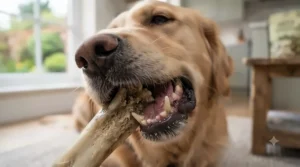
The single most common mistake is buying based on size alone rather than matching hardness to individual chewing style, leaving genuinely strong chewers under-challenged by soft daily sticks or, worse, average chewers over-matched against genuinely hard heavy duty dental bones. A close second is treating occasional-use products like nylon bones or yak chews as daily staples, when they’re designed and safest as periodic, supervised sessions rather than everyday fare. Buyers also frequently skip checking VOHC accreditation entirely, missing a straightforward signal of clinically tested effectiveness that’s freely available to check before purchase.
A subtler mistake is ignoring calorie content across a week of daily dental chews, particularly with meat-flavoured sticks that can add up meaningfully for a large dog already on a calorie-controlled diet. Finally, many owners leave chews unsupervised once their dog seems settled and familiar with a product, when wear and tear over time — cracks, sharp edges, or a chew worn down to a swallowable size — is exactly when risk increases rather than decreases.
Benefits vs Traditional Alternatives: Dental Bones vs Brushing & Professional Cleaning
| Feature | Dental Bones | Toothbrushing | Professional Vet Cleaning |
|---|---|---|---|
| Effort required | Low, daily habit | Higher, needs training | None, but needs a vet visit |
| Effectiveness | Moderate, mechanical action | Highest, if done consistently | Highest, removes existing tartar |
| Cost over time | Ongoing, moderate | Low, one-off brush and paste | Higher, periodic anaesthetic procedure |
| Dog cooperation needed | Minimal | Significant, needs training | Sedation, minimal cooperation |
| Best For | Daily maintenance between cleanings | Gold-standard prevention | Removing existing tartar buildup |
The comparison above makes the relationship between these three approaches fairly clear: dental bones like the Greenies Large Dental Treats or WHIMZEES Alligator Large are a genuinely useful daily maintenance layer, but they work best alongside, not instead of, regular brushing and periodic professional attention. Toothbrushing remains the most effective single intervention when done consistently, though plenty of dogs resist it, which is exactly where a reliable daily chew earns its place. Professional cleaning under anaesthetic is the only way to remove tartar that’s already hardened onto the tooth surface, meaning even the best dental bone routine doesn’t replace regular veterinary dental checks.
Long-Term Cost & Maintenance: Total Cost of Dental Care
Sticker price per pack is only part of the real cost of maintaining a large dog’s dental health, and it’s worth running the comparison properly. A budget daily option like the Pedigree DentaStix Large wins on upfront price per stick but, used daily over a year, adds up to a meaningful ongoing cost that’s worth budgeting for rather than treating as incidental. VOHC-accredited options like Greenies Large Dental Treats and Virbac VeggieDent Fr3sh cost more per pack but come with clinical backing that may reduce the frequency or severity of professional dental interventions down the line — a genuine long-term saving worth weighing against the higher upfront spend.
Occasional heavy duty options like the Nylabone Power Chew Textured Bone or Himalayan-style Yak Milk Chew work out relatively economical per session given how long a single chew lasts, but the real cost consideration there is risk management: any dental treatment for a fractured tooth, should the worst happen, dwarfs the cost of the chew itself many times over. Building a consistent daily routine around a softer, clinically-tested option, supplemented occasionally by a supervised harder chew, tends to offer the best long-term balance of cost, effectiveness, and safety for most large dogs.
Large Breed Dental Care: Building a Complete Routine
Large breed dental care works best as a layered routine rather than reliance on any single product, however good. PDSA’s veterinary guidance generally advises against feeding bones and other very hard chews, since they can cause slab fractures — where a large chunk of tooth breaks off and exposes the sensitive inside of the tooth — a genuinely useful principle to keep in mind even when reaching for the toughest of our seven picks. Their broader guidance on canine dental disease is available via PDSA’s dental disease resource, and it’s worth a read for any large dog owner building a dental routine from scratch.
A well-rounded routine typically combines daily brushing where your dog tolerates it, a daily VOHC-accepted chew such as the Greenies Large Dental Treats or WHIMZEES Alligator Large, and periodic veterinary dental checks to catch problems before they escalate. Blue Cross’s guidance notes that dental chews should be the correct size for your dog, since undersized chews risk choking while overly hard chews risk fracturing teeth — a balance this whole guide has tried to reflect throughout. You can read more via Blue Cross’s dog dental care advice. Finally, checking whether a product carries the VOHC Seal of Acceptance remains one of the fastest, most reliable ways to separate genuinely tested dental products from chews that simply claim dental benefits without backing them up.

Frequently Asked Questions
❓ Are dental bones safe for all large dogs?
❓ How often should I give my dog a dental bone?
❓ What's the safest chew for a strong chewer large dog?
❓ Can dental chews replace brushing my dog's teeth?
❓ How do I know if a dental bone is too hard for my dog's teeth?
Conclusion
Choosing the right dental bones for large dogs ultimately comes down to matching hardness and format to your specific dog’s chewing style, not simply their weight on a packaging chart. Budget-conscious owners building a straightforward daily routine are well served by the Pedigree DentaStix Large, while anyone prioritising clinical backing should look closely at the VOHC-accredited Greenies Large Dental Treats, WHIMZEES Alligator Large, or Virbac VeggieDent Fr3sh depending on dietary needs. Dogs needing more targeted tartar control might suit the ProDen PlaqueOff Dental Bones, while genuinely powerful chewers should approach the Nylabone Power Chew Textured Bone and Himalayan-style Yak Milk Chew as occasional, closely supervised sessions rather than daily staples.
Whichever you choose, the safest large breed dental care routine treats any single chew as one layer among several — daily maintenance, supervision matched to your dog’s individual jaw strength, and regular veterinary dental checks together, rather than any one product carrying the whole job alone. Get that balance right, and you’ll have a dog with genuinely healthier teeth and considerably less interest in your furniture.
Recommended for You
- Dental Chew Toy vs Dental Stick for Dogs: 7 Winners for 2026
- 7 Best Dog Teeth Cleaning Toys UK 2026: Vet-Backed Picks
- Dental Chew Toys for Dogs: 7 Vet-Reviewed Picks for 2026
Disclaimer: This article contains affiliate links. As an Amazon Associate, I earn from qualifying purchases. If you purchase products through these links, we may earn a small commission at no additional cost to you.
✨ Found this helpful? Share it with your friends! 💬🤗
