In This Article
Here’s a fact that stops most dog owners in their tracks: periodontal disease is the single most commonly diagnosed condition in UK dogs, edging out even ear infections and obesity, according to a large-scale VetCompass study from the Royal Veterinary College. One in eight dogs seen by a UK vet in any given year is dealing with it. Quietly. Painfully. Usually without you noticing until the breath turns eye-watering.
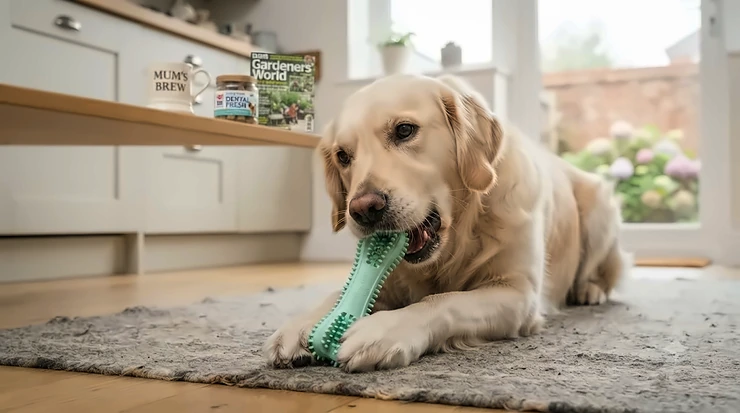
That’s where dog teeth cleaning toys earn their keep. They’re not a magic substitute for a toothbrush — nothing genuinely is — but the right toy, used consistently, turns your dog’s natural urge to gnaw into something that actually fights plaque instead of just destroying your slippers. The trouble is that “dental toy” has become one of the most overused labels in pet retail. Slap a few ridges on a rubber stick, call it a teeth cleaning toy, and watch it sell. Some of these products genuinely help. Others do roughly as much for your dog’s gums as chewing a stick off the pavement.
This guide cuts through that noise. We’ve researched seven real, currently available products — spanning rubber, nylon, bamboo-fibre and toothbrush-style designs — and paired every recommendation with honest analysis of what the material and texture actually do in a dog’s mouth, not just what the packaging promises. We’ll also walk through how to choose sensibly, the mistakes that trip up even careful owners, and where teeth cleaning chew toys for dogs fit alongside proper brushing rather than instead of it. If you’ve been wondering whether a dog toothbrush alternative toy can genuinely move the needle on your dog’s oral health, you’re in the right place.
What Are Dog Teeth Cleaning Toys?
Dog teeth cleaning toys are chew products engineered with textures, ridges, nubs or bristle-like grooves that create mechanical friction against the tooth surface as a dog gnaws, helping to disrupt soft plaque before it hardens into tartar. Unlike edible dental chews, most are reusable and made from rubber, nylon or fibre blends built to withstand repeated chewing sessions.
They work on a simple mechanical principle: the texture rubs against enamel and along the gumline in roughly the same way bristles do, while the act of chewing stimulates saliva flow, which helps rinse the mouth naturally. What they don’t do is replace brushing’s targeted, angled contact at the gumline — the one place dental disease actually begins.
Quick Comparison Table
| Product | Best For | Material | Price Range |
|---|---|---|---|
| KONG Dental with Rope | All-round moderate chewers | Natural rubber + rope | £8-£15 range |
| Nylabone Power Chew Dental Arch Bone | Aggressive/power chewers | Nylon | £6-£12 range |
| Benebone Dental Chew | Solo chewers wanting real flavour | Nylon | £10-£18 range |
| Bamboodles T-Bone | Budget-conscious owners | Bamboo fibre + nylon | Under £8 |
| HETOO Toothbrush Toy | Small dogs, toothpaste pairing | Natural rubber | Under £8 |
| Nylabone FlexiChew Dental Bone | Seniors & gentle chewers | Gumabone (flexible) | £5-£10 range |
| WOOF Bite n’ Brush | Motivation-led brushing | Rubber + refill treats | £12-£20 range (plus refills) |
Looking across the table, there’s a clear split between rigid nylon chews built for dogs that would happily gnaw through a table leg, and softer rubber or Gumabone options designed for gentler mouths, puppies and seniors. The HETOO Toothbrush Toy and Bamboodles T-Bone anchor the budget end, while the WOOF Bite n’ Brush sits at the top once you factor in ongoing refill costs. No single toy suits every dog, which is exactly why the material and texture matter more than the marketing copy on the packet.
💬 Just one click — help others make better buying decisions too!😊
The Top 7 Dog Teeth Cleaning Toys: Expert Analysis
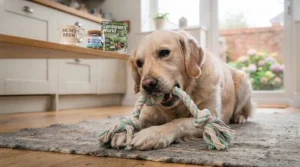
1. KONG Dental with Rope — Denta-Ridges plus a floss-style rope centre
The standout here is genuinely clever: a hollow, ridged rubber body threaded through the middle with a woven rope, so the toy tackles tooth surfaces and interdental gaps in one product. It’s built from KONG’s Classic natural red rubber, and the Denta-Ridges are moulded rather than glued on, so they don’t peel away with use the way some cheaper textured coatings do.
The ridge pattern is deep enough to create real friction against the tooth surface without being so aggressive that it risks wearing enamel, and the hollow core means you can stuff it with a smear of dog-safe paste to extend engagement time. This makes it a solid pick for the average moderate chewer — a Labrador, spaniel or terrier-type dog that chews with enthusiasm but doesn’t habitually destroy toys in minutes. Reviewers consistently report that the rope wears through faster than the rubber body itself, and some flag that determined chewers can work small rope fragments loose, which is worth supervising for.
Pros:
- ✅ Durable natural rubber holds its ridge texture well
- ✅ Stuffable centre extends chewing motivation
- ✅ Rope adds interdental flossing action
Cons:
- ❌ Rope frays and detaches faster than the rubber body
- ❌ Not rated for the most extreme power chewers
Priced in the £8-£15 range depending on size, it’s a fair mid-range buy for dogs that need more engagement than a plain rubber toy but don’t need the reinforced toughness of a nylon chew.
2. Nylabone Power Chew Dental Arch Bone — multi-level nubs built for relentless jaws
This is nylon, full stop, and that single material choice defines everything about how it performs. The arch shape is moulded with multiple tiers of nubs and ridges rather than one uniform texture, which theoretically means more tooth-surface contact points per chew cycle than a smooth-sided bone.
For dogs that treat softer toys as a five-minute snack, the appeal is obvious: nylon resists puncture and tearing in a way rubber and bamboo-fibre blends simply can’t. Reviewers consistently praise how long it survives with genuinely tough chewers, and the bacon or chicken flavour infused through the material (not just coated on) keeps interest going well past the novelty stage. What most buyers overlook is the flip side of that same durability: rigid nylon is hard enough that UK veterinary dental specialists routinely warn it can occasionally contribute to slab fractures in dogs that chew with real force, particularly on the large carnassial teeth. The general rule vets suggest is that if you can’t dent a chew with your own fingernail, it may be too hard for daily unsupervised use.
Pros:
- ✅ Exceptional durability for genuine power chewers
- ✅ Multi-level texture increases tooth-surface contact
- ✅ Flavour infused throughout, not just coated
Cons:
- ❌ Rigid material carries a small fracture risk in forceful chewers
- ❌ Too hard for puppies, seniors or gentle chewers
At around £6-£12 depending on size, it’s genuinely good value for the durability on offer, provided you match it to the right dog and keep an eye on wear.
3. Benebone Dental Chew — a paw-friendly wishbone shape with real bacon flavour
Benebone’s twist on the nylon-chew category is ergonomic rather than textural: the curved wishbone shape is specifically designed so a dog can pin it between their paws and chew from an angle, rather than the toy rolling away across the kitchen floor. It’s a small design detail, but based on the spec comparison with straight-bone nylon chews, it noticeably changes how confidently smaller or less coordinated dogs can hold onto it.
The material is nylon flavoured with genuine bacon rather than an artificial coating, which the brand states keeps the scent contained enough that owners don’t notice it in the house even though dogs clearly do. What the spec sheet won’t tell you, but the manufacturer’s own guidance does, is that most dogs will visibly wear a Benebone down within about a month of regular use, and the brand explicitly recommends replacing it once you see larger chunks starting to lift rather than fine flaking.
Pros:
- ✅ Ergonomic paw-grip shape suits solo chewing
- ✅ Genuine bacon flavour infused, not coated
- ✅ No off-putting odour for humans in the house
Cons:
- ❌ Same hardness-related risk profile as other rigid nylon chews
- ❌ Premium pricing compared with own-brand nylon alternatives
Expect to pay in the £10-£18 range, which sits at the pricier end of the nylon category — the trade-off is largely about shape and flavour quality rather than any dramatic dental performance difference.
4. Bamboodles T-Bone — a British bamboo-fibre blend designed to flake, not shard
Bamboodles takes a different materials approach: roughly 30% bamboo fibre blended with 70% nylon-type polymer, engineered so that as the toy wears, it flakes into small rice-sized pieces rather than splintering into sharp shards the way some natural wood chews can. The T-bone shape borrows the same paw-grip logic as Benebone, giving dogs a stable base to gnaw from.
On paper this means a genuinely interesting middle ground between the extremes of soft rubber and rigid nylon — textured enough to create friction, forgiving enough to reduce splinter risk. In practice, aggregated review sentiment is more mixed than the marketing suggests: plenty of owners report good, long-lasting chewing sessions, but a meaningful number of reviews — including from owners of cocker spaniels and dachshunds — describe chunks coming away within 15 to 20 minutes with a determined chewer. Reviewers consistently note this inconsistency, which is worth flagging honestly rather than glossing over, since it clearly depends heavily on individual chewing style.
Pros:
- ✅ Budget-friendly UK-available brand
- ✅ Flaking design reduces sharp-splinter risk versus wood
- ✅ Grippable T-shape works well for paws
Cons:
- ❌ Durability is inconsistent across dogs, per real reviews
- ❌ Not a reliable choice for determined power chewers
At under £8 for most sizes, it’s an accessible entry point — just go in with realistic expectations if your dog chews hard.
5. HETOO Dog Toothbrush Toy — a genuine toothbrush shape built for pairing with paste
Of everything on this list, the HETOO Toothbrush Toy looks least like a chew toy and most like an actual toothbrush, and that’s deliberate. The natural rubber body is moulded into a stick or rod shape with bristle-like serrations along the surface and a small opening designed for squeezing dog toothpaste into the grooves before handing it over.
Here’s what most buyers overlook: this is arguably the closest a passive toy gets to replicating an actual brushing motion, because it pairs mechanical friction from the serrated rubber with the chemical action of whatever paste you load into it — commonly an enzymatic formula. Reviewers consistently note it works particularly well for small-breed dogs with crowded, overlapping teeth, where a conventional toothbrush is awkward to angle. The manufacturer’s own guidance recommends limiting sessions to a few minutes at a time, since prolonged unsupervised chewing on a soft rubber toy risks gum strain rather than benefit.
Pros:
- ✅ Designed specifically to pair with dog toothpaste
- ✅ Gentle rubber suits puppies and small breeds
- ✅ Genuinely budget-friendly entry point
Cons:
- ❌ Softer rubber won’t survive determined power chewers
- ❌ Best used in short, supervised sessions rather than left out all day
Typically priced under £8, it’s one of the most accessible ways to add a real mechanical-plus-chemical cleaning step without committing to a full brushing routine from day one.
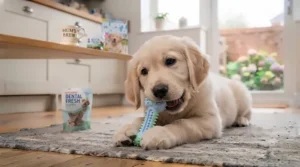
6. Nylabone FlexiChew Dental Bone — a gentler Gumabone texture for softer mouths
Where the Power Chew range is all rigidity, Nylabone’s Moderate Chew FlexiChew line swaps to a bouncier, more flexible “Gumabone” material with rounded dental nubs rather than sharp-edged ridges. It’s explicitly marketed for moderate chewers, and the brand recommends it especially for senior dogs whose teeth and gums may be more sensitive than a younger dog’s.
Based on the spec comparison with the nylon options above, the trade-off is straightforward: you lose some raw durability, but you gain a texture that’s genuinely gentler on ageing gums and less likely to contribute to the kind of forceful-impact dental injuries associated with very hard chews. It’s also freezable, which vets often suggest can soothe inflamed gums in older dogs or teething puppies. Reviewers consistently describe it as a favourite among senior-dog owners specifically, while noting — unsurprisingly, given the material — that it doesn’t last long with a genuinely tough chewer.
Pros:
- ✅ Gentle on sensitive or ageing gums
- ✅ Freezable for soothing relief
- ✅ Rounded nubs massage rather than scrape
Cons:
- ❌ Not built to survive aggressive chewers
- ❌ Softer material wears down faster than nylon
At £5-£10 depending on size, it’s a sensible, low-risk choice specifically for the audience it’s aimed at, rather than a general-purpose toy.
7. WOOF Bite n’ Brush — an interactive toothbrush toy that dispenses purpose-formulated treats
The WOOF Bite n’ Brush approaches the whole category from a different angle: instead of relying purely on texture to motivate chewing, it’s a V-shaped hollow toy lined with bristled grooves that holds a refill treat inside. The dog has to work at the bristled slots to reach the treat, and in doing so, the bristles brush against the tooth surface from multiple angles.
What most buyers overlook about products like this is that the “brushing” happens almost incidentally — it’s really a motivation-engineering exercise, using a treat reward to keep a dog chewing on a textured surface for longer than a passive toy would achieve. The brand states its refill treats are formulated with parsley, green tea extract and peppermint oil, ingredients commonly associated with breath-freshening and oral-care support. It’s worth noting honestly that independent research the brand itself references — a Rutgers University comparison of enzymatic toothpaste, dental chews, bully sticks and raw marrow bones — found that all of those product categories reduced oral bacteria to a broadly similar degree, which is a useful reminder that consistency of use tends to matter more than any single product’s specific formula.
Pros:
- ✅ Bristled grooves add genuine multi-angle scrubbing
- ✅ Treat motivation extends chewing time meaningfully
- ✅ Refill ingredients targeted specifically at oral care
Cons:
- ❌ Ongoing refill purchases add to the real cost
- ❌ Limited benefit if you stop buying replacement treats
Expect around £12-£20 for the toy itself, with refills sold separately — factor that recurring cost in before you commit, because it changes the value equation considerably.
How to Choose Dog Teeth Cleaning Toys
Choosing well comes down to matching material and texture to your specific dog, not chasing whichever toy has the most five-star reviews. Here’s the reasoning, step by step:
- Assess your dog’s chewing style first. A dog that reduces toys to confetti in ten minutes needs a fundamentally different material to one that gently gnaws for twenty minutes and loses interest.
- Apply the fingernail test to hard chews. If you press your nail into a nylon or hard rubber toy and can’t leave a mark, treat it with caution for daily unsupervised use, especially with strong-jawed breeds.
- Match texture to age and dental health. Puppies losing baby teeth and seniors with worn enamel generally do better with flexible Gumabone or softer rubber than rigid nylon.
- Check the size against your dog’s weight, not just breed stereotype. An undersized toy is both a choking hazard and less effective at generating proper chewing pressure across the back teeth.
- Look for genuine texture depth, not surface decoration. Ridges and nubs need real height to create friction — shallow, purely cosmetic texturing does very little.
- Consider whether stuffability or treat-motivation will get more actual use out of it. A toy your dog ignores after day two provides zero dental benefit, however well-engineered it is.
- Budget for replacement, not just the initial purchase. Even durable toys need swapping out once texture wears smooth or damage appears.
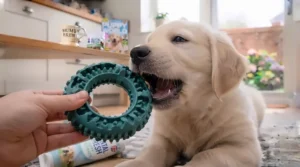
Practical Usage Guide: Getting the Most From Every Chew
Buying the right toy is only half the job — how you introduce and maintain it matters just as much for actual dental benefit.
First 30 days: Introduce any new dental toy gradually rather than leaving it out unsupervised from day one. Watch how your dog handles it for the first few sessions so you can judge whether the hardness suits their chewing style before committing to daily use. For stuffable toys like the KONG Dental with Rope, start with a small smear of something dog-safe rather than a full load, so the toy still requires genuine chewing rather than becoming a five-second treat delivery.
Ongoing maintenance: Rubber and Gumabone toys should be washed regularly — warm water and mild washing-up liquid, rinsed thoroughly — since saliva and food residue collect in ridges and grooves precisely where you want cleaning to happen, not bacterial build-up. Inspect nylon chews like the Nylabone Power Chew Dental Arch Bone or Benebone Dental Chew weekly for chunks, cracks or flattened texture, and retire them the moment wear looks structural rather than cosmetic.
Common early mistakes: Leaving a new, unfamiliar toy with a dog while unsupervised; assuming bigger dogs automatically need harder chews rather than considering age and dental condition; and forgetting that a toy sitting untouched in the toy box does nothing for plaque control, however good the ridges look.
Real-World Scenarios: Matching the Toy to Your Dog
The energetic young Labrador who destroys everything: A confident, powerful chewer under two years old needs genuine durability first. The Nylabone Power Chew Dental Arch Bone or Benebone Dental Chew suit this profile well, provided teeth are checked periodically and the fingernail-hardness rule is respected.
The senior Cavalier with sensitive gums: Small breeds — Cavaliers especially — carry a notably higher risk of periodontal disease according to peer-reviewed VetCompass breed data, and older dogs often have thinning enamel. The Nylabone FlexiChew Dental Bone, used fresh from the freezer, offers gentle relief alongside genuine plaque friction without risking further dental trauma.
The nervous rescue dog who won’t tolerate a toothbrush near their mouth: For dogs where hands-on brushing simply isn’t achievable yet, the HETOO Toothbrush Toy paired with a smear of enzymatic paste offers a lower-stress bridge — no restraint required, just self-directed chewing that still delivers some chemical and mechanical cleaning action.
Common Mistakes When Buying Dog Teeth Cleaning Toys
The most frequent error is choosing purely on price or cute packaging rather than material suitability — a bargain nylon bone is no bargain if it’s too hard for your dog’s jaw strength and ends up causing a dental injury requiring a costly vet visit. A close second is buying one toy and expecting it to solve dental hygiene single-handedly; even the best dental toy is a supplement to a routine, not a replacement for one. Owners also commonly underestimate wear speed, leaving a flattened, texture-worn toy in rotation long after it’s stopped doing anything useful. Finally, sizing mistakes are common — an oversized toy a small dog can’t properly close their jaw around, or an undersized one that’s swallowed whole rather than chewed, both undermine the entire point of a dental toy.
Teeth Cleaning Chew Toys vs Dog Toothbrush Alternative Toys
| Factor | Teeth Cleaning Chew Toys | Dog Toothbrush Alternative Toys | Best For |
|---|---|---|---|
| Cleaning mechanism | Passive friction from chewing | Active application with paste | Overlapping/crowded teeth |
| Supervision needed | Moderate | Higher (short sessions) | Puppies and small breeds |
| Ease of daily use | Very easy, self-directed | Requires paste top-up each time | Busy households |
| Example product | Nylabone Power Chew Dental Arch Bone | HETOO Toothbrush Toy | Depends on dog’s chewing style |
The distinction matters more than it first appears. Standard teeth cleaning chew toys for dogs rely entirely on passive friction generated by chewing pressure, which works well but can’t target the gumline with any precision. Genuine dog toothbrush alternative toys, like the HETOO design, are built to be actively loaded with paste before each session, layering chemical cleaning on top of the mechanical action — closer in principle to brushing, even if the technique still falls short of a proper toothbrush angled under the gumline.
Plaque Removal Toys: Separating Fact From Marketing
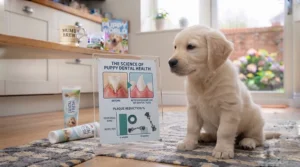
Not every toy marketed for plaque removal delivers meaningfully on that promise, and the difference usually comes down to texture depth and consistency of use rather than clever branding. A ridge or nub needs real height and a firm edge to physically disturb the thin biofilm of plaque before it mineralises into tartar within roughly one to two days of forming — features that actually matter include moulded (not printed or coated) texture, and a material firm enough to resist smoothing out within weeks. Features that matter far less than marketing suggests include flavour variety, colour, and squeak functions, which influence how enthusiastically a dog chews but do nothing directly for plaque itself.
FAQ
❓ Do teeth cleaning toys really work for dogs?
❓ How often should I give my dog a dental chew toy?
❓ Can puppies use dog teeth cleaning toys?
❓ What's better, a dental chew toy or dental sticks?
❓ Are enzymatic toothpaste and dental toys used together safe?
Conclusion
Dog teeth cleaning toys sit in an unusual spot in the pet product world: genuinely useful when chosen well, largely pointless when chosen on packaging alone. The seven products covered here span the realistic range a UK owner will actually encounter — from the rigid, long-lasting nylon of the Nylabone Power Chew Dental Arch Bone and Benebone Dental Chew, through the gentler middle ground of the KONG Dental with Rope and Bamboodles T-Bone, to the more specialised HETOO Toothbrush Toy, Nylabone FlexiChew Dental Bone and WOOF Bite n’ Brush.
None of them, alone, will undo dental disease that’s already taken hold, and none genuinely replace a proper brushing routine — but used consistently, matched sensibly to your dog’s age, size and chewing strength, they meaningfully reduce the daily plaque burden that leads to the kind of periodontal disease affecting one in eight UK dogs every single year. Pick based on how your dog actually chews, not how the toy photographs, keep an eye on wear, and treat every toy on this list as one useful layer in a broader dental care routine rather than the whole solution.
✨ Ready to Protect Your Dog’s Smile?
🔍 Browse the full range on Amazon today and find the dental toy that truly fits your dog’s chewing style, size and age — a small purchase now that could save considerably on dental bills down the line.
Recommended for You
- Dental Chew Toys for Dogs: 7 Vet-Reviewed Picks for 2026
- 7 Best Dental Chew Balls for Dogs in 2026: Honest UK Guide
- Dental Chew Toys Under £10: 7 Brilliant Budget Picks (2026)
Disclaimer: This article contains affiliate links. As an Amazon Associate, I earn from qualifying purchases. If you purchase products through these links, we may earn a small commission at no additional cost to you.
✨ Found this helpful? Share it with your friends! 💬🤗
