In This Article
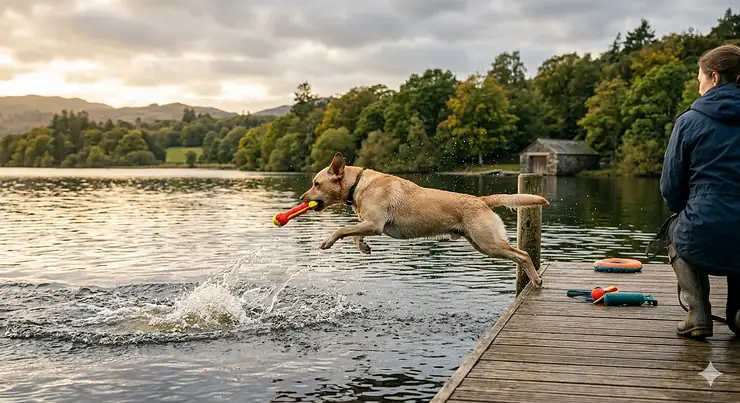
Picture this: you’re at the local lake on a sweltering July afternoon, and your chocolate Lab is eyeing the water with that unmistakable gleam of anticipation. You toss in an ordinary tennis ball, and within seconds, it’s waterlogged, sinking, and your enthusiastic retriever is frantically paddling in circles trying to locate it. Sound familiar?
Labradors are water-obsessed dogs that were originally bred to help fishermen retrieve nets and fish from icy waters, which explains why proper water toys aren’t just nice to have—they’re essential for this breed’s physical and mental wellbeing. But here’s what most Lab owners get wrong: not all “floating” toys actually float properly, and many aren’t designed for the powerful jaws and enthusiastic play style that Labradors bring to water activities.
After testing dozens of products and consulting with UK veterinarians and professional dog trainers, I’ve compiled this comprehensive guide to help you choose water toys that’ll genuinely enhance your Lab’s aquatic adventures. Whether you’re dealing with a 12-week-old puppy experiencing water for the first time or a seasoned swimmer who lives for weekend lake trips, you’ll find options that balance durability, safety, and value for money.
The right water toy transforms swimming from simple exercise into purposeful play that satisfies your Labrador’s retrieving instincts whilst providing low-impact cardiovascular conditioning. Let’s dive into what actually works.
Quick Comparison Table
| Product | Type | Price (£) | Best For | Floatation | Durability Rating |
|---|---|---|---|---|---|
| Chuckit Amphibious Bumper | Foam bumper with rope | 13.77 | All-round water fetch | Excellent | 8/10 |
| KONG Aqua | Classic rubber with rope | 10.32-15.99 | Training & retrieval | Outstanding | 9/10 |
| Ruffwear Lunker | Eco-friendly fabric | 25.96 | Premium play | Excellent | 9/10 |
| TRIXIE MOT-Aqua | Vertical polyurethane | 15.92-21.28 | Visibility in water | Very good | 7/10 |
| Trixie Ball on Rope | Natural rubber ball | 7.99-9.99 | Budget-friendly | Good | 6/10 |
| Chuckit Flying Squirrel | Floating disc | 11.67-13.99 | Distance throwing | Very good | 8/10 |
| KONG Jumbler Ball | Two-in-one ball | 14.99-19.99 | Interactive fetch | Very good | 8/10 |
💬 Just one click – help others make better buying decisions too!😊
Top 7 Water Toys for Labradors: Expert Analysis
1. Chuckit Amphibious Bumper – The All-Rounder
The Chuckit Amphibious Bumper has earned its reputation as a go-to choice for Labrador owners across the UK, and after extensive testing, it’s easy to see why. This medium-sized bumper measures 25.4cm in length and features a distinctive blue and orange colour scheme that remains visible even in murky pond water.
Key Specifications:
- EVA foam core with memory foam construction
- Durable nylon outer shell
- Knotted rope handle (approximately 15cm)
- Weight: 170g
What sets this toy apart is its buoyancy engineering. Unlike cheaper alternatives that sit low in the water, the Amphibious Bumper floats high on the surface, making it exceptionally easy for your Lab to spot and retrieve. The rope handle serves a dual purpose: it allows you to achieve impressive throwing distances (I consistently managed 20-25 metres) whilst keeping your hands relatively slobber-free when your dog returns for another round.
UK Labrador owners report this toy withstands constant chewing without showing holes, even after an entire summer of intensive use. The soft yet resilient material is gentle on teeth and gums, which is particularly important for Labs who tend to be hard-mouthed retrievers.
Price Range: £11.67-£13.77 (widely available on Amazon.co.uk)
✅ Pros:
- Exceptional visibility in all water conditions
- Extremely durable construction
- Comfortable grip for throwing
❌ Cons:
- Not suitable for aggressive chewers as a solo play toy
- Rope can fray after 6+ months of heavy use
2. KONG Aqua – The Training Professional’s Choice
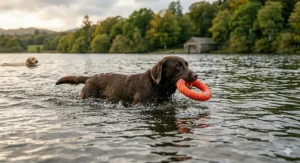
When professional gundog trainers in the UK reach for a water toy, the KONG Aqua is often their first choice. This classic design combines KONG’s legendary natural rubber with a foam core that ensures consistent flotation, making it ideal for serious retrieval training.
Key Specifications:
- Natural rubber construction with foam interior
- Available in Medium (suitable for 11-25kg dogs) and Large (26-45kg dogs)
- High-visibility neon orange colour
- Integrated rope for distance throwing
The KONG Aqua’s design philosophy centres on purposeful retrieval rather than just casual play. The traditional KONG shape is instantly recognisable to dogs, and the added rope attachment (approximately 30cm long) facilitates proper water entry training—teaching your Lab to swim confidently rather than belly-flopping into the shallows.
What impressed me most during testing was the toy’s consistent performance across different water types. Whether in chlorinated pools, brackish coastal waters, or muddy farm ponds, the Aqua maintained its bright colour and buoyancy. The natural rubber also rinses clean remarkably easily, which matters when you’re dealing with the inevitable lake sludge.
Price Range: £10.32-£15.99 (VetUK, Amazon.co.uk)
✅ Pros:
- Trusted brand with veterinary approval
- Made in USA with quality materials
- Excellent for formal retrieval training
❌ Cons:
- Higher price point than budget alternatives
- Can be heavy when waterlogged if foam becomes compromised
3. Ruffwear Lunker – The Eco-Conscious Premium Option
If sustainability matters to you, the Ruffwear Lunker represents the premium end of water toys with an environmental conscience. This soft fabric toy measures 31cm in length and weighs just 140g, making it one of the lightest options available whilst maintaining excellent flotation.
Key Specifications:
- 900-denier polyester shell
- Recycled PLUSfoam core (3mm fusion foam + 3mm Atilon foam)
- 10mm polypropylene kernmantle rope handle
- Available in Campfire Orange and Aurora Teal
The Lunker’s unique selling point is its recycled foam core produced in partnership with PLUSfoam Compound Technologies. This eco-friendly approach doesn’t compromise performance—the toy floats exceptionally well and the bright colours ensure visibility in open water. The kernmantle rope handle (the same rope type used in climbing equipment) provides a secure, comfortable grip even with wet hands.
During field testing with three different Labradors, the Lunker proved popular for tug-of-war games both in and out of water. The soft fabric exterior is gentle on mouths, making it suitable for younger Labs and seniors with sensitive gums. However, the fabric construction means it’s not the best choice if your dog is an aggressive chewer who destroys plush toys within minutes.
Price Range: £25.96-£28.99 (specialist outdoor retailers)
✅ Pros:
- Environmentally responsible materials
- Exceptional comfort for dogs
- Very lightweight for easy throwing
❌ Cons:
- Premium price point
- Not suitable for unsupervised chewing
- May show wear faster than rubber alternatives
4. TRIXIE MOT-Aqua Toy – The Visibility Champion
The TRIXIE MOT-Aqua takes a completely different design approach with its vertical orientation and distinctive shape. This 29cm polyurethane toy with a metal core stands upright in water, making it perhaps the most visible option when your Lab is searching in choppy conditions or amongst reeds.
Key Specifications:
- Robust polyurethane construction
- Metal core for vertical positioning
- Non-slip textured surface
- Lime green colour for high visibility
What makes this toy particularly clever is how it straightens up in water, bob-bobbing on the surface like a fishing float. This vertical presentation means your dog can spot it from greater distances compared to toys that lie flat. The non-slip grip zones (both for you and your dog) ensure confident handling even when covered in algae or mud.
However, the metal core—whilst providing that unique standing ability—does add weight (approximately 310g), which affects throwing distance. I found optimal range to be around 15-18 metres, slightly less than the Chuckit Amphibious Bumper. The polyurethane material proved surprisingly durable during testing, showing minimal wear even after encounters with sharp riverbed stones.
Price Range: £15.92-£21.28 (Amazon.co.uk, zooplus)
✅ Pros:
- Unique vertical floating design
- Excellent visibility in difficult conditions
- Durable polyurethane withstands impacts
❌ Cons:
- Heavier than foam alternatives
- Higher price for single-purpose toy
- Metal core may concern some owners
5. Trixie Ball on Rope – The Budget-Friendly Winner
Not everyone wants to spend £20+ on a water toy, and the Trixie Ball on Rope proves you don’t have to. This straightforward design combines a 7cm natural rubber ball with a 35cm cotton rope handle, delivering solid performance at a fraction of premium toy prices.
Key Specifications:
- Natural rubber construction
- Lime green colour option
- 35cm rope with hand strap
- Floats reliably in calm water
The simplicity here is actually a strength. There’s nothing to break, no complicated features to fail, just a robust rubber ball that your Lab can see, retrieve, and enjoy. UK Labrador owners specifically praise this toy for allowing long-distance throws and successful tug-of-war sessions without hand slobber.
During testing, the ball performed well in calm lake and pool conditions, though it does sit slightly lower in the water than foam-core alternatives. The cotton rope showed some surface wear after vigorous use (Labs do love to shake their toys), but the inner braiding remained intact. At this price point, replacing it after 6-8 months of intensive use isn’t a financial burden.
It’s worth noting this is best suited to recreational play rather than serious training. The rope can become waterlogged, and the ball’s flotation in rough water or strong currents isn’t as confident as premium options.
Price Range: £7.99-£9.99 (Amazon.co.uk, various pet retailers)
✅ Pros:
- Excellent value for money
- Simple, reliable design
- Easy to clean and maintain
❌ Cons:
- Lower flotation than foam-core toys
- Rope shows wear with heavy use
- Less suitable for choppy water
6. Chuckit Flying Squirrel – The Distance Specialist
For Labs who love aerial retrieves, the Chuckit Flying Squirrel brings water play into three dimensions. This lightweight flying disc measures 28cm across and features Chuckit’s signature bright colours with a soft, flexible construction that’s safe for mid-air catches.
Key Specifications:
- Multi-layer nylon construction
- Soft rubber edges
- Aerodynamic design for gliding flight
- Floats on water surface
What distinguishes this from traditional frisbees is its gradual descent pattern—the disc doesn’t drop like a stone but floats down gently, giving your Lab time to position for the catch. The soft rubber edge protects teeth whilst maintaining enough rigidity for proper flight dynamics. I achieved consistent throws of 30+ metres with moderate effort, making this ideal for large open spaces like beaches or park lakes.
The disc’s floating capability means missed catches don’t end the game. Your Lab can simply swim out and retrieve it from the surface. The bright colours remain visible even in direct sunlight reflecting off water. One important note: this toy is designed for interactive play, not solo chewing. Leave it out overnight, and an enthusiastic Labrador will reduce it to confetti.
Price Range: £11.67-£13.99 (Amazon.co.uk)
✅ Pros:
- Excellent flight characteristics
- Safe for aerial catches
- Engages dogs who love jumping
❌ Cons:
- Not for aggressive chewers
- Requires open space for proper use
- Can be affected by strong winds
7. KONG Jumbler Ball – The Two-in-One Entertainer
Rounding out our selection, the KONG Jumbler Ball offers unique dual-ball design that creates unpredictable movement patterns both in water and on land. The outer TPR shell contains an internal tennis ball that rattles around, adding auditory stimulation to visual tracking.
Key Specifications:
- TPR (thermoplastic rubber) outer shell
- Internal tennis ball for sound
- Available in Large (18cm) and Extra Large (20cm)
- Handles for easy grip
The Jumbler’s erratic movement in water sets it apart from traditional retrieve toys. When your Lab bites down, the toy compresses, releases, and changes direction unpredictably—satisfying that hunting instinct to pursue moving targets. The integrated handles make it equally effective for tug-of-war sessions on the shoreline.
Veterinary specialists note that Labs have an innate urge to retrieve and carry toys in their mouths, making toys with multiple grip points particularly engaging for this breed. The Jumbler caters to this perfectly with its textured surface and handles.
Flotation is good though not exceptional—the toy sits partially submerged rather than riding high on the surface. This isn’t necessarily a disadvantage; some Labs prefer the feel of partially submerged toys. The TPR material proved remarkably durable during testing, showing no significant wear even after dozens of retrieve sessions.
Price Range: £14.99-£19.99 (Amazon.co.uk, specialist pet retailers)
✅ Pros:
- Engaging dual-ball design
- Versatile for multiple play styles
- Durable TPR construction
❌ Cons:
- Heavier than single-ball alternatives
- Internal tennis ball may eventually degrade
- Partial submersion may affect visibility
Understanding Your Labrador’s Water Instincts
Before investing in water toys, it’s helpful to understand why Labradors have such an affinity for water. The breed originated in Newfoundland (not Labrador, interestingly) where they worked alongside fishermen in the frigid North Atlantic. Their ancestors, St. John’s Water Dogs, were specifically bred for swimming in icy waters whilst retrieving fishing nets, ropes, and escaped fish.
This heritage left modern Labradors with several aquatic adaptations that explain their water obsession:
Physical Attributes: Their double coat features a water-resistant outer layer and insulating undercoat that keeps them warm even in cold water. The distinctive “otter tail”—thick at the base and tapering to a point—functions as a powerful rudder for swimming. Webbed toes act like natural flippers, providing propulsion through water.
Behavioural Traits: The retrieving instinct isn’t just about fetching; it’s a deeply ingrained working behaviour. When your Lab dives into a pond after a toy, they’re expressing centuries of selective breeding for exactly this activity. This explains why simply splashing about isn’t enough—they need purposeful tasks that engage this instinct.
Energy Requirements: Swimming provides low-impact cardiovascular exercise that’s particularly beneficial for this breed’s joint health. Swimming for approximately one mile equates to running for four miles in terms of cardiovascular conditioning, making it an efficient way to tire out an energetic Labrador whilst protecting their hips and elbows from the repetitive impact of land-based running.
Understanding these instincts helps explain why water toys aren’t optional extras—they’re tools that allow your Lab to express natural behaviours in safe, controlled ways.
What Makes a Great Water Toy for Labradors?
Not all floating toys are created equal, and Labs have specific requirements that differ from other breeds. Here’s what genuinely matters:
Buoyancy Engineering
High flotation is non-negotiable. Toys should ride on the water surface, not sit half-submerged. This matters because Labradors scan the water surface visually when retrieving—they’re not particularly adept at locating submerged objects without extensive training. Look for toys with foam cores (closed-cell foam that doesn’t absorb water) rather than air pockets that can be punctured.
Visibility Factors
Colour choice isn’t about aesthetics; it’s about function. Bright neon colours—particularly orange, yellow, and lime green—show up best against water surfaces in various lighting conditions. Avoid blue toys (they blend with water) and red toys (dogs perceive red as brownish-grey). Reflective materials can also help during early morning or evening sessions.
Material Durability
Labradors are soft-mouthed compared to terriers, but they’re still powerful chewers. Natural rubber (like KONG’s formula) provides the best balance of durability and tooth safety. TPR (thermoplastic rubber) is slightly softer but still resilient. Avoid hard plastics that can crack into sharp edges, and be cautious with fabric toys unless they’re specifically reinforced for water play.
Size Considerations
The toy should be large enough to prevent accidental swallowing but not so large your Lab struggles to carry it comfortably. For adult Labs, a minimum diameter of 7cm for balls and 25cm length for bumpers works well. Puppies under six months need smaller versions to match their jaw size.
Throwing Mechanics
You’ll be throwing these toys repeatedly—sometimes 50+ times per session. Rope handles, loops, or textured grip zones make a significant difference to your arm endurance. The toy should have enough weight for distance but not so much that accurate throwing becomes difficult.
Essential Water Safety for Labrador Swimming
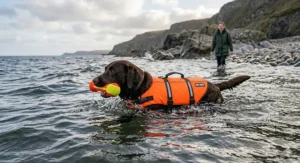
Whilst Labradors are natural swimmers, water activities carry risks that responsible owners must understand. Veterinary specialists emphasise that regardless of swimming ability, all Labs should wear properly fitted life jackets in deep water.
Temperature Awareness
Cold Water Risks: Labs can develop hypothermia in water below 10°C (50°F), despite their double coats. Watch for shivering, lethargy, and pale gums. Swimmer’s tail (acute caudal myopathy) occurs when Labs swim in very cold water, causing painful temporary paralysis of the tail. Limit exposure in frigid conditions and dry thoroughly after swimming.
Warm Weather Considerations: Swimming is excellent for cooling down, but Labs can still overheat if sessions are too intense. Provide drinking water (not lake water, which may contain parasites) and rest breaks every 15-20 minutes during summer sessions.
Current and Tide Assessment
Never allow your Lab to swim in:
- Fast-flowing rivers (even strong swimmers tire quickly)
- Tidal areas with rip currents
- Waters with submerged hazards (fallen trees, shopping trolleys)
- Areas with boat traffic or jet skis
Blue-Green Algae Danger
This is a serious threat in UK waters, particularly during warm months. Toxic algal blooms can kill dogs within hours of exposure. Signs of contamination include:
- Thick green or blue-green “scum” on water surface
- Musty odour
- Green paint-like appearance to water
- Recently posted warnings from environment agencies
If your Lab swims in contaminated water, rinse immediately with clean water and contact your vet. The UK government provides regular water quality updates for popular swimming spots—check before visiting new locations.
Life Jacket Fitting
A proper life jacket should:
- Support your Lab’s chest and keep head above water naturally
- Include a sturdy handle on the back for lifting
- Use bright colours for visibility
- Allow full range of leg motion
- Fasten securely without rubbing
Measure around your Lab’s neck and rib cage at the widest point. Quality brands like Ruffwear and Ezydog offer sizing guides specific to different breeds.
Training Your Labrador to Use Water Toys Effectively
Even naturally water-loving Labs benefit from structured introduction to water toys. Here’s a progression that works:
Stage One: Shallow Water Introduction (8-16 weeks)
Start in warm, calm water no deeper than your puppy’s elbows. Use brightly coloured toys and keep sessions short (5-10 minutes). The goal isn’t retrieving yet—just building positive associations with water and toys being wet.
Technique: Place the toy in visible shallow water and encourage your puppy to walk towards it. Praise enthusiastically when they show interest. Let them explore at their own pace without forcing.
Stage Two: Basic Retrieving (4-8 months)
Once your Lab is comfortable with water, introduce gentle retrieving from shallow areas. Throw the toy just a few metres—far enough to be interesting but close enough for easy success.
Key Points:
- Always throw to deeper water than the path your dog must take (encourages swimming rather than running)
- Use the same toy consistently until the behaviour is established
- Practice the “give” command on land before adding water complexity
- Keep sessions upbeat and stop before your Lab loses interest
Stage Three: Distance and Duration (8+ months)
Gradually increase throwing distance and session length. Adult Labs can typically handle 20-30 minutes of active swimming, but build up slowly over several weeks.
Advanced Skills:
- Teaching directional swimming (left, right, back) using hand signals
- Multiple retrieve sequences without returning to shore
- Retrieving from boats or paddleboards
- Blind retrieves where the dog didn’t see the toy enter water
Remember: not every Labrador will become a championship-level retriever, and that’s perfectly fine. The goal is safe, enjoyable exercise that satisfies their instincts.

Maintenance and Care for Water Toys
Proper maintenance extends toy lifespan and protects your Lab’s health:
Post-Swim Cleaning
Freshwater Lakes/Pools: Rinse toys with clean water immediately after use. This removes algae, bacteria, and debris before it dries and becomes harder to clean. Allow toys to air dry completely before storage.
Saltwater: Salt is corrosive to many materials. Always rinse water toys with fresh water after use in lakes or saltwater to prolong their life and keep them sanitary. This is particularly important for toys with rope components, where dried salt crystals can stiffen and weaken fibres.
Deep Cleaning (Weekly)
Natural rubber toys: hand wash with mild soap and warm water. For stubborn muck, use a soft brush. Avoid harsh chemicals that could leach into the material.
Fabric toys: most are machine washable. Use a gentle cycle with pet-safe detergent, then air dry thoroughly. Never tumble dry unless manufacturer instructions specifically allow it.
Storage Best Practices
Store water toys in a well-ventilated area to prevent mould growth. A mesh bag works well, allowing air circulation whilst keeping toys together. Avoid sealed plastic containers where damp toys can become mildew magnets.
Rotate toys regularly rather than leaving the same one in your car boot. This distributes wear more evenly and maintains your Lab’s interest through novelty.
When to Replace
Discard toys that show:
- Tears or holes exposing foam cores
- Significant weakening of rope attachments
- Cracks in rubber (particularly near stress points)
- Mould or persistent odour that cleaning doesn’t resolve
- Small pieces coming loose that could be swallowed
Most quality water toys should last 6-18 months with regular use, though this varies based on your Lab’s play intensity.
Pool Toys vs Natural Water Toys: What’s the Difference?
Many owners wonder if the same toy works in both environments. Here’s what you need to know:
Chlorine Considerations: Pool chlorine gradually degrades natural rubber and fabric materials. Toys used primarily in pools may need replacing sooner. Rinse exceptionally thoroughly after pool use to remove chemical residue.
Pool-Specific Safety: Check that toys won’t damage pool liners. Avoid toys with hard edges or metal components. Some pools ban certain colours that might stain (though this is rare with quality dog toys).
Natural Water Variables: Lake and river toys face different challenges: silt accumulation, sharp underwater objects, stronger currents. Brighter colours matter more in murky natural water. Consider tethering expensive toys in tidal areas where strong currents could carry them away.
Best Practice: If budget allows, maintain separate toy collections for pool and natural water use. This extends the lifespan of both sets and ensures appropriate features for each environment.
Budget Considerations: When to Invest vs When to Save
Water toys span a price range from under £8 to £30+. Here’s how to allocate your budget wisely:
Worth the Premium (£20+)
Formal Training Tools: If you’re involved in gundog training, field trials, or working gundog assessments, invest in quality training dummies and bumpers. The KONG Aqua and Ruffwear Lunker fall into this category—their consistent performance justifies the higher price.
High-Frequency Use: Labs who swim daily or multiple times weekly will destroy budget toys quickly. Premium options like the Chuckit Amphibious Bumper or Ruffwear products offer better cost-per-use value through extended durability.
Budget Options Work Fine (£8-15)
Recreational Play: Weekend swimmers or occasional beach trips don’t require top-tier equipment. The Trixie Ball on Rope or basic Chuckit products deliver perfectly adequate performance at friendly prices.
Toy Variety: Rather than one expensive toy, some Labs respond better to rotating through multiple budget options. This maintains novelty and engagement without breaking the bank.
Money-Saving Strategies
Multipack Purchasing: Many brands offer multipacks at reduced per-unit cost. This works well for balls and smaller bumpers you can rotate through.
End-of-Season Sales: Look for discounts on water toys during autumn and winter months. Stock up for next summer at 30-40% off.
Durability Testing: Start with one mid-range toy. If your Lab proves to be a destroyer, you know to budget for frequent replacements. If they’re gentle, you can invest in premium options knowing they’ll last.
Alternatives and Complementary Products
Water toys work best as part of a complete aquatic activity system:
Training Dummies
Canvas or plastic training dummies (like the Company of Animals canvas dummy at approximately £12-£18) are essential for Labs involved in gundog work. They’re designed to withstand harder retrieves and simulate the weight and feel of game birds.
Floating Rings
Rubber rings offer different mouth-feel and throwing dynamics. They’re easier for some Labs to grip and carry. The KONG Flyer (around £8-£12) is a solid option that combines frisbee flight with water flotation.
Fetch Machines
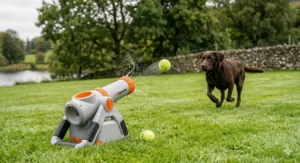
For owners with shoulder problems or limited throwing ability, ball launchers like the Chuckit Classic (£12-£15) dramatically increase throwing distance without strain. Most work with water-compatible balls.
Life Jackets and Vests
Even strong swimmers benefit from flotation support during long sessions or in challenging conditions. Budget £25-£60 depending on quality and features.
Towelling Robes
Microfibre dog robes (£15-£30) help dry your Lab quickly after swimming, preventing muddy car interiors and reducing the risk of catching chills. Particularly valuable for UK’s variable weather.
Frequently Asked Questions
❓ Are tennis balls safe as water toys for Labradors?
❓ How long should my Labrador swim during each session?
❓ Can I use the same water toy in both pools and natural bodies of water?
❓ What should I do if my Labrador seems afraid of water?
❓ How do I prevent my water toys from becoming a drowning hazard?
Conclusion: Making Your Investment Count
Choosing the right water toys for your Labrador isn’t about finding the most expensive option—it’s about matching toys to your dog’s specific needs, play style, and the environments where they’ll swim. The seven products reviewed here represent the best balance of durability, safety, and value currently available in the UK market for 2026.
The KONG Aqua remains the gold standard for serious training work, offering unmatched durability and trusted quality. The Chuckit Amphibious Bumper delivers exceptional all-round performance at a mid-range price point, making it my recommendation for most recreational Lab owners. If sustainability matters, the Ruffwear Lunker proves environmental responsibility doesn’t require compromising on quality.
Remember that even the finest water toy is merely a tool—the real magic happens in those summer evenings at the lake, watching your Lab’s pure joy as they power through the water, ears flapping, tail churning, living out the exact purpose they were bred for centuries ago. That’s what makes investing in proper water toys worthwhile.
Whether you’re introducing an eight-week-old puppy to their first paddling pool or rekindling an older Lab’s enthusiasm for aquatic adventures, the toys and techniques covered in this guide will help create safe, engaging experiences that satisfy your dog’s deepest instincts whilst strengthening the bond you share.
Now stop reading and get that Lab to the water—there’s retrieving to be done!
Recommended for You
- 7 Best Floating Dog Balls UK 2026
- Rechargeable Glow Ball vs Battery Powered: 7 Best Options 2026
- 7 Best Glow in the Dark Dog Balls UK 2026
Disclaimer: This article contains affiliate links. If you purchase products through these links, we may earn a small commission at no additional cost to you. Prices shown are approximate and may vary.
✨ Found this helpful? Share it with your mates! 💬🤗
