
In This Article
Choosing between solid rubber ball vs hollow for dogs isn’t just about grabbing the cheapest option from your local pet shop. I’ve seen countless dog owners at the park tossing whatever ball they can find, only to watch their beloved companions struggle with inappropriate toys that either bounce erratically, pose choking hazards, or wear down their teeth faster than a builder’s drill on concrete.
The construction of a dog ball fundamentally affects everything from bounce height and durability to safety and dental health. Solid rubber balls offer unmatched durability and controlled bounce patterns, whilst hollow balls provide lighter weight and unique compression features that some dogs absolutely adore. Understanding the density, material composition, and internal structure of your dog’s fetch toy can mean the difference between years of safe play and an unexpected trip to the emergency vet.
Throughout this comprehensive guide, we’ll dissect exactly what makes solid rubber ball vs hollow for dogs such an important decision for UK pet owners. We’ll examine seven carefully selected products available on Amazon.co.uk, explore the science behind rubber ball construction, and provide actionable advice that’ll help you make an informed choice tailored to your dog’s specific needs, play style, and safety requirements.
Quick Comparison Table
| Feature | Solid Rubber Balls | Hollow Rubber Balls |
|---|---|---|
| Weight | Heavier (80-200g) | Lighter (30-90g) |
| Bounce | Consistent, predictable | Variable, unpredictable |
| Durability | Excellent (6-24+ months) | Good (3-12 months) |
| Dental Safety | Very good (minimal compression) | Excellent (compressible) |
| Best For | Power chewers, precise fetching | Gentle chewers, water play |
| Price Range | £5.50-£24.48 | £7.49-£19.42 |
| Choking Risk | Lower (dense structure) | Moderate (can compress) |
💬 Just one click – help others make better buying decisions too! 😊
Top 7 Solid Rubber Ball vs Hollow for Dogs: Expert Analysis
1. KONG Extreme Ball with Hole (Hollow)
The KONG Extreme Ball with Hole represents the pinnacle of hollow rubber ball design for power chewers across the UK. Available in two sizes (small for dogs up to 9kg, medium/large for 7-29kg), this puncture-resistant fetch toy features KONG’s signature black Extreme rubber formula.
Key Specifications:
- Made from natural KONG Extreme rubber (USA-manufactured)
- Hollow design with central hole for treat insertion
- Puncture-resistant construction
Price: £7.49-£15.08
UK customers consistently praise its extreme bounce and durability, with one Staffie owner noting it survived weeks of intensive chewing whilst cheaper alternatives lasted mere hours. The hollow structure allows dogs to compress the ball slightly between their teeth, providing satisfying feedback without risk of dental damage.
✅ Pros:
- Exceptional durability for hollow construction
- High visibility red/black colouring
- Treat-dispensing capabilities
❌ Cons:
- Heavier than standard hollow balls
- Premium pricing compared to competitors
2. ChuckIt! Ultra Ball (Hollow)
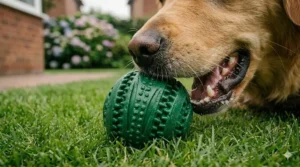
The ChuckIt! Ultra Ball dominates UK dog parks with its distinctive orange and blue colouring and exceptional high-bounce rubber construction. This launcher-compatible ball features a hollow core surrounded by thick natural rubber walls.
Key Specifications:
- Natural rubber with extra-thick core
- Floats on water for retrieval games
- Compatible with ChuckIt! launchers
Price: £6.79-£10.49 (2-pack)
British dog owners appreciate the exceptional value, with multiple reviewers confirming these balls outlast traditional tennis balls by months. The hollow construction creates an unpredictable bounce that keeps fetch games exciting, whilst the buoyant design makes them perfect for lake and seaside adventures.
✅ Pros:
- Outstanding bounce characteristics
- Highly visible in tall grass
- Launcher compatibility
❌ Cons:
- Can be lost easily due to extreme bounce
- Small size unsuitable for large breeds
3. West Paw Zogoflex Jive Ball (Solid-ish)
The West Paw Zogoflex Jive Ball utilises proprietary Zogoflex material (a non-rubber plastic blend) to create an exceptionally durable solid-construction ball that’s gentle on teeth whilst maintaining structural integrity.
Key Specifications:
- Zogoflex proprietary plastic blend
- Dishwasher safe and FDA-approved
- One-time replacement guarantee
Price: £12.99-£18.99
UK Collie and Staffie owners report this ball surviving aggressive chewing sessions that destroy conventional toys within minutes. The solid construction provides consistent bounce whilst remaining soft enough to prevent dental trauma. Made in Montana, USA, with 100% recyclable materials.
✅ Pros:
- Virtually indestructible construction
- BPA-free and phthalate-free
- Floats for water play
❌ Cons:
- Premium price point
- Not true rubber (synthetic material)
4. KONG Ball with Hole Classic Red (Hollow)
The KONG Ball with Hole Classic Red offers the same trusted hollow design as the Extreme version but in softer natural red rubber suitable for moderate chewers and everyday fetch games.
Key Specifications:
- KONG Classic red natural rubber
- Hollow design with treat hole
- Suitable for dogs 7-29kg (medium/large)
Price: £7.49-£9.99
Perfect for dogs who enjoy fetch but aren’t aggressive destroyers, this ball provides excellent bounce characteristics with lower density than the black Extreme version. UK reviewers note it’s ideal for training sessions and interactive play, though power chewers can eventually puncture the thinner walls.
✅ Pros:
- Softer on teeth than Extreme version
- Classic KONG reliability
- Treat-dispensing functionality
❌ Cons:
- Less durable than black Extreme
- Can be punctured by determined chewers
5. Classic Solid Rubber Ball (Solid)
The Classic Solid Rubber Ball represents traditional solid construction at its finest – a dense, chocolate-scented sphere of pure natural rubber that’s been delighting British dogs for over 50 years.
Key Specifications:
- 100% solid natural rubber construction
- Available in 62mm and 70mm diameters
- Chocolate scent for added appeal
Price: £5.50-£9.99
This no-frills option receives praise from UK dog owners who value simplicity and longevity. The solid construction means predictable bounce patterns and virtually indestructible durability. VioVet customers report these balls lasting years with proper supervision, making them exceptional value for money.
✅ Pros:
- Outstanding durability
- Budget-friendly pricing
- Easy to clean
❌ Cons:
- Heavy (can cause bruising if thrown carelessly)
- Limited size options

6. Beco Ball on Rope Natural Rubber (Solid with Rope)
The Beco Ball on Rope combines solid natural rubber construction with a recycled cotton rope handle, creating a versatile toy for fetch, tug, and interactive play sessions.
Key Specifications:
- Natural rubber tapped from rubber trees
- 100% recycled cotton rope
- Available in small (30cm) and large (50cm)
Price: £9.99-£14.99
UK customers appreciate the eco-friendly construction and the rope’s added throwing distance. However, reviewers note the rope can fray with aggressive chewing, though the solid rubber ball itself remains intact. As a 1% For Planet member, Beco donates proceeds to environmental causes.
✅ Pros:
- Sustainable materials
- Extended throwing range
- Solid ball construction
❌ Cons:
- Rope requires supervision
- Heavier than rope-free alternatives
7. West Paw Zogoflex Air Boz (Hollow)
The West Paw Zogoflex Air Boz features a unique hollow design with textured exterior ridges that dogs can compress between their teeth, providing sensory satisfaction whilst maintaining structural integrity.
Key Specifications:
- Hollow Zogoflex construction
- Textured grip surface
- Fits standard ball launchers (small size)
Price: £14.99-£19.42
British Retriever and German Shepherd owners report this ball surviving months of intensive play. The hollow design makes it lightweight for long throwing sessions, whilst the compressible nature provides an endorphin release when dogs bite down. Dishwasher safe and recyclable.
✅ Pros:
- Lightweight for extended play
- Textured surface for grip
- Guaranteed against dog damage
❌ Cons:
- Premium pricing
- Can be difficult to locate in undergrowth
Understanding Ball Density for Dogs
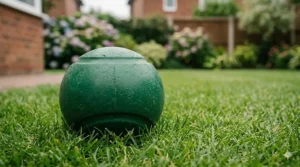
The density of a dog ball fundamentally determines its behaviour during play. Solid rubber balls typically measure 1.1-1.4 g/cm³, creating substantial weight that produces controlled, predictable bounces ideal for training and precision fetch games. This higher density also means they sink in water, limiting their utility for swimming sessions.
Hollow rubber balls, conversely, range from 0.3-0.7 g/cm³ depending on wall thickness. This lower density creates buoyancy for water play and reduces the risk of injury from high-velocity impacts. The air-filled cavity allows for compression when bitten, which many dogs find immensely satisfying and can actually reduce dental wear compared to unyielding solid structures.
According to research on material science, natural rubber’s elasticity and durability make it ideal for dog toys, though the internal structure dramatically affects performance characteristics. The hollow design distributes bite pressure across a larger surface area, whilst solid balls concentrate force at the contact point.
Rubber Ball Types Comparison
Natural Rubber vs Synthetic Materials
Natural rubber, harvested from Hevea brasiliensis trees, offers superior elasticity and biodegradability compared to synthetic alternatives. Products like KONG utilise natural rubber for its tear resistance and dental safety, whilst brands like West Paw employ proprietary Zogoflex blends that sacrifice pure rubber’s feel for enhanced durability.
UK veterinary guidance suggests natural rubber provides the optimal balance between firmness and give. The material compresses slightly under jaw pressure without cracking or splintering, unlike cheaper plastics that can fragment into sharp edges. Veterinary toxicology research confirms BPA-free, phthalate-free rubber toys pose minimal health risks when properly manufactured.
Solid vs Hollow Construction Trade-offs
Solid construction excels in durability and predictability. The uniform density throughout the ball means consistent bounce angles, making training exercises more reliable. However, this same density creates substantial weight—a large solid rubber ball can weigh 200g or more, potentially causing bruising or dental fractures if dogs catch high-velocity throws incorrectly.
Hollow balls sacrifice some durability for versatility. The air cavity reduces weight to 30-90g, making them safer for vigorous play and ideal for young or elderly dogs with sensitive teeth. The compressible walls allow dogs to “squish” the ball, providing tactile feedback that many find irresistible. However, aggressive chewers can eventually puncture hollow walls, particularly around valve seams or weakened areas.
Best Rubber Ball Material
FDA-Approved Natural Rubber
The gold standard for dog ball safety remains FDA-approved natural rubber, as utilised in KONG’s Classic and Extreme lines. This material undergoes rigorous testing to ensure it contains no toxic additives, heavy metals, or harmful dyes. Natural rubber’s molecular structure provides inherent antimicrobial properties, reducing bacterial buildup during play.
UK pet safety advocates recommend seeking products explicitly labeled as “natural rubber” rather than generic “rubber compound.” Cheaper alternatives often contain fillers, plasticisers, or recycled materials that may leach chemicals during chewing. Pet product safety standards suggest avoiding balls with strong chemical odours or those that leave residue on hands.
Zogoflex and Advanced Synthetics
West Paw’s Zogoflex represents a newer category of engineered plastics designed specifically for aggressive chewers. Whilst not technically rubber, this latex-free, BPA-free material provides exceptional durability and can be fully recycled at end-of-life. The dishwasher-safe property offers hygiene advantages over traditional rubber.
However, some dogs prefer the tactile feel of natural rubber over synthetic alternatives. The slightly harder surface of Zogoflex may not compress as satisfyingly, though it compensates with virtually indestructible construction that reduces long-term replacement costs.
Bouncy Balls for Dogs Fetch
Optimising Bounce Height
Bounce characteristics vary dramatically between solid and hollow constructions. Solid rubber balls typically rebound to 60-75% of their drop height, creating vigorous but manageable fetch sessions. ChuckIt! Ultra Balls, with their hollow design and specific rubber compound, can exceed 80% rebound, producing exhilarating games that challenge even the fastest Border Collies.
For UK weather conditions—particularly wet grass and muddy parks—higher bounce can actually pose challenges. Balls that bounce too vigorously may sail over fences or into roads. Solid balls offer more predictable trajectories, making them safer for enclosed spaces and urban environments.
Surface Texture and Grip
The exterior texture influences both human throwing comfort and canine retrieval. Smooth solid balls like the Classic Solid Rubber Ball provide excellent grip when dry but can become slippery when wet. Textured hollow balls like the West Paw Air Boz maintain grip in all conditions, though accumulated dirt in grooves requires regular washing.
Veterinary dental specialists emphasise that smooth surfaces reduce abrasive wear on tooth enamel compared to textured alternatives. Tennis balls’ fuzzy coating acts like sandpaper when contaminated with grit, gradually filing down canines and premolars over years of play.
Fetch Ball Construction
Wall Thickness in Hollow Designs
The engineering of hollow balls centres on wall thickness optimisation. KONG’s Extreme line features 6-8mm walls, providing puncture resistance whilst maintaining compressibility. Standard red KONG balls measure 4-5mm, offering easier compression for moderate chewers but reduced durability against determined biters.
UK manufacturers must balance weight reduction against structural integrity. Thinner walls (2-3mm) create ultra-light balls perfect for indoor play or senior dogs, but they succumb quickly to power chewers. Premium hollow balls like ChuckIt! Ultra achieve the sweet spot with 5-6mm walls that flex without failing.
Valve and Seam Integrity
Manufacturing quality dramatically affects longevity, particularly around valve points where hollow balls are inflated during production. Inferior products feature visible seam lines or valve protrusions that create weak points. Premium brands like KONG employ seamless moulding techniques that eliminate these vulnerabilities.
When purchasing hollow balls, inspect the surface for any irregularities, bumps, or visible seam lines. These indicate lower-quality manufacturing that’ll fail prematurely under aggressive chewing. The investment in seamless construction pays dividends in extended lifespan and safety.
Rubber Ball Performance
Temperature Tolerance
Natural rubber’s performance varies with temperature, a consideration for UK’s variable climate. In winter cold (0-5°C), solid rubber balls become noticeably harder, increasing bounce height but potentially risking dental damage on frozen ground. Hollow balls maintain more consistent behaviour due to internal air acting as thermal insulation.
Summer heat (25-30°C) softens rubber, reducing bounce and increasing bite marks from play sessions. Store balls indoors during temperature extremes to maximise longevity. Zogoflex materials show superior temperature stability, maintaining consistent properties from -10°C to 40°C.
Water Resistance and Buoyancy
For dogs who adore swimming, buoyancy becomes paramount. All hollow balls float by design, making them ideal for lake, river, and seaside adventures. Solid balls sink immediately, though some UK owners deliberately choose this for shallow water training where dogs must dive.
Saltwater exposure accelerates natural rubber degradation through osmotic stress. Rinse balls thoroughly after beach sessions and dry completely to prevent internal moisture accumulation in hollow designs. KONG’s natural rubber shows excellent saltwater resistance compared to cheaper compounds.
How to Choose Solid Rubber Ball vs Hollow for Dogs
Step 1: Assess Your Dog’s Chewing Intensity
Evaluate honestly whether your dog is a “gentle mouther,” “moderate chewer,” or “power destroyer.” Power chewers (Staffies, Pit Bulls, German Shepherds) require either solid construction or KONG Extreme hollow balls. Moderate chewers (Labradors, Retrievers) thrive with standard hollow balls like ChuckIt! Ultra. Gentle dogs (Cavaliers, Whippets) can enjoy any construction type.
Step 2: Determine Primary Play Environment
Indoor play benefits from lighter hollow balls that won’t damage furniture or walls. Outdoor fetch in open spaces suits solid balls’ predictable bounce. Water play demands hollow construction for flotation. Multi-environment users should invest in both types for versatility.
Step 3: Consider Size-to-Mouth Ratio
The ball must be too large to lodge in your dog’s throat. For Labradors and similar breeds (25-35kg), choose balls 6.5-7.5cm diameter. Smaller breeds (5-15kg) need 5-6cm balls. Veterinary safety guidelines recommend balls 1.5× larger than the fully open mouth width.
Step 4: Evaluate Budget vs Longevity
Premium hollow balls (KONG Extreme, West Paw) cost £15-20 but last 12-24 months. Budget solid balls cost £6-10 and can last years with supervision. Calculate cost-per-month rather than upfront price. Power chewers destroying £5 balls monthly spend more annually than investing in one £20 KONG.
Step 5: Check Material Certifications
Seek FDA-approved, BPA-free, phthalate-free certifications. Avoid balls with strong chemical odours or those leaving residue on skin. UK sellers should provide material safety documentation upon request. Reputable brands like KONG and West Paw proudly display certifications.
Step 6: Test Bounce and Compression
Before purchase, squeeze the ball (in-store) or test immediately upon delivery. Hollow balls should compress slightly with firm hand pressure. Solid balls remain rigid. Drop from waist height—quality balls bounce 50-75% of drop height consistently.
Step 7: Plan Supervision and Rotation
No ball is truly indestructible. Plan for supervised play sessions and inspect balls weekly for cracks, punctures, or excessive wear. Rotate between 2-3 different ball types to prevent jaw fatigue and maintain interest through variety.
✨ Don’t Miss These Exclusive Deals!
🔍 Take your fetch games to the next level with these carefully selected products. Click on any highlighted item to check current pricing and availability on Amazon.co.uk. These tools will help you create authentic play experiences your family will love!
Safety Considerations for Solid vs Hollow Balls
Choking and Obstruction Risks
Hollow balls present paradoxical choking risks. Whilst lighter and less likely to cause impact injuries, they can compress enough to lodge in the throat if undersized. Veterinary emergency data suggests tennis ball-sized hollow balls pose the greatest risk to Labradors and Retrievers, who can accidentally inhale during enthusiastic catches.
Solid balls, being incompressible, either fit safely in the mouth or are too large to swallow. The rigid structure prevents the vacuum effect that can seal hollow balls against the throat. Always size upward when uncertain—better too large than risking obstruction.
Dental Health Implications
Veterinary dentists increasingly warn about abrasive toys wearing down tooth enamel over time. Solid rubber balls, whilst firm, distribute pressure evenly across tooth surfaces. Hollow balls compress slightly, reducing point-stress on individual teeth.
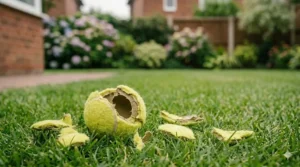
The primary dental danger comes not from solid vs hollow construction but from abrasive coatings. Tennis balls’ felt exterior, when contaminated with sand or dirt, acts like sandpaper on enamel. Choose smooth rubber surfaces regardless of internal structure. Inspect teeth monthly for unusual wear patterns, particularly on the canines and front premolars used for gripping.
Projectile and Impact Safety
A solid rubber ball travelling at high velocity carries substantial kinetic energy. A 150g solid ball thrown at 40 km/h can cause bruising or even fracture small bones in toy breeds. Hollow balls, weighing 40-70g, pose lower impact risks whilst maintaining throwing distance.
For households with children or elderly family members, hollow balls offer safer mixed play. The reduced mass prevents accidental injuries if throws go astray. However, solid balls excel in windy conditions, maintaining trajectory where hollow balls blow off course.
Cleaning and Maintenance Guidelines
Daily Maintenance Routines
Rinse balls after each park session to remove saliva, dirt, and bacteria. Warm water suffices for routine cleaning, though dishwasher-safe balls like West Paw products can undergo weekly deep cleans on the top rack. Solid balls dry faster than hollow designs, which can trap moisture inside.
For hollow balls, shake vigorously after rinsing to expel internal water. Store with the hole facing downward to promote drainage. Moisture trapped inside hollow balls can foster mould growth, creating health hazards and unpleasant odours.
Deep Cleaning Protocols
Monthly deep cleans maintain hygiene and extend longevity. Submerge balls in warm water with pet-safe disinfectant for 10-15 minutes. Scrub textured surfaces with a soft brush to remove accumulated grime from grooves. Rinse thoroughly—residual chemicals can cause digestive upset if ingested during play.
For stubborn stains on solid balls, bicarbonate of soda paste works excellently without toxic residues. Avoid harsh chemicals like bleach that can degrade natural rubber’s molecular structure. KONG recommends their proprietary toy cleaner, though mild washing-up liquid proves equally effective.
Durability Expectations by Dog Breed
Power Chewing Breeds
Staffordshire Bull Terriers, American Pit Bulls, and German Shepherds require extreme durability. These breeds can destroy standard hollow balls within days. Invest in KONG Extreme (black rubber), West Paw Zogoflex, or solid rubber balls. Expect 6-18 month lifespans even with these premium options.
UK Staffie owners report the Classic Solid Rubber Ball surviving 2+ years of daily play, whilst KONG Extreme hollow balls typically last 8-12 months. The solid construction’s uniform density prevents the weak points that power chewers exploit in hollow designs.
Moderate Chewers
Labrador Retrievers, Border Collies, and Spaniels enjoy fetch more than destructive chewing. ChuckIt! Ultra and standard KONG red balls provide excellent 12-18 month service lives. These breeds benefit from hollow construction’s lighter weight during extended play sessions.
Gentle Breeds
Cavalier King Charles Spaniels, Whippets, and similar gentle breeds rarely damage even basic hollow balls. Focus on appropriate sizing and bounce characteristics rather than durability. Budget-friendly options like standard hollow balls costing £6-8 can last years with these dogs.
Environmental and Ethical Considerations
Natural Rubber Sustainability
Natural rubber production involves tapping Hevea brasiliensis trees, a renewable process that doesn’t harm the plants. However, rubber plantations have environmental impacts through habitat conversion. Choose brands like Beco that offset environmental costs through conservation donations and use recycled materials where possible.
KONG sources rubber from sustainable plantations and manufactures in the USA with strict environmental controls. West Paw’s Zogoflex, whilst synthetic, is fully recyclable and made from renewable energy sources in Montana.
End-of-Life Disposal
Solid rubber balls can often be recycled through specialist rubber recycling programmes, though availability varies across the UK. Contact local councils about rubber recycling options. West Paw operates a recycling programme accepting returned Zogoflex products.
Hollow balls that have been punctured but not destroyed can gain second lives as garden watering can markers, plant pot feet, or craft materials. Avoid landfill disposal when alternatives exist—natural rubber biodegrades eventually, but the process releases methane in anaerobic landfill conditions.
Training Applications for Different Ball Types
Solid Balls for Precision Work
Solid balls’ predictable bounce patterns make them ideal for advanced training. The consistent trajectory allows dogs to develop precise catching skills and timing. For agility training, solid balls’ reliable behaviour enables repeatable exercises that build muscle memory.
Service dog training often employs solid balls for retrieve exercises requiring specific placement. The controlled bounce ensures trainee dogs aren’t distracted by erratic movement. However, begin with lighter hollow balls for young puppies, transitioning to solid designs as jaw strength develops.
Hollow Balls for Engagement
The unpredictable bounce of hollow balls creates excitement that maintains engagement during play-based training. Use ChuckIt! Ultra balls for recall training—the erratic bounce triggers stronger chase instincts, making returns more enthusiastic. The lighter weight allows longer throwing distance, useful for building stamina.
Hollow balls with treat holes (KONG with Hole) excel at reward-based training. Fill with peanut butter or treats to create self-rewarding toys that reinforce positive behaviours without constant human intervention.
Regional UK Considerations
Weather Impact on Ball Performance
Britain’s damp climate affects rubber ball performance significantly. Morning dew and frequent rain make smooth solid balls slippery, whilst textured hollow balls maintain grip. Consider purchasing both types—solid for dry summer days, hollow for typical British drizzle.
Coastal regions face accelerated degradation from salt exposure. Solid balls show superior resistance to saltwater damage compared to hollow designs with internal cavities where salt can accumulate. Rinse thoroughly after beach sessions regardless of construction type.
Park and Public Space Regulations
Many UK parks restrict hard balls to prevent injury in crowded spaces. Hollow balls’ lighter weight makes them more acceptable to park wardens and other users. Check local bylaws before purchasing—some areas specifically prohibit solid balls over certain weights in designated play areas.
Urban environments with limited space benefit from hollow balls’ reduced bounce. A solid ball sailing over a 2-metre fence into traffic creates obvious hazards. Hollow balls provide adequate play value whilst maintaining better control in confined spaces.
✨ Don’t Miss These Exclusive Deals!
🔍 Take your dog’s playtime to the next level with these carefully selected products. Click on any highlighted item to check current pricing and availability on Amazon.co.uk. These tools will help you create authentic exercise experiences your furry friend will love!
Benefits vs Traditional Tennis Balls
| Feature | Rubber Balls (Solid/Hollow) | Traditional Tennis Balls |
|---|---|---|
| Dental Safety | Excellent (smooth surface) | Poor (abrasive felt) |
| Durability | 6-24 months | 1-4 weeks |
| Visibility | High (bright colours) | Moderate (yellow) |
| Cost per Month | £0.50-£1.50 | £2-£5 |
| Choking Risk | Low-Moderate (sized correctly) | Moderate-High |
| Bounce Quality | Consistent | Degrades quickly |
| Water Use | Excellent (hollow floats) | Poor (absorbs water) |
Price Range & Value Analysis
Budget Options (£5-£10)
Entry-level solid balls like the Classic Solid Rubber Ball at £5.50-£9.99 provide exceptional value for non-aggressive chewers. A single ball can last years with proper care, calculating to mere pence per month. Basic hollow balls (£6-£8) work well for gentle dogs but may require replacement every 3-6 months.
For budget-conscious UK households, solid construction offers superior long-term value despite comparable upfront costs. The durability advantage compounds over time—a £6 solid ball lasting 18 months costs £0.33/month versus a £7 hollow ball lasting 6 months at £1.17/month.
Mid-Range Options (£10-£15)
This tier includes ChuckIt! 2-packs (£10-£12) and standard KONG products (£10-£14). The value proposition centres on balanced durability and performance. Expect 8-12 month lifespans from hollow balls, 12-18 months from solid equivalents.
ChuckIt! bundles provide the best value in this range—two balls for £10-£12 ensures you always have a spare when one gets lost in undergrowth. The launcher compatibility adds utility for owners with throwing limitations.
Premium Options (£15-£25)
West Paw Zogoflex (£15-£20) and KONG Extreme (£15-£18) justify premium pricing through guaranteed replacement programmes and extended lifespans. These products target power chewers who destroy cheaper alternatives monthly.
A West Paw Jive at £18 lasting 18 months (£1/month) dramatically outperforms £8 balls replaced every 6 weeks (£5.33/month). The initial investment pays for itself within four months for aggressive chewers.
FAQ
❓ Can I use hollow rubber balls for aggressive chewers?
❓ Do solid rubber balls damage dogs' teeth more than hollow ones?
❓ Which type is better for water play and swimming?
❓ How long should a quality rubber ball last with daily use?
❓ Are there size differences between solid and hollow balls for the same breed?
Conclusion
The debate between solid rubber ball vs hollow for dogs ultimately hinges on your specific circumstances rather than one option being universally superior. Solid balls deliver unmatched durability, predictable bounce patterns, and exceptional value for power chewers, whilst hollow designs provide lighter weight, water flotation, and the satisfying compression that many dogs find irresistible.
British dog owners benefit from keeping both types in their toy rotation. Reserve solid balls for precise fetch training and aggressive chewers, whilst hollow balls excel during swimming sessions and indoor play. The £15-30 investment in 2-3 quality balls tailored to different scenarios proves far more economical than constantly replacing inappropriate cheap alternatives.
Remember that no ball construction eliminates the need for supervision. Inspect toys weekly for cracks, punctures, or excessive wear. Size appropriately to prevent choking, choose smooth surfaces to protect tooth enamel, and rotate between different toys to prevent jaw fatigue. Whether you choose solid density or hollow design, prioritising quality materials and proper sizing ensures years of safe, enjoyable play for your beloved companion.
Recommended for You
- 7 Best Indestructible Rubber Dog Balls UK 2026
- 7 Best Chuckit Ultra Ball Options UK 2026
- 7 Best Bulk Tennis Balls for Dogs UK 2026 – Save Big
Disclaimer: This article contains affiliate links. If you purchase products through these links, we may earn a small commission at no additional cost to you. Prices shown are approximate and may vary.
✨ Found this helpful? Share it with your mates! 💬🤗
