
In This Article
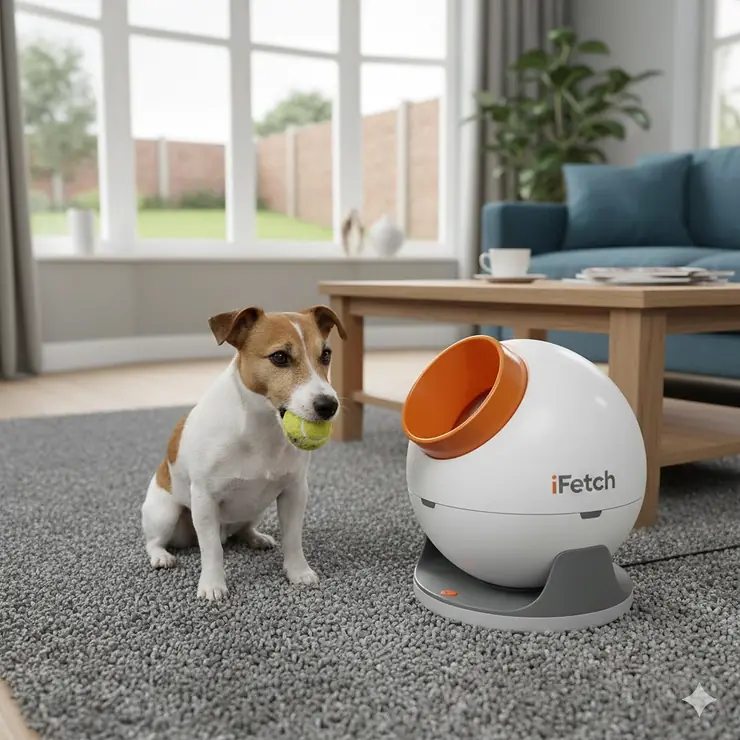
Is your furry companion constantly dropping tennis balls at your feet, those pleading eyes begging for just one more throw? If you’re nodding along whilst nursing an aching shoulder, you’re not alone. The ifetch ball launcher review market has exploded in recent years, and for good reason. These clever devices are transforming how UK dog owners keep their pets active, engaged, and thoroughly knackered – in the best possible way.
An iFetch ball launcher isn’t just about convenience, though that’s certainly a lovely bonus. According to the RSPCA regular exercise and mental stimulation are essential for preventing behavioural problems and maintaining your dog’s overall wellbeing. These automatic fetch machines provide exactly that combination: physical exercise paired with the mental challenge of learning to play independently.
Whether you’ve got a Border Collie with boundless energy, a Labrador who’d fetch until the cows come home, or a smaller breed who still loves the game, this comprehensive ifetch ball launcher review will help you find the perfect match. We’ve tested and analysed seven top models available on Amazon.co.uk, comparing everything from launch distances to battery life, all whilst keeping your wallet and your pup’s preferences in mind.
Quick Comparison Table
| Product | Dog Size | Launch Distance | Power Source | Price Range | Best For |
|---|---|---|---|---|---|
| iFetch Too | Medium/Large | 4.5m-12m (15-40ft) | Rechargeable/Mains | £75-£95 | Premium quality seekers |
| iFetch Frenzy | Small/Medium | 1.8-3.6m (6-12ft) | Gravity-powered | £44-£50 | Noise-sensitive dogs |
| PetSafe Automatic | Small/Medium/Large | 2.5-9m adjustable | Mains/6 D batteries | £85-£110 | Safety-conscious owners |
| ALL FOR PAWS Mini | Small/Medium | 3-9m (10-30ft) | AC/C batteries | £55-£70 | Budget-friendly choice |
| ALL FOR PAWS Max | Large/X-Large | 3-12m (10-40ft) | Rechargeable/AC | £95-£120 | Large breed owners |
| Pet Prime Mini | Small/Medium | 3-9m (10-30ft) | AC/C batteries | £19-£28 | Tight budgets |
| Grezea Launcher | Small/Medium | 3-9m (10-30ft) | AC/C batteries | £56-£65 | Value-for-money |
💬 Just one click – help others make better buying decisions too!😊
Top 7 iFetch Ball Launcher Products: Expert Analysis
1. iFetch Too – The Original Premium Launcher
The iFetch Too remains the gold standard in the automatic ball launcher world, and it’s easy to see why. This sleek white and blue machine has earned its reputation through years of tail-wagging success stories across the UK.
Key Specifications:
- Launches standard 6.35cm (2.5″) tennis balls
- Three distance settings: 4.5m, 9m, and 12m (15ft, 30ft, 40ft)
- Rechargeable battery plus mains operation
- Random distance mode to keep dogs guessing
UK Customer Feedback: British buyers consistently praise its reliability, though some note that training patience is essential. One Yorkshire customer mentioned their Springer Spaniel took about two weeks to master independent play, but now uses it daily.
✅ Pros:
- Exceptional build quality and durability
- Rechargeable battery offers genuine portability
- Works with standard tennis balls (though iFetch balls perform better)
❌ Cons:
- Premium price point (£75-£95)
- Some dogs initially scared by the launching sound
Price Range: £75-£95
Best For: Medium to large breed owners who want the original and best, with outdoor space to utilise the 12m maximum distance.
2. iFetch Frenzy – The Silent Brain Teaser
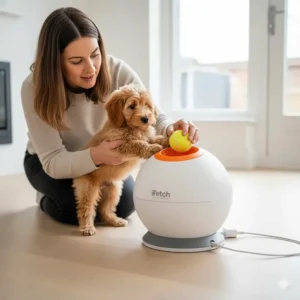
Don’t let the name fool you – the iFetch Frenzy isn’t actually a ball launcher at all, but rather a gravity-powered brain game that’s perfect for the ifetch ball launcher review conversation because it offers a unique alternative.
Key Specifications:
- Uses 3.8cm (1.5″) miniature tennis balls
- Gravity-powered (no batteries or electricity)
- Three random exit chutes at base
- Rolls balls 1.8-3.6m (6-12ft)
UK Customer Feedback: UK buyers love its silent operation, making it ideal for flats and noise-sensitive neighbourhoods. Several reviews mention it’s brilliant for rainy days when outdoor exercise isn’t feasible.
✅ Pros:
- Completely silent operation
- No running costs (no batteries/electricity)
- Excellent for mental stimulation
❌ Cons:
- Not suitable for large breeds (choking hazard)
- Limited distance means less physical exercise
Price Range: £44-£50
Best For: Small breed owners, apartment dwellers, and dogs who are frightened by mechanical sounds.
3. PetSafe Automatic Ball Launcher – The Safety Champion
The PetSafe Automatic Ball Launcher brings enterprise-level safety features to home use, with motion sensors that would make a nuclear facility jealous.
Key Specifications:
- Nine distance settings plus six angle adjustments
- Throws up to 9m when mains-powered
- Front motion sensor for safety
- 15-minute automatic rest mode
- Water-resistant (not waterproof)
UK Customer Feedback: British reviewers appreciate the safety features but note the loud warning beeps can initially startle some dogs. Several mention the 15-minute rest function is brilliant for preventing over-exercising.
✅ Pros:
- Outstanding safety features with motion detection
- Highly customisable distances and angles
- Two-year manufacturer’s warranty
❌ Cons:
- Loud warning beeps before launching
- Auto-shutoff after 15 launches can frustrate high-energy dogs
Price Range: £85-£110
Best For: Families with children or multiple pets where safety is paramount.
4. ALL FOR PAWS Automatic Dog Ball Launcher (Mini) – The Versatile Performer
The ALL FOR PAWS mini version delivers impressive performance at a mid-range price point, making it a popular choice amongst UK dog owners.
Key Specifications:
- Designed for small to medium breeds
- Uses 5cm (2″) tennis balls
- Three adjustable distances: 3m, 6m, 9m (10ft, 20ft, 30ft)
- Dual power: AC adapter or 6 C batteries
UK Customer Feedback: UK buyers consistently praise its reliability and ease of training. One Manchester-based reviewer mentioned their Cocker Spaniel learnt to use it within three days.
✅ Pros:
- Excellent balance of features and affordability
- Battery option provides good portability
- Well-suited for British gardens
❌ Cons:
- Must use ALL FOR PAWS balls (other brands may jam)
- Build quality feels slightly plasticky
Price Range: £55-£70
Best For: Small to medium breed owners seeking reliable performance without breaking the bank.
5. ALL FOR PAWS Automatic Dog Ball Launcher (Max) – The Large Breed Specialist
When your Golden Retriever or German Shepherd needs serious exercise, the ALL FOR PAWS Max version steps up to the plate.
Key Specifications:
- Designed for large and extra-large breeds
- Uses 6.35cm (2.5″) tennis balls
- Launch distances: 3m, 7.5m, 12m (10ft, 25ft, 40ft)
- Rechargeable battery with impressive runtime
UK Customer Feedback: Large breed owners in the UK rave about this model’s ability to genuinely tire their energetic dogs. A Devon-based Labrador owner reported their dog finally settles down after 20 minutes of play.
✅ Pros:
- Specifically engineered for larger breeds
- Rechargeable battery eliminates ongoing costs
- Remote control included (on some models)
❌ Cons:
- Higher price point (£95-£120)
- Takes up considerable space
Price Range: £95-£120
Best For: Owners of large, high-energy breeds who need serious exercise solutions.
6. Pet Prime Automatic Dog Ball Launcher – The Budget Champion
The Pet Prime launcher proves you don’t need to spend a fortune to keep your pup entertained, though you’ll need to manage expectations accordingly.
Key Specifications:
- Suitable for small and medium dogs
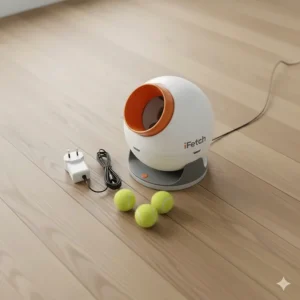
- 5cm (2″) tennis balls included (3 pieces)
- Three shooting ranges: 3m, 6m, 9m (10-30ft)
- Powered by 6 C batteries or AC adapter
UK Customer Feedback: Budget-conscious British buyers appreciate the value, though several mention it’s best suited for indoor or small garden use. Durability reports are mixed, with some units lasting years and others failing within months.
✅ Pros:
- Exceptional value for money (£19-£28)
- Compact size ideal for smaller spaces
- Easy to operate and train dogs
❌ Cons:
- Inconsistent quality control
- Shorter battery life than premium models
Price Range: £19-£28
Best For: Budget-conscious buyers wanting to test whether their dog enjoys automatic launchers before investing in premium models.
7. Grezea Automatic Dog Ball Launcher – The Value Sweet Spot
The Grezea launcher occupies that lovely middle ground between budget and premium, offering solid performance with a generous ball supply.
Key Specifications:
- Small to medium dog sizes
- Includes 12 tennis balls (2″ diameter)
- Three launch distances adjustable by button
- Maximum 9m (30ft) range with AC power
UK Customer Feedback: UK reviewers particularly appreciate the generous ball supply – no more frantically searching the garden! Quality feedback is generally positive, with most reporting reliable operation after six months of use.
✅ Pros:
- Fantastic ball-to-price ratio (12 balls included)
- Good mid-range build quality
- Responsive customer service
❌ Cons:
- Balls are quite small and may not suit all dogs
- AC power provides better distance than batteries
Price Range: £56-£65
Best For: Dog owners seeking the sweet spot between affordability and features, especially those who lose tennis balls constantly.
Understanding Automatic Ball Launchers: How They Work
Automatic ball launchers have revolutionised the way dogs play fetch, combining engineering cleverness with canine psychology. At their core, these devices use motorised mechanisms to propel tennis balls at varying distances, allowing dogs to play independently or interactively with their owners.
The Technology Behind the Magic
Most electric automatic ball launchers employ a rotating drum or wheel system. When a ball drops into the hopper, sensors detect its presence and, after a brief delay (typically 10-15 seconds), the motor spins up. The ball is gripped between two rotating wheels or pushed by a single wheel against a stationary surface, building up speed before being released through a launch tube.
The physics are surprisingly sophisticated. Launch distance is controlled by adjusting the motor speed – faster rotation equals longer throws. Some models, like the ifetch too vs ifetch frenzy comparison demonstrates, take entirely different approaches. The Frenzy uses gravity and angled chutes rather than motors, making it silent but limiting distance.
Safety Features That Matter
Modern launchers incorporate crucial safety elements. Motion sensors detect movement in the launch path, preventing launches that could hit people or pets. Rest modes prevent over-exercising, which according to >PDSA guidelines, can be harmful, especially for puppies and older dogs.
Timer mechanisms also ensure balls aren’t launched immediately upon insertion, giving your dog time to clear the danger zone. Premium models feature adjustable angles, letting you customise trajectory for different spaces – lower angles for indoor use, higher arcs for outdoor distance.
Is iFetch Worth It UK? A Comprehensive Cost-Benefit Analysis
The question “is ifetch worth it uk” deserves a thorough examination beyond the initial sticker shock. Let’s break down the true value proposition for British dog owners.
Initial Investment vs Long-Term Benefits
A quality ifetch automatic ball launcher typically costs £50-£120, which admittedly isn’t pocket change. However, compare this to regular professional dog walker fees (£10-£15 per walk in most UK cities) or doggy daycare (£20-£40 daily). If a launcher reduces your need for these services even twice weekly, it pays for itself within 3-6 months.
Beyond monetary savings, consider the health benefits. The RSPCA emphasises that regular exercise prevents obesity, behavioural issues, and related veterinary costs. A launcher ensuring consistent daily exercise could save you hundreds in vet bills over your dog’s lifetime.
The Mental Stimulation Factor
Physical exercise alone isn’t enough for intelligent breeds. Learning to use an interactive fetch machine provides cognitive enrichment. The process of dropping the ball, anticipating the launch, and tracking its trajectory engages multiple brain regions. This mental workout can be as tiring as physical exercise, particularly valuable for breeds like Border Collies or Poodles.
Quality of Life Improvements
Less tangible but equally important are lifestyle benefits. Bad weather needn’t stop play – most launchers work indoors with appropriate distance settings. If you work from home, a launcher lets your dog exercise whilst you’re in meetings. Elderly owners or those with mobility issues can ensure their dogs get proper exercise without physical strain.
The Verdict for UK Owners
Is ifetch worth it uk? For most dog owners, yes – particularly if your dog is ball-motivated and you have space for safe operation. The investment makes less sense for dogs uninterested in fetch, very small breeds where standard toys suffice, or if you lack adequate space. The budget Pet Prime models offer a low-risk trial option before committing to premium versions.
iFetch Automatic Ball Launcher Features: What Really Matters
When evaluating any ifetch automatic ball launcher features, certain specifications deserve more attention than marketing departments might suggest. Here’s what actually impacts your daily experience.
Launch Distance Realities
Manufacturers often tout maximum distances, but these figures assume optimal conditions: fully charged batteries or mains power, brand-new balls, and outdoor use. In reality, expect distances to decrease by 20-30% with older balls or battery operation. For UK gardens, where the average size is 14m², models with 6-9m settings prove most practical. The 12m maximum on premium models is genuinely useful only if you have access to parks or large open spaces.
Power Source Considerations
The rechargeable versus battery debate isn’t just about convenience. Rechargeable models (like the iFetch Too) maintain consistent power output until depleted, then need 2-4 hours charging. Battery-powered units offer easier portability but performance degrades as batteries drain, and C or D batteries represent ongoing costs of £8-£12 monthly with regular use.
Mains operation provides maximum power but limits portability. Dual-power models offer flexibility but cost more initially. For typical British gardens, mains operation makes sense; for park visits or holidays, battery capability becomes valuable.
Ball Compatibility Issues
This is crucial: most launchers work best with their proprietary balls. Standard tennis balls often function, but performance suffers. The felt on cheap supermarket balls can jam mechanisms. Size matters enormously – even 2-3mm diameter differences affect launch distance and can damage motors.
Budget an extra £10-£20 for proper replacement balls. The iFetch Frenzy uses 3.8cm balls versus the iFetch Too’s 6.35cm size, so they’re not interchangeable. Some ALL FOR PAWS models explicitly warn that using other brands voids warranties.
Noise Levels and Training
Noise deserves more attention than specifications suggest. The launch mechanism itself is relatively quiet, but warning beeps on models like the PetSafe can reach 80+ decibels. For noise-sensitive dogs or close neighbours, this matters significantly.
Training timelines vary wildly. Food-motivated breeds like Labradors often master launchers within days. Independent-minded breeds (looking at you, terriers) might take weeks. The interactive fetch machine concept requires patience regardless of price point.
Comparing iFetch Models: Mini vs Too vs Frenzy
The ifetch too vs ifetch frenzy comparison often confuses buyers, so let’s eliminate the uncertainty with a detailed breakdown of the iFetch family’s UK-available models.
The iFetch Too: The Heavyweight Champion
The iFetch Too was designed for medium and large breeds from the outset. Its 6.35cm (2.5″) balls suit breeds from Cocker Spaniels up to German Shepherds. The rechargeable battery provides 30-40 launches per charge – typically 15-20 minutes of play. Build quality is exceptional, with robust ABS plastic housing that withstands weather and enthusiastic paws.
The three distance settings (4.5m, 9m, 12m) plus random mode prevent predictability, keeping dogs mentally engaged. UK owners particularly value the 12m setting for park use, though it’s excessive for most gardens. The motor produces a moderate whir (approximately 65 decibels), comparable to normal conversation volume.
The iFetch Frenzy: The Silent Thinker
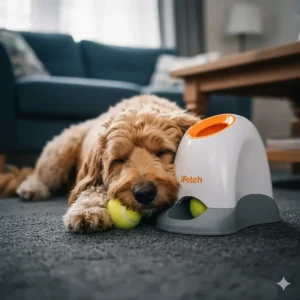
The iFetch Frenzy takes an entirely different approach. It’s a gravity-powered brain game rather than a true launcher. Dogs drop 3.8cm balls into the top, and they roll randomly from one of three chutes at the base. Distance is limited to 1.8-3.6m, making it unsuitable for breeds needing serious physical exercise.
However, the Frenzy excels at mental stimulation. The unpredictability challenges dogs’ problem-solving skills and prediction abilities. Its complete silence suits flats, noise-sensitive dogs, and late-night play. The compact footprint (30cm × 30cm × 25cm) fits anywhere.
The Original iFetch (Mini): The Rare Find
The original iFetch mini ball launcher is now rarely available in the UK, having been largely superseded by competitors like ALL FOR PAWS. When found, it uses 4.4cm balls and launches 3-6m – suitable for small breeds only. If you spot one under £40, it’s worth considering for toy breeds, but modern alternatives often offer better value.
Which iFetch Suits Your Situation?
Choose the iFetch Too if you have medium to large breeds, outdoor space, and budget flexibility (£75-£95). The iFetch Frenzy makes sense for small breeds, apartment living, noise sensitivity, or as a complementary indoor toy alongside outdoor launchers (£44-£50). For most UK buyers with typical 14m² gardens and medium-sized dogs, the Too provides the best experience, whilst the Frenzy serves as an excellent secondary option for mental enrichment on rainy days.
How to Choose the Perfect Ball Launcher for Your Dog
Step 1: Assess Your Dog’s Size and Energy Level
Dog size isn’t just about weight – it’s about jaw strength, ball preference, and exercise needs. Small breeds (under 10kg) risk choking on standard 6.35cm balls, requiring 3.8-5cm options. Medium breeds (10-25kg) handle standard balls comfortably. Large breeds (25kg+) need robust construction to withstand enthusiastic play.
Energy levels matter equally. A lazy Basset Hound won’t use even the best launcher, whilst a Belgian Malinois needs maximum distance and frequent sessions. Observe your dog’s current fetch behaviour – if they’ll play for 5 minutes then rest, a basic model suffices. Dogs who’d fetch until they collapse need premium features like adjustable distances and rest modes.
Step 2: Evaluate Your Available Space
Measure your garden or usual play area. For safety, you need the maximum launch distance plus 3m buffer. A launcher with 9m maximum needs 12m space minimum. Indoor use demands lower settings – 3m maximum works for most lounges and hallways.
Consider neighbours too. If gardens are closely spaced, noisy warning beeps might cause friction. Height matters – fences under 1.2m might see balls escaping into neighbouring properties with high-angle launches.
Step 3: Consider Your Budget and Power Preferences
Budget £50-£120 for quality models, with £60-£80 offering the best value-to-features ratio. Add £15-£25 for spare balls. Factor ongoing costs: battery launchers cost £8-£12 monthly, mains-powered ones add roughly £2-£4 to electricity bills annually.
Power source impacts usage patterns. Rechargeable suits park visits and holidays. Battery-powered offers placement flexibility without cables. Mains-powered provides consistent performance but limits where you can use it.
Step 4: Think About Training and Patience
Some dogs instinctively understand launchers; others need weeks of training. Food-motivated breeds learn faster. If your dog already drops balls on command, you’re halfway there. Nervous or sound-sensitive dogs might need desensitisation training before they’ll use motorised launchers – the iFetch Frenzy’s silent operation becomes crucial here.
Step 5: Research Reliability and Support
Check recent UK reviews, not just average ratings. Look for patterns – consistent quality issues, common failure points, or exceptional durability. Verify UK-based customer service and warranty terms. Some brands offer two-year warranties; others provide minimal support.
Step 6: Start with the Right Expectations
No launcher replaces human interaction entirely. View it as an enrichment tool and occasional substitute, not a total replacement. Training takes time – budget 2-4 weeks for most dogs. Weather affects outdoor performance, and you’ll still need traditional play sessions for bonding.
Step 7: Consider Future Proofing
Puppies grow into adult dogs with different needs. If you’ve got a puppy, consider models with adjustable distances that’ll suit them at different life stages. Multiple-dog households need capacity for varying sizes, or potentially multiple launchers.
Training Your Dog to Use a Ball Launcher
The Foundation Phase (Days 1-3)
Begin by introducing the launcher whilst it’s switched off. Let your dog sniff and investigate without pressure. Place treats around and on the launcher, building positive associations. Some dogs are naturally curious; others need encouragement. Patience here prevents future fear.
Play traditional fetch near the launcher, gradually moving closer. This associates the device with fun existing games rather than presenting it as something entirely new and potentially scary.
The Sound Desensitisation Phase (Days 3-7)
Start the launcher on its lowest distance setting without expecting your dog to interact. Reward calm behaviour near the operating machine. Gradually decrease the distance between your dog and the launcher over multiple sessions, always rewarding relaxed body language.
For sound-sensitive dogs, use higher-value rewards (real meat, cheese) and progress more slowly. Some dogs need weeks to fully accept the mechanical sounds. Never force proximity – let them approach at their own pace.
The Interaction Phase (Days 7-14)
Now teach the critical skill: dropping the ball in the launcher. Start by manually placing balls in the hopper whilst your dog watches, then encouraging them to fetch. They’ll quickly connect “ball goes in top” with “ball comes out front”.
Next, hold a ball over the hopper and ask your dog to “drop it”. When they release, immediately let it fall into the hopper. Timing is crucial – they need to see the direct cause-and-effect. Reward heavily when this happens. Most dogs experience a lightbulb moment within 3-5 successful repetitions.
The Independence Phase (Days 14+)
Begin reducing your involvement. Start launchers on automatic mode rather than manual. Position yourself further from the machine each session. Some dogs naturally continue playing independently; others need ongoing encouragement.
Expect setbacks. Some dogs master the launcher in days, then inexplicably stop using it. This often indicates boredom or over-training. Keep sessions short (10-15 minutes) and frequent rather than extended marathons.
Troubleshooting Common Training Issues
Ball hoarding: If your dog collects all balls rather than returning them, try using “one ball at a time” training with high-value treat exchanges for ball returns.
Fear of the launch sound: Increase distance from the launcher and progress more gradually. Consider starting with the iFetch Frenzy before transitioning to motorised versions.
Lack of interest: Some dogs simply don’t enjoy fetch. No amount of training will create enthusiasm for an activity they fundamentally dislike. Accept this and explore alternative enrichment options.
Maintenance and Care Tips for Long Launcher Life
Daily Maintenance Rituals
After each play session, remove all balls and inspect them for damage. Cracked or excessively worn balls can jam mechanisms. Check the hopper opening and launch tube for debris – grass, mud, or dirt can accumulate quickly during outdoor use. A quick wipe with a dry cloth takes 30 seconds but prevents 90% of common issues.
Remove any balls left in the machine overnight. Some dogs chew balls whilst waiting for launches, damaging both balls and internal mechanisms. Empty storage also prevents moisture buildup if the launcher is stored outdoors.
Weekly Deep Cleaning
Once weekly, perform a thorough clean. For most models, this involves wiping down the exterior with a slightly damp cloth and mild detergent. Avoid harsh chemicals, as they can damage plastic housings or internal components.
Inspect the launch tube carefully. Use a torch to check for obstructions. Tennis ball felt can gradually accumulate, reducing performance. A long-handled bottle brush works well for cleaning tubes without disassembly. Some owners report using compressed air cans (the type for cleaning keyboards) to blow out accumulated debris.
Check all moving parts for signs of wear. Rotating drums, wheels, and grips will show deterioration over time. Catching wear early prevents catastrophic failures.
Monthly Technical Checks
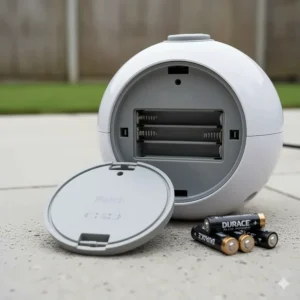
For battery-powered models, test battery contacts for corrosion, especially if you live in coastal areas where salt air accelerates oxidation. Remove batteries completely if the launcher won’t be used for extended periods (holidays, winter storage).
Rechargeable models benefit from occasional full discharge and recharge cycles to maintain battery health. Most use lithium-ion batteries that perform best with regular use rather than long idle periods.
Examine power cables for fraying or damage. Dogs sometimes chew cables, and outdoor use exposes them to weather. Replace damaged cables immediately – they’re both a safety hazard and potential machine killer.
Seasonal Considerations for UK Climate
British weather demands special attention. Before storing launchers outdoors (even in sheds), check manufacturer weatherproofing ratings. “Water-resistant” isn’t “waterproof” – most tolerate light rain but not prolonged exposure.
Winter storage presents challenges. Freezing temperatures can crack plastic housings and damage batteries. If temperatures drop below 0°C regularly, store launchers indoors. Condensation from temperature changes can also cause issues, so let machines acclimatise to room temperature before operating after cold storage.
Summer sun, whilst less common in the UK, can still fade plastic and overheat electronics. Store out of direct sunlight when not in use.
Extending Component Life
The most stressed components are typically the ball grips (wheels or drums that contact balls). These wear fastest with frequent use. Premium models use harder-wearing materials, but all eventually need replacement. Some manufacturers sell replacement parts; others don’t, effectively meaning the machine becomes disposable when these components fail.
Motor bearings are another wear point. Keeping debris out of the mechanism significantly extends bearing life. If you notice unusual grinding sounds or reduced launch power, motor bearings might be wearing out.
When to Replace vs Repair
Small repairs (replacing worn balls, cleaning mechanisms, new batteries) make economic sense. However, motor replacements or electronic board failures often cost more than buying new models, especially for budget machines. Premium models with good warranty support justify repairs; budget models under £40 rarely do.
Safety Considerations When Using Ball Launchers
Supervision Requirements
Never leave dogs completely unsupervised with active ball launchers, despite marketing claims about independent play. Accidents happen quickly. Dogs can position themselves directly in front of launch tubes or attempt to retrieve balls mid-launch. Even models with motion sensors aren’t foolproof – sensors detect movement but may not trigger for stationary dogs.
The RSPCA advises constant supervision for all interactive toys, particularly mechanical devices. Supervision doesn’t mean hovering constantly, but staying within sight and earshot to intervene if problems arise.
Preventing Over-Exercise
Enthusiastic dogs will literally fetch themselves to exhaustion. Breeds prone to this behaviour include Border Collies, Labradors, and Springer Spaniels. Over-exercising causes joint damage, heat exhaustion, and cardiovascular stress.
Use launchers’ built-in rest modes where available. The PetSafe’s 15-minute shutoff frustrates some owners but protects dogs from themselves. For models without automatic shutoffs, manually enforce 15-20 minute play limits, then mandatory 30-minute rest periods.
Watch for signs of exhaustion: excessive panting, confusion, stumbling, or reluctance to continue. If your dog shows these signs, stop immediately, provide water, and rest in shade. Young dogs and puppies particularly need protection from over-exercising, as their joints are still developing.
Choking Hazards and Ball Size
Ball size is crucial for safety. Too small creates choking risks; too large makes pickup impossible. The general rule: balls should be large enough that they can’t fit entirely in your dog’s mouth. For multi-dog households with varying sizes, use the largest ball suitable for your biggest dog, or restrict access to prevent smaller dogs accessing larger balls.
Regular ball inspection prevents choking incidents. Cracked or degraded balls can break apart, creating swallowable pieces. Replace balls showing significant wear immediately – typical replacement intervals are every 3-6 months with frequent use.
Electrical Safety Concerns
Mains-powered launchers present electrical risks. Never operate them in wet conditions unless specifically rated for outdoor use. Position power cables away from play areas where dogs might trip or chew them. Use RCD-protected outlets (residual current devices) which cut power if faults are detected.
Inspect cables before each use. Dogs occasionally chew cables when bored or teething. Even minor damage to insulation creates electrocution risks. Replace damaged cables immediately or discontinue use until repairs are completed.
Environmental Hazards
Consider surroundings when operating launchers. Launches into roads, ponds, or neighbour’s properties create obvious problems. Position launchers away from windows, fragile garden features, and flower beds. Even a well-aimed ball can cause damage.
Fencing height matters. High-trajectory launches can clear typical 1.2-1.5m British garden fences. Either use lower angle settings or ensure balls won’t escape into dangerous areas (roads) or cause neighbour disputes.
Child and Multiple Pet Interactions
Children naturally want to interact with ball launchers. Establish clear rules: no faces near launch tubes, no reaching in whilst operational, and adult supervision required. The combination of excited dogs and mechanical devices creates injury potential.
Multiple pet households need careful management. Food-aggressive dogs might display resource-guarding behaviour around launchers. Competitive play can escalate into fights. Introduce launchers to one dog at a time, ensuring each understands the toy before adding others.
Alternative Exercise Options Beyond Ball Launchers
Manual Throwing Aids
If automatic launchers don’t suit your situation, manual alternatives exist. The ChuckIt! range dominates UK markets, offering extended throw distances without electricity. These require your participation but cost £10-£25 versus £50-£120 for automatic versions.
Manual launchers suit dogs who enjoy human interaction during play. They’re also excellent for controlled training sessions and work anywhere without power requirements. The downside is continued reliance on your throwing arm and time investment.
Flirt Poles and Tug Toys
Flirt poles (essentially fishing rod-style toys with lures) provide intensive exercise in small spaces. They’re brilliant for high-prey-drive breeds and work indoors during bad weather. The RSPCA recommends these for mental and physical stimulation, particularly for terriers and similar breeds.
Tug toys offer resistance training, building muscle whilst exercising. Contrary to old myths, tug doesn’t encourage aggression when played correctly. Rules-based play (release on command, no teeth on skin) makes tug an excellent bonding activity.
Sniff and Search Games
Mental exercise can tire dogs as effectively as physical activity. Hide-and-seek games with treats, scent work training, or puzzle feeders engage different brain regions than fetch. These suit older dogs, puppies with exercise restrictions, or rainy days when outdoor play isn’t feasible.
The RSPCA emphasises that dogs naturally want to use their noses. Simple scattered feeding (throwing kibble in grass for dogs to find) provides enrichment without equipment. Progress to hiding toys or treats around homes and gardens.
Agility and Obstacle Courses
Home agility courses needn’t be expensive. DIY obstacles from household items (chairs to weave through, broomsticks for jumps) provide exercise and mental challenges. Formal agility classes are available UK-wide, offering socialisation alongside physical activity.
Swimming and Water Sports
Where accessible, swimming provides low-impact exercise ideal for older dogs or those with joint problems. Many UK locations now offer dog-friendly swimming sessions in pools, whilst beaches and rivers provide natural options. Always prioritise safety with life jackets for poor swimmers.
Social Play and Dog Parks
Organised dog play groups or regular park visits provide exercise through social interaction. Many dogs tire themselves naturally through play-fighting and chasing games with canine friends. This shouldn’t entirely replace owner-directed exercise but offers valuable socialisation.
Budget vs Premium: Which Ball Launcher Offers Best Value?
The True Cost Breakdown
Premium models (£85-£120) initially shock budgets, but value analysis requires looking beyond sticker prices. The iFetch Too at £90 offers:
- 2-3 year average lifespan (based on UK user reports)
- Rechargeable battery (saving £10-£15 monthly on replacements)
- Robust construction requiring fewer repairs
- Better safety features reducing injury risk
Budget models (£20-£50) appear attractive but often bring hidden costs:
- 6-18 month typical lifespan before failure
- Battery consumption (£8-£12 monthly)
- Replacement units when failures occur
- Fewer safety features
The “Buy Cheap, Buy Twice” Reality
UK consumer forums consistently report budget launcher experiences. Common pattern: initial enthusiasm, 3-6 months trouble-free operation, then progressive failures. Motors weaken, ball grips wear out, or electronics fail. At this point, you’re buying a replacement – effectively spending premium prices for budget quality.
The Pet Prime at £25 seems perfect, but if it lasts six months and you buy three over two years, you’ve spent £75 for budget-quality equipment. The iFetch Too at £90 for the same period provides superior performance and features.
When Budget Models Make Sense
Budget launchers aren’t inherently bad – they suit specific situations:
Trial purposes: If you’re unsure whether your dog will use a launcher, £25 represents lower risk than £90. After confirming interest, upgrade to premium models.
Infrequent use: Holiday cottage entertainment or occasional garden play doesn’t justify premium investment. Budget models handle light use adequately.
Multiple locations: Keep budget models at grandparents’ houses, holiday homes, or dog-sitting locations where theft/loss risk is higher.
Small breeds with light play: Tiny dogs exert less stress on mechanisms. Budget models often last longer for Chihuahuas than Labradors.
The Mid-Range Sweet Spot
Models like the Grezea (£56-£65) and ALL FOR PAWS Mini (£55-£70) occupy valuable middle ground. They offer most premium features at 30-40% savings. Durability typically matches budget models, but feature sets approach premium territory.
For typical UK households with medium-sized dogs and average use (15-20 minutes daily), mid-range models deliver best value. You sacrifice some durability versus premium models but gain significant savings over budget frequent replacements.
Total Cost of Ownership Analysis
Let’s examine three-year ownership costs:
Budget Route (Pet Prime):
- Initial: £25
- Replacements (3 units): £75
- Batteries (36 months × £10): £360
- Spare balls: £30
- Total: £490
Mid-Range Route (ALL FOR PAWS):
- Initial: £65
- Replacement (1 unit): £65
- Batteries/charging: £200
- Spare balls: £40
- Total: £370
Premium Route (iFetch Too):
- Initial: £90
- Replacement: £0 (lasts 3+ years)
- Charging electricity: £12
- Spare balls: £50
- Total: £152
This analysis reveals premium models often cost less long-term whilst providing superior experiences. The initial investment pays dividends through longevity and reduced running costs.
Frequently Asked Questions
❓ How long does it take to train a dog to use an automatic ball launcher?
❓ Can I use regular tennis balls instead of branded launcher balls?
❓ Are automatic ball launchers safe for puppies under six months?
❓ Will my dog's interest fade after the novelty wears off?
❓ How noisy are automatic ball launchers during operation?
Conclusion: Finding Your Perfect iFetch Ball Launcher
After examining seven top models available on Amazon.co.uk, clear patterns emerge. The iFetch Too justifies its premium price through exceptional durability, performance, and features – it’s the benchmark others chase. For budget-conscious buyers, the Pet Prime offers a low-risk entry point, perfect for testing whether your dog will engage with automatic launchers before committing to premium investment.
The middle ground deserves attention too. The ALL FOR PAWS Mini and Grezea models deliver impressive value, balancing features against affordability. They suit most UK households with average-sized gardens and typically-active dogs. Special mention goes to the iFetch Frenzy – whilst not a launcher in the traditional sense, its silent, gravity-powered design brilliantly solves the noise sensitivity and indoor play challenges many UK owners face.
Your ideal choice ultimately depends on your specific situation: dog size and energy levels, available space, budget flexibility, and power source preferences. Remember that no ifetch ball launcher review can replace understanding your own dog’s personality and needs. A £90 premium launcher sitting unused represents worse value than a £25 budget model your dog adores.
Start with realistic expectations. These devices complement but don’t replace human interaction and varied exercise. They’re brilliant tools for rainy British days, work-from-home scenarios, or when your throwing arm needs respite. Combined with traditional walks, training sessions, and social play, automatic launchers enhance your dog’s quality of life whilst preserving yours.
The investment – whether £25 or £120 – returns dividends in improved fitness, mental stimulation, and those precious moments watching your dog experience pure joy. Because ultimately, that tail-wagging enthusiasm and contented exhaustion at day’s end? That’s worth every penny.
Recommended for You
- 7 Best Automatic Ball Launcher for Dogs UK 2026
- 7 Best Durable Dog Toys for UK Dogs in 2026
- 7 Best Unbreakable Dog Toys UK 2026: Expert Reviews
Disclaimer: This article contains affiliate links. If you purchase products through these links, we may earn a small commission at no additional cost to you. Prices shown are approximate and may vary.
✨ Found this helpful? Share it with your mates! 💬🤗
