In This Article
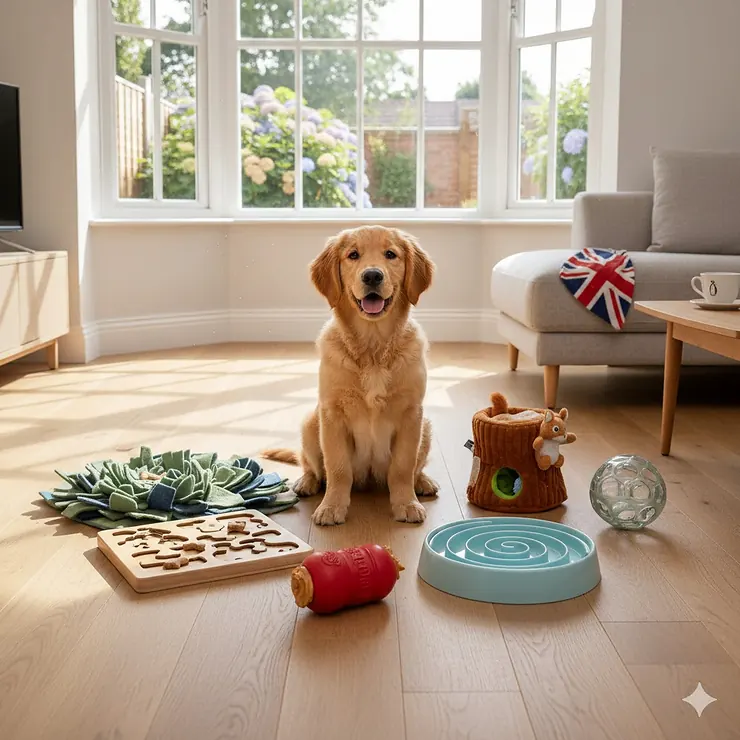
Does your furry mate seem restless even after a long walk? You’re not imagining things. Research from Guide Dogs UK reveals that mental stimulation can tire a dog out more effectively than physical exercise alone—in fact, just 15 minutes of brain games equals roughly 30 minutes of running about! This isn’t just clever marketing; it’s backed by science from institutions like Duke University’s Canine Cognition Center, which studies how our canine companions think and solve problems.
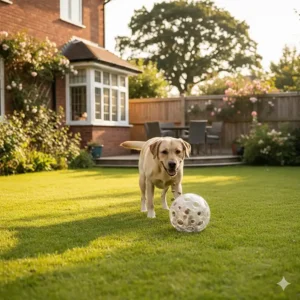
The best dog puzzle toys transform mealtimes into mental workouts, tapping into your dog’s natural foraging instincts whilst keeping destructive behaviours at bay. Whether you’ve got a Border Collie who’s outsmarted every toy in the house or a senior Labrador needing gentler cognitive challenges, puzzle toys offer engaging enrichment for every life stage. From budget-friendly snuffle mats to advanced multi-level challenges, this guide covers everything available on Amazon.co.uk in 2026, complete with honest reviews from UK pet parents.
Mental enrichment isn’t a luxury—it’s essential. A 2008 study published in Applied Animal Behaviour Science found that dogs with regular mental stimulation showed better appetites, reduced depression, increased playfulness, and notably less barking. For high-energy breeds like German Shepherds or working dogs that historically had jobs, these cognitive challenges fill a crucial gap in modern pet life.
Quick Comparison Table: Top 7 Dog Puzzle Toys at a Glance
| Product | Difficulty Level | Best For | Price Range (£) | Our Rating |
|---|---|---|---|---|
| Nina Ottosson by Outward Hound Dog Brick | Intermediate (Level 2) | Smart breeds, beginners | £12.99-£18.99 | ⭐⭐⭐⭐⭐ |
| Outward Hound MultiPuzzle Expert | Advanced (Level 4) | Puzzle masters | £22.99-£29.99 | ⭐⭐⭐⭐½ |
| TRIXIE Flip Board | Intermediate (Level 2) | Multi-dog households | £14.99-£19.99 | ⭐⭐⭐⭐⭐ |
| Vivifying Snuffle Mat | Beginner | Fast eaters, seniors | £9.99-£16.99 | ⭐⭐⭐⭐½ |
| Nina Ottosson Dog Smart | Beginner (Level 1) | Puppies, first-timers | £11.99-£15.99 | ⭐⭐⭐⭐⭐ |
| KONG Wobbler | Beginner-Intermediate | Active dogs, slow feeding | £10.99-£17.99 | ⭐⭐⭐⭐ |
| TRIXIE Move2Win Advanced | Expert (Level 3) | Experienced puzzlers | £19.99-£26.99 | ⭐⭐⭐⭐½ |
💬 Just one click – help others make better buying decisions too!😊
Top 7 Best Dog Puzzle Toys: Expert Analysis
1. Nina Ottosson by Outward Hound Dog Brick – Best Overall
Price: £12.99-£18.99
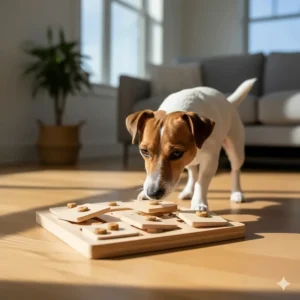
If I had to recommend just one puzzle toy for newcomers, the Dog Brick would win every time. This intermediate-level challenge features multiple treat compartments hidden beneath sliding bricks and flip-up lids, creating a multi-step problem your dog must solve. The brilliant design means you can adjust difficulty—start with just the flip lids for beginners, then add the sliding compartments as your pup’s skills develop.
Key Specifications:
- Three types of treat-hiding spots (9 compartments total)
- BPA, PVC, and phthalate-free materials
- Dishwasher safe for easy cleaning
UK customers consistently praise its durability, with one reviewer noting their Springer Spaniel has used it daily for eight months without damage. The non-slip base prevents frustrated dogs from pushing it across your newly polished floors—a thoughtful touch that shows Nina Ottosson understands real dog behaviour.
What UK Buyers Say: “Brilliant for my Cockapoo who was destroying furniture out of boredom. Now she’s obsessed with her ‘breakfast puzzle’ and actually tires herself out!” – Manchester buyer review
✅ Pros:
- Adjustable difficulty levels
- Suitable for small to large breeds
- Genuinely engaging for 10-15 minutes
❌ Cons:
- Some clever dogs solve it within days
- Small treat compartments (use kibble, not large biscuits)
2. Outward Hound by Nina Ottosson MultiPuzzle Level 4 – Most Challenging
Price: £22.99-£29.99
For dogs who’ve mastered basic puzzles and give you those “is that all you’ve got?” looks, the MultiPuzzle represents the Everest of canine brain teasers. This expert-level challenge requires sequential problem-solving—your dog must complete steps in the correct order to access hidden treats. It features a rotating centre wheel and sliding compartments that only reveal treats when manipulated in specific sequences.
Key Specifications:
- Sequential multi-step solving required
- 300-gram capacity across multiple compartments
- Food-safe composite materials
One London-based Border Collie owner shared that it took their notoriously clever dog three days to crack the system—and even then, it provides 15-20 minutes of engagement each session. The complexity means this isn’t one they’ll solve instantly, maintaining long-term interest that cheaper toys simply can’t match.
What UK Buyers Say: “My Australian Shepherd was destroying Level 2 puzzles in minutes. This actually challenges him. Worth every penny!” – Edinburgh customer
✅ Pros:
- Genuinely difficult for even smart breeds
- Durable construction (four-year user reports)
- Multiple treat hiding locations
❌ Cons:
- Higher price point (but excellent value)
- Can frustrate dogs new to puzzles
3. TRIXIE Flip Board Interactive Puzzle – Best Value
Price: £14.99-£19.99
The TRIXIE Flip Board offers exceptional bang for your pound. This intermediate puzzle combines flip, slide, and lift mechanisms across different compartments, providing varied challenges that keep dogs guessing. German engineering meets practical pet design—it’s robust enough for enthusiastic pawing whilst remaining light enough for older dogs to manipulate.
Key Specifications:
- Five different opening techniques
- BPA and phthalate-free plastic
- Dishwasher safe (top rack)
What sets TRIXIE apart is their commitment to varied difficulty within single products. Some compartments flip easily, others require sliding, and a few demand lifting—meaning one puzzle keeps multiple skill levels engaged. Perfect for households with several dogs of varying cleverness!
What UK Buyers Say: “Better than more expensive brands. My Westie and Beagle both use it without fighting over whose turn it is.” – Bristol review
✅ Pros:
- Multiple challenge types in one puzzle
- Excellent build quality for price
- Easy to clean thoroughly
❌ Cons:
- Some dogs focus on one compartment type
- Lighter weight (determined dogs might flip it)
4. Vivifying Snuffle Mat for Dogs – Best for Beginners & Seniors
Price: £9.99-£16.99
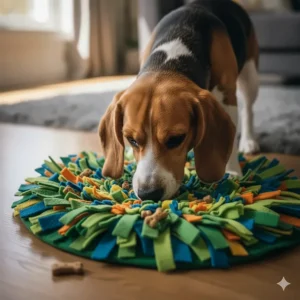
Don’t underestimate the humble snuffle mat—these fleece masterpieces tap into your dog’s most powerful sense whilst providing calming, natural enrichment. The Vivifying Snuffle Mat features densely packed fleece strips in varying lengths, creating hundreds of hiding spots for kibble or treats. It’s particularly brilliant for senior dogs, anxious pups, or fast eaters who need to slow down.
Key Specifications:
- 68cm diameter (suitable for large breeds)
- Machine washable at 30°C
- Non-slip backing for carpet or hard floors
Research published by the National Center for Biotechnology Information demonstrates that sniffing activities release dopamine in dogs’ brains—the same “happy chemical” humans get from enjoyable activities. One clever Manchester owner uses it for their reactive rescue dog’s breakfast, noting it helps establish calm morning routines before walks.
What UK Buyers Say: “My 14-year-old Lab can’t do complicated puzzles anymore, but absolutely loves his snuffle mat. Keeps him engaged without frustration.” – Glasgow buyer
✅ Pros:
- Calming for anxious dogs
- Slows down fast eaters naturally
- Machine washable (critical for hygiene)
❌ Cons:
- Some dogs try to “dig” it up
- Requires supervision initially
5. Nina Ottosson Dog Smart Composite Puzzle – Best for First-Time Puzzlers
Price: £11.99-£15.99
The Dog Smart is specifically designed as an introduction to puzzle toys—perfect for puppies or dogs who’ve never encountered interactive challenges before. Nine treat compartments hide beneath removable bone-shaped covers that dogs nudge or paw away to reveal their rewards. The simplicity is deliberate; it builds confidence whilst teaching the fundamental concept of “work equals reward.”
Key Specifications:
- Nine treat hiding compartments
- Level 1 difficulty (one-step actions)
- Food-safe composite materials
Veterinary behaviourists often recommend starting with Level 1 puzzles to prevent frustration that might put dogs off mental enrichment entirely. The Dog Smart strikes this balance perfectly—easy enough to encourage but engaging enough to provide genuine mental stimulation. One Norwich Terrier owner noted their previously destructive puppy now chooses puzzle time over chewing skirting boards!
What UK Buyers Say: “Perfect first puzzle. My Cavalier figured it out quickly but still enjoys it months later. Great confidence builder!” – Leeds review
✅ Pros:
- Builds problem-solving confidence
- Suitable for tiny to medium breeds
- Quiet operation (no clattering)
❌ Cons:
- Very smart dogs may need upgrading quickly
- Not suitable for aggressive chewers
6. KONG Wobbler Interactive Treat Dispenser – Best for Active Dogs
Price: £10.99-£17.99
The KONG Wobbler takes a different approach to mental stimulation—it’s part puzzle, part physical exercise. This weighted, egg-shaped dispenser wobbles unpredictably as dogs bat it around, randomly releasing kibble through adjustable openings. It’s particularly brilliant for high-energy breeds that need to burn physical and mental energy simultaneously.
Key Specifications:
- Adjustable difficulty via hole size
- Weighted base prevents tipping
- Suitable for outdoor use
KONG Company has manufactured pet products since 1976, and their durability is legendary. The Wobbler’s thick-walled construction withstands enthusiastic play whilst the unpredictable movement keeps dogs engaged far longer than static puzzles. One Birmingham Staffie owner uses it for entire meals, noting it transformed their dog’s eating from 60 seconds to 15 minutes of engaged activity.
What UK Buyers Say: “My Springer was putting on weight from eating too fast. This slows him down AND tires him out. Genius!” – Cardiff buyer
✅ Pros:
- Combines mental and physical exercise
- Nearly indestructible construction
- Great for portion control
❌ Cons:
- Can be noisy on hard floors
- Not suitable for small/toy breeds
7. TRIXIE Move2Win Level 3 Advanced Puzzle – Best for Experienced Dogs
Price: £19.99-£26.99
The Move2Win represents TRIXIE’s pinnacle of puzzle complexity. This advanced Level 3 challenge features four different compartment types that require lifting, pulling via loops, and sliding knobs along specific paths. It’s designed for dogs who’ve mastered intermediate puzzles and need genuine mental challenges to stay engaged.
Key Specifications:
- Four difficulty levels in one puzzle
- Non-slip rubber feet
- Includes instructional booklet with training tips
What makes this exceptional is its teaching potential—the included guide explains how to introduce each difficulty level progressively, building your dog’s problem-solving skills systematically. One Yorkshire-based dog trainer uses it for cognitive assessment, noting that dogs who master all four levels demonstrate exceptional spatial reasoning.
What UK Buyers Say: “My working Cocker needed something genuinely challenging. This keeps her busy for 20 minutes and she actually sleeps afterwards!” – Newcastle review
✅ Pros:
- Progressive difficulty levels
- Training guide included
- Excellent for smart working breeds
❌ Cons:
- Can frustrate beginners
- Small parts require supervision
✨ Don’t Miss These Exclusive Deals!
🔍 Take your dog’s mental enrichment to the next level with these carefully selected products. Click on any highlighted item to check current pricing and availability on Amazon.co.uk. These tools will help you create authentic engagement your clever canine will love!
Understanding Canine Intelligence: Why Puzzle Toys Matter
The Science Behind Dog Brains
Dogs possess cognitive abilities roughly equivalent to a 2-year-old human child, according to renowned canine researcher Professor Stanley Coren. The average dog can learn approximately 150 words, count up to four or five, and solve basic problems through observation and trial-and-error. However, like human brains, canine cognition requires regular exercise to maintain sharpness—particularly as dogs age.
Research published in Neurobiology of Aging demonstrates that dogs receiving regular cognitive enrichment alongside antioxidant-rich diets showed significantly reduced age-related cognitive decline. The brain, whether human or canine, operates on a “use it or lose it” principle. Without regular mental challenges, neural pathways can weaken, leading to reduced problem-solving abilities and increased confusion.
What makes puzzle toys particularly effective is their ability to activate multiple cognitive processes simultaneously. When your dog approaches a puzzle toy, they must remember past experiences, plan sequential actions, maintain focus despite distractions, and demonstrate physical dexterity. This comprehensive brain workout provides far more stimulation than passive activities like watching squirrels through windows.
Breed-Specific Intelligence Considerations
Not all dogs approach puzzles identically—breed characteristics significantly influence problem-solving styles. Border Collies and German Shepherds, bred for centuries to work independently and make decisions, often excel at complex puzzles requiring sequential thinking. Conversely, scent hounds like Beagles may initially struggle with visual puzzles but absolutely dominate snuffle mats and scent-based challenges.
Understanding your dog’s breed tendencies helps select appropriate puzzles. Retrievers typically enjoy toys involving mouthing and carrying, whilst terriers—bred to dig and excavate—often prefer puzzles with flaps to lift and compartments to “dig” into. This doesn’t mean breeds can’t learn outside their natural inclinations; it simply means starting with breed-appropriate challenges builds confidence faster.
Working breeds require particularly robust mental stimulation. These dogs were developed to perform complex tasks for hours daily—herding sheep, retrieving game, guarding property. Modern pet life rarely provides equivalent challenges, leading to frustration that manifests as destructive behaviour. Puzzle toys offer a productive outlet that satisfies their need to work and solve problems.
Age-Appropriate Mental Challenges
Puppies benefit from puzzle toys differently than adult or senior dogs. For young pups (8-16 weeks), puzzles serve primarily as confidence builders whilst reinforcing that thinking brings rewards. Simple Level 1 toys with obvious solutions work best, preventing frustration whilst establishing positive associations with problem-solving.
Adult dogs (1-7 years) can handle increasingly complex challenges. This life stage represents their cognitive peak, when learning new skills comes easiest and retention remains sharpest. Rotating between different puzzle types prevents boredom whilst continuously challenging their growing abilities.
Senior dogs (8+ years) particularly benefit from regular mental stimulation. Multiple studies, including research from Duke University’s Canine Cognition Center, show that older dogs maintaining active cognitive engagement demonstrate slower mental decline. However, puzzles for seniors should consider potential arthritis or reduced dexterity—snuffle mats and simple sliding puzzles work better than those requiring significant jaw strength or complex motor skills.
How to Choose the Right Puzzle Difficulty Level
Assessing Your Dog’s Current Skills
Before purchasing puzzle toys, honestly evaluate your dog’s current problem-solving abilities. Has your dog ever worked for food beyond their bowl? Do they show interest in interactive play, or prefer passive activities? These observations help select appropriate starting difficulties.
Begin with Level 1 puzzles if your dog has never encountered food puzzles before, regardless of their breed’s reputation for intelligence. Starting too difficult creates frustration, potentially putting them off mental enrichment entirely. One Scottish veterinary behaviourist noted that most “problem” dogs she encounters simply need appropriately challenging activities—not medication.
Watch how your dog approaches problems. Do they give up quickly, or persist determinedly? Patient, persistent dogs can handle higher difficulties sooner, whilst easily-frustrated pups benefit from longer periods with simpler puzzles. There’s no shame in having a dog who prefers Level 1 puzzles indefinitely—the goal is engagement and enjoyment, not proving canine genius.
Progressive Difficulty Advancement
The Nina Ottosson and TRIXIE puzzle systems both use standardised difficulty levels, making progression logical. Level 1 involves single-step actions (lift, slide, or flip). Level 2 combines actions or adds obstacles. Level 3 requires sequential steps in specific orders. Level 4 demands complex multi-step sequences with problem-solving adaptation.
Progress between levels only when your dog consistently solves puzzles within 5-10 minutes. If they’re still challenged and engaged, there’s no rush to increase difficulty. Some dogs happily work the same puzzle for months, particularly if you vary treat types to maintain interest.
Introduce new difficulty levels alongside familiar puzzles initially. This prevents frustration whilst building confidence. For example, keep their mastered Level 1 puzzle available whilst introducing a Level 2—if the new puzzle becomes overwhelming, they can retreat to their “comfort puzzle” for a success experience.
Customising Challenges for Your Dog
Puzzle toys offer adjustment opportunities beyond manufacturer difficulty levels. Change treat types to modify engagement—high-value treats (cheese, dried liver) increase motivation for difficult puzzles, whilst kibble works perfectly for easier challenges or daily use.
Modify puzzle complexity by blocking certain compartments or removing moveable pieces initially. The TRIXIE Flip Board, for instance, can start with just flip compartments available, then gradually reveal sliding sections as skills develop. This customisation extends each puzzle’s lifespan considerably.
Environmental modifications also affect difficulty. Placing puzzles on carpet versus hard floors changes the challenge—carpet provides grip for pawing, whilst hard floors make toys slide around, adding complexity. Some owners use puzzle toys in different rooms, noting that environmental novelty increases engagement even with familiar toys.
Mental Stimulation Benefits: Beyond Boredom Relief
Reducing Destructive Behaviours
Destructive chewing, excessive barking, and household destruction rarely stem from spite—they’re symptoms of understimulation. Dogs are intelligent creatures bred for specific jobs; without appropriate outlets, they create their own “entertainment” that rarely aligns with human preferences.
A 2008 study in Applied Animal Behaviour Science examining kennelled dogs found those receiving regular enrichment toys showed dramatically reduced problematic behaviours. Better appetites, decreased depression indicators, increased playfulness, and notably less barking all correlated with mental stimulation access.
Think of puzzle toys as preventative maintenance. Fifteen minutes with a challenging puzzle can provide enough mental tiredness to prevent hours of potential destruction. One Cambridge owner noted their previously destructive rescue Staffie hasn’t touched furniture since implementing morning puzzle feeding—the mental workout satisfies his need to “do something” productively.
Anxiety and Stress Management
Mental stimulation activates reward pathways in dogs’ brains, releasing endorphins and dopamine—the same neurochemicals associated with happiness and calm in humans. For anxious dogs, particularly those struggling with separation issues, puzzle toys can provide crucial distraction and stress relief.
Guide Dogs UK specifically recommends enrichment activities for managing canine anxiety. Snuffle mats, in particular, leverage sniffing’s calming properties—the repetitive, focused activity of searching for treats naturally lowers heart rate and promotes relaxation. It’s similar to how focused activities like knitting or gardening calm stressed humans.
However, puzzle difficulty matters for anxious dogs. Overly challenging puzzles increase frustration, potentially worsening anxiety. Start with simple successes—Level 1 puzzles or snuffle mats—building positive associations before gradually increasing complexity. The goal is calm engagement, not cognitive testing.
Supporting Senior Dog Cognition
Canine cognitive dysfunction (CCD) affects over one-third of dogs aged 8+, causing symptoms similar to human dementia—confusion, disrupted sleep patterns, house-training accidents, and decreased social interaction. Whilst medication can help, research consistently shows that mental stimulation significantly slows this decline.
A landmark study in Experimental Gerontology followed senior Beagles receiving cognitive enrichment and antioxidant-rich diets. Results showed dramatically better discrimination learning and problem-solving compared to control groups. The researchers concluded that lifelong mental engagement, combined with proper nutrition, effectively delays age-related cognitive deterioration.
For senior dogs, puzzle toys should emphasise success over difficulty. Snuffle mats work beautifully—they engage the nose without requiring complex motor skills or frustrating physical manipulation. Simple Level 1 puzzles remain engaging whilst preventing the frustration that might discourage an older dog from trying.
Strengthening the Human-Dog Bond
Puzzle toy training creates unique bonding opportunities. When you teach your dog how new puzzles work, you’re not just providing entertainment—you’re communicating, problem-solving together, and celebrating successes as a team. This shared activity strengthens your relationship whilst building trust and mutual understanding.
Many UK owners report that puzzle toy time becomes a cherished routine. One Norfolk owner describes their evening “puzzle hour” where their Border Collie works through various challenges whilst the family watches—it’s become appointment viewing that brings everyone together. These shared experiences create positive associations that extend beyond puzzle time.
Training puzzle skills also improves general obedience and communication. Dogs learning to solve puzzles become better listeners, more focused, and increasingly patient. They learn that thinking brings rewards, making them more responsive to training in other areas. It’s a beautiful cycle where mental stimulation improves trainability, which enables more complex enrichment, which further enhances cognitive abilities.
Puzzle Toy Comparison: Traditional vs. Interactive Feeding
| Feature | Traditional Bowl | Snuffle Mat | Puzzle Toy | Wobbler/Dispenser |
|---|---|---|---|---|
| Eating Speed | Very fast (30-60 seconds) | Slow (5-10 minutes) | Moderate-Slow (10-15 minutes) | Slow (10-20 minutes) |
| Mental Engagement | None | Moderate-High | High | Moderate |
| Physical Activity | None | Low | Low-Moderate | High |
| Difficulty Levels | N/A | One level | Multiple levels | Adjustable |
| Best For | Non-food motivated dogs | Anxious dogs, seniors | Smart breeds | Active dogs, weight management |
| Cleaning Ease | Very easy | Moderate (machine washable) | Easy (dishwasher safe) | Easy |
| UK Price Range | £5-£15 | £10-£17 | £12-£30 | £11-£18 |
Safety Considerations When Using Puzzle Toys
Supervision Requirements
Always supervise initial puzzle toy sessions. Dogs unfamiliar with interactive feeders might become frustrated or try inappropriate problem-solving methods—like chewing through plastic to reach treats. Supervision allows you to guide them toward correct solving techniques whilst preventing potential hazards.
Watch for frustration signals—excessive pawing, barking, or abandoning the puzzle entirely. If your dog seems overwhelmed, simplify the challenge. Make treat hiding more obvious, reduce puzzle complexity, or switch to an easier toy temporarily. Building confidence through success matters more than pushing through difficult challenges.
Some puzzle toys contain small, removeable parts that determined chewers might detach and potentially swallow. The Nina Ottosson bone covers, whilst designed to be safe, could pose choking hazards for extremely aggressive chewers. Know your dog’s chewing tendencies and select appropriate puzzles accordingly.
Material Safety and Durability
Quality puzzle toys use BPA, PVC, phthalate, and lead-free materials—these certifications appear in reputable brands like Nina Ottosson, TRIXIE, and KONG. Cheaper alternatives often lack these safety standards, potentially exposing dogs to harmful chemicals, particularly when combined with food.
Durability matters beyond longevity—poorly constructed toys break, creating sharp edges or detachable pieces that could cause injury. UK safety regulations require pet toys meet specific standards, but enforcement varies. Stick with established brands that have track records for safety.
Inspect puzzle toys regularly for wear. Cracks, broken pieces, or significant scratching indicate replacement time. Even high-quality toys eventually wear out—that’s normal. But continuing to use damaged puzzles risks injury from sharp edges or swallowed fragments.
Appropriate Treat Selection
Not all treats work equally well in puzzle toys. Size matters—treats too large won’t fit through dispensing holes, whilst tiny treats make puzzles too easy. Kibble-sized pieces (roughly 1cm or smaller) work best for most puzzle types.
Consider moisture content. Wet or greasy treats can gum up puzzle mechanisms, making cleaning difficult and potentially encouraging bacterial growth. Save soft treats for snuffle mats or lick mats specifically designed for wet food. Puzzle toys with moving parts work best with dry kibble or freeze-dried treats.
Calorie considerations matter, particularly for weight-management dogs. Puzzle toys encourage slower eating, which aids digestion and increases satisfaction from smaller portions. Some owners use puzzle toys for entire meals, eliminating traditional bowl feeding entirely. This approach works beautifully for food-motivated dogs whilst preventing treat-related weight gain.
Price vs. Value: Investment Analysis
Budget-Friendly Options (£10-£15)
Entry-level puzzle toys offer excellent value for testing whether your dog enjoys mental enrichment before investing heavily. The Nina Ottosson Dog Smart and Vivifying Snuffle Mat both retail under £16 whilst providing genuine engagement for most dogs.
Budget options work particularly well for households uncertain about long-term commitment or those with puppies who might outgrow preferences quickly. However, cheaper puzzles often sacrifice durability—expect budget toys to last 6-12 months with regular use, versus premium options lasting years.
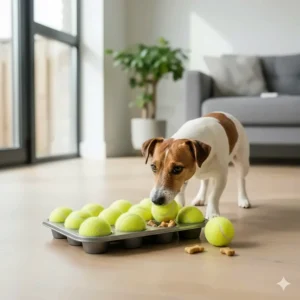
DIY alternatives cost virtually nothing. Hiding kibble in rolled towels, placing treats under muffin tins with tennis balls on top, or scattering food in cardboard boxes provides enrichment without expense. These work wonderfully for variety but lack the systematic difficulty progression and durability of commercial products.
Mid-Range Quality (£15-£20)
This price range represents optimal value for most UK dog owners. Products like the TRIXIE Flip Board and KONG Wobbler balance quality construction, engaging challenges, and reasonable pricing. They’ll withstand daily use for years whilst providing enough complexity to maintain long-term interest.
Mid-range puzzles typically feature:
- Food-safe, durable materials
- Dishwasher-safe construction
- Multiple difficulty adjustments
- Well-designed mechanisms that won’t break easily
For most households, investing £15-20 in quality puzzle toys makes more sense than purchasing multiple cheap alternatives that break quickly. One Bristol owner calculated spending £45 on budget toys over two years before investing £18 in a TRIXIE puzzle that’s lasted three years and counting.
Premium Investment (£20+)
Premium puzzles like the Outward Hound MultiPuzzle Level 4 command higher prices but offer exceptional value for smart, experienced puzzle dogs. These represent long-term investments—properly maintained, they’ll provide years of daily enrichment.
Consider premium options when:
- Your dog has mastered cheaper puzzles quickly
- You have working breeds requiring serious mental challenges
- You’re committed to puzzle feeding long-term
- Budget allows for quality tools
The cost-per-use calculation favours premium puzzles for dedicated users. A £28 puzzle used daily for three years costs less than 3 pence per session—exceptional value for 15-20 minutes of quality mental stimulation.
Top Interactive Brain Games for Dogs
Scent Work and Nose Games
Dogs’ olfactory abilities vastly exceed human capabilities—they possess roughly 300 million scent receptors compared to our paltry 6 million. Leveraging this natural talent through scent work provides incredibly enriching mental exercise whilst tapping into instinctive behaviours.
Start with simple scent games using treats hidden in obvious locations. Gradually increase difficulty by hiding treats in harder-to-find spots or using scent articles (items carrying specific smells) instead of visible treats. This progression mirrors professional scent-work training used for detection dogs.
Advanced scent work involves teaching dogs to identify specific scents—lavender, vanilla, or even individual family members’ scents—and indicate when they’ve found them. The Kennel Club offers scent work competitions where dogs of any breed can compete based purely on nose talent rather than physical abilities.
Hide and Seek Variations
Hide and seek engages multiple cognitive functions simultaneously—memory, problem-solving, scent discrimination, and spatial awareness. Begin with obvious hiding spots (behind doors your dog watched you approach) and gradually increase difficulty as they understand the game.
For solo play, hide favourite toys around your home before leaving for work. Many dogs self-entertain by “hunting” hidden treasures throughout the day. One Edinburgh owner hides three squeaky toys daily before leaving; her Springer systematically searches the house, proudly presenting each find upon her return.
Advanced versions involve hiding family members in different rooms and having your dog find specific people on command. This teaches name recognition whilst providing fantastic mental stimulation for social dogs who love interactive games with their humans.
Training New Tricks
Teaching new tricks or commands provides mental stimulation whilst enhancing your dog’s skill set and your mutual communication. The process of learning—attempting, failing, adjusting, and succeeding—exercises cognitive pathways more effectively than performing mastered behaviours.
Focus on practical tricks that serve double purposes. “Touch” (touching their nose to your hand) helps with recall and prevents jumping. “Find it” becomes useful for locating lost items. “Spin” or “roll over” impresses visitors whilst building body awareness and coordination.
Research from Duke University demonstrates that dogs learn optimally through positive reinforcement and novel challenges. Even senior dogs show improved cognitive function when consistently learning new skills, regardless of their age when training begins.
Environmental Enrichment
Mental stimulation extends beyond toys into environmental enrichment. Varying walking routes exposes dogs to new sights, sounds, and smells that engage their brains differently than physical exercise alone. A 20-minute “sniff walk” where your dog controls pace and direction often provides more mental tiredness than an hour’s structured march.
Create sensory gardens featuring dog-safe plants with interesting textures and scents. Lavender and chamomile offer calming aromatherapy, whilst mint and lemon balm provide energising smells. Ensure all plants are non-toxic—the Blue Cross maintains comprehensive lists of dog-safe versus dangerous plants for UK gardens.
Indoor enrichment includes scattering feeding, where you distribute kibble throughout rooms rather than using bowls. This mimics natural foraging behaviours whilst encouraging dogs to use their noses actively. One Manchester owner combines this with puzzle toys, creating multi-stage treasure hunts that keep their working Cocker engaged for 30+ minutes daily.
Troubleshooting Common Puzzle Toy Challenges
“My Dog Isn’t Interested in Food Puzzles”
Not all dogs instantly embrace puzzle toys—some show initial confusion or disinterest. Start with exceptionally high-value treats (cheese, hot dog pieces, or dried liver) to increase motivation. Make the puzzle ridiculously easy initially, literally showing your dog how treats appear when they interact with it.
Some dogs prefer certain puzzle types over others. If traditional sliding puzzles don’t spark interest, try snuffle mats, which engage different instincts. Conversely, dogs uninterested in sniffing might prefer wobbler dispensers that involve physical activity alongside problem-solving.
Timing matters. Introduce puzzles when your dog is genuinely hungry—before mealtimes rather than after. Satiated dogs lack motivation to work for food. One Brighton owner discovered their Westie adored puzzles at breakfast but ignored them completely after dinner.
“My Dog Cheats or Gets Frustrated”
Clever dogs often find “shortcuts” that bypass intended solving methods—flipping puzzles over, using force to break compartments, or pawing frantically rather than thinking. These behaviours indicate the puzzle is either too difficult or your dog hasn’t learned the concept of methodical problem-solving.
Reduce difficulty immediately when frustration appears. Success builds confidence; repeated failure builds avoidance. Go back to simpler puzzles or make current ones easier by leaving treats partially visible or reducing the number of steps required.
Teach calm problem-solving through positive reinforcement. Reward gentle, thoughtful interactions and ignore frantic pawing or aggressive behaviours. Some dogs need explicit training that calm thinking—not frenzied effort—brings rewards.
“My Dog Solved It Too Quickly”
Smart dogs master puzzles rapidly, which seems disappointing after investing in quality toys. However, this represents success—your dog is demonstrating excellent cognitive abilities! The solution isn’t easier puzzles but increased difficulty or variety.
Rotate puzzle toys weekly rather than leaving them constantly available. Novelty maintains engagement far better than familiar challenges, even when your dog “knows” how to solve them. One Cambridge owner maintains six different puzzles, rotating two weekly for constant variety.
Create artificial difficulty by modifying puzzles. Cover some compartments, hide puzzles inside cardboard boxes that must be opened first, or freeze puzzle toys with wet treats, extending solving time significantly. These modifications breathe new life into mastered toys without purchasing replacements.
“Cleaning Seems Impossible”
Food-based enrichment inevitably creates cleaning requirements. Most quality puzzle toys are dishwasher-safe (top rack) for thorough cleaning. For quick daily maintenance, rinse with hot water immediately after use, preventing residue from hardening.
Snuffle mats require machine washing weekly minimum, particularly with wet or greasy treats. Use a gentle cycle at 30°C and air dry thoroughly—tumble drying can melt synthetic fibres or cause shrinkage. One Birmingham owner purchased two identical snuffle mats, rotating them to ensure one’s always clean and dry.
Prevent sticky residue by sticking with dry treats. Kibble, freeze-dried meat, or commercial dog biscuits won’t gum up mechanisms like peanut butter or cheese. Save soft treats for toys specifically designed for them (lick mats, KONG classics) rather than mechanical puzzles.
FAQ: Your Dog Puzzle Toy Questions Answered
❓ Are puzzle toys suitable for aggressive chewers?
❓ How long should my dog spend with puzzle toys daily?
❓ Can I use puzzle toys for my dog's entire meal?
❓ What difficulty level should I start with for my first puzzle toy?
❓ How do I know if my dog is cognitively declining and needs puzzle toys?
Conclusion: Transform Your Dog’s Mental Wellbeing Today
The best dog puzzle toys aren’t luxury items—they’re essential tools for canine wellbeing in 2026. From the versatile Nina Ottosson Dog Brick perfect for beginners, to the challenging Outward Hound MultiPuzzle for experienced puzzlers, there’s an option for every dog and budget available on Amazon.co.uk.
Remember that mental stimulation equals physical exercise in importance. Those 15 minutes of focused puzzle-solving can prevent hours of potential destruction whilst strengthening your bond and keeping your dog’s mind sharp well into their senior years. Whether you’re addressing existing behavioural issues, preventing boredom in high-energy breeds, or supporting cognitive health in older dogs, puzzle toys offer proven, science-backed benefits.
Start with Level 1 puzzles or snuffle mats to build confidence, then progress based on your dog’s enthusiasm and abilities. Rotate toys to maintain novelty, clean thoroughly to ensure hygiene, and always supervise initial sessions. Most importantly, celebrate your dog’s successes—those moments of discovery when they crack a new puzzle rank among the most joyful experiences in dog ownership.
Your dog’s brain deserves the same care and attention you give their physical health. Invest in quality puzzle toys today and watch your furry companion transform into the engaged, happy, mentally-stimulated dog they were meant to be.
Recommended for You
- 7 Best Nina Ottosson Dog Puzzles UK: Complete Guide 2026
- 7 Best Toys for Destructive Dogs UK 2026
- 7 Best Kong Wobbler & Treat Dispensers for UK Dogs 2026
Disclaimer: This article contains affiliate links. If you purchase products through these links, we may earn a small commission at no additional cost to you. Prices shown are approximate and may vary. All products featured are available on Amazon.co.uk and prices are shown in GBP including VAT where applicable.
✨ Found this helpful? Share it with your mates! 💬🤗
