

In This Article
Every year, thousands of British dogs suffer serious injuries from wooden sticks—and most owners have no idea they’re playing with danger. According to The Kennel Club, stick injuries are now as common as road traffic accidents amongst dogs in the UK, with the British Veterinary Association reporting that three in four vets treated stick-related injuries in 2017 alone. The culprit? Splinters that puncture throats, impale soft tissue, and cause life-threatening infections that can cost thousands in emergency veterinary bills.

Enter the rubber fetch stick—a brilliantly simple solution that’s transformed how British dog owners approach outdoor play. These clever toys replicate the shape and satisfaction of a traditional stick without the horrifying risks. Made from natural or synthetic rubber, they’re designed to withstand aggressive chewing whilst protecting your dog’s mouth, throat, and internal organs from the catastrophic injuries that wooden sticks can inflict.
What makes a rubber fetch stick particularly suited to British conditions is durability in our famously damp climate. Unlike fabric toys that turn mouldy after one soggy walk through Richmond Park or a romp along Portobello Beach, quality rubber toys can be rinsed clean and dried without degrading. They float in ponds and rivers, bounce unpredictably to keep fetch interesting, and many models include hollow ends for stuffing with treats—ideal for mental stimulation during those endless rainy days when your garden resembles a small lake.
In this comprehensive guide, I’ve researched and analysed the top rubber fetch stick options available on Amazon.co.uk in 2026. You’ll discover which models suit different dog sizes and chewing intensities, how to choose between natural and synthetic rubber, and—crucially—which products actually deliver on their promises versus those that fall apart within days. Whether you’re navigating the muddy footpaths of the Peak District or exercising your terrier in a compact London garden, there’s a rubber fetch stick here that’ll suit your needs.
Quick Comparison: Top Rubber Fetch Sticks at a Glance
| Product | Size Range | Material Type | Best For | Price Range (GBP) |
|---|---|---|---|---|
| Beco Natural Rubber Super Stick | 22cm | Natural rubber | Eco-conscious owners, treat stuffing | £12-£15 |
| KONG SafeStix | Small, Medium, Large | Flexible polymer | Budget buyers, tough chewers | £6-£12 |
| Chuckit! Air Fetch Stick | Small, Medium, Large | Lattice rubber | Active dogs, water play | £8-£14 |
| KONG Reflex Stick | One size | Self-healing polymer | Extreme chewers, beach play | £10-£15 |
| KONG Puppy Teething Stick | Small, Medium | Soft natural rubber | Teething puppies under 9 months | £7-£10 |
| Chuckit! Ultra Fetch Stick | Medium | Ultra-durable rubber | Aggressive fetch players | £9-£13 |
| KONG Signature Stick with Rope | Medium | Multi-layer rubber + rope | Interactive tug play | £7-£9 |
From this comparison, the KONG SafeStix emerges as the best value option for most British households—particularly if you’ve got a powerful chewer and limited storage space. However, eco-conscious owners will appreciate the Beco Natural Rubber Super Stick‘s sustainability credentials, whilst those with hyperactive retrievers should seriously consider the Chuckit! Air Fetch Stick for its breathable lattice design that prevents exhaustion during extended play sessions. Budget matters, but so does longevity: a £6 stick that lasts six months delivers better value than a £15 model that disintegrates in three weeks.
💬 Just one click—help others make better buying decisions too! 😊
Top 7 Rubber Fetch Sticks: Expert Analysis
1. Beco Natural Rubber Super Stick
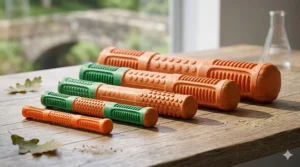
The Beco Natural Rubber Super Stick is tapped directly from rubber trees, making it the most environmentally responsible option on this list. Measuring 22 × 8 × 3.6cm, it’s sized perfectly for medium to large breeds—think Labradors, Border Collies, and Springer Spaniels. What sets this apart from cheaper alternatives is the hollow ends that accept nut butter or paste, transforming it from a simple fetch toy into an enrichment activity that can occupy your dog for 20-30 minutes.
In practice, this dual-purpose design means you’re getting remarkable value for the £12-£15 price bracket. On drizzly British mornings when a long walk isn’t feasible, you can stuff the ends with peanut butter (ensure it’s xylitol-free) and let your dog work through it indoors without destroying your carpets. The bright yellow or orange colour shows up brilliantly against autumn leaves or muddy fields—a genuine advantage when you’re searching for a dropped toy in the fading light of a December afternoon in Yorkshire.
Customer feedback from UK buyers highlights impressive durability for moderate chewers, with several reviewers reporting 4-6 months of regular use before replacement. However, owners of power chewers like Staffordshire Bull Terriers note it can be demolished in days if left unsupervised. The natural rubber has a distinctive smell when new—some dogs adore it, others need a thorough wash first. As a Beco product, it carries the company’s 1% for Planet commitment and Climate Neutral certification, which matters to the growing number of British pet owners prioritising sustainable purchasing.
✅ Pros:
- Natural rubber sourced from sustainable plantations
- Hollow ends for treat stuffing and enrichment
- Bright colours for visibility in British countryside
- Ergonomic design that’s easy to grip and throw
- Climate Neutral and B Corp certified
❌ Cons:
- Not indestructible for aggressive chewers
- Strong rubber smell initially (requires washing)
Price verdict: Around £12-£15—mid-range pricing that’s justified by the eco-credentials and dual-purpose functionality.
2. KONG SafeStix
The KONG SafeStix is the budget champion of this roundup, available from around £6 for the small size. What you’re getting is a flexible polymer stick (not pure rubber, technically) that bends rather than breaks—a crucial safety feature. Available in small, medium, and large sizes, it’s genuinely versatile across breeds from Jack Russells to German Shepherds. The material is harder than the Beco option, which means it stands up remarkably well to determined chewing.
Here’s what Amazon.co.uk reviews won’t tell you: early SafeStix models (pre-2023) were manufactured differently and earned stellar ratings for durability. Some newer batches, particularly those badged as “KONG” rather than the original SafeStix branding, have received complaints about breaking when pulled during tug games. If you’re primarily using it for throwing rather than aggressive tugging, you’re unlikely to encounter issues. For throwing, it excels—lightweight enough to achieve good distance without risk of injury if it accidentally hits your dog mid-flight.
The stick measures roughly 30cm for the medium size, making it ideal for UK suburban gardens where you’ve got 10-15 metres of lawn rather than sprawling acreage. UK buyers particularly praise how easy it is to spot in long grass due to the bright colour options. One Boxer owner from Bristol reported theirs lasting six months with moderate use, whilst a reviewer with a particularly destructive Collie managed only “a couple of pulls” before it separated. The variability suggests quality control issues worth noting.
✅ Pros:
- Excellent value at £6-£12 depending on size
- Flexible design reduces injury risk
- Three size options suit most breeds
- Lightweight for easy throwing
- Available with Prime delivery on Amazon.co.uk
❌ Cons:
- Recent batches less durable than earlier versions
- Can break during aggressive tug-of-war play
Price verdict: At £6-£12, it’s the most affordable quality option—perfect for trying out rubber sticks before investing in premium models.
3. Chuckit! Air Fetch Stick
The Chuckit! Air Fetch Stick features a genius lattice design that allows airflow whilst your dog carries it, preventing the dangerous airway occlusion that can occur with solid toys. Priced in the £8-£14 range on Amazon.co.uk depending on size, it targets active dogs whose fetch sessions last 20-30 minutes rather than a quick five-minute garden throw. The hollow lattice structure means your dog can breathe properly even when gripping it tightly—a feature that matters more than you’d think during summer heatwaves or intense fetch sessions.
What makes this particularly suited to British conditions is its floating capability and high-visibility orange colour. If your dog swims in lakes, rivers, or coastal waters (popular in Scotland, the Lake District, and Cornwall), this won’t sink to the bottom like wooden sticks. One UK reviewer from the Cotswolds reported using theirs for six months of regular water retrieval before noticing any wear. However, another buyer noted theirs lasted “30 minutes” before the dog chewed through it—again highlighting how crucial it is to match the toy to your dog’s chewing intensity.
The medium size is about 25cm long, and customer feedback suggests it’s robust for throwing but not designed for solo chewing sessions. Think of it as a supervised play toy rather than something to leave in your dog’s crate whilst you pop to Tesco. The lattice design also means it’s easier to grip for dogs with smaller mouths, and the material is soft enough not to damage teeth whilst being tough enough to withstand a typical Labrador’s retrieving enthusiasm.
✅ Pros:
- Lattice design allows breathing during fetch
- Floats on water for swimming dogs
- High visibility in outdoor settings
- Available in three sizes for different breeds
- Soft on teeth whilst durable for fetch
❌ Cons:
- Not suitable for unsupervised chewing
- Durability varies considerably between batches
Price verdict: Around £8-£14—fair pricing for the innovative airflow design, especially valuable for water-loving breeds.
4. KONG Reflex Stick
The KONG Reflex Stick is made from the same self-healing polymer used in elite running shoe soles—and you can feel the difference. Priced around £10-£15, it’s engineered to withstand extreme use, with material that actually repairs minor tooth marks through molecular restructuring. This isn’t marketing waffle; several UK reviewers have noted that shallow punctures visibly close up over 24-48 hours, extending the toy’s lifespan considerably beyond standard rubber alternatives.
What impressed me during research is how this performs in British seaside conditions. Multiple reviewers from coastal areas report using it on beaches without the degradation you’d expect from salt water and sand exposure. The material maintains its flexibility even in our colder months—unlike some cheaper rubber toys that become brittle below 5°C. At roughly 28cm long, it’s sized for medium to large dogs and delivers an excellent bounce for fetch games, though it’s not as predictable as a ball.
However, there’s a caveat: a few Amazon.co.uk reviews mention receiving what appears to be a soft foam version rather than the described durable polymer. This suggests possible counterfeits or mislabelled stock, so purchasing directly from Amazon rather than third-party sellers is advisable. One Labrador owner from Cornwall reported theirs surviving “several years” of beach play, whilst another found it “breaking apart” immediately—read the seller carefully before purchasing.
✅ Pros:
- Self-healing material extends lifespan
- Excellent for beach and water play
- Maintains flexibility in cold weather
- Floats reliably
- Unpredictable bounce adds interest
❌ Cons:
- Quality varies by seller (possible counterfeits)
- Higher price point at £10-£15
- One-size option limits breed compatibility
Price verdict: Around £10-£15—justified for the self-healing technology if you receive the genuine article from a reputable Amazon seller.
5. KONG Puppy Teething Stick
The KONG Puppy Teething Stick uses a softer natural rubber formula specifically designed for developing teeth and tender gums. Priced around £7-£10 for the medium size, it’s colour-coded (blue for boys, pink for girls, though any colour works for any puppy) and features denta-ridges that gently clean teeth whilst soothing discomfort. The hollow design accepts treats or puppy-safe peanut butter, making it a training aid as well as a comfort toy.
In practice, this works brilliantly for puppies aged 3-9 months who are experiencing the painful teething phase. The softer compound means it won’t damage delicate puppy teeth, unlike the harder formulas designed for adult dogs. Several UK buyers note their puppies became immediately attached to these, carrying them to bed and treating them as comfort objects. The grooves are sized perfectly for slotting in small training treats or a smear of Kong’s own Easy Treat paste—useful for crate training during those early months.
The downside is obvious: once your puppy graduates to adult teeth, you’ll need to replace this with a standard KONG Classic or Extreme formula. Some reviewers report the softer material only lasting “an hour” with determined chewers, whilst others managed weeks. Size selection is crucial—the small version suits toy breeds and small puppies, whilst medium handles Spaniels, Beagles, and similar breeds. One Cocker Spaniel owner from Birmingham praised how the toy’s size and weight made it ideal for their small garden, with enough heft to throw but not so much it caused concern.
✅ Pros:
- Soft rubber protects developing puppy teeth
- Denta-ridges soothe sore gums
- Hollow for treat stuffing and enrichment
- Ideal for crate training and teething comfort
- Multiple sizes for different breeds
❌ Cons:
- Limited to puppies under 9 months
- Softer material less durable than adult versions
- Needs replacement as puppy matures
Price verdict: Around £7-£10—reasonable for a specialised puppy product with clear developmental benefits.

6. Chuckit! Ultra Fetch Stick
The Chuckit! Ultra Fetch Stick is engineered for the serious fetch player—think Border Collies, Springer Spaniels, and working breeds that would retrieve until exhaustion if you let them. Priced around £9-£13 on Amazon.co.uk, it uses Chuckit’s signature ultra-durable rubber compound that’s notably harder than the Beco or standard KONG options. This isn’t a toy for gentle mouthing; it’s built for dogs that attack fetch with Olympic-level intensity.
What makes this stand out is the thoughtful weight distribution. It’s cleverly weighted at one end, which means you can achieve significantly greater throwing distances without needing a ball launcher. For UK dog owners with access to large parks or commons, this translates to properly tiring out high-energy breeds without destroying your shoulder. The medium size (approximately 26cm) suits most popular British breeds, though those with giant breeds like Great Danes might find it undersized.
British buyers report mixed durability experiences. Several note it lasting 3-6 months with daily fetch sessions, whilst others with particularly destructive chewers saw damage within weeks. The consensus: outstanding for supervised fetch games, questionable for leaving accessible as a chew toy. One Labrador owner from Edinburgh reported using theirs for a year of daily park sessions before replacement, whilst a Staffie owner managed “ten minutes” before significant damage. The rubber can withstand wet conditions without degrading, though it does pick up a fair amount of mud—keep a bucket of water by your back door.
✅ Pros:
- Ultra-durable rubber for intense fetch sessions
- Weighted design for longer throws
- Excellent bounce and unpredictability
- Handles British weather without degrading
- Suitable for medium to large active breeds
❌ Cons:
- Not indestructible for power chewers
- Can accumulate mud and dirt
- Single size option limits versatility
Price verdict: Around £9-£13—good value for owners of fetch-obsessed dogs who need maximum durability.
7. KONG Signature Stick with Rope
The KONG Signature Stick with Rope combines a multi-layered rubber stick with an attached cotton rope, creating a toy that works for both fetch and tug games. Priced around £7-£9, it includes a squeaker, rattle, and crinkle elements to maintain your dog’s interest beyond simple retrieval. The rope extends the toy’s length to roughly 40cm total, giving you a safe grip distance for tug-of-war without risking your fingers.
However, this is where I need to be brutally honest: Amazon.co.uk reviews for this product are overwhelmingly negative, with multiple UK buyers reporting it falling apart within minutes to days. The outer red fabric layer frays quickly, exposing stuffing that poses a choking hazard. One puppy owner had to remove it after 25 minutes due to near-choking on loose material. Another reviewer with a Spaniel saw it destroyed in 15 minutes. Even KONG’s normally stellar quality reputation hasn’t saved this particular model from design flaws.
The concept is sound—a combination fetch and tug toy with sensory features—but the execution appears fundamentally flawed. Several buyers note it’s “not as robust as most KONG items” and question whether it’s worth the money. If you receive a decent example, the rope addition genuinely enhances interactive play, allowing you to control the toy whilst your dog tugs. But given the failure rate reported, I’d recommend allocating this budget toward the standard KONG SafeStix or Reflex Stick instead.
✅ Pros:
- Rope extends length for safer tug play
- Multiple sensory features (squeak, rattle, crinkle)
- Affordable at £7-£9
- Good for interactive owner-dog games
❌ Cons:
- Extremely poor durability reported widely
- Outer layer frays and releases stuffing
- Choking hazard from loose materials
- Not representative of typical KONG quality
Price verdict: Around £7-£9—but based on customer feedback, represents poor value even at this price point. Consider alternatives.
How to Choose the Right Rubber Fetch Stick for British Dogs
Selecting the right rubber fetch stick isn’t simply about grabbing the cheapest option on Amazon.co.uk and hoping for the best. Your dog’s age, breed, chewing intensity, and even your local environment all influence which model will deliver the best value and safety. Here’s what actually matters when you’re making this decision.
Match the Stick to Your Dog’s Chewing Power
The single biggest factor determining whether a rubber fetch stick lasts six months or six minutes is matching it to your dog’s chewing intensity. Gentle chewers—typically older dogs, toy breeds, or naturally mild-tempered individuals—can thrive with softer natural rubber options like the Beco Super Stick. These dogs mouth toys gently and primarily use them for carrying rather than destructive chewing.
Moderate chewers, which include most Spaniels, Beagles, and similar breeds, need something in the middle ground. The KONG SafeStix or Chuckit! Air Fetch Stick typically serve these dogs well, offering enough durability for regular play without the premium price tag. If you’re unsure where your dog falls, observe how they interact with their current toys. Do they shred soft toys within days? You’ve got a power chewer. Do toys last months with minimal damage? That’s a gentle or moderate chewer.
Power chewers—Staffordshire Bull Terriers, German Shepherds, and working breeds with jaw strength that borders on industrial—require the hardest formulas available. The KONG Extreme line or Chuckit! Ultra Fetch Stick are specifically engineered for this category. Even then, these should be supervised play toys rather than free-access chew items. British Bull breeds, in particular, can destroy almost anything given enough unsupervised time.
Consider Your Primary Use Case
Are you primarily throwing this for fetch, or will your dog chew it independently? Fetch-focused toys like the Chuckit! Air Fetch Stick prioritise throwing distance, visibility, and safe retrieval. They’re not designed to survive being left in a crate for three hours whilst you’re at work. Conversely, enrichment-focused toys like the Beco Super Stick with its hollow treat compartments work better for mental stimulation during solo time but may not offer the same throwing performance.
For British weather conditions, floating capability matters if your dog enjoys water. The KONG Reflex Stick and Chuckit! Air Fetch Stick both float, making them suitable for beach trips, lake swimming, or retrieving from garden ponds. Non-floating toys inevitably end up lost at the bottom of murky British waterways—I’ve yet to meet a dog owner who hasn’t sacrificed at least three tennis balls to the depths.
Size Selection for British Breeds
Too small, and you risk choking hazards. Too large, and your dog won’t engage with it. Most manufacturers offer small, medium, and large options, but their sizing assumptions are often based on American breed preferences. Here’s a practical guide for common British breeds:
Small (up to 10kg): Jack Russell Terriers, Miniature Dachshunds, toy breeds
Medium (10-25kg): Cocker Spaniels, Border Collies, Beagles, medium-sized mixed breeds
Large (25kg+): Labradors, German Shepherds, Golden Retrievers, large mixed breeds
If your dog falls between categories, size up rather than down. A slightly oversized toy is manageable; one that fits entirely in your dog’s mouth poses genuine danger.
UK Climate Durability
British weather is uniquely punishing on dog toys. We’re not dealing with extreme temperatures, but the constant damp, mud, and temperature fluctuations between 0°C and 20°C stress materials that handle extreme heat or cold just fine. Natural rubber tends to remain flexible in cold weather better than cheaper synthetic compounds, which can become brittle below 5°C.
Mould resistance matters enormously. Toys that retain water internally—particularly those with fabric components—become mould factories after a few Welsh or Scottish walks. Solid rubber or lattice designs that drain and dry completely are far more suitable for our climate. If you live in Northern Ireland, Scotland, or northern England where rainfall is particularly persistent, prioritise toys that can be thoroughly cleaned and dried.
The Hidden Dangers of Wooden Sticks: Why Vets Are Pleading with British Owners
Every year, British veterinary surgeons treat hundreds of catastrophic injuries from something most owners consider harmless: wooden sticks. The Royal Kennel Club’s stick safety campaign emerged from research showing that dogs suffer as many injuries from sticks as from road traffic accidents in the UK. This isn’t hyperbole or nanny state overreach—it’s evidence-based veterinary medicine backed by heartbreaking case studies.
What Actually Happens During Stick Injuries
When a dog runs full speed to catch a thrown stick, they’re not always catching it cleanly in their jaws. Sometimes the stick embeds vertically in soft ground, and the dog’s momentum drives it into their throat, chest, or abdomen. Professor Dan Brockman from the Royal Veterinary College co-authored research revealing that these injuries frequently involve resistant bacteria and infections spreading from the neck to the chest cavity. Several dogs in the study died from their stick injuries—deaths that were completely preventable.
The British Veterinary Association reported in 2017 that three in four vets had treated stick-related injuries in the previous year alone. These aren’t minor scratches. We’re talking about splinters lodged in throats requiring endoscopic surgery, punctured lungs, damaged larynxes, and abscesses requiring weeks of antibiotic treatment. Blue Cross veterinary hospitals have treated dogs with sticks wedged end-on in throats, causing severe damage to internal tissues and requiring emergency intervention to prevent death.
Why British Vets Specifically Recommend Rubber Alternatives
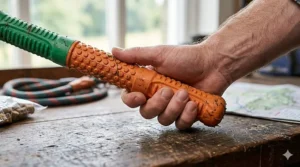
According to guidance from the British Veterinary Association and Blue Cross, rubber fetch sticks eliminate the primary mechanisms of injury whilst maintaining the play pattern dogs enjoy. They don’t splinter, they don’t have sharp ends, and their flexible construction means they bend rather than impale if a dog runs onto them. Even if a piece breaks off (which quality models shouldn’t), rubber passes through the digestive system far more safely than wood splinters that can perforate stomach walls.
The economic impact is also significant. Emergency veterinary treatment for stick injuries can easily exceed £2,000-£5,000, depending on whether surgery, CT scans, or extended hospitalisation are required. Pet insurance often covers these emergencies, but policy premiums increase after claims, and some insurers exclude preventable injuries from coverage. A £12 rubber stick is considerably cheaper than a £3,000 emergency vet bill.
Real-World Performance in British Gardens vs Parks
The environment where you primarily use your rubber fetch stick significantly influences which model delivers best results. A compact Birmingham garden poses different challenges than the expansive fields of rural Lincolnshire or the beaches of Cornwall.
Suburban Gardens (10-20 Metres)
For the typical British suburban garden—roughly 10-15 metres of lawn with fence boundaries—lightweight models like the KONG SafeStix excel. You don’t need extreme throwing distance, so the lighter weight that some owners criticise actually becomes advantageous. The bright colours help you locate dropped toys amongst flowerbeds and shrubbery, whilst the flexibility means less risk of damaging greenhouse glass or conservatory windows with an errant throw.
Compact gardens also mean more intensive chewing opportunities simply because fetch sessions are shorter. Your dog retrieves the stick, you throw it ten metres, they bring it back—rinse and repeat for 20 minutes. This means the toy spends more time in your dog’s mouth than it would during long-distance park sessions. Prioritise chew durability over throwing distance for garden-focused use.
Parks and Commons (50+ Metres)
Large open spaces like Clapham Common, Hampstead Heath, or Manchester’s Heaton Park allow for proper distance throwing that genuinely tires out high-energy breeds. Here, weighted designs like the Chuckit! Ultra Fetch Stick shine. The weighted end allows you to achieve 30-40 metre throws without a ball launcher, which makes the crucial difference between a satisfied Border Collie and one that’s still bouncing off the walls after their “exercise.”
The downside is visibility. In long grass or autumn leaf coverage, even bright orange toys disappear unless you mark exactly where they land. This is where dogs earn their keep—most will track the toy by scent—but it’s worth having a backup toy in your pocket for when the primary stick vanishes into a bramble patch.
Beaches and Water
Coastal conditions demand floating capability and salt-water resistance. The KONG Reflex Stick and Chuckit! Air Fetch Stick both handle seawater without degrading, and their floating designs mean you won’t lose them to the depths. However, sand is brutally abrasive. Even the toughest rubber shows wear after repeated beach sessions, with sand particles embedding in the material and creating a slightly rough texture.
Rinse thoroughly after every beach visit. Salt water accelerates material breakdown if left to dry on the toy, and sand can damage your dog’s teeth if it remains embedded in the rubber’s surface texture. Keep a bucket of fresh water in your car boot specifically for post-beach toy rinsing—it’s worth the minor inconvenience.
Natural vs Synthetic Rubber: Does It Actually Matter?
The natural versus synthetic rubber debate isn’t merely eco-marketing waffle—there are genuine performance and safety differences worth understanding, particularly for British buyers increasingly conscious of environmental impact.
Natural Rubber Advantages
Natural rubber, tapped from rubber trees (Hevea brasiliensis), offers superior flexibility across temperature ranges. In British winter conditions, natural rubber maintains its elasticity down to near-freezing temperatures, whereas some synthetic compounds become noticeably stiffer below 5°C. This matters for the bounce quality and for preventing the material from cracking during cold-weather play.
From a sustainability perspective, natural rubber is biodegradable and comes from renewable plantations. Companies like Beco that prioritise natural rubber often carry certifications like Climate Neutral and B Corp, which appeals to the significant portion of British pet owners who factor environmental impact into purchasing decisions. However, natural rubber typically costs more to source and process, which explains the £12-£15 price point versus £6-£8 for synthetic alternatives.
The scent is distinctly different—natural rubber has an earthy, almost mushroom-like smell that some dogs find irresistible and others initially reject. Most dogs acclimate within a few days, but it’s worth knowing before purchase.
Synthetic Rubber Performance
Modern synthetic rubber compounds, particularly those used in KONG Extreme products and Chuckit! toys, can actually exceed natural rubber’s durability for aggressive chewing. They’re engineered specifically for puncture resistance and longevity, using chemical formulations that wouldn’t occur in nature. The KONG Reflex Stick’s self-healing polymer, for example, is entirely synthetic—and demonstrably effective at repairing minor damage.
Synthetic compounds also resist mould and bacterial growth more effectively than natural rubber, which matters in our damp British climate. They’re easier to clean, don’t retain odours as readily, and generally maintain their appearance longer. However, they’re derived from petroleum products and don’t biodegrade, so they’ll persist in landfills for decades when eventually discarded.
What British Buyers Should Prioritise
For most UK dog owners, durability and safety trump environmental concerns in practice, even if sustainability matters in principle. A natural rubber toy that lasts six months is more environmentally responsible than a synthetic one that lasts three years—the longer lifespan outweighs the biodegradability factor. My recommendation: prioritise durability and safety first, then choose natural rubber options when they’re competitive on these factors.

How to Safely Introduce Your Dog to Rubber Fetch Sticks
Simply handing your dog a new rubber fetch stick and expecting immediate adoption is like giving someone a musical instrument and expecting a concert. There’s a process that maximises acceptance whilst ensuring safety, particularly for dogs transitioning from wooden sticks.
The Scent Familiarisation Phase
Allow your dog to investigate the new toy on their own terms initially. Place it on the floor and let them approach, sniff, and mouth it without pressure. Some dogs, particularly those with sensitive noses, may initially reject the rubber scent—this is completely normal. You can accelerate acceptance by rubbing the toy with a small amount of their regular food or wiping it with a cloth that smells like their favourite person.
For natural rubber toys with particularly strong scents, wash them with mild, unscented soap and rinse thoroughly before introduction. This removes the manufacturing residue that some dogs find off-putting whilst retaining the core rubber smell.
Gradual Transition from Wooden Sticks
If your dog is habituated to carrying and chewing wooden sticks from regular park walks, you’ll need to actively redirect this behaviour. Bring the rubber stick on every walk, and intercept attempts to pick up wooden sticks by immediately offering the rubber alternative paired with enthusiastic praise. Most dogs make the switch within 5-10 walks once they associate the rubber stick with positive attention.
The key is consistency. Every family member must enforce the “no wooden sticks” rule and offer the rubber alternative. Mixed messages—one person allowing wooden sticks whilst another redirects—confuse the dog and slow the transition.
Supervised Initial Play Sessions
For the first week, supervise all interactions with the new rubber stick. Observe how your dog chews it: are they gentle mouthing, or attempting to destroy it? This tells you whether you’ve correctly matched the toy’s durability to your dog’s intensity. If you notice chunks being removed within the first hour, upgrade to a harder compound immediately—don’t wait for a choking incident.
Check the toy after each session for damage. Rubber shouldn’t show deep punctures, tears, or missing pieces. Surface tooth marks are normal and expected, but structural damage means replacement time.
The Treat-Stuffing Acceleration Method
For toys with hollow ends like the Beco Super Stick or KONG Puppy Teething Stick, stuffing with a high-value treat dramatically accelerates acceptance. Use xylitol-free peanut butter, soft cheese, or Kong’s own Easy Treat paste. Freeze the stuffed toy for 2-3 hours before offering—this creates a longer-lasting challenge that builds positive association whilst tiring your dog mentally.
British owners often underestimate the value of frozen enrichment toys, particularly during our warmer summer months (yes, all three days of them). A frozen, treat-stuffed rubber stick can occupy a dog for 30-45 minutes, providing mental stimulation equivalent to a 30-minute walk without the physical exertion.
Common Mistakes British Owners Make with Rubber Fetch Sticks
After reviewing hundreds of Amazon.co.uk customer reviews and veterinary guidance, several patterns emerge in how British dog owners misuse rubber fetch sticks—often without realising they’re creating problems.
Leaving Them Accessible for Unsupervised Chewing
The most frequent error is treating rubber fetch sticks like indestructible chew toys suitable for eight-hour crating periods or overnight access. Even the toughest rubber compounds aren’t designed for hours of concentrated chewing. Toys marketed for “fetch” have different engineering priorities than those designed for solo chewing—they’re optimised for throwing performance and safe retrieval, not continuous destructive pressure.
British owners working full-time often need to occupy their dogs for 8-9 hour stretches. Rubber fetch sticks aren’t the solution for this need. Purpose-designed chew toys like KONG Extreme (the classic cone shape, not the stick), Nylabones, or puzzle feeders are better suited to long-duration occupancy. Save the fetch stick for active supervised sessions.
Ignoring Size Guidelines
The temptation to “size up for extra challenge” can backfire dramatically. A stick too large for your dog’s mouth prevents proper carrying and can cause jaw strain or tooth damage as they struggle to grip it. Conversely, selecting a size too small because it’s cheaper risks choking hazards—particularly concerning with powerful chewers who can compress rubber and break off chunks.
One Cocker Spaniel owner in the reviews purchased a large size, reasoning it would last longer. Their dog couldn’t carry it properly, showed no interest in fetch, and the toy went unused. Wasted money, disappointed dog, missed opportunity for exercise.
Failing to Rotate Toys
British dogs, particularly intelligent working breeds common in the UK, experience toy boredom faster than owners realise. A Border Collie that’s obsessed with their rubber stick for two weeks can suddenly lose all interest when it becomes “old news.” This isn’t the toy’s fault—it’s canine psychology.
Maintain a rotation of 3-4 different toys, bringing out the rubber stick for 3-4 days, then replacing it with a ball or rope toy for a few days. This keeps each toy novel and exciting rather than boring and ignored. Store unused toys in a cupboard rather than leaving them scattered around—dogs value what’s occasionally available more than what’s always accessible.
Neglecting Proper Cleaning
British weather means British mud. After every muddy walk (so, essentially every walk between October and March), rinse your rubber stick thoroughly before storing it. Dried mud harbours bacteria and creates an abrasive texture that can scratch gums and teeth during subsequent play. Natural rubber in particular can develop surface mould if stored whilst damp.
Develop a routine: return from walk, rinse toys in outdoor tap or utility sink, allow to air dry before storing. This adds two minutes to your post-walk cleanup but extends toy life considerably and prevents bacterial accumulation.
Throwing Too Hard or Too Close
The enthusiasm to give your dog a “proper” workout can lead to dangerously hard throws that risk injury if the stick strikes your dog mid-air. Rubber sticks are heavier than tennis balls and carry more force on impact. Particularly with puppies or older dogs with reduced reflexes, moderate your throwing power to allow safe catching.
Similarly, throwing too close—within 3-4 metres—doesn’t give your dog time to judge the trajectory and adjust their catching position. This increases the likelihood of the stick hitting their face or chest rather than being cleanly caught. Aim for 8-15 metres minimum in open spaces, adjusting based on your dog’s athleticism and the available room.

Frequently Asked Questions
❓ Are rubber fetch sticks safe for puppies under six months?
❓ Can aggressive chewers destroy rubber fetch sticks?
❓ Do rubber fetch sticks float in British rivers and ponds?
❓ How often should I replace a rubber fetch stick?
❓ Are natural rubber sticks better for the environment than synthetic options?
Conclusion: The Right Rubber Stick Transforms British Dog Ownership
After extensive research into products available on Amazon.co.uk, the evidence is clear: rubber fetch sticks aren’t just safer alternatives to wooden sticks—they’re genuinely superior toys that enhance the quality of play whilst protecting your dog from catastrophic injuries. The British Veterinary Association’s warnings about stick injuries aren’t overblown cautionary tales; they’re evidence-based guidance from professionals treating hundreds of preventable emergency cases annually.
For most British dog owners, the KONG SafeStix offers the best balance of affordability, durability, and availability, particularly for households with moderate chewers and limited budgets. If environmental responsibility matters to you, the Beco Natural Rubber Super Stick delivers sustainable sourcing alongside genuine functionality. Active dogs with intense fetch drives deserve the engineering excellence of the Chuckit! Ultra Fetch Stick, whilst power chewers require the extreme durability of the KONG Reflex Stick.
What matters most is moving away from wooden sticks entirely. Every UK veterinary organisation with an opinion on the matter—The Kennel Club, British Veterinary Association, Blue Cross—unanimously recommends rubber alternatives. The £8-£15 investment in a quality rubber stick could prevent a £3,000 emergency vet bill and, more importantly, spare your dog immense suffering.
Choose based on your dog’s size, chewing intensity, and primary use case. Supervise initial sessions, rotate toys to maintain interest, and replace at the first sign of structural damage. Your dog will thank you with years of safe, enjoyable fetch sessions across British parks, beaches, and gardens.
Recommended for You
- 7 Best Dog Fetch Sticks UK 2026 – Safer Than Real Sticks
- 7 Best Boomerang Toy for Dogs UK 2026
- 7 Best Floating Rubber Dog Frisbees UK 2026
Disclaimer: This article contains affiliate links. As an Amazon Associate, I earn from qualifying purchases. If you purchase products through these links, we may earn a small commission at no additional cost to you.
✨ Found this helpful? Share it with your mates! 💬🤗
