
In This Article
You’ve just brought home that adorable bundle of fluff, and whilst you’re diligently planning walkies and cuddle sessions, there’s a crucial element many new puppy parents overlook: mental exercise. Here’s something that might surprise you—20 minutes of sniffing and puzzle-solving provides the same mental workout as a full hour of walking! That’s not just clever marketing; it’s backed by canine cognitive research.
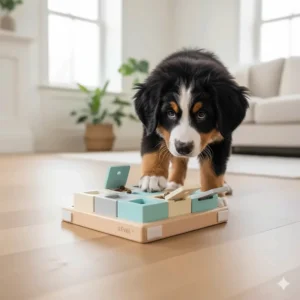
Beginner puzzle toys for puppies aren’t simply entertaining diversions. They’re essential tools for healthy brain development during those critical first months. Research from Duke University demonstrates that puppies’ brains undergo rapid development between 8 and 20 weeks of age, and the experiences they have during this window permanently shape their cognitive abilities. By six weeks old, your puppy’s brain is already 70% of an adult dog’s size, growing at an astonishing pace that demands proper stimulation.
But here’s the challenge: not all puzzle toys are created equal, and choosing one that’s too advanced can frustrate your pup, whilst picking something too simple wastes their potential. Level 1 beginner puzzle toys strike that perfect balance, offering achievable challenges that build confidence and problem-solving skills. Whether you’ve got a curious Cocker Spaniel or a brilliant Border Collie puppy, starting with appropriate beginner puzzles sets the foundation for a lifetime of mental engagement.
In this comprehensive guide, we’ll explore the seven best beginner puzzle toys for puppies available on Amazon.co.uk in 2026, complete with honest reviews, UK pricing in pounds sterling, and expert insights on choosing the perfect first puzzle for your furry friend.
Quick Comparison Table: Top Beginner Puzzle Toys for Puppies
| Product | Difficulty | Price Range (£) | Best For | Key Feature |
|---|---|---|---|---|
| Nina Ottosson Treat Tumble | Level 1 | £11-£14 | Rolling action lovers | Adjustable difficulty openings |
| KONG Gyro Puppy | Beginner | £11-£15 | Independent play | Wobble-and-roll dispensing |
| Brightkins Kanoodle (Small) | Easy-Moderate | £14-£17 | Small breeds | 9 rotating compartments |
| Nina Ottosson Puppy Smart | Level 1 | £12-£16 | First-time puzzlers | 9 sliding bone covers |
| Outward Hound Hide-A-Squirrel | Easy | £10-£13 | Plush toy fans | No-treat alternative |
| KONG Wobbler | Beginner | £13-£17 | Food-motivated pups | Weighted bottom design |
| Interactive Slow Feeder Bowl | Level 1 | £8-£12 | Fast eaters | Maze-pattern feeding |
💬 Just one click – help others make better buying decisions too! 😊
Top 7 Beginner Puzzle Toys for Puppies: Expert Analysis
1. Nina Ottosson by Outward Hound Treat Tumble
The rolling introduction to puzzle play
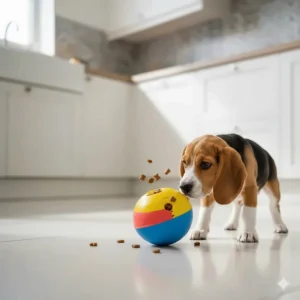
The Nina Ottosson Treat Tumble has earned its reputation as the ideal first puzzle for countless UK puppies, and for good reason. This vibrant blue ball features a genius design: two adjustable openings that you can make larger or smaller depending on your puppy’s skill level. Simply fill it with kibble or small training treats, and watch your pup bat, nudge, and chase it across your kitchen floor.
Key Specifications:
- Level 1 beginner difficulty
- Diameter: 12 centimetres (4.75 inches)
- BPA-free, food-safe materials
- Dishwasher-safe for easy cleaning
Price: £11.55-£13.99 (depending on retailer)
UK buyers consistently praise this toy’s durability and versatility. One London-based owner reported, “My 10-week-old Labrador puppy figured out the basics within minutes but still plays with it daily at six months. We’ve gradually reduced the opening size to keep it challenging.” The adjustable difficulty means this puzzle grows with your puppy rather than becoming obsolete after a few sessions.
✅ Pros:
- Adjustable difficulty extends toy’s lifespan
- Encourages physical activity alongside mental stimulation
- Works brilliantly on hard floors and low-pile carpets
❌ Cons:
- Can be noisy on wooden or tile floors
- Some persistent chewers may damage the plastic edges
2. KONG Gyro Puppy Edition
The wobble-and-reward classic
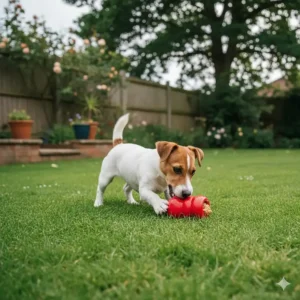
KONG has built its reputation on indestructible dog toys, and the Gyro Puppy brings that trusted quality to the puzzle toy realm. This Saturn-shaped wonder features a spinning inner orb encased in a soft outer ring, creating unpredictable rolling patterns that fascinate puppies whilst gradually dispensing treats.
Key Specifications:
- Puppy-specific soft TPE outer ring
- Transparent inner ball for visual motivation
- Suitable for puppies under 9 kilograms (20 pounds)
- Dimensions: 12.7 × 7.6 centimetres
Price: £11.55-£14.99
What sets the Gyro apart for UK buyers is its puppy-specific design. The softer outer ring is gentle on developing teeth, unlike the standard version marketed for adult dogs. A Manchester-based puppy trainer notes, “I recommend the Gyro for puppies who need to burn mental energy without excessive physical strain—perfect for rainy British days when outdoor play isn’t possible.”
The transparent centre ball is particularly clever; puppies can see exactly how much food remains inside, maintaining their motivation throughout play sessions. One reviewer from Edinburgh mentioned their Chihuahua-Jack Russell cross stays engaged for 15-20 minutes, which is impressive for small breed puppies with shorter attention spans.
✅ Pros:
- Puppy-safe materials designed for developing teeth
- Visual treat display maintains engagement
- Compact size perfect for small breeds
❌ Cons:
- Outer ring may show teeth marks (cosmetic only)
- Not suitable for aggressive chewers
3. Brightkins Kanoodle Dog Edition (Small)
The colourful challenge that went viral
Inspired by the TikTok-famous human puzzle game, the Brightkins Kanoodle Dog Edition brings vibrant, brain-teasing fun to your puppy’s enrichment routine. This one-piece puzzle features six brightly coloured rotating pieces that conceal nine hidden treat compartments, challenging your pup to sniff, spin, and search for rewards.
Key Specifications:
- 9 hidden treat compartments
- 6 rotating puzzle pieces
- Dimensions: 19 × 19 centimetres (7.5 × 7.5 inches)
- BPA-free, dishwasher-safe construction
- Includes certified trainer guide
Price: £14.99-£16.99
What makes the Kanoodle stand out is its multi-sensory engagement. The rotating pieces make satisfying clicking sounds that puppies find rewarding, creating positive associations with puzzle-solving. A Brighton-based Cockapoo owner shared, “The rainbow colours genuinely seem to attract my puppy’s attention more than plain puzzles. She’ll bring it to me when she wants to play, which never happened with other toys.”
The included expert guide from a certified professional dog trainer (CPDT-KA) is invaluable for first-time puzzle users. It provides step-by-step introduction protocols and troubleshooting tips that help prevent frustration. According to Brightkins’ research, 20 minutes with this puzzle equals approximately one hour of walking in terms of mental stimulation—a claim UK buyers find accurate based on how thoroughly it tires out their puppies.
✅ Pros:
- Vibrant design appeals to puppies’ visual attention
- Doubles effectively as a slow feeder for meals
- Expert training guide included
❌ Cons:
- Clever puppies may solve it quickly (can increase difficulty)
- Higher price point than basic puzzles
4. Nina Ottosson by Outward Hound Puppy Smart
The sliding puzzle that builds confidence
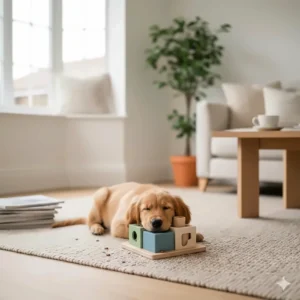
The Puppy Smart represents Nina Ottosson’s beginner-friendly approach to interactive feeding. This composite puzzle features nine treat compartments covered by bone-shaped pieces that puppies must slide or lift to access their rewards. The tan and blue colour scheme is deliberately chosen to be highly visible to dogs’ dichromatic vision.
Key Specifications:
- 9 sliding bone covers over treat compartments
- Food-safe composite construction
- Holds approximately 120 millilitres (half cup) of food
- Dimensions: 29 × 29 centimetres
- Free from BPA, PVC, lead, and phthalates
Price: £12.49-£15.99
This puzzle shines with puppies who are complete novices to enrichment toys. The bones slide easily, requiring minimal force, which prevents early discouragement. A Surrey-based dog behaviourist explains, “The Puppy Smart is brilliant for building what we call ‘task persistence’—the willingness to keep trying when something’s challenging. Puppies who master this puzzle show increased confidence in other training scenarios.”
UK buyers appreciate that this puzzle can serve double duty. Many use it as a slow feeder at mealtimes, transforming a 30-second scoff-down into a 10-minute engaging activity. One Glasgow owner reported their Beagle puppy’s digestion improved noticeably when they switched from a standard bowl to the Puppy Smart for breakfast.
✅ Pros:
- Extremely beginner-friendly with easy-slide mechanism
- Suitable for use as everyday slow feeder
- Sturdy construction withstands enthusiastic pawing
❌ Cons:
- Some pieces can be removed and may become chew targets
- Requires supervision initially
5. Outward Hound Hide-A-Squirrel
The treat-free puzzle alternative
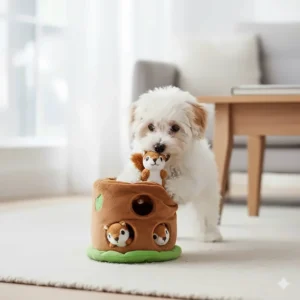
Not every enrichment activity needs to involve food, and the Hide-A-Squirrel proves this beautifully. This plush puzzle consists of a tree trunk “burrow” and three squeaky squirrels that puppies must extract using their noses and paws. It’s a fantastic option for puppies who are watching their waistlines or those training with meals rather than extra treats.
Key Specifications:
- Medium size: 17 × 15 centimetres trunk with 3 squirrels
- Soft plush construction
- Multiple squeakers for auditory engagement
- Available in four sizes
Price: £10.59-£12.99
This puzzle taps into dogs’ natural prey drive and foraging instincts without the caloric consequences of treat-based toys. A Nottingham-based veterinary nurse recommends it for puppies prone to weight gain or those with sensitive stomachs. The squeakers provide instant gratification, maintaining motivation even without food rewards.
UK reviewers consistently mention durability as a pleasant surprise. Whilst it’s not marketed as a chew toy, many report their Hide-A-Squirrel surviving months of daily play. One creative owner from Wales mentioned, “We rotate which squirrel gets hidden and sometimes wrap one in a towel for added difficulty. It keeps the puzzle fresh.”
✅ Pros:
- No treats required—great for diet-conscious puppies
- Combines puzzle-solving with retrieval play
- Surprisingly durable for a plush toy
❌ Cons:
- Not suitable for destructive chewers
- Squeakers may be too exciting for some households
6. KONG Wobbler
The weighted wonder for food motivation
The KONG Wobbler takes a brilliantly simple approach: a weighted, egg-shaped dispenser that puppies must nudge, bat, and topple to release kibble. The genius lies in its self-righting design—it always returns to upright, creating an endlessly entertaining challenge that never becomes impossible.
Key Specifications:
- Weighted bottom for self-righting action
- Adjustable difficulty via opening size
- Holds up to 475 millilitres (2 cups) of food
- Dishwasher-safe
- Available in two sizes
Price: £13.49-£16.99
This puzzle is particularly beloved by UK owners of food-motivated breeds like Labradors, Beagles, and Cocker Spaniels. The Wobbler effectively transforms mealtimes from gulping sessions into 15-20 minute activities, significantly reducing the risk of bloat and improving digestion. A Birmingham-based vet recommends it specifically for deep-chested breeds prone to gastric issues.
The adjustable opening is key to its versatility. Start wide for initial success, then gradually narrow it as your puppy’s skills develop. One Yorkshire-based owner noted, “We’ve used the Wobbler for eight months, progressively making it harder. My puppy still hasn’t lost interest, and it’s become part of our morning routine.”
✅ Pros:
- Self-righting design prevents frustration
- Excellent for slowing down fast eaters
- Durable construction suitable for medium-large puppies
❌ Cons:
- Can be noisy on hard floors
- Not ideal for very small breed puppies
7. Interactive Slow Feeder Puzzle Bowl
The budget-friendly daily essential
For puppy parents seeking beginner puzzle toys for puppies on a budget, interactive slow feeder bowls offer tremendous value. These maze-patterned bowls feature raised ridges and valleys that transform ordinary meals into problem-solving adventures, forcing puppies to navigate around obstacles to access their food.
Key Specifications:
- Non-slip rubber base
- Food-safe plastic construction
- Capacity: approximately 350-500 millilitres depending on model
- Multiple maze patterns available
- Dishwasher-safe
Price: £8.69-£11.99
Whilst technically a bowl rather than a toy, these feeders serve as perfect introduction to puzzle-based feeding for puppies who find traditional puzzles overwhelming. A canine nutritionist from Bristol explains, “Slow feeders can extend a meal from 30 seconds to 5-10 minutes, which has significant digestive benefits and provides gentle cognitive challenge.”
UK buyers appreciate the practical value—this is enrichment your puppy experiences twice daily at mealtimes without requiring separate play sessions. One Cornwall-based owner reported, “My Spaniel puppy used to vomit after bolting his food. Since switching to a slow feeder bowl, he’s had no digestive issues and seems calmer after meals.”
✅ Pros:
- Extremely affordable entry point
- Used daily at mealtimes for consistent enrichment
- Non-slip base prevents messy floor-sliding
❌ Cons:
- Less engaging than interactive toys
- Some patterns harder to clean thoroughly
Understanding Puzzle Difficulty Levels for Puppies
What Makes a Puzzle “Beginner Level”?
Puzzle manufacturers use numbered difficulty ratings, but what do they actually mean for your puppy? Level 1 or beginner puzzles typically feature single-step solutions—your puppy performs one action (push, nudge, slide) and immediately receives a reward. This instant gratification is crucial for maintaining motivation in puppies with limited attention spans.
Intermediate puzzles (Level 2) require combining multiple actions or solving sequential steps. Advanced puzzles (Levels 3-4) demand complex problem-solving that most puppies aren’t developmentally ready to tackle. According to research from the University of Edinburgh’s canine cognition lab, puppies’ executive function—the ability to plan and execute multi-step tasks—develops gradually over their first 16 weeks.
The Goldilocks Principle: Not Too Easy, Not Too Hard
Your puppy’s ideal puzzle should challenge them just enough to require thinking but not so much that they give up in frustration. Canine behaviorists call this the “zone of proximal development”—borrowed from human childhood education theory. A puzzle slightly above your puppy’s current ability promotes growth; one too far beyond frustrates and discourages.
Watch for these signs your puzzle is appropriately difficult:
- Your puppy engages for 5-15 minutes before solving
- They show problem-solving behaviours (pawing different areas, trying various approaches)
- They seem pleased and confident upon success
Signs a puzzle is too difficult include giving up within 2 minutes, showing stress signals (yawning, lip-licking, avoiding the toy), or becoming destructively frustrated. Conversely, if your puppy solves it in under 30 seconds consistently, it’s time to graduate to a more challenging option.
The Science Behind Puppy Brain Development
Critical Windows for Cognitive Growth
Neuroscience research reveals that puppies’ brains undergo extraordinary development during their first year, with particularly rapid changes between 3 and 16 weeks. During this period, neural pathways form at astonishing rates—experiences literally shape brain structure. Puppies exposed to varied mental challenges develop larger brains with more neural connections than those raised in unstimulating environments.
A landmark study published in the Journal of Veterinary Behavior followed 101 Labrador Retriever puppies through Duke University’s Puppy Kindergarten programme. Researchers found that puppies tested every two weeks showed measurable cognitive development, with problem-solving abilities improving most dramatically between 8 and 12 weeks. However, the ease of learning begins declining around 16 weeks, making early enrichment crucial.
Why Mental Stimulation Equals Physical Exercise
The often-cited claim that 20 minutes of mental stimulation equals an hour of physical exercise isn’t marketing hyperbole—it’s based on canine energy expenditure research. Mental tasks require significant glucose consumption by the brain, and the concentration required genuinely tires puppies. This is particularly valuable for UK owners during wet winter months when outdoor exercise is limited.
Moreover, mental tiredness produces calmer, more settled puppies. Physical exercise alone can actually increase arousal levels in some high-energy breeds, creating over-stimulated puppies who struggle to settle. Mental enrichment through beginner puzzle toys for puppies provides the perfect balance, satisfying curiosity whilst promoting relaxation afterwards.
Choosing the Right Puzzle for Your Puppy’s Breed and Personality
Size Matters: Matching Puzzles to Breed
Small breed puppies (under 10 kilograms fully grown) need puzzles scaled to their diminutive stature. A Chihuahua puppy cannot manipulate the same sliding covers as a Golden Retriever. The Brightkins Kanoodle (Small) and KONG Gyro Puppy are specifically designed for petite paws and smaller mouths.
Medium breed puppies (10-25 kilograms adult weight) have the most options available, fitting comfortably into standard beginner puzzles like the Nina Ottosson Puppy Smart.
Large breed puppies require sturdy construction that withstands their strength. The KONG Wobbler and larger versions of most puzzles prevent accidental damage from enthusiastic giant breed paws.
Personality-Based Recommendations
Food-motivated puppies (Labradors, Beagles, Cocker Spaniels): Start with treat-dispensing puzzles like the Treat Tumble or Wobbler. Their strong food drive maintains engagement even when puzzles become challenging.
Independent thinkers (Terriers, Huskies, Border Collies): Choose puzzles with multiple solution approaches like the Kanoodle, which allows various strategies for accessing treats.
Sensitive souls (Cavalier King Charles Spaniels, Italian Greyhounds): Begin with extremely easy puzzles like slow feeder bowls, building confidence before progressing to more complex challenges.
High-energy breeds (Working and herding dogs): Combine puzzle toys with physical components—the Hide-A-Squirrel offers mental challenge plus retrieval exercise.
How to Introduce Puzzle Toys to Your Puppy
The First Session: Setting Up for Success
Never simply present a puzzle and expect your puppy to understand it instinctively. Proper introduction prevents frustration and builds positive associations. Here’s a step-by-step protocol recommended by UK certified dog trainers:
- Pre-loading success: For the very first session, leave some treats fully visible and easily accessible. You want immediate success to build confidence.
- Demonstration: Show your puppy how the puzzle works. Slide a piece, let them see the treat, allow them to take it. This “modeling” helps them understand the concept.
- Gradual challenge: Over subsequent sessions, make treats progressively less obvious. Start with 75% visible, then 50%, then fully hidden.
- Keep sessions brief: Initial puzzle sessions should last just 3-5 minutes. Puppies’ attention spans are limited, and you want to end whilst they’re still engaged and successful.
- Enthusiastic praise: Celebrate every small success with genuine enthusiasm. Your excitement reinforces their problem-solving efforts.
Common Mistakes to Avoid
Rushing difficulty progression: Moving too quickly to harder puzzles or concealment creates frustration. Most puppies need 1-2 weeks on fully visible treats before progressing.
Leaving puzzles available constantly: Puzzle toys should be “special events” brought out for specific sessions. Constant availability leads to disinterest through overexposure.
Using low-value treats: Boring kibble won’t maintain motivation. Use high-value treats—small pieces of chicken, cheese, or commercial training treats—at least initially.
Insufficient supervision: Never leave puppies unsupervised with puzzle toys initially. They might chew pieces, become frustrated, or need guidance.
Comparing progress: Every puppy develops at their own pace. Don’t compare your Cocker Spaniel’s puzzle skills to your neighbour’s Border Collie.
Safety Considerations for Puppy Puzzle Toys
Material Safety Standards in the UK
Post-Brexit, the UK maintains UKCA marking requirements for pet products, ensuring toys meet safety standards. Reputable brands like KONG, Nina Ottosson, and Brightkins manufacture toys free from BPA, PVC, phthalates, and lead—chemicals potentially harmful to puppies who inevitably mouth and chew toys.
Always verify products are food-safe if they’ll contact edibles. Most quality puzzle toys specify “food-grade materials” or “food-safe construction” in their descriptions. When purchasing from Amazon.co.uk, check that products have UK/EU safety certifications rather than solely international standards.
Choking Hazards and Supervision
Even beginner-level puzzles contain components that could present choking risks if damaged or deliberately removed. Wooden puzzles can splinter; plastic pieces can crack under determined chewing. The golden rule: always supervise initial play sessions and regularly inspect toys for damage.
Remove puzzles immediately if you observe:
- Cracks, splits, or broken pieces
- Exposed sharp edges
- Loose components that could detach
- Signs of material degradation
For puppies who are aggressive chewers rather than puzzle-solvers, consider whether puzzle toys are appropriate at this stage. Some puppies need to mature and learn bite inhibition before safely using puzzles with removable parts.
Hygiene and Cleaning
Puzzle toys contact food and saliva, creating environments where bacteria can flourish. Establish a cleaning routine:
After each use: Rinse thoroughly with warm water, removing all food residue. Most modern puzzles are dishwasher-safe (top rack), which simplifies this process.
Weekly deep clean: Wash with pet-safe antibacterial solution or diluted white vinegar. Ensure complete drying before storing to prevent mould growth.
Replace when necessary: Even with excellent care, toys wear out. Establish a replacement schedule based on your puppy’s usage intensity.
Combining Puzzle Toys with Training and Routine
Incorporating Puzzles into Daily Life
The most successful puppy enrichment programmes integrate puzzles into daily routines rather than treating them as occasional novelties. Here’s how UK dog trainers recommend structuring puzzle time:
Morning mental warm-up (5-10 minutes): Before breakfast, offer a simple puzzle with part of their morning meal. This provides gentle cognitive engagement that sets a calm tone for the day.
Midday enrichment (10-15 minutes): For puppies at home during the day, a puzzle session combats boredom and provides structure. This is particularly valuable for working-from-home owners.
Pre-walk preparation (5 minutes): A quick puzzle session before walks takes the edge off puppy excitement, making lead manners easier. The mental work slightly tires them, resulting in calmer, more focused outdoor behaviour.
Evening wind-down (10-15 minutes): Puzzle time an hour before bedtime provides constructive tire-out without physical over-excitement that could delay sleep.
Using Puzzles as Training Tools
Clever trainers use puzzle toys to teach broader lessons:
Impulse control: Require your puppy to sit-stay whilst you prepare the puzzle. They only get to engage when released with a cue word. This builds self-control.
“Go find it” cue: Hide puzzle toys around your home (easy locations initially), then send your puppy to search using a consistent cue. This combines scent work with puzzle-solving.
Calm settling practice: After puzzle sessions, guide your puppy to their bed or crate for calm time. This teaches the valuable skill of self-settling after stimulating activities.
Duration building: Gradually extend how long your puppy works on puzzles before you help or intervene. This builds persistence and independent problem-solving.
Troubleshooting Common Puppy Puzzle Problems
“My Puppy Loses Interest After 30 Seconds”
This typically indicates either too-easy puzzles (solved immediately, no continued challenge) or insufficient motivation (treats aren’t appealing enough). Solutions:
- Increase treat value: Switch from ordinary kibble to chicken, cheese, or commercial training treats
- Make puzzles harder: If your puppy solves too quickly, progress to next difficulty level or modify current puzzles
- Reduce bowl feeding: If puppies receive unlimited food elsewhere, puzzle treats lack appeal
- Create mystery: Disappear whilst they’re puzzling, making it an independent activity rather than a performance for you
“My Puppy Gets Frustrated and Gives Up”
Frustration signals the puzzle is too difficult for their current ability. Immediate fixes:
- Simplify dramatically: Return to visible treats or easier puzzles
- Provide helpful hints: Tap on correct areas or partially open compartments
- Shorten sessions: Work for 2 minutes maximum, ending on success
- Celebrate small wins: Praise any problem-solving attempt, not just complete solutions
“My Puppy Just Chews the Puzzle Instead of Solving It”
This behaviour suggests your puppy hasn’t yet learned the “rules” of puzzle play. Interventions:
- Immediate redirection: The moment chewing begins, redirect attention to appropriate chew toys
- Shorter supervised sessions: Keep puzzle time brief whilst teaching appropriate interaction
- Choose chew-resistant materials: KONG rubber products withstand more abuse than plastic puzzles
- Ensure adequate chew outlets: Provide plentiful appropriate chew toys separately from puzzle time
“My Puppy Solves Every Puzzle Too Easily”
Congratulations—you’ve got a canine genius! Next steps:
- Graduate to Level 2: Intermediate puzzles provide necessary challenge
- Modify existing puzzles: Cover additional holes, add extra barriers, combine multiple puzzles
- DIY enhancements: Place puzzles inside cardboard boxes, wrap in towels, or create multi-step sequences
- Introduce scent work: Hide puzzles for your puppy to locate before solving
DIY Puzzle Alternatives and Budget Options
Household Item Puzzles
You needn’t spend a fortune on commercial puzzles. Creative UK owners have developed brilliant DIY alternatives using everyday items:
Muffin tin puzzle: Place treats in muffin cups, cover with tennis balls. Puppies must remove balls to access rewards. Cost: £0 if you have items already.
Cardboard box treasure hunt: Hide treats in crumpled paper inside boxes. Puppies shred and search. Fully recyclable and free entertainment.
Towel roll puzzle: Lay treats along a towel, roll it up. Puppies must unroll to find rewards. Increases difficulty by securing roll with rubber bands (supervised only).
Plastic bottle dispenser: Clean, empty water bottles with treats inside. Puppies bat and roll bottles to dispense treats. Remove caps and labels first.
Egg carton game: Place treats in egg carton compartments. Simple but effective for young puppies. Use card versions for biodegradability.
Rotating Toys for Sustained Interest
Rather than buying numerous puzzles simultaneously, implement a rotation system. Keep 2-3 puzzles actively in use, storing others away. After 1-2 weeks, swap stored puzzles for active ones. This “novelty by absence” maintains interest more economically than constantly purchasing new toys.
When to Progress Beyond Beginner Puzzles
Signs Your Puppy Is Ready for Level 2
Most puppies spend 4-8 weeks mastering beginner puzzle toys for puppies before advancing. Watch for these readiness indicators:
✅ Consistently solves Level 1 puzzles in under 2 minutes
✅ Shows problem-solving strategies rather than random attempts
✅ Maintains focus for 15+ minutes on puzzle activities
✅ Displays confident, relaxed body language during puzzle time
✅ Seeks out puzzle toys independently
Don’t rush this progression. Thorough mastery of basics creates stronger problem-solving foundations than premature advancement to harder puzzles.
Level 2 Puzzles Worth Considering
When your puppy graduates, consider these intermediate options available on Amazon.co.uk:
Nina Ottosson Dog Tornado: Rotating layers with 12 compartments requiring multi-step solutions. £18-£24.
Nina Ottosson Dog Brick: Sliding blocks and removable bones create complex challenges. £16-£22.
Trixie Activity Flip Board: Multiple game types on one board for variety. £15-£20.
Outward Hound Puzzle Cube: Three-dimensional puzzle requiring sequential problem-solving. £17-£23.
Frequently Asked Questions
❓ How often should puppies use puzzle toys each day?
❓ Are treat-dispensing puzzles suitable for puppies on strict diets?
❓ Can puzzle toys help with separation anxiety in puppies?
❓ What's the difference between Level 1 and Level 2 puzzle toys?
❓ Are wooden or plastic puzzles safer for teething puppies?
Conclusion: Starting Your Puppy’s Enrichment Journey
Choosing beginner puzzle toys for puppies isn’t merely about purchasing entertainment—it’s an investment in your dog’s cognitive development, emotional wellbeing, and lifelong learning capacity. Those crucial first months offer unprecedented opportunities to shape neural pathways and problem-solving abilities that will serve your puppy throughout their life.
The seven puzzles we’ve explored represent the finest options available to UK puppy parents in 2026, each offering unique benefits suited to different breeds, personalities, and household situations. Whether you select the adjustable Nina Ottosson Treat Tumble, the wobbling KONG Gyro, or the vibrant Brightkins Kanoodle, you’re providing your puppy with essential mental stimulation during their most formative period.
Remember that puzzle success isn’t about your puppy being a canine Einstein—it’s about building confidence, satisfaction, and the understanding that effort brings rewards. Start easy, progress gradually, and celebrate every small victory. Your puppy’s brain is developing at an extraordinary pace, and appropriate enrichment literally shapes that developing mind.
As you embark on this enrichment journey, keep sessions short, supervision consistent, and expectations realistic. Every puppy develops at their own pace, and comparing your Beagle to your neighbour’s Border Collie only creates unnecessary pressure. Focus on your individual puppy’s progress, adjust difficulty appropriately, and most importantly, make puzzle time fun.
The investment—both financial and time—pays dividends in calmer behaviour, better focus during training, and a deeper bond between you and your puppy. Those 15 minutes of daily puzzle time might seem modest, but they’re laying foundations for a lifetime of mental agility and wellbeing.
So fill that first puzzle, hide those treats, and watch your puppy’s eyes light up with the joy of discovery. You’re not just entertaining them for the afternoon—you’re helping build a brilliant, confident, well-adjusted dog.
Recommended for You
- 7 Best Dog Puzzle Toys 2026: Transform Your Dog’s Mind | UK Guide
- 7 Best Nina Ottosson Dog Puzzles UK: Complete Guide 2026
- 7 Best Toys for Destructive Dogs UK 2026
Disclaimer: This article contains affiliate links. If you purchase products through these links, we may earn a small commission at no additional cost to you. Prices shown are approximate and may vary.
✨ Found this helpful? Share it with your mates! 💬🤗
